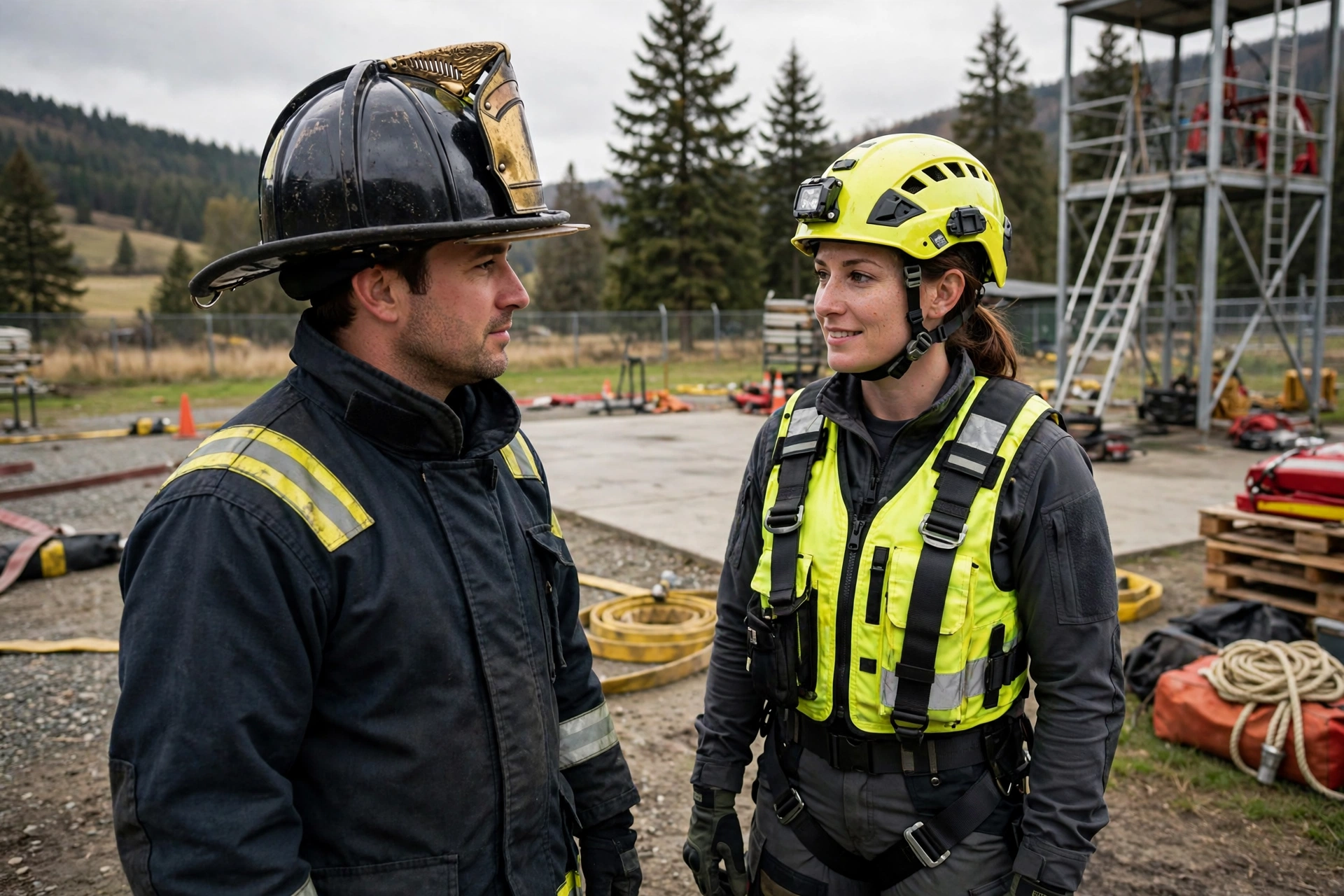
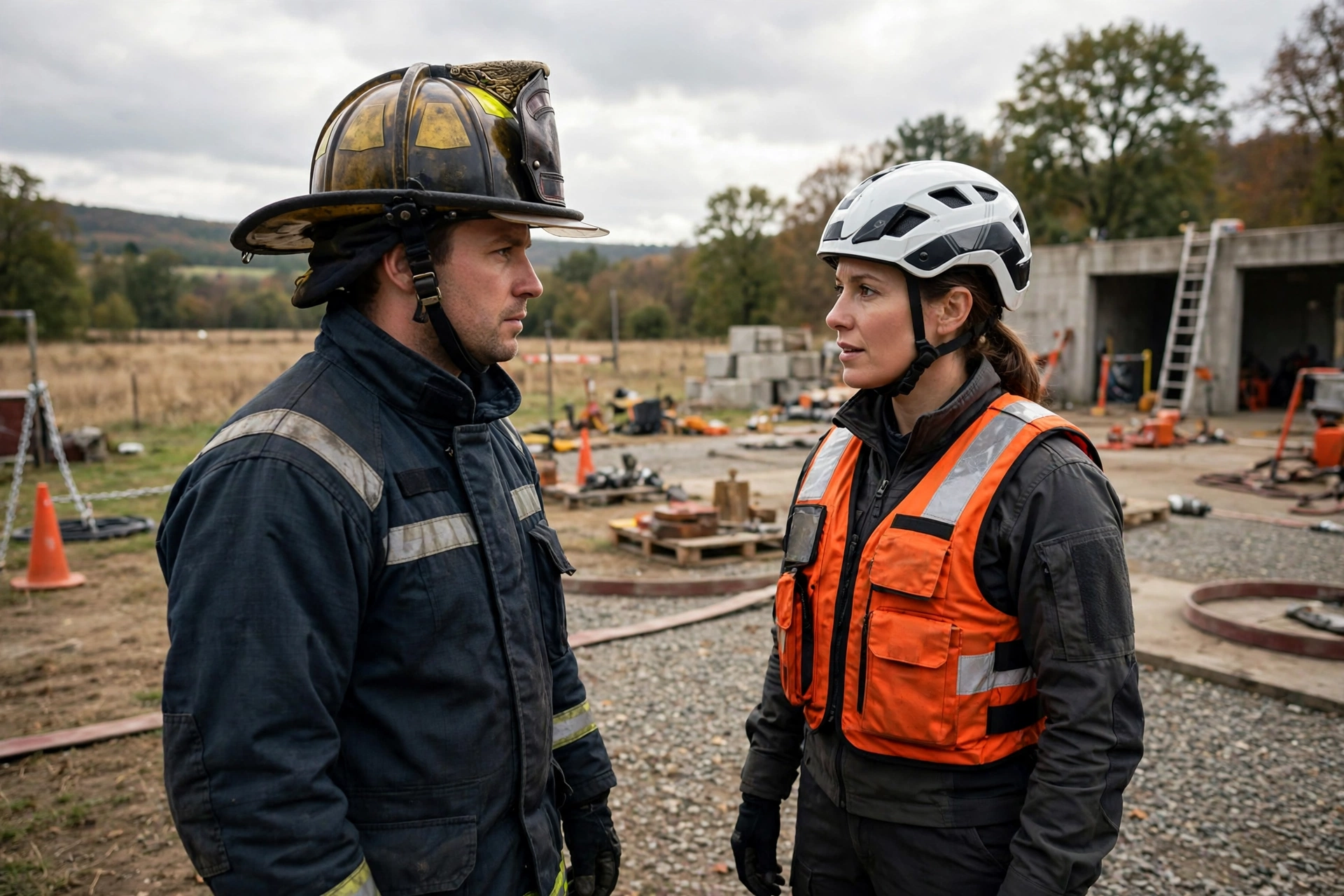
In general terms, a fire helmet and a rescue helmet are built for different jobs: a fire helmet protects against heat, flame, and falling debris in a burning building, while a rescue helmet protects against impacts during technical rescue work such as road crashes, rope work, and confined spaces. They may look similar at a glance, but their shells, liners, ventilation, and accessories are tuned to very different hazards, and using the wrong one can leave important risks uncovered.
The confusion is understandable. Both are worn by emergency responders, both sit on the same fire appliance in many services, and some responders wear both types during a single shift. Knowing what each helmet is designed for, and when each one is the right choice, helps crews, volunteers, and buyers avoid a costly and potentially dangerous mix-up.
What Is a Fire Helmet Designed to Do?
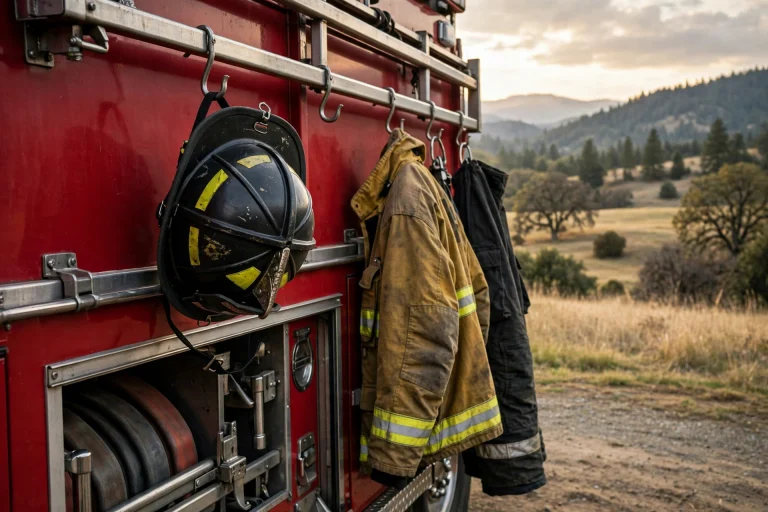
A structural fire helmet is built for the inside of a burning building. Its shell must resist heat and flame, and it usually has a long rear brim that channels water and debris away from the neck and shoulders. The helmet is part of a full protective ensemble that includes a fire suit, gloves, boots, and breathing apparatus, and it is designed to work with all of those items at once.
Heat resistance is the defining feature. The shell and liner are chosen to withstand high temperatures without softening or failing, and the helmet often includes a face shield or goggles to protect the eyes from heat, sparks, and falling material. Ear and neck covers protect areas that would otherwise be exposed to radiant heat, and the whole design assumes the wearer will be working in an environment where the air itself is hot and smoky.
Because of this focus, a fire helmet is relatively heavy and not particularly well ventilated. Ventilation holes that would cool the head in normal use could also let in heat and embers, so the design deliberately limits airflow. That trade-off is acceptable in a fire, where heat protection matters more than comfort, but it makes the helmet a poor choice for long, physically demanding rescue work in warm weather.
What Is a Rescue Helmet Designed to Do?
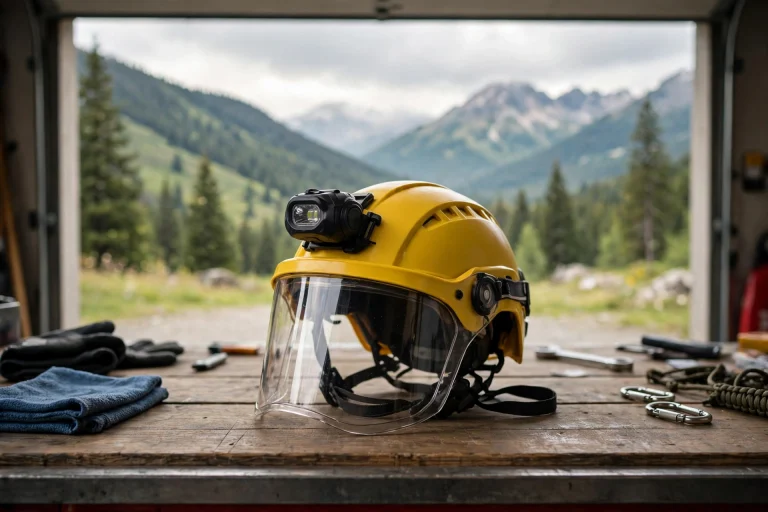
A rescue helmet, sometimes called a technical rescue helmet, is built for impact protection during rescue operations that do not involve direct flame. Think of road traffic collisions, rope rescues on cliffs or in trenches, collapsed structures after the fire is out, water rescue, and urban search and rescue. The main hazards are falling objects, bumps against hard surfaces, and impacts during movement in awkward positions.
These helmets are usually lighter than fire helmets, with better ventilation, a lower profile, and a fit system that keeps the helmet stable when the wearer is upside down, crawling, or working on a rope. Many have attachment points for headlamps, which are essential in dark or confined spaces, and some accept visors or goggles for eye protection against dust and debris.
The chin strap is another important difference. Rescue helmets typically have a strong, multi-point chin strap that keeps the helmet on during a fall or while hanging, whereas a fire helmet’s strap is designed mainly to keep it in place during firefighting movements. That difference reflects the way each helmet is expected to be used: a rescue helmet must stay on in a much wider range of body positions.
How Do the Shells and Liners Differ?
Fire helmet shells are made from heat-resistant materials that hold their shape at high temperatures, and their liners are designed to insulate the head from heat as well as absorb impact. The liner may be thicker and less ventilated, because its job includes slowing heat transfer to the wearer’s head during a fire attack or a search in a hot environment.
Rescue helmet shells focus on impact resistance and penetration resistance at normal temperatures. They are often made from strong, lightweight materials, and their liners are optimised for absorbing a blow from a falling object or a collision with a hard surface. Ventilation channels in the shell and liner help manage heat build-up during strenuous work, which is important when a rescue operation lasts for hours.
Can One Helmet Do Both Jobs?
In general terms, some helmets are designed to bridge the gap, but most services still keep the two types separate. A small number of multi-role helmets aim to offer reasonable heat resistance alongside the ventilation and lamp mounts of a rescue helmet, and these can suit services that respond to a mixed workload with limited budgets. Even so, they involve compromises, and they should only be used where they meet the relevant standards for the work being done.
The practical answer for most crews is to carry both types and choose per incident. A firefighter arriving at a road crash will reach for the rescue helmet, while the same firefighter entering a burning building will wear the structural helmet. Switching helmets takes only a moment, and it is far better than wearing the wrong protection for the job.
Buyers and volunteer departments sometimes ask whether they can save money by buying only one type. In general terms, that saving is false economy if the department attends both fires and rescues. The cost of a second helmet is small compared with the risk of a head injury, and it is worth discussing the department’s actual call profile with a supplier before deciding. The same principle applies across helmet types: protection only works when the helmet fits and suits the activity, which is why impact systems matter too, as explained in this guide to what MIPS means for helmets.
Which Helmet Should You Choose for Your Role?
Start with the work you actually do. If your role is structural firefighting, a fire helmet is essential, and a rescue helmet cannot replace it. If your role is technical rescue, road rescue, or rope work, a rescue helmet is the right tool, and a fire helmet will slow you down and overheat you without adding useful protection.
If you do both, plan for both. Check what your service or department issues, and ask about its policy on helmet selection per incident type. If you are buying privately, for example as a volunteer or a trainer, look for helmets that meet the standards relevant to your work, try them on with the other kit you wear, and check that accessories such as lamps and visors fit properly.
Finally, remember that a helmet is only part of the system. Eye protection, gloves, clothing, and training all matter, and no helmet compensates for poor technique or a rushed risk assessment. Choose the helmet for the hazard, keep it in good condition, and replace it after a serious impact or when its service life is reached.
Frequently Asked Questions
Q: Is a rescue helmet fireproof?
A: In general terms, no. Rescue helmets are built for impact protection at normal temperatures and are not designed to withstand the heat and flame of a structural fire. Entering a burning building in a rescue helmet would leave the wearer dangerously unprotected.
Q: Can a fire helmet be used for rope rescue?
A: It can be worn, but it is not ideal. A fire helmet is heavier, less ventilated, and less stable in inverted positions than a rescue helmet, so it can cause fatigue and may not stay in place as reliably during rope work.
Q: Do firefighters carry both types of helmet?
A: Many services do. Crews often carry a structural fire helmet and a rescue helmet on the appliance and choose the right one for each incident, switching as the work changes.

Olivia
Writer at Helmet Today, covering helmet reviews, fit and riding safety.