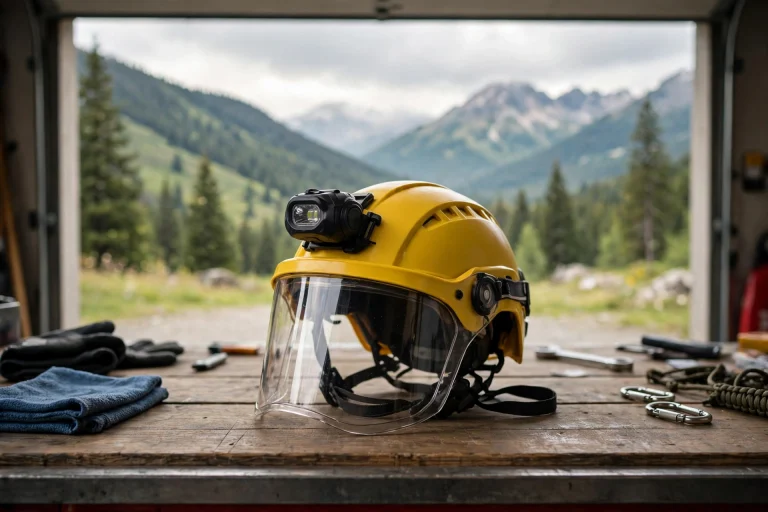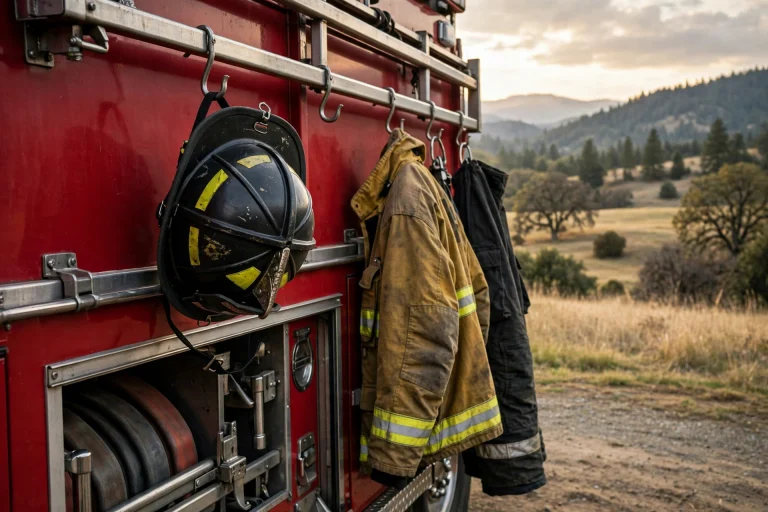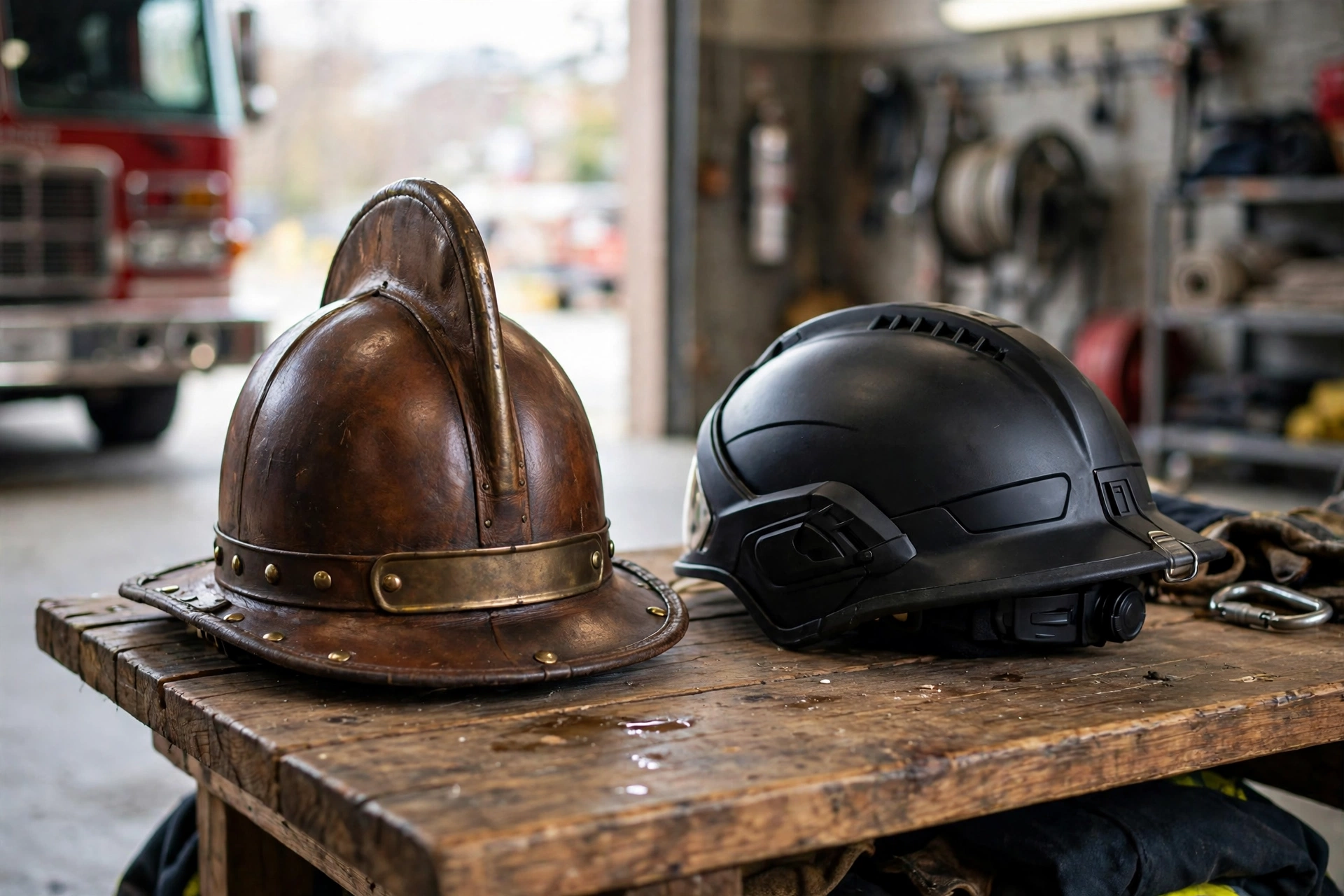
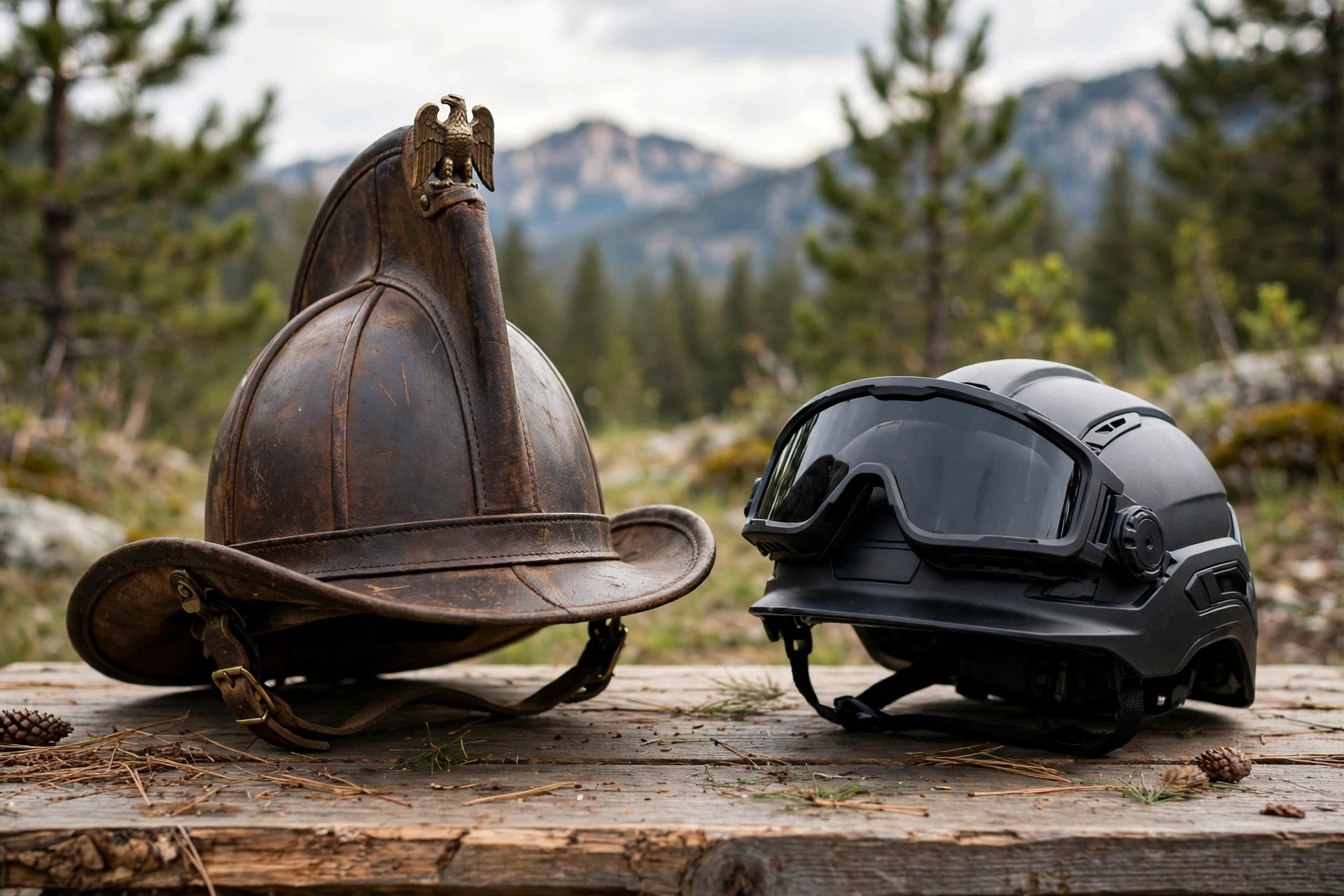
In general terms, traditional fire helmets have a tall, distinctive shape with a long rear brim, while modern fire helmets have a lower, rounder profile and are usually lighter, better ventilated, and easier to fit with modern breathing apparatus and communications. Both styles protect firefighters in structural fires, and the choice between them often comes down to tradition, department policy, and the practical demands of the work.
The traditional helmet is instantly recognisable, and for many firefighters it is a symbol of the service itself. The modern helmet is less iconic but, in many departments, more practical. Understanding what each style offers, and where each one falls short, helps explain why both are still in use today.
What Does a Traditional Fire Helmet Look Like?
The traditional fire helmet, often called the American style, has a high crown with a distinctive front shield and a long rear brim that extends well beyond the back of the head. The brim channels water, embers, and debris away from the neck and shoulders, which is a real advantage when working under a hose stream or in a collapsing ceiling environment. The tall shape also gives the helmet a large, visible presence that has become part of fire service identity.
Traditional helmets are usually made from sturdy, heat-resistant materials, and they have a suspension system that sits the shell above the head. This creates an air gap that helps insulate the head from heat. The front shield, often decorated with the department’s insignia and the firefighter’s number or rank, is mounted on the front of the helmet and can be customised, which adds to the helmet’s identity value.
The trade-offs are weight and bulk. A traditional helmet is generally heavier than a modern one, and its tall shape can catch on low ceilings, door frames, and debris in confined spaces. In a tight search, or when crawling through a smoke-filled room, that extra height can be a nuisance, and some firefighters find the helmet tiring on long incidents.
What Does a Modern Fire Helmet Look Like?
Modern fire helmets, sometimes called European or contemporary style, have a lower, more rounded shell that hugs the head more closely. The brim is shorter all round, and the overall profile is more compact. This makes the helmet lighter, easier to move in, and less likely to snag in confined spaces, which suits the close-quarters work of modern firefighting.
Modern helmets often include features that traditional helmets lack or add as extras. Integrated eye protection, in the form of a visor or goggles that stow inside the shell, is common. Lamp mounts, communications fittings, and adjustable ratchet suspensions are usually built in, and the liner systems tend to offer finer adjustment for different head shapes. Ventilation, where it is included, is designed to work without compromising heat resistance.
The lower profile also works better with modern breathing apparatus and hoods. Because the shell sits closer to the head, it interferes less with mask straps and communications ear cups, and it is easier to fit correctly with the full ensemble. For firefighters who spend a lot of time in breathing apparatus, that compatibility is a practical advantage that matters on every call.
How Do They Compare on Protection?
Both styles, when they meet the relevant standards for structural firefighting, offer serious protection against heat, flame, impact, and penetration. The differences are in emphasis rather than in basic safety. A traditional helmet’s long rear brim gives extra protection to the neck and shoulders from falling water and debris, while a modern helmet’s closer fit and lighter weight may reduce fatigue and neck strain over a long incident.
Impact protection depends on the shell and liner design rather than the outward shape. Modern helmets often use advanced liner materials and suspension designs that absorb impacts efficiently, but traditional helmets also use proven liner systems that have protected firefighters for decades. The key point is that the helmet must meet the standard for the work, be in good condition, and fit correctly, regardless of style.
Heat resistance is similar in principle, though the materials differ. Traditional helmets often use thick, heat-resistant shells, while modern helmets may use composite materials that achieve similar resistance at lower weight. In practice, both are designed to withstand the temperatures encountered in structural firefighting, and neither should be used beyond its rated limits or after heat damage.
Why Do Some Departments Stick With Traditional Helmets?
Tradition is a genuine factor, and it should not be dismissed lightly. The traditional helmet is part of fire service culture in many countries, and firefighters take pride in wearing it. That pride matters for morale and for the public image of the service, and a department that switches styles may face resistance from crews who feel they are losing part of their identity.
There are practical reasons too. Departments that already stock traditional helmets, shields, and spare parts have an investment in the style, and switching means retraining, new stock, and new fitting procedures. The long rear brim also remains genuinely useful in some firefighting situations, particularly where water and debris fall from above. For departments whose work involves a lot of exterior fire attack or wildland-urban interface work, that brim is a real benefit.
Why Do Other Departments Choose Modern Helmets?
Weight and comfort are the most common reasons. A lighter helmet reduces neck fatigue, especially on long incidents or during training, and a closer fit improves mobility in confined spaces. For departments that do a lot of search, rescue, and interior work, those advantages add up over a career.
Compatibility with modern equipment is another strong reason. Breathing apparatus, thermal imaging cameras, communications headsets, and helmet lamps all need to work together, and modern helmets are often designed with those accessories in mind. Integrated visors and goggles also mean fewer separate items to carry and lose, and a helmet that works smoothly with the rest of the kit is one that firefighters are more likely to wear correctly.
Cost and maintenance can also favour modern helmets, depending on the supplier and the department’s purchasing arrangements. Replacement parts, liners, and visors may be easier to source, and the simpler shape may be easier to clean and inspect. As with any helmet choice, the decision should be based on the department’s actual work, its equipment, and its budget, rather than on fashion alone. Whatever style is chosen, fit remains the foundation of protection, and modern impact research underlines that point, as explained in this guide to what MIPS means for helmets.
Frequently Asked Questions
Q: Is a modern fire helmet safer than a traditional one?
A: In general terms, neither style is inherently safer, provided both meet the relevant standards for structural firefighting and fit correctly. The differences are mainly in weight, profile, and compatibility with other equipment, not in basic protection.
Q: Why do traditional fire helmets have a long back brim?
A: The long rear brim channels water, embers, and falling debris away from the neck and shoulders, which is especially useful when working under hose streams or in environments where material falls from above.
Q: Can a firefighter choose their own helmet style?
A: In general terms, the department decides. Most services issue a standard helmet style for consistency, maintenance, and compatibility, so individual choice is usually limited to size and fit adjustments within that style.

Olivia
Writer at Helmet Today, covering helmet reviews, fit and riding safety.