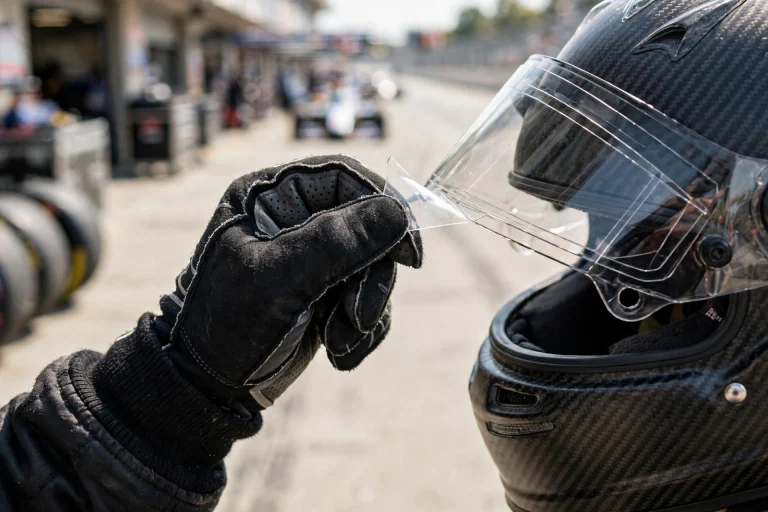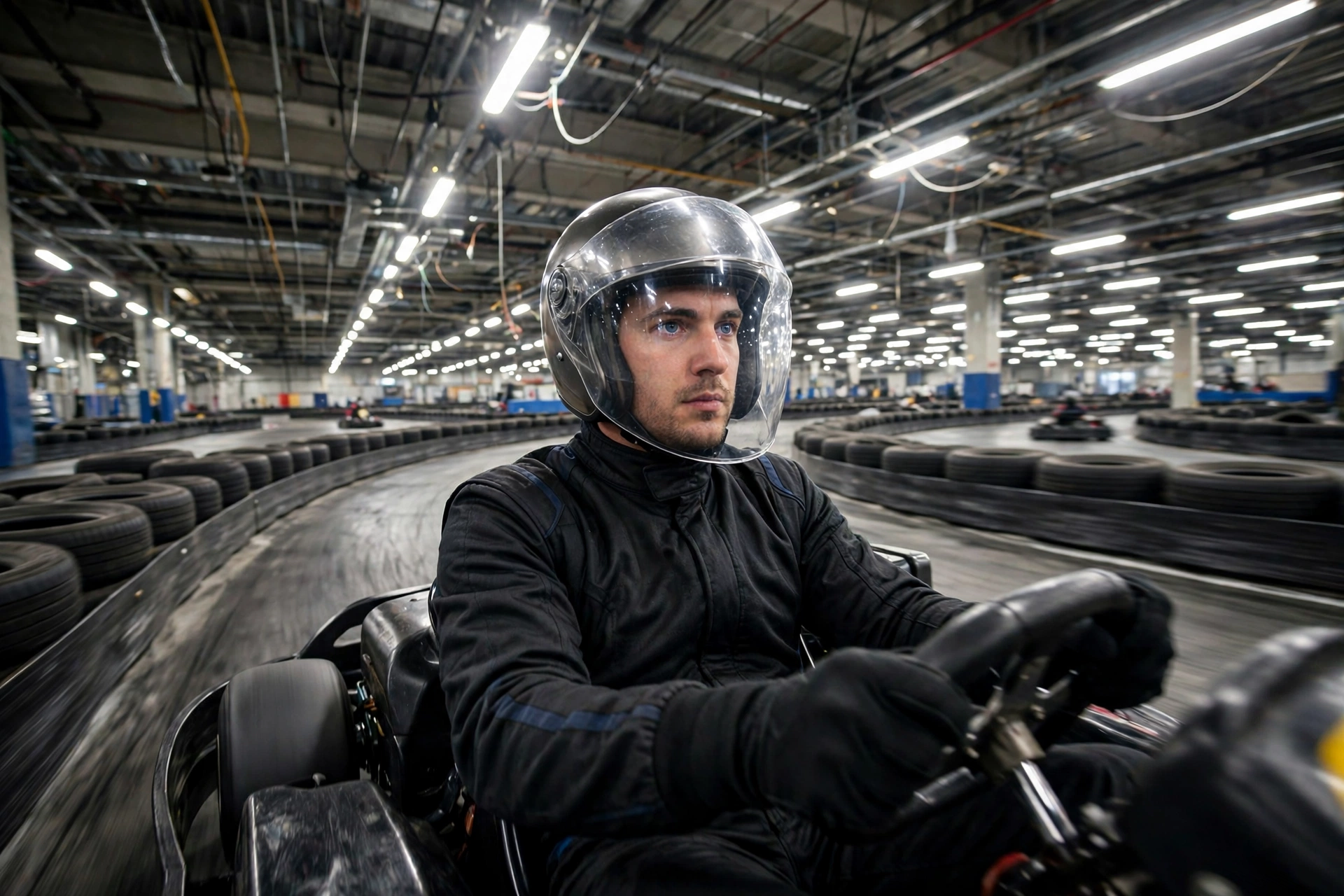
In general terms, a clear visor is the better choice for indoor karting, because indoor tracks are lit artificially and a tinted visor cuts out light you need to judge braking points, other karts, and track markings. Tinted visors have their place outdoors in bright sun, but indoors they usually make vision worse, not better.
Indoor tracks bring their own visual challenges: mixed lighting, dark corners, reflective floors, and sudden changes from brightly lit straights to dimmer bends. The right visor helps you see clearly through all of them. This guide compares clear and tinted visors for indoor use and explains how to keep your vision sharp session after session.
Why Does Indoor Lighting Make Clear Visors Better?
Indoor karting venues use overhead lights that vary in brightness from one part of the track to another. Some sections sit under strong lights, while corners, tunnels, and areas under viewing platforms can be noticeably darker. A clear visor lets your eyes adapt to those changes without an extra layer of tint in the way.
A tinted visor reduces the total light reaching your eyes. Outdoors in strong sunlight that reduction is welcome, but indoors it means you are effectively driving in dimmer conditions than the track actually offers. That can make it harder to spot a slowing kart ahead, read a flag signal, or judge the edge of the track in a dark corner.
Eye fatigue is another factor. When vision is dimmed, your eyes work harder to pick out detail, and over a long session that strain builds up. A clear visor keeps the picture as bright and natural as the venue allows, which helps concentration and reaction time, especially in evening sessions when you may already be tired.
When Might a Tinted Visor Help Indoors?
There are exceptions, and they are worth knowing. Some indoor tracks have very bright sections — for example, a straight under banks of lights or near large windows on a sunny day — where glare can be a problem. A lightly tinted visor can take the edge off that glare, though a clear visor with an anti-glare coating often does the same job without darkening the whole view.
Some drivers are sensitive to bright light or suffer from headaches under harsh lighting. For those drivers, a light tint can make a session more comfortable. If that is you, choose the lightest tint that helps, and test it in the darkest part of the track before committing to a full race with it.
Another exception is a track that is partly outdoors or has a roof section open to daylight. If part of the lap runs in bright sun and part indoors, a tinted visor may be a reasonable compromise. Even then, many drivers prefer a clear visor and sunglasses-style inserts or a flip-down sun shield, which can be raised for the indoor sections.
What About Anti-Fog and Scratch Resistance?
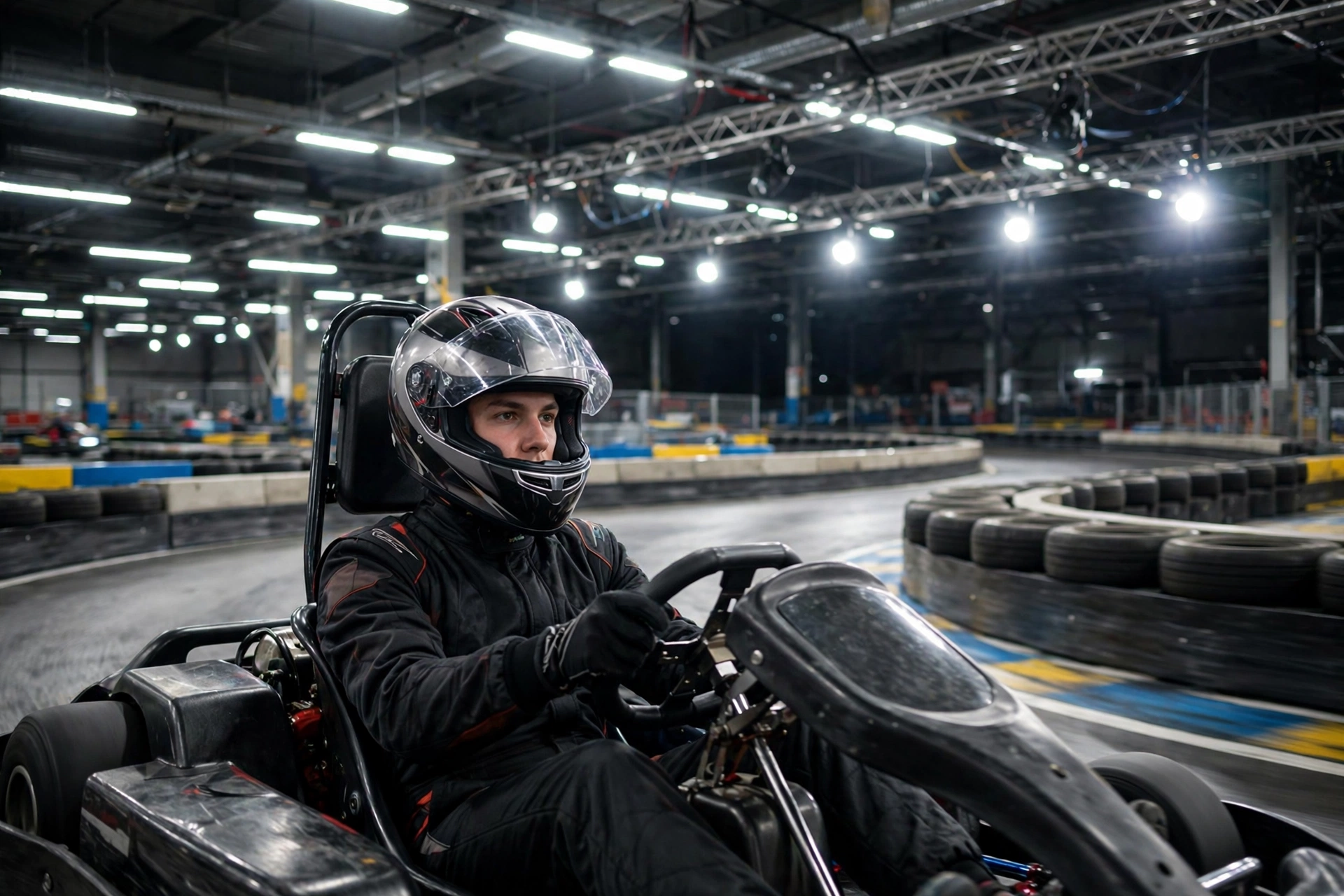
Fogging is a bigger problem indoors than outdoors. Indoor tracks are often humid, drivers work hard, and the temperature difference between the helmet interior and the track air can mist a visor quickly. An anti-fog visor, or an anti-fog insert fitted inside the visor, is one of the most useful upgrades for indoor karting.
Scratches matter too. A scratched visor scatters light, and under indoor lighting that scatter shows up as glare and haze, especially when lights are directly ahead. Tinted visors hide scratches less well than many drivers expect: a scratch on a dark visor still catches the light. Keeping the visor clean and protected in a soft bag between sessions matters more than the tint you choose.
When buying a spare visor, check that it fits your helmet model exactly and seals properly around the edges. A poorly fitting visor can let in draughts and dust, and it may not stay in the position you set. Genuine or well-matched pattern visors are worth the small extra effort to source.
How Do You Keep an Indoor Visor Clear?
Start each session with a clean visor. Wipe it with a soft microfibre cloth and a cleaner made for helmet visors, not a household glass cleaner, which can damage coatings. Clean both the inside and the outside, and check for scratches under a bright light before you go out.
During a session, resist the urge to lift the visor to clear fog. Lifting it lets in dust and draughts and can dry your eyes out, and on a busy indoor track it also leaves your face exposed to debris. Instead, crack the visor to its first notch if your helmet allows it, which lets a little air flow through without opening it fully.
Between sessions, store the helmet with the visor closed or covered, away from keys and tools that could scratch it. If you use an anti-fog insert, follow its care instructions: many inserts should not be wiped when wet, and wiping them dry with a rough cloth can ruin the coating. A little care here keeps vision clear for far longer.
Which Visor Should You Choose for Indoor Karting?
For most indoor drivers, the answer is simple: a clear visor, kept clean, with anti-fog treatment if your track is humid. It gives the brightest, most natural view across the whole track, and it avoids the dimming problem that makes tinted visors a handicap indoors.
If glare is a genuine problem at your venue, try a light tint or a sun strip before committing to a dark tint, and test it in the darkest corner, not just on the brightest straight. The darkest part of the track is where a wrong visor choice costs you most.
Whatever visor you choose, remember that vision is part of safety, and that fit is what makes any helmet’s protection work — including systems that address angled impacts, as explained in this guide to what MIPS means for helmets. A visor you can see through clearly, on a helmet that fits properly, is the combination that keeps you fast and safe indoors.
Frequently Asked Questions
Q: Can I wear sunglasses under a karting helmet visor indoors?
A: In general terms, you can, but it is rarely a good idea indoors. Sunglasses darken the view just like a tinted visor, and they can fog, slip, or press uncomfortably under a helmet. A clear visor on its own is usually better.
Q: Do tinted visors protect against indoor lights?
A: They reduce brightness, but indoor lighting is rarely strong enough to need that protection. The trade-off — a darker view in dim corners — usually outweighs any benefit, so a clear visor is the safer default.
Q: How often should I replace a karting visor?
A: Replace it when scratches, haze, or a failing anti-fog coating start to affect vision, or when the seal no longer closes properly. Visors are a wear item, and a fresh visor is one of the cheapest vision upgrades you can make.

Olivia
Writer at Helmet Today, covering helmet reviews, fit and riding safety.