In general terms, cleaning a rental karting helmet means wiping the shell and visor, freshening the interior lining, and letting it dry fully before the next driver uses it — without soaking the padding or using harsh chemicals that could damage the shell or lining. Rental helmets are shared by many drivers, so a quick, hygienic clean between uses matters for comfort and for health.
Whether you run a karting centre, hire karts for a party, or simply want to clean a helmet you have just borrowed, the process is straightforward. This guide covers what to clean, what to avoid, and how to keep a shared helmet fresh without shortening its life.
What Should You Clean First on a Rental Helmet?
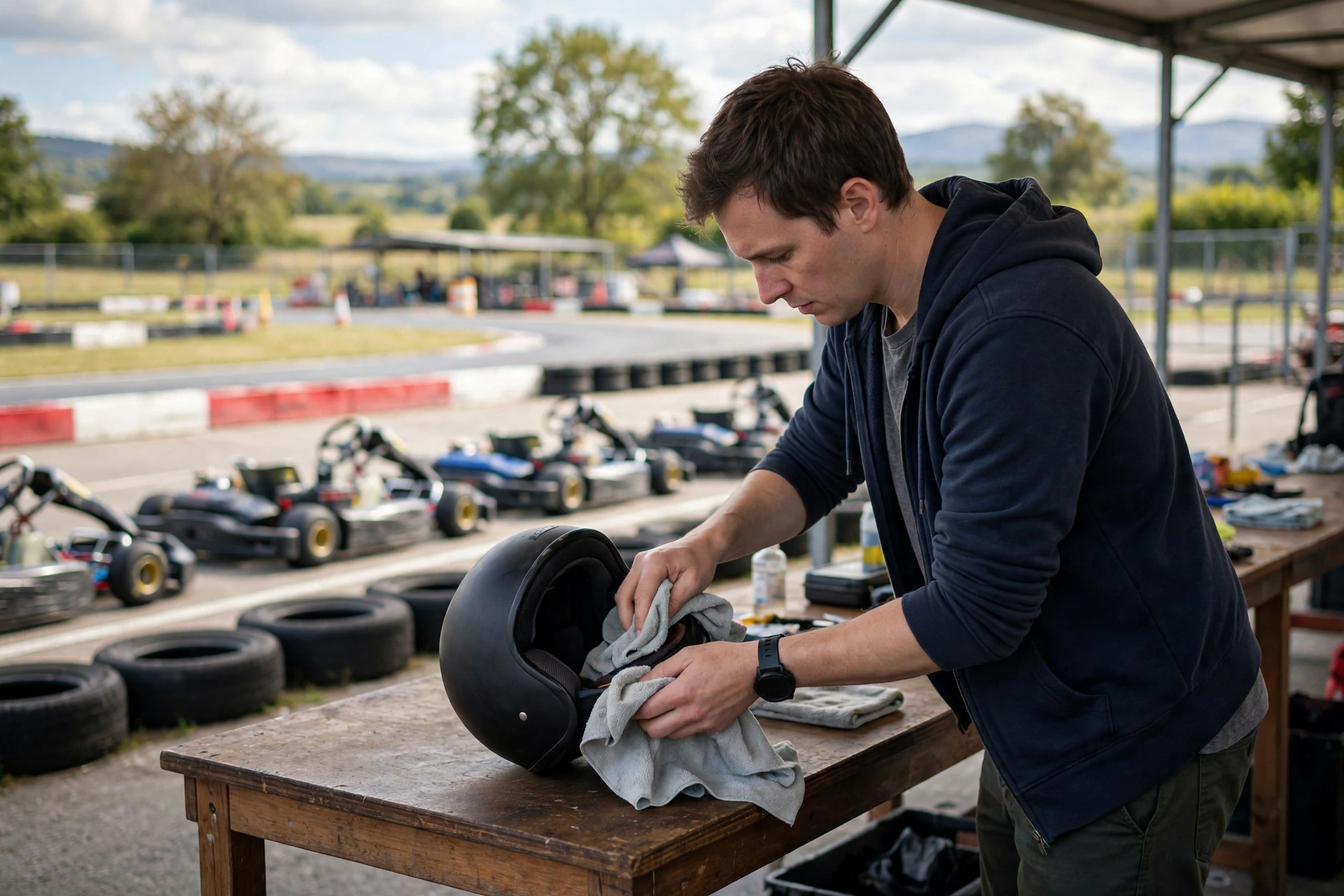
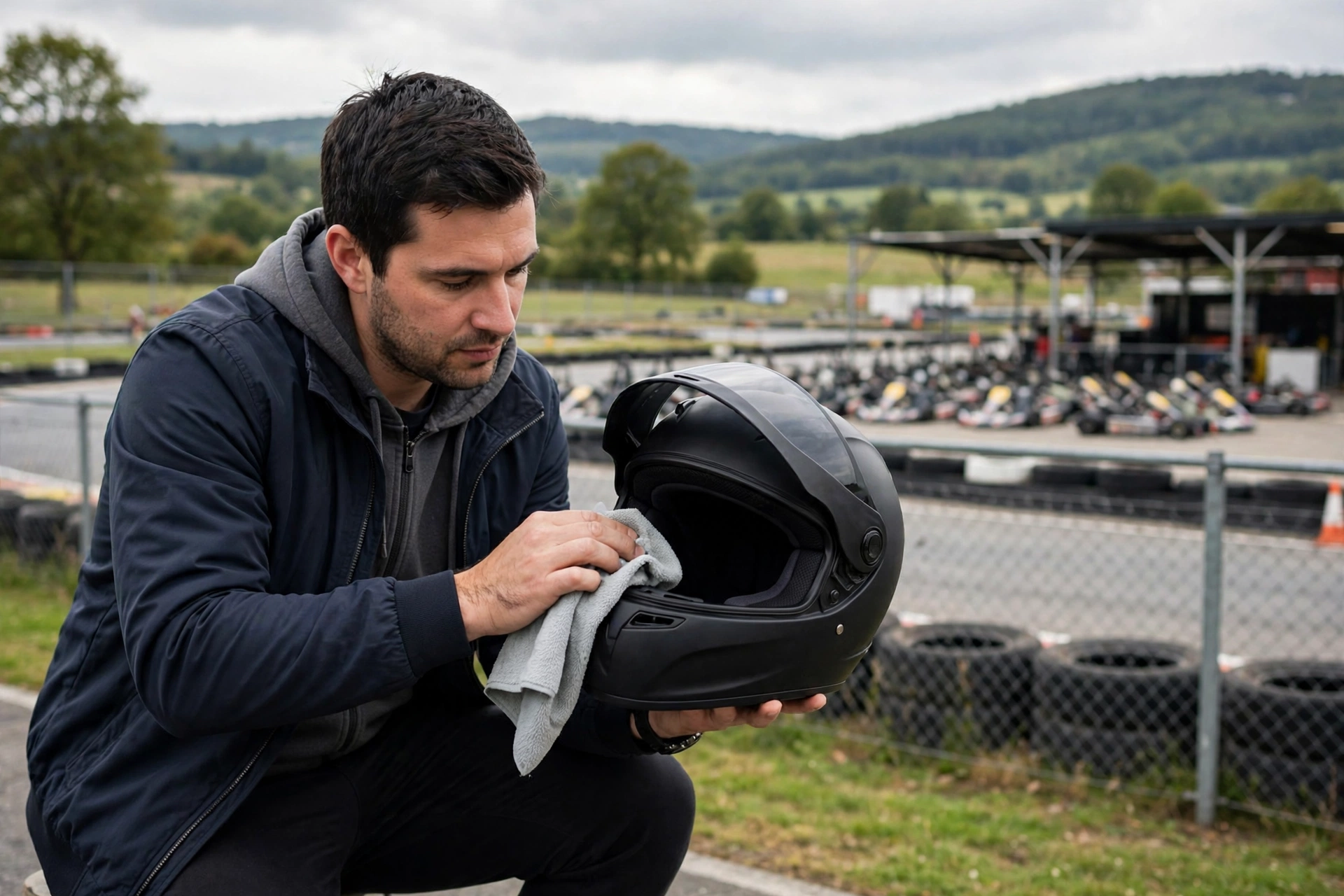
Start with the outside. Wipe the shell with a damp cloth and a mild soap solution to remove dust, sweat marks, and track grime. Pay attention to the vents, where dust collects, and to the chin bar, which picks up marks from handling. A soft brush can help clear vent slots without scratching the shell.
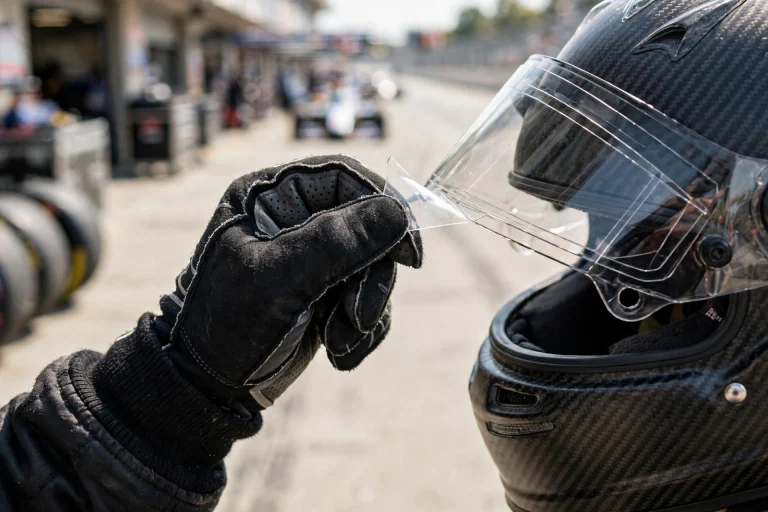
Next, clean the visor. Use a soft microfibre cloth and a visor-safe cleaner, wiping gently from the centre outward. Rental visors are often scratched, and harsh scrubbing only makes that worse. If a visor is badly scratched or its coating is peeling, it is better to replace it than to keep cleaning a visor that no longer gives a clear view.
Finally, deal with the interior. The lining is where sweat and odour build up, and it is the part the next driver notices most. Wipe the lining with a lightly damp cloth, and use a helmet-safe antibacterial spray if your centre uses one. Avoid soaking the lining: padding that stays damp breeds odour and takes a long time to dry.
How Do You Freshen the Interior Without Damaging It?
Removable linings are the easiest to freshen. If the helmet’s cheek pads and crown liner come out, remove them, hand-wash them in lukewarm water with mild soap, rinse well, and let them air-dry completely before refitting. Never use a tumble dryer or direct heat, which can shrink or warp the padding.
For fixed linings, a damp cloth and a light spray are the safe approach. Work in sections, wringing the cloth out often so you are dampening rather than wetting the padding. A small amount of baking soda sprinkled on dry lining, left for a short while, and then brushed or vacuumed off can help with odour, but check that no residue remains before the helmet goes back into service.
Drying is the step most often rushed, and it is the one that matters most for hygiene. A helmet put away damp will smell worse the next day, not better. Stand the helmet upside down or on a stand in a ventilated area, with the visor open, until the lining is fully dry to the touch. Fans help; radiators and hair dryers do not, because concentrated heat can damage foam.
What Cleaning Products Should You Avoid?
Avoid solvents, petrol-based cleaners, and strong disinfectants on the shell, because they can attack the shell material or its finish. The same goes for bleach, which can damage both shell and lining and leave a smell that lingers for the next driver. Mild soap and water handle most rental-helmet grime perfectly well.
Avoid abrasive pads and paper towels on the visor. Visors scratch easily, and once scratched they scatter light and reduce vision. Microfibre is the safe choice, and a dedicated visor cleaner is worth keeping at the counter for staff use.
Also avoid spraying anything directly into vents or onto the visor mechanism in large amounts. Liquids can work into hinges and locking parts and leave residue that stiffens them. Spray onto a cloth first, then wipe, and keep liquids away from any electronic parts if the helmet has them, such as a fitted intercom or light.
How Often Should Rental Helmets Be Cleaned?
In general terms, rental helmets should be wiped down between every driver. That does not mean a deep clean after each use, but a quick wipe of the shell and visor and a freshen of the lining should be part of the handover routine, just like checking the strap and fit.
A deeper clean — washing removable linings, cleaning vents properly, and inspecting the whole helmet — should happen regularly, for example weekly in a busy centre or after a set number of hires. Keeping a simple rota helps: helmets that have had a deep clean can be marked, so none are missed.
Inspection should happen alongside cleaning. Check the chin strap for fraying, the visor mechanism for smooth operation, the shell for cracks or deep dents, and the lining for compression or tearing. A helmet that fails any of those checks should be taken out of service, however clean it looks, because cleaning cannot restore protection that is no longer there.
What Should Drivers Do Before Wearing a Rental Helmet?
Drivers can help themselves too. Wearing a balaclava or a disposable helmet liner under a rental helmet improves hygiene for everyone and makes the helmet more comfortable, especially in hot weather. Many centres sell or provide these, and they are worth using even when they are optional.
Before setting off, check the fit: the helmet should sit level, cover the forehead, and stay put when you shake your head gently. Check the visor opens and closes and gives a clear view, and tell staff if anything is wrong — a loose strap, a cracked visor, or a lining that smells strongly of damp. Staff would rather swap a helmet than send a driver out in one that is not right.
Remember that a clean helmet is only part of staying safe, and that fit is what makes any helmet’s protection work — including systems that address angled impacts, as explained in this guide to what MIPS means for helmets. A fresh, well-fitting rental helmet, worn with a liner, is the best start to any karting session.
Frequently Asked Questions
Q: Can I use disinfectant wipes on a rental karting helmet?
A: In general terms, mild wipes are fine on the shell, but avoid harsh disinfectants on the visor and lining, where they can damage coatings and foam. Use a helmet-safe spray or mild soap and water instead, and let the helmet dry fully.
Q: Is it safe to share a rental karting helmet?
A: Yes, provided the centre cleans helmets between drivers and you wear a balaclava or disposable liner. If a helmet looks dirty, damp, or damaged, ask for a different one before you drive.
Q: Can rental helmets be machine-washed?
A: No — do not put a helmet in a washing machine. Wash removable linings by hand in lukewarm water, wipe the shell and fixed lining with a damp cloth, and air-dry everything completely.

Olivia
Writer at Helmet Today, covering helmet reviews, fit and riding safety.