In general terms, replace a skydiving helmet after a hard impact, when the shell or lining shows serious damage, when straps or fittings no longer work properly, or when the helmet is simply old and worn out — and check the manufacturer’s guidance for your model, since recommended service life varies. There is no single expiry date that fits every helmet, but there are clear warning signs that mean it is time for a new one.
Skydiving helmets take a hard life. They are bumped in aircraft, knocked on door frames, dropped on concrete, exposed to sun and wind, and worn in freefall at speed. Most of that wear is cosmetic, but some of it affects protection. Learning to tell the difference keeps you from replacing a good helmet too early — or trusting a worn one too long.
What Damage Means Replace It Now?
A hard impact is the clearest reason to replace a helmet. If the helmet has struck something hard during a landing, a collision, or a fall, the energy-absorbing liner may be compressed even if the shell looks fine from outside. That compression is often invisible, and a liner that has already absorbed one hard impact may not absorb the next one as well. When in doubt after a serious knock, retire the helmet.
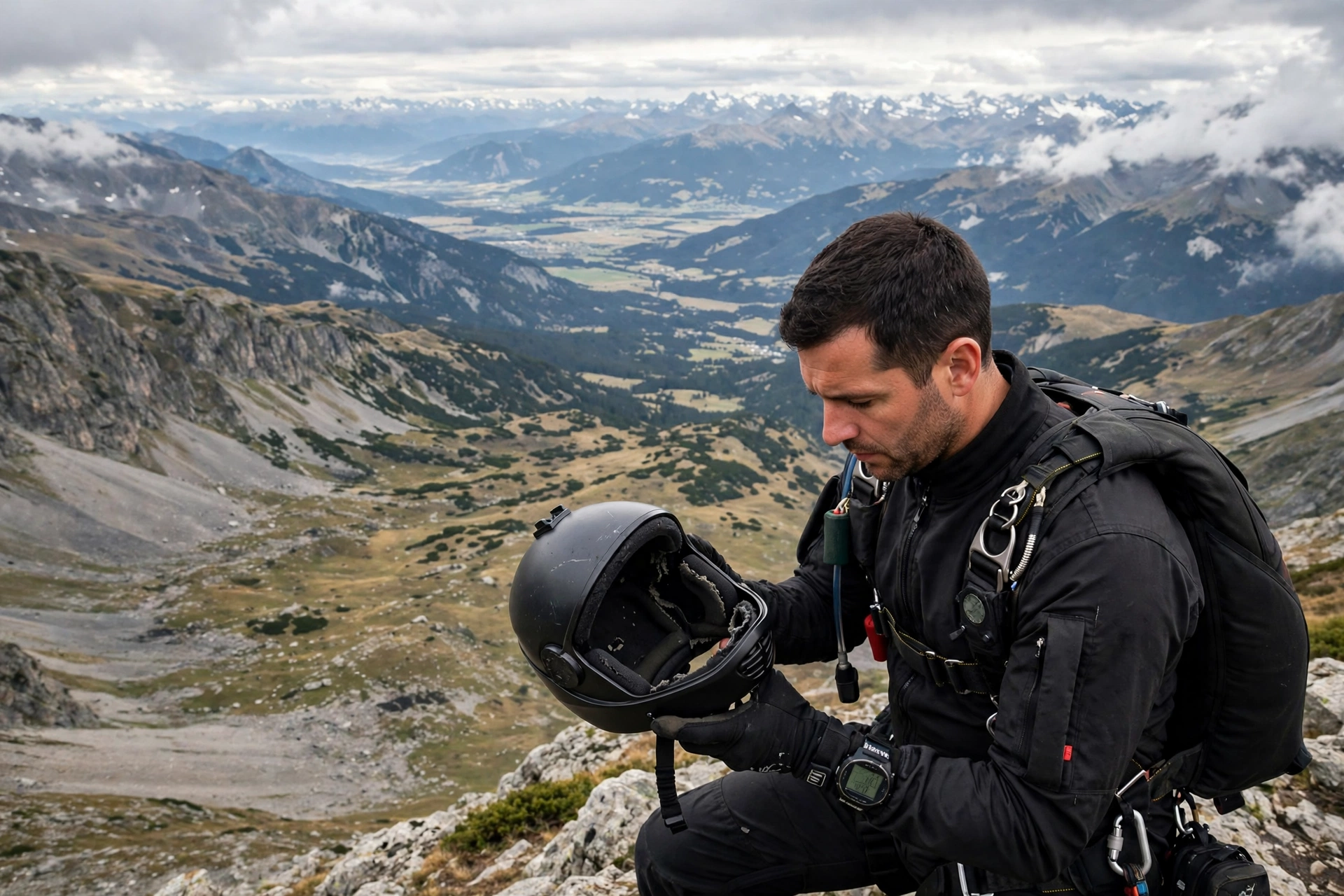
Visible shell damage is the next warning sign. Look for cracks, deep gouges, dents that change the shell shape, or areas where the shell feels soft or delaminated. Surface scratches from normal handling are different — they look untidy but do not necessarily affect protection. Cracks and structural dents do, and they are not repairable by cleaning or polishing.
Damage to straps, buckles, and fittings also counts. A chin strap that slips, a buckle that no longer locks securely, or a visor mechanism that will not stay in place all undermine the helmet’s ability to stay on your head when it matters. If a fitting cannot be replaced with the manufacturer’s own part, or if the strap webbing is frayed, replacement is the safer choice.
Does Age Alone Mean a Helmet Must Go?
Age matters, but it is not the whole story. Helmet materials age gradually through exposure to sunlight, heat, sweat, and general use, and the liner can lose some of its resilience over time even without a crash. That is why manufacturers often give a recommended service life or retirement guidance, and why it is worth checking the guidance for your specific helmet rather than guessing.
How the helmet has been used and stored affects ageing just as much as the calendar. A helmet stored in a cool, dry place and used moderately will age more slowly than one left in a hot car, baked in sunlight, or flown intensively for years. Frequent jumpers will wear a helmet out faster than occasional jumpers, even if both helmets are the same age.
As a practical approach, treat age as a prompt for a closer inspection, not as an automatic verdict. A helmet that is getting old deserves a careful check of shell, liner, straps, and fit, and a conversation with your dropzone or the manufacturer if anything looks doubtful. If several age-related signs appear together — faded shell, hardened lining, stiff straps — replacement is usually the sensible call.
How Does Fit Tell You It Is Time?
Fit changes as linings compress and wear. A helmet that once felt snug may start to move around, rock on the head, or slip forward in freefall. That looseness is a warning sign, because a helmet that moves cannot protect consistently — it may shift before or during an impact, leaving part of the head less covered.
Try the usual fit checks: the helmet should sit level, stay put when you shake your head, and feel firm without painful pressure. If new cheek pads or a replacement liner restore the fit, the helmet may have life left in it, provided the shell and straps are sound. If the fit cannot be restored, or if the shell itself has loosened around the liner, the helmet is done.
Comfort changes are also worth noticing. A lining that has gone hard, lumpy, or thin no longer cushions the head as it should, and it can make the helmet uncomfortable enough that you start adjusting it constantly in the aircraft. Discomfort that comes from worn padding is not just an annoyance; it is information about the helmet’s condition.
What About Visors, Audibles, and Accessories?
Visor condition affects safety directly, because skydiving depends on clear vision. A visor that is badly scratched, cracked, or fogs constantly distorts what you see, and that makes spotting, tracking, and landing harder. If the visor cannot be replaced, or if the mechanism that holds it is worn, the helmet as a whole may need replacing even if the shell is fine.
Audible altimeters and camera mounts are accessories, not reasons to keep a worn helmet. Moving an audible to a new helmet is straightforward, and camera mounts should never be an excuse to keep a helmet past its safe life. Judge the helmet on its shell, liner, straps, and fit, and treat accessories as transferable extras.
Similarly, a helmet that still looks good can be worn out inside. Liners compress, glues age, and straps stretch, all out of sight. That is why regular inspection matters more than appearance, and why a helmet that has seen many seasons deserves a harder look than one that has spent most of its life on a shelf.
How Do You Choose the Replacement?
Start with fit, then style. Decide whether an open-face or full-face helmet suits your jumping — full-face offers more coverage and wind protection, open-face offers better hearing and a wider feel of airflow — and try several sizes and shapes. Head shapes differ, and a helmet that fits a friend well may press on your forehead or slip on your head.
Check that the replacement suits your discipline and your dropzone’s expectations. Some disciplines and dropzones have preferences or requirements about helmet style, visor use, or audible placement, and it is worth asking before buying. Comfort, vision, and hearing all matter in freefall, so a helmet that interferes with any of them is a poor choice however good it looks.
Finally, remember that a new helmet only protects if it fits and is worn correctly, every jump. That is true for every helmet type, including those with systems for angled impacts, as explained in this guide to what MIPS means for helmets. Retire the old helmet without regret when its time comes, and give the new one the same regular inspection habit from its first jump.
Frequently Asked Questions
Q: How long does a skydiving helmet last?
A: In general terms, it depends on use, storage, and the manufacturer’s guidance. A well-cared-for helmet used moderately can last several seasons, while one flown intensively or stored badly will wear out sooner. Inspect it regularly and follow the maker’s retirement guidance.
Q: Can a skydiving helmet be repaired after a crash?
A: In general terms, no — a helmet that has absorbed a hard impact should be replaced, not repaired. Cosmetic scratches can be lived with, but a compressed liner or cracked shell cannot be restored to its original protective ability.
Q: Does a scratched visor mean replacing the whole helmet?
A: Not necessarily. If the visor is replaceable and the shell, liner, and straps are sound, fitting a new visor is enough. If the visor mechanism itself is worn or the visor cannot be replaced, then the helmet may need to go.

Olivia
Writer at Helmet Today, covering helmet reviews, fit and riding safety.