
In general terms, paragliding helmets are made to specific certification standards that test impact protection, coverage, and retention, and the label inside the helmet — often referring to a standard such as EN 966 for air sports — is the simplest way to check that a helmet has been tested for this kind of flying. Certification is not a guarantee of safety in every accident, but it is evidence that the helmet passed a recognised set of tests before it reached the shops.
Standards can feel like dry paperwork, but they answer a practical question: has this helmet been tested in a way that resembles paragliding? A helmet designed for another sport may look similar and feel comfortable, yet protect differently. Understanding what the labels mean helps you choose a helmet that was actually tested for the flying you do.
What Is EN 966 and Why Does It Matter?
EN 966 is the European standard for helmets used in air sports, including paragliding, hang gliding, and powered paragliding. In general terms, it sets requirements for impact absorption, the area of the head that must be covered, the strength of the chin strap and retention system, and the field of vision the helmet must allow. A helmet certified to EN 966 has passed laboratory tests covering those areas.
The coverage requirement is an important part of the standard. Paragliding helmets must protect the top, sides, and back of the head, and the standard defines how far down the shell must extend. That is why paragliding helmets look different from lightweight cycling helmets, which are tested to different requirements and cover the head differently. Shape and coverage are part of the protection, not just styling.
EN 966 also tests the retention system — the chin strap and its fastening — to check that the helmet stays on the head during an impact rather than rolling off. A helmet that comes off in a crash protects no one, so strap strength and the way the strap is anchored matter as much as the shell. When you check a helmet’s label, you are checking that all of these tests were part of its design.
How Do You Check a Helmet’s Certification?
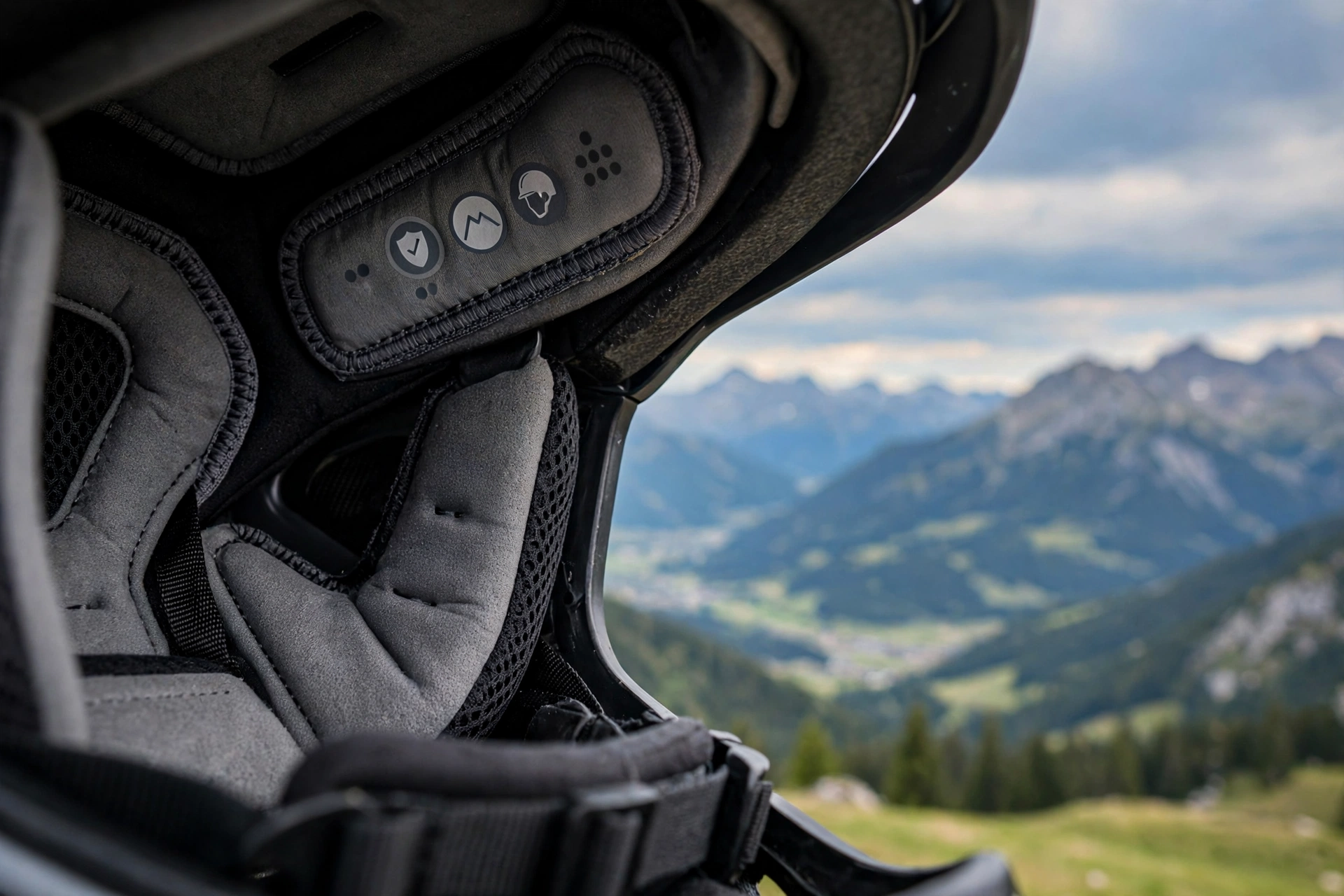
Look for the label inside the helmet, usually under the lining or on a sewn-in tag. It should name the standard, the manufacturer, the model, and the size. If the label is missing, faded beyond reading, or does not name a recognised standard, treat that as a warning sign and ask the seller or manufacturer for clarification before flying in it.
Be careful with helmets that claim certification without showing it. Marketing language such as “meets safety requirements” is not the same as a named, testable standard on the label. A reputable manufacturer will state the standard clearly, and the label is the document that matters, not the advertising. If you buy second-hand, check the label before you pay, since labels can be removed or damaged over time.
Also check that the certification matches the sport. A helmet certified only for cycling, skiing, or climbing has been tested to different requirements, even if it feels sturdy. Some helmets carry more than one certification, which can be useful, but the paragliding certification is the one that shows the helmet was tested for air sports. When in doubt, ask your school or instructor, who will know what is accepted locally.
Do Different Countries Use Different Standards?
In general terms, yes — different regions have their own standards and certification bodies, and a helmet sold in one country may be certified under a different system from one sold elsewhere. In Europe, EN 966 is the common reference for air sports helmets, while other regions may use their own national standards or accept EN 966 alongside them. The underlying idea is the same: independent testing against a published set of requirements.
For most pilots, the practical point is simpler than the full international picture. Buy from a reputable paragliding supplier, check the label, and confirm that the helmet is accepted by your school, club, or national association. Local organisations often publish guidance on which certifications they accept, and following that guidance avoids problems at check-in, training, or competition.
If you fly internationally, carry the helmet’s documentation and be ready for questions. A helmet that is accepted at home is usually accepted elsewhere when its certification is clear, but rules and expectations vary, and a quick check before travelling saves an awkward conversation at a foreign launch site.
Does Certification Replace Fit and Care?
No — certification is a starting point, not a complete answer. A certified helmet that fits badly protects less well than it should, because it can shift, rock, or come off in an impact. Fit checks still matter: the helmet should sit level, stay put when you shake your head, and feel snug without painful pressure points. No label can substitute for that check.
Care matters too. A certified helmet that has been dropped hard, left in prolonged heat, or stored badly may no longer perform as it did when new, even though its label still says the same standard. Regular inspection of the shell, straps, and lining, and retirement after a hard impact, are part of keeping a certified helmet genuinely protective.
Finally, remember that standards test specific impacts in a laboratory, while real accidents vary widely. Certification tells you the helmet passed recognised tests; it does not promise protection in every possible crash. Flying within your skill level, maintaining your wing and equipment, and wearing a well-fitted certified helmet together give you the best combination, including for systems that address angled impacts, as explained in this guide to what MIPS means for helmets.
Should You Buy a Helmet Without Certification?
In general terms, no, not for paragliding. An uncertified helmet may be comfortable and well made, but without a recognised test standard you have no independent evidence of how it performs in an impact, how much of the head it covers, or whether its strap will hold. That uncertainty is a poor trade for a piece of equipment whose whole job is protection.
This applies doubly to helmets borrowed from other sports or bought as fashion items. A helmet that looks like a paragliding helmet is not necessarily tested like one, and the differences are in the laboratory results, not in the appearance. If a helmet cannot show its certification, choose a different one.
For students, the simplest route is to use the school’s helmets first, then buy a certified helmet with the school’s advice once you know your size and preferences. Schools handle certification questions every day, and their guidance will steer you to helmets that are both certified and accepted in your flying community.
Frequently Asked Questions
Q: What does EN 966 mean on a paragliding helmet?
A: In general terms, it means the helmet was tested to the European standard for air sports helmets, covering impact absorption, head coverage, strap strength, and field of vision. The label inside the helmet is where you confirm it.
Q: Can I use a cycling helmet for paragliding?
A: In general terms, no — a cycling helmet is tested to a different standard with different coverage and impact requirements. For paragliding, choose a helmet certified for air sports, and ask your school if you are unsure.
Q: Does a certified helmet last forever?
A: No. Certification describes how the helmet performed when tested, not how it performs after years of use, heat, and knocks. Inspect it regularly, and replace it after a hard impact or when wear affects fit, straps, or shell condition.

Olivia
Writer at Helmet Today, covering helmet reviews, fit and riding safety.