In general terms, tactical helmet rails and mounts are the attachment systems fitted to the sides, front, and rear of a tactical helmet that let the wearer add equipment — such as lights, cameras, hearing protection, and night vision devices — without drilling into or modifying the shell. They turn a plain shell into a platform that can be configured for different tasks, and understanding them helps you choose compatible accessories.
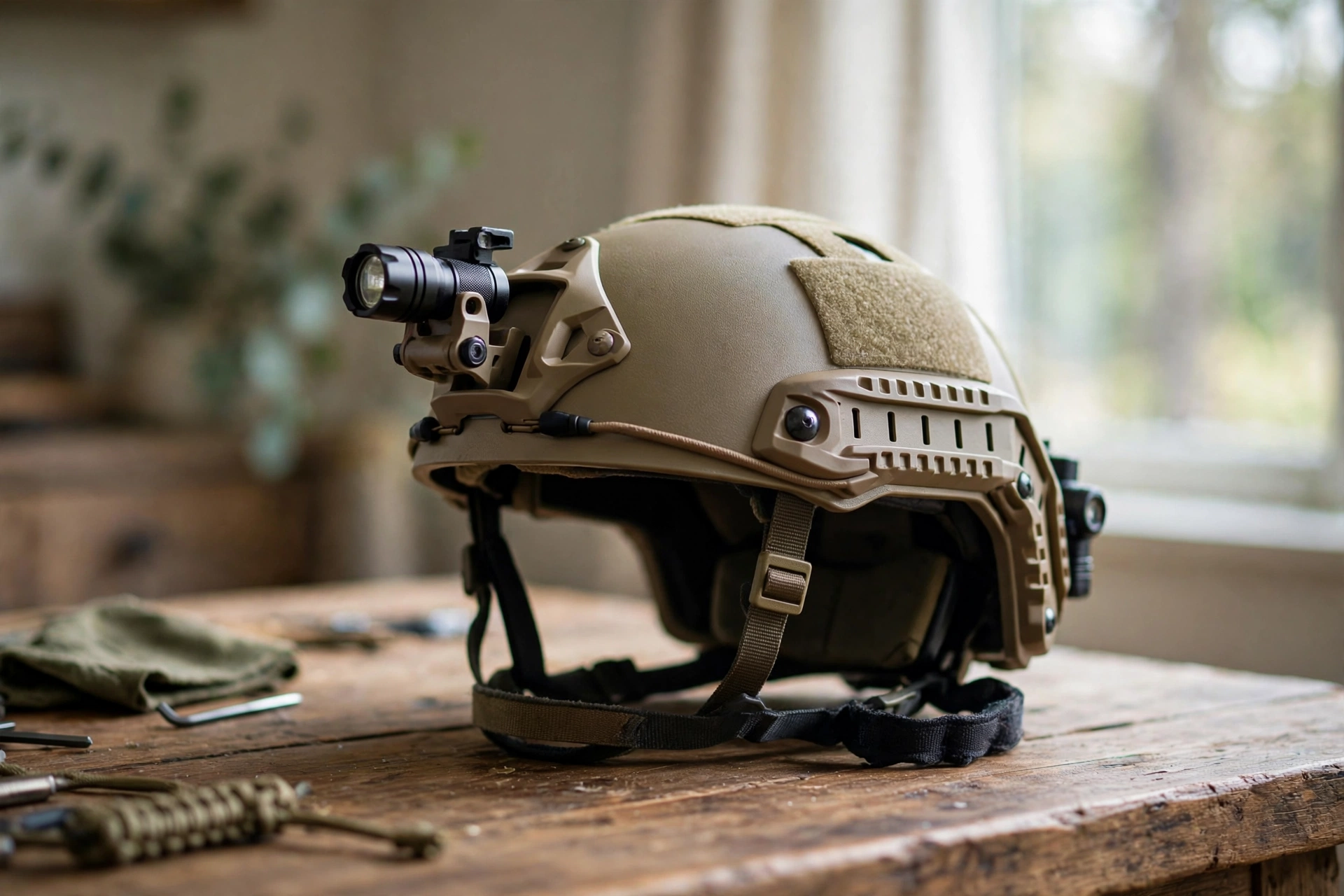
If you have ever looked closely at a modern tactical helmet, you will have noticed the rails running along the sides, a mount on the front, and sometimes a rail or attachment point at the back. These are not decoration. Each one has a purpose, and each accepts only certain types of accessory. This guide explains what each part does and how the pieces fit together.
What Are Side Rails on a Tactical Helmet?
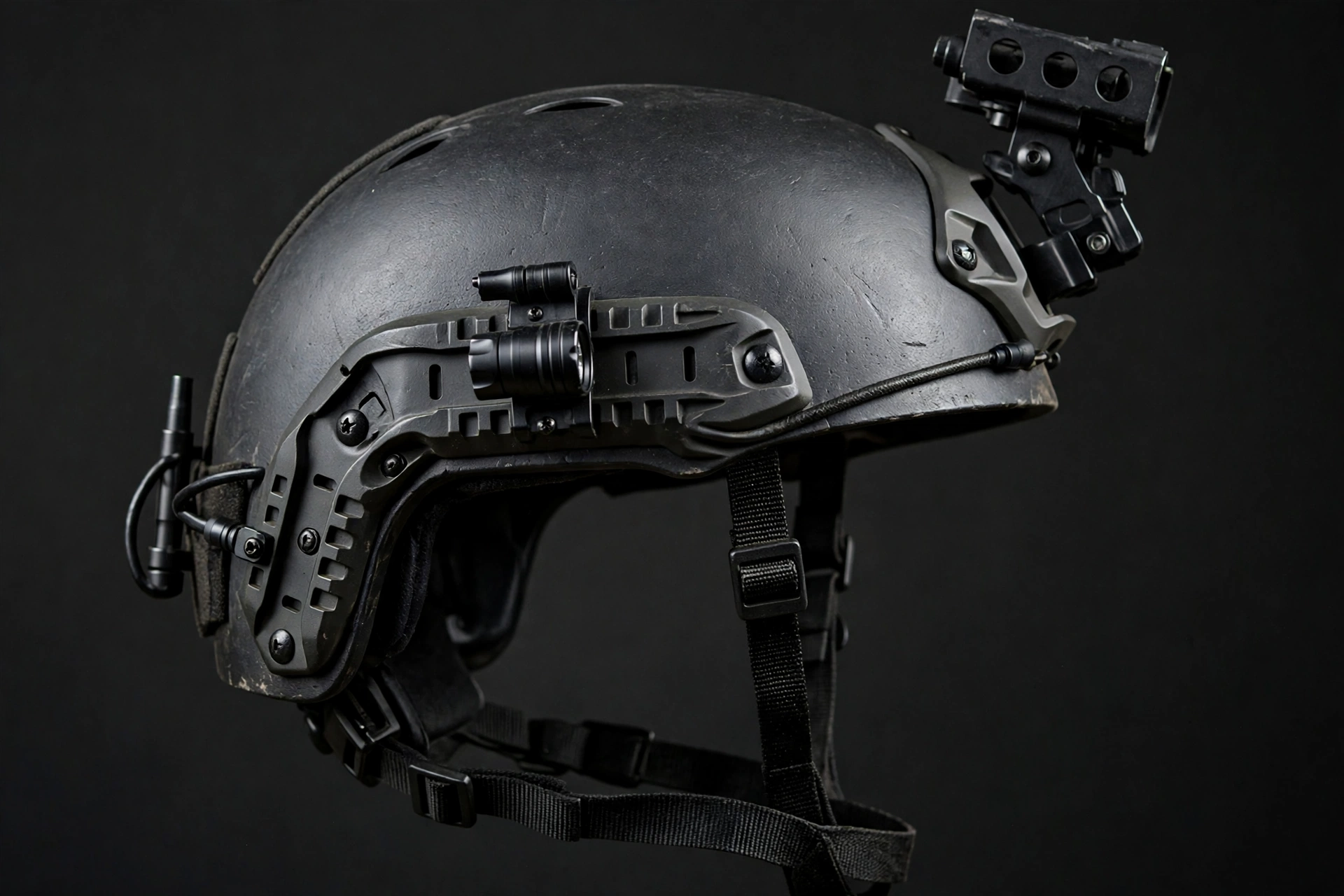
Side rails are the horizontal tracks mounted on the left and right sides of the helmet shell, often called ARC-style rails. They are the most versatile attachment point on the helmet. In general terms, they accept a wide range of accessories that slide or clip onto the rail: lights, cameras, and adapters for hearing protection are the most common. Adapters let ear defenders mount directly to the helmet, which keeps them stable and avoids the pressure of a separate headband.
The advantage of a rail system is flexibility. Accessories can be added, removed, or moved without tools in many cases, and the same rail can carry different equipment on different days. The trade-off is weight and balance: every accessory adds weight, and weight mounted high or to one side changes how the helmet feels. It is worth checking that anything you mount is designed for your helmet’s rail type, since rails differ between manufacturers and an adapter made for one system may not fit another.
What Is the Front Mount (Shroud) For?
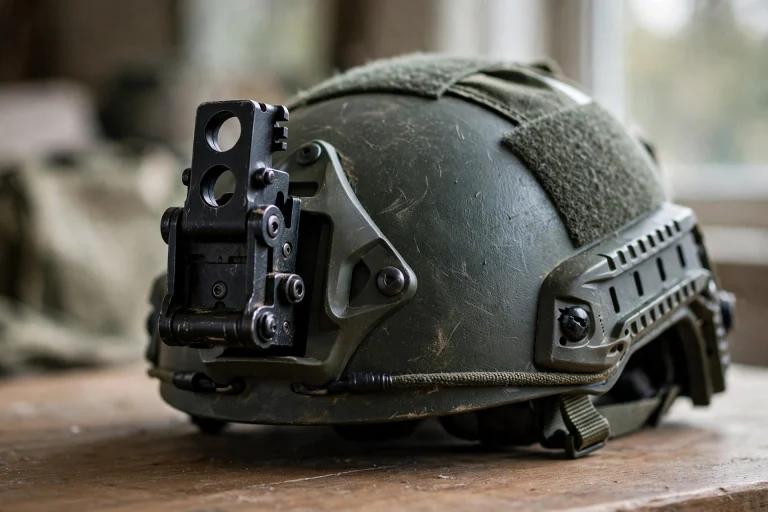
The front mount, often called a shroud, is the bracket fixed to the front of the helmet above the forehead. Its main purpose is to hold a night vision device, which attaches via an arm that locks into the shroud and can be flipped up out of the way when not in use. Some shrouds also accept cameras, lights, or counterweight mounts, depending on their design.
Because the shroud sits at the front of the helmet, anything mounted there affects balance — a heavier device at the front pulls the helmet forward, which is why rear counterweights are sometimes used to restore balance. The shroud itself is usually bolted through the shell by the manufacturer, and it is not something to fit casually at home: the shell’s integrity matters, and holes drilled in the wrong place can weaken it. If a helmet does not come with a shroud, fitting one is a job for someone who understands that helmet’s construction.
What Mounts Are Found at the Rear of the Helmet?
The rear of a tactical helmet often carries a smaller rail, a Velcro panel, or attachment points for straps. Rear rails can hold lights, battery packs, or counterweights that balance front-mounted equipment. Velcro panels at the rear (and often on the sides) are used for attaching pouches, identification patches, or cable management — keeping cables for lights and communications tidy and out of the way.
Cable management matters more than it might seem. Loose cables can snag on branches, door frames, or vehicle hatches, and a snagged cable can pull a helmet out of position at the worst moment. Many users route cables along the rails or under Velcro covers to keep them flat against the shell. In general terms, the rear of the helmet is best thought of as the balance and storage area: it carries what the front and sides cannot, and it keeps the whole setup stable.
How Do You Choose Compatible Accessories?
Compatibility is the main thing to get right. Start by identifying your helmet’s rail and shroud type — the manufacturer’s description usually names it — and then look for accessories made for that system. Adapters exist that bridge between systems, but each adapter adds weight and a potential point of failure, so a direct fit is usually better than a stack of adapters.
Also consider the helmet as a whole. A light that is perfect on its own may be a poor choice if it makes the helmet front-heavy, and hearing protection adapters only help if the ear defenders they carry seal properly around your ears. Some helmets also include a low-friction layer designed to reduce rotational forces in angled impacts; reading about what MIPS is for helmets can help you understand that feature if you see it listed. Test the full setup — helmet, rails, mounts, and accessories together — before relying on it, and check that nothing wobbles, snags, or blocks your vision.
Do Rails and Mounts Weaken the Helmet?
In general terms, rails and mounts fitted by the manufacturer as part of the helmet’s design do not weaken it, because the shell was designed and tested with them in place. Problems arise when accessories are added by drilling new holes, using bolts that are too long, or forcing parts that do not fit. Any modification that pierces the shell can change how it handles impact, and it may also void the manufacturer’s guidance.
The practical rule is simple: use the attachment points the helmet provides, use accessories made for those points, and do not drill the shell yourself. Inspect rails and mounts regularly for cracks, loose screws, or bent sections, since a mount that fails could drop equipment or leave a sharp edge. If a rail is damaged, replace it with the correct part for that helmet rather than improvising a repair.
Frequently Asked Questions
Q: Are all tactical helmet rails the same?
A: No. Rail systems differ between manufacturers, so an accessory made for one rail type may not fit another. Check your helmet’s rail type before buying accessories, and use adapters only where they are genuinely needed.
Q: Can I add a front mount to a helmet that does not have one?
A: In general terms, it is best not to drill a shell yourself, since that can weaken it. Choose a helmet that already has the mount you need, or seek advice from someone who understands that helmet’s construction.
Q: How much weight can I add to a helmet?
A: There is no single answer, but every accessory adds weight and affects balance and neck comfort. Keep the total as low as practical, balance front and rear weight, and test the full setup before relying on it.

Olivia
Writer at Helmet Today, covering helmet reviews, fit and riding safety.