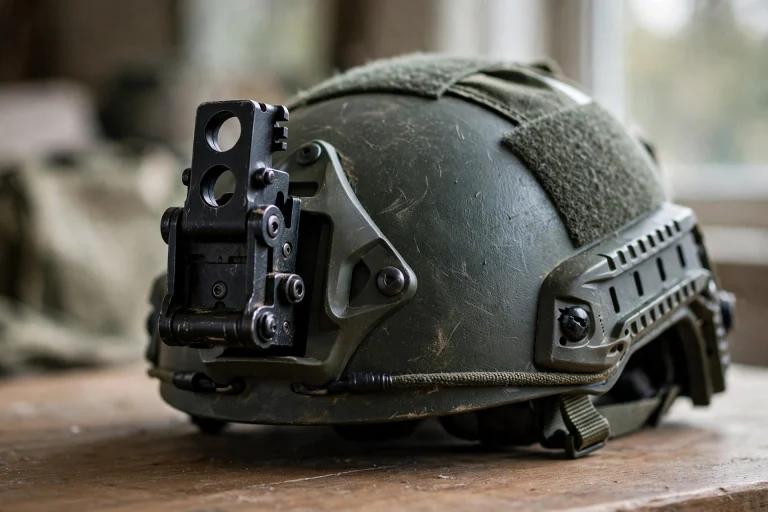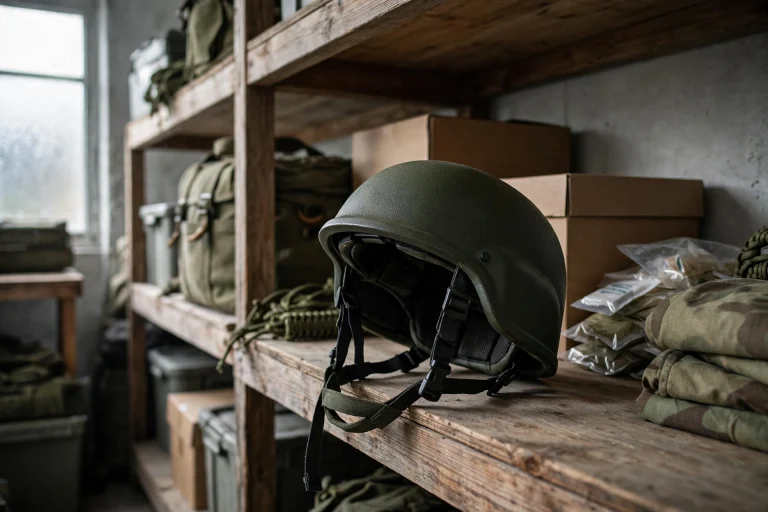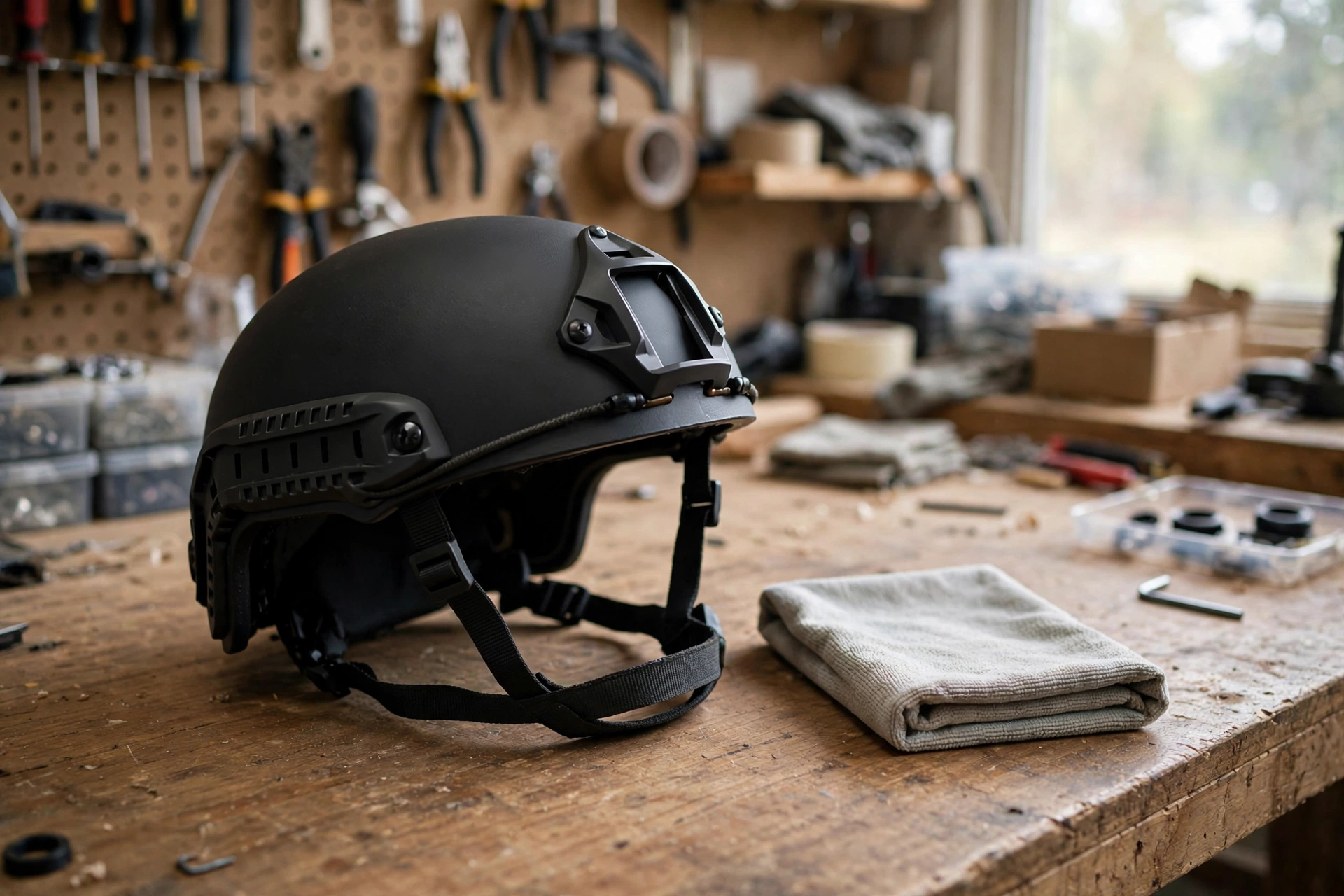
In general terms, cleaning a tactical helmet means wiping the shell with a damp cloth and mild soap, cleaning the pads and straps separately according to their material, and letting everything air-dry — never using harsh solvents, abrasive pads, or high heat, which can damage the shell, pads, or coatings. A clean helmet is not just about appearance: dirt and sweat degrade pads and straps over time, and a well-maintained helmet is more comfortable and lasts longer.
Tactical helmets pick up sweat, dust, mud, and grime, especially with regular use. Cleaning is straightforward, but the materials involved — layered fibre shells, foam pads, nylon straps, and sometimes electronic accessories — each need a slightly different approach. This guide covers the whole job, step by step.
What Do You Need to Clean a Tactical Helmet?
Keep it simple: a soft cloth or sponge, lukewarm water, a small amount of mild soap, and a towel for drying. That is enough for most cleaning. Avoid solvents, bleach, harsh detergents, and abrasive scouring pads — these can attack the shell’s resin, fade coatings, or break down pad materials. If you are unsure whether a product is safe, test it on a small, hidden area first, or check the manufacturer’s guidance for your helmet.
Before you start, remove anything that should not get wet: lights, cameras, communication equipment, and any detachable accessories. These usually have their own cleaning instructions. Removing the pads and straps, where they are designed to come out, makes the job much easier and lets you clean each part properly rather than scrubbing around them.
How Do You Clean the Shell?
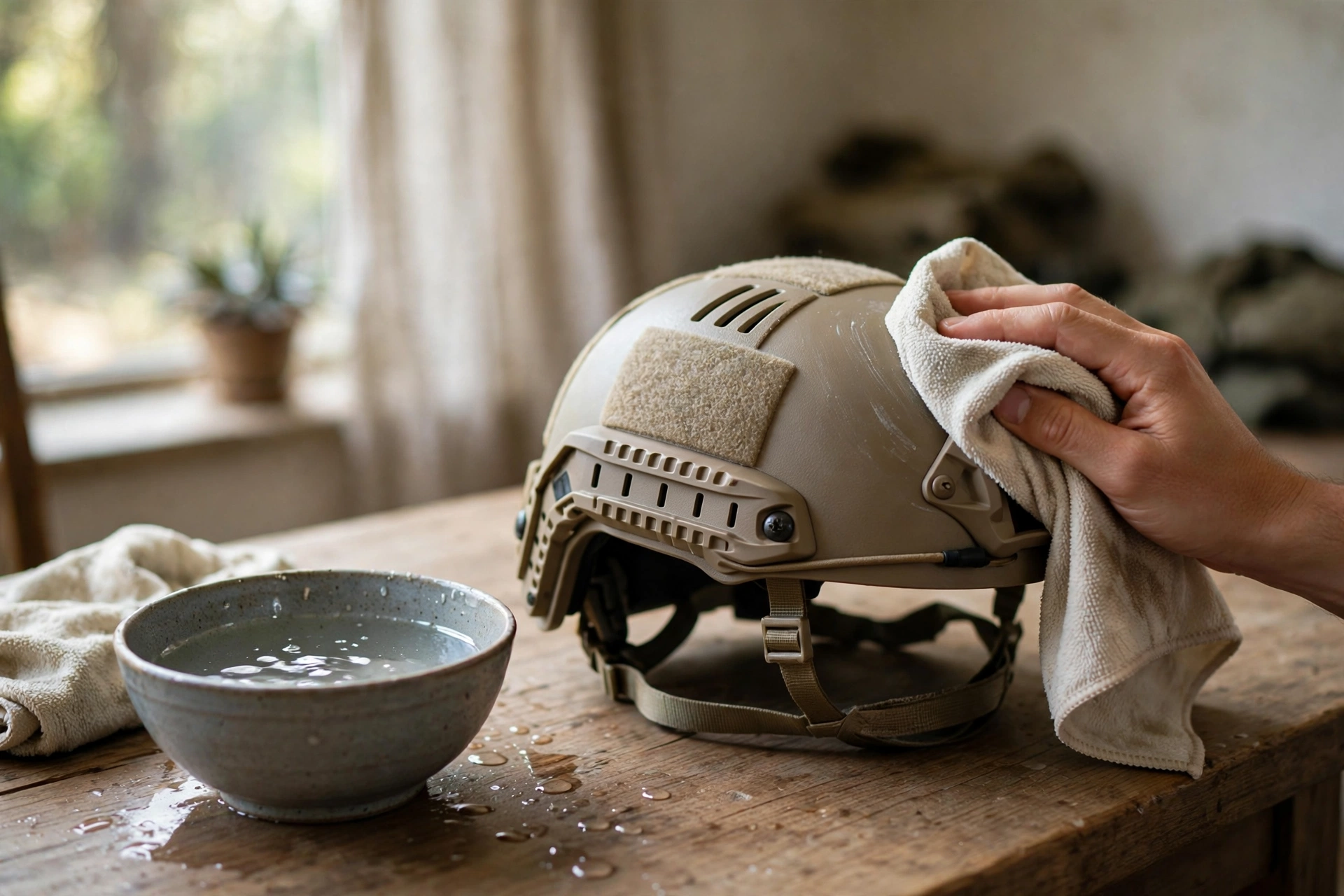
Wipe the outside of the shell with a cloth dampened in lukewarm water with a little mild soap, working in sections and paying attention to the rails, mounts, and any grooves where dirt collects. For dried mud, let a damp cloth sit on it briefly to soften it rather than scraping — scraping can scratch coatings and damage the surface. Rinse the cloth and wipe again with clean water to remove soap residue, then dry the shell with a towel.
Do not soak the helmet or run it under a strong jet of water. Water forced into padding, mounting points, or the space between shell layers can be hard to dry out and may encourage mould or degrade adhesives. The same caution applies to the inside of the shell: wipe it gently rather than flooding it. If the helmet has a fabric cover, remove the cover and clean it separately — covers are usually easier to wash than the shell itself, and washing the cover keeps the shell cleaner in the first place.
How Do You Clean the Pads and Straps?
Pads absorb most of the sweat, so they usually need the most attention. If the pads are removable, take them out and hand-wash them in lukewarm water with mild soap, squeezing gently rather than wringing hard, then rinse thoroughly and press out excess water with a towel. Let them air-dry completely before refitting — damp pads are uncomfortable and can develop an odour. Do not tumble-dry pads or put them on a radiator, since high heat can warp foam and damage adhesives.
Straps can usually be wiped down with a damp cloth and mild soap, or hand-washed if they are very dirty. Check the buckles and adjustment sliders while you clean: grit in a buckle can stop it holding, and a frayed strap should be replaced rather than cleaned and reused. Some helmets also include a low-friction layer as part of the liner system; if yours does, handle it gently and check the manufacturer’s guidance, and reading about what MIPS is for helmets can help you understand what that layer does in general terms.
One more point worth remembering: never share pads between helmets unless they are the same model and size. Pads mould to the wearer’s head over time and to the helmet’s interior shape, and a pad set from a different helmet may sit unevenly, changing the fit. Keeping each helmet’s pads with that helmet, and labelling spares if you have several, avoids a subtle fit problem that is easy to overlook.
How Often Should You Clean a Tactical Helmet?
How often depends on use. A helmet worn daily in dusty or sweaty conditions benefits from a quick wipe after use and a thorough clean of the pads regularly — for example, weekly or whenever the pads start to smell. A helmet used occasionally may only need cleaning after each use and a deeper clean a few times a year. The key is not to let sweat and dirt build up: once pads are heavily soiled or straps are stiff with grime, they are harder to restore and may need replacing.
Cleaning is also a good time to inspect the helmet. Look for cracks in the shell, loose screws on rails and mounts, worn pads, and damaged straps or buckles. A regular clean-and-inspect routine catches problems early, while they are still easy to fix, and it keeps a record — even an informal one — of the helmet’s condition over time.
What Should You Avoid When Cleaning?
There are a few common mistakes worth avoiding. Do not use solvents, acetone, or strong degreasers on the shell, since these can damage resin and coatings. Do not use a pressure washer or immerse the helmet in water. Do not dry the helmet with high heat — no radiators, hair dryers on hot settings, or direct sun on a hot day — since heat can warp pads and affect adhesives. And do not store the helmet while it is still damp: let it dry fully first, in a ventilated place away from direct sunlight.
Finally, do not reassemble the helmet until every part is dry. Refitting damp pads traps moisture against the shell and the wearer’s head, which is uncomfortable and can lead to odour or mould. Patience here pays off: a fully dry, clean helmet is ready to wear and will stay in good condition longer.
Frequently Asked Questions
Q: Can I machine-wash tactical helmet pads?
A: In general terms, hand-washing is safer. Machine washing can warp foam and damage adhesives, so wash pads by hand in lukewarm water with mild soap unless the manufacturer says otherwise.
Q: Can I use disinfectant spray on my helmet?
A: Mild, fabric-safe products are usually fine on pads, but avoid harsh chemicals and solvents on the shell. Check the manufacturer’s guidance if you are unsure, and always let parts dry fully afterwards.
Q: How do I get rid of a smell in my helmet?
A: Remove and hand-wash the pads, wipe the shell and straps, and let everything air-dry completely. Persistent odour after cleaning usually means the pads need replacing.

Olivia
Writer at Helmet Today, covering helmet reviews, fit and riding safety.