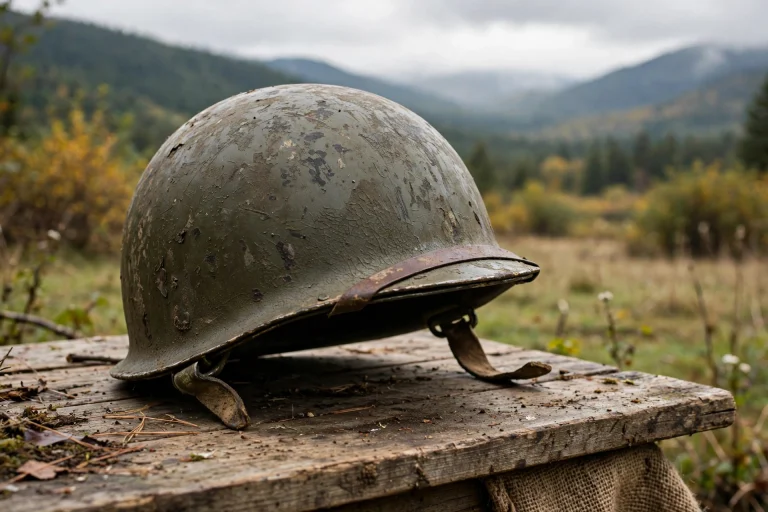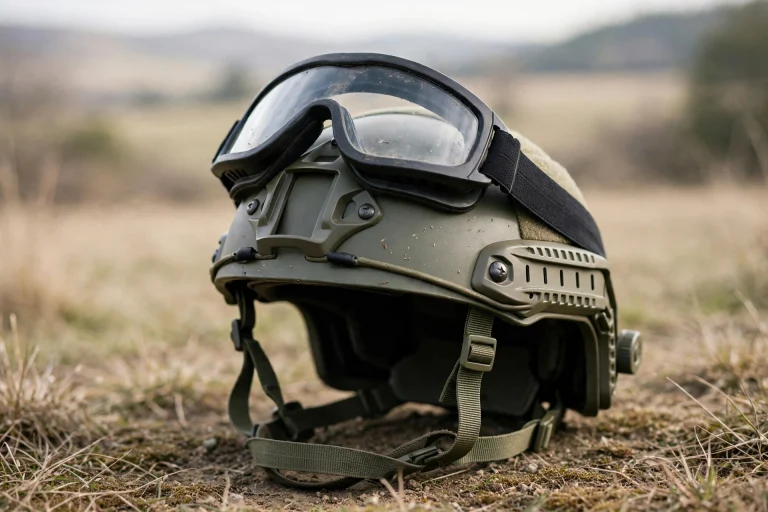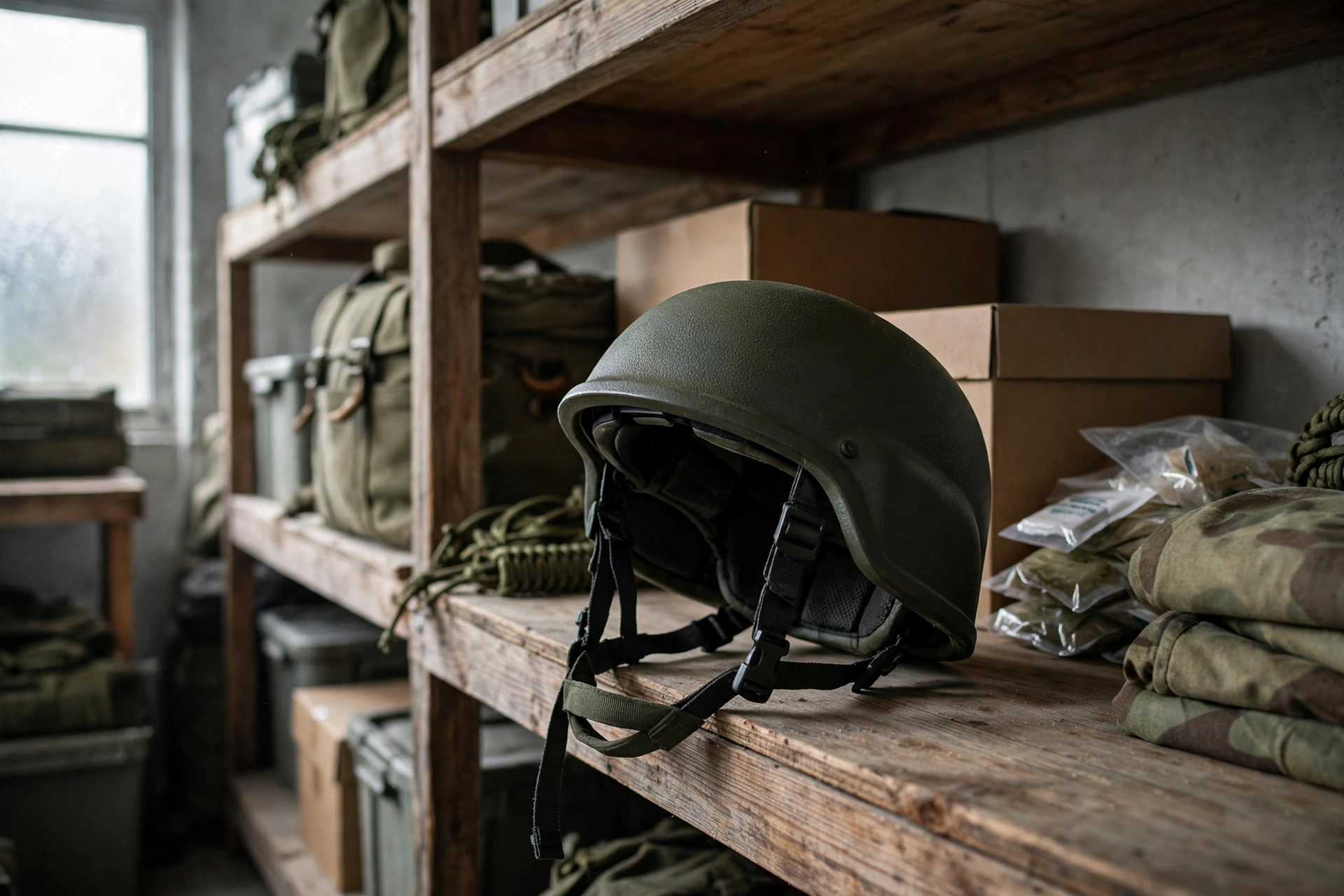
In general terms, the best way to store a ballistic helmet is in a cool, dry place away from direct sunlight, resting on a shelf or a stand rather than hanging by its straps, with the shell clean and fully dry before it goes away. Good storage does not make a helmet last forever, but it helps protect the shell, the padding, and the straps from the heat, moisture, and pressure that slowly wear them down. A helmet that is tossed into a damp garage or left baking in a car will age faster than one kept in stable indoor conditions.
Ballistic helmets are built to be tough, but their materials still respond to their environment. The outer shell, the liner, the foam pads, and the retention system all age over time, and poor storage can speed that process up. Storing a helmet well is therefore a simple habit worth getting right, especially if the helmet is used only from time to time and spends long periods on a shelf. This guide explains, in general terms, how to store a ballistic helmet, what to avoid, and how to check it before it goes back into use.
Where Should You Store a Ballistic Helmet?
A good storage spot is indoors, dry, and at a fairly steady room temperature. A bedroom closet, a shelf in a dry utility room, or a dedicated gear shelf all work well. The main things to avoid are dampness, extreme heat, and long exposure to sunlight. Basements that flood or stay damp, attics that become very hot in summer, and the boot of a car are all poor choices for long-term storage.
Keep the helmet away from chemicals as well. Solvents, fuels, and strong cleaning products can damage shell coatings, adhesives, and padding over time, so a dry, ventilated spot away from harsh conditions is ideal.
Should a Ballistic Helmet Hang or Sit on a Shelf?
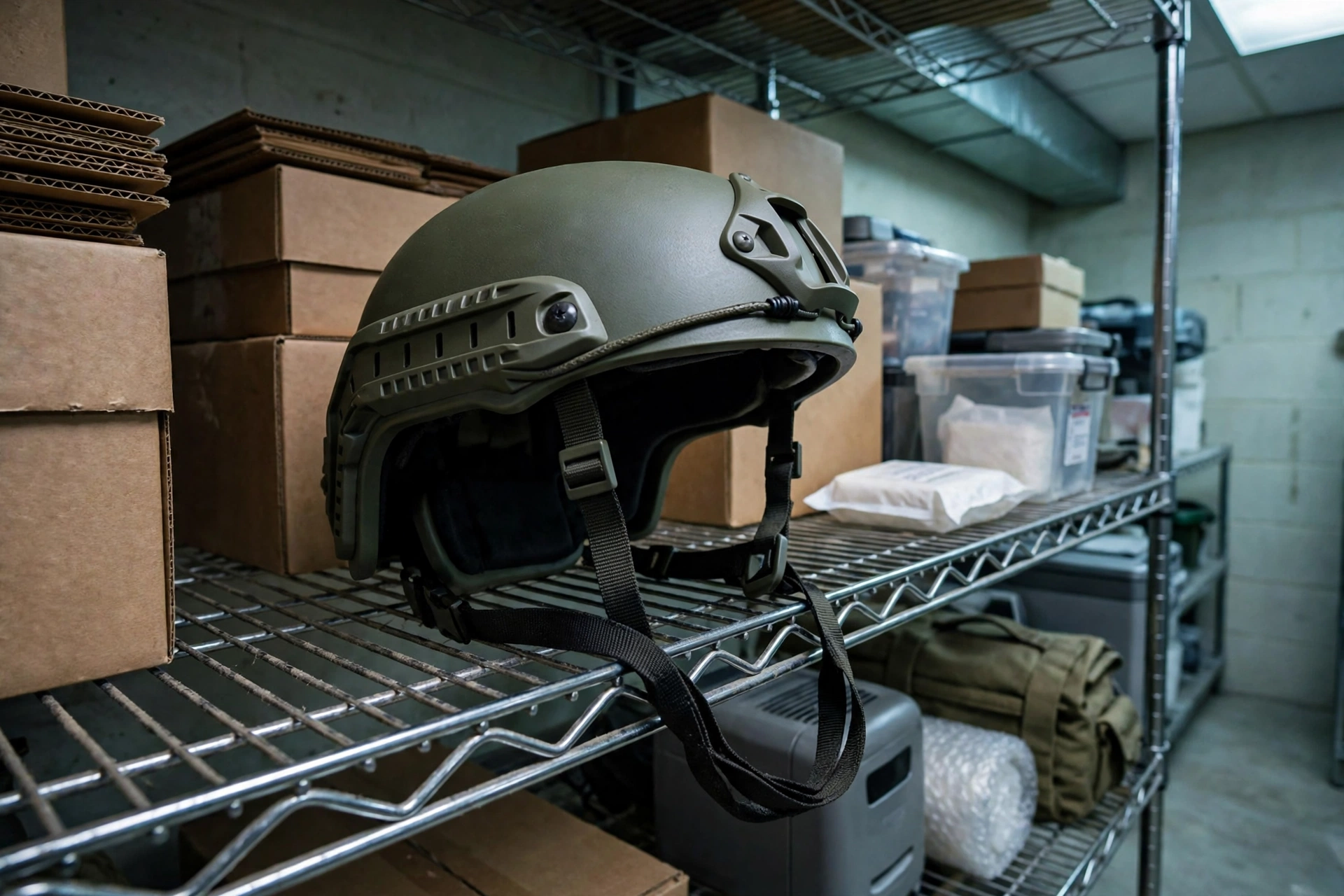
In general terms, resting the helmet on a shelf or a rounded stand is better than hanging it by its chin strap. Hanging puts the helmet’s full weight on the straps and buckles for months at a time, which can stretch webbing and distort the fit. A shelf spreads the weight across the shell instead, which is how the helmet is designed to carry loads.
If shelf space is tight, a wide, rounded helmet stand can work, but avoid narrow hooks that press into one point of the shell or liner. Do not stack heavy objects on top of the helmet or pile gear inside it, since pressure can compress the pads unevenly. If you use a bag or case, keep it dry inside and leave it unsealed now and then so trapped moisture can escape.
How Should You Clean a Ballistic Helmet Before Storage?
Always store a helmet clean and dry. Wipe the shell with a soft cloth dampened with plain water or a mild soap solution, following the maker’s guidance where you have it, and wipe away any mud, dust, or sweat. Remove the pads if they are designed to come out, and let them air-dry separately before refitting them. Never put a wet or sweaty helmet straight into a closed bag, because trapped moisture encourages odour and can degrade padding and webbing over time.
Do not use harsh solvents, abrasive pads, or high heat to dry a helmet. A hair dryer on a hot setting or a radiator can distort foam and damage adhesives. Air drying at room temperature is slower but much safer. If the helmet has been exposed to salt water or heavy mud, rinse and dry it thoroughly before storage, and check the straps and buckles for grit that could wear the webbing.
What About Accessories and Attachments During Storage?
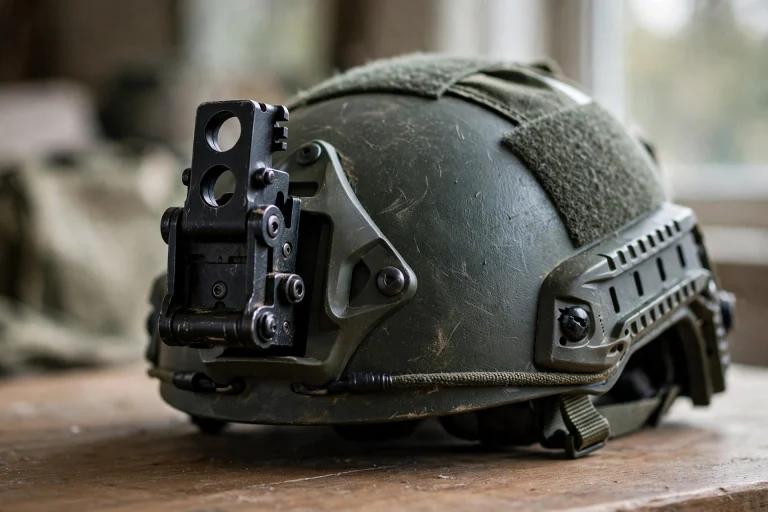
Accessories such as lights, cameras, and communication headsets are best removed before long-term storage if they can be taken off easily. This takes weight off the rails and mounts, reduces pressure points, and lets you store the accessories separately where their batteries will not leak or swell. Batteries in particular should be removed or stored according to their own guidance, since a leaking battery can damage mounts and pads.
Mounted rails, shrouds, and covers that are fixed to the shell can stay in place, but check that nothing is pressing hard against the shell or bending a rail. If a cover fits loosely, it can protect the shell from dust and scuffs during storage. Just make sure the cover itself is clean and dry, so it does not trap moisture against the shell. For helmets with adjustable pads, leaving the pads in their normal fitted position avoids stretching the hook-and-loop fasteners.
How Long Can a Ballistic Helmet Stay in Storage?
There is no single answer, because shelf life depends on the helmet’s materials, its age, how it was used, and the conditions it was kept in. In general terms, a helmet does not stay new forever simply because it sat unused: foams, adhesives, and webbing age even without use, although good storage slows that ageing considerably. A helmet that has spent years in a hot, damp shed is in a very different state from one kept in a dry closet, even if neither was ever worn.
For that reason, storage time should not be the only thing you judge. A helmet that has been stored for a long time should be inspected before use, and any helmet with a history of impact, visible cracking, delamination, or badly degraded pads should be treated with caution. If you are unsure about a helmet’s condition, seek advice from the maker or a qualified supplier rather than guessing. When it comes to protection, understanding how modern helmet liners work can also help you judge what the padding inside your own helmet is meant to do.
How Do You Check a Stored Helmet Before Using It Again?
Before a stored helmet goes back into use, give it a careful once-over. Look at the shell for cracks, chips, dents, or any sign that layers are separating. Check the pads for hardening, crumbling, or compression that does not spring back. Pull gently on the straps and buckles to confirm they hold, and check the webbing for fraying or sun fading. If anything looks or feels wrong, do not rely on the helmet until it has been properly assessed.
Also check the fit. Pads settle and straps can shift during storage, so refit the helmet until it sits level and stable, without rocking or pressing painfully. A helmet that fitted well years ago may need its pads rearranged or replaced, so note its age and condition for future checks.
Frequently Asked Questions
Q: Can I store a ballistic helmet in the garage?
A: In general terms, only if the garage is dry, temperate, and free of chemicals and direct sun. Many garages are damp or very hot in summer, so an indoor shelf is usually the safer choice.
Q: Should I keep a ballistic helmet in a sealed bag?
A: A clean, dry bag can protect against dust, but a sealed bag can trap moisture. Make sure the helmet is fully dry first, and air it out from time to time during long storage.
Q: Does a stored helmet need replacing after a certain time?
A: There is no universal expiry date for storage alone. Condition matters more than the calendar, so inspect the shell, pads, and straps before use and seek expert advice if you have doubts.

Olivia
Writer at Helmet Today, covering helmet reviews, fit and riding safety.