In general terms, yes — a good magnetic helmet buckle works as well as a D-ring for everyday riding, because both systems hold the chin strap closed under normal use, though D-rings remain the reference standard in racing and in some certification tests. The real difference is not strength in a straight pull, but how each closure behaves with gloves, dirt, wear, and user error.
Chin strap closures are easy to overlook when buying a helmet, yet they are the part that keeps the helmet on your head in a crash. A helmet that comes off, or shifts far enough to expose the forehead, cannot do its job. That is why closure design matters, and why riders who struggle with D-rings — especially with gloves on — are asking whether magnets are a genuine alternative or just a convenience gimmick.
How Do Magnetic Helmet Buckles Work?
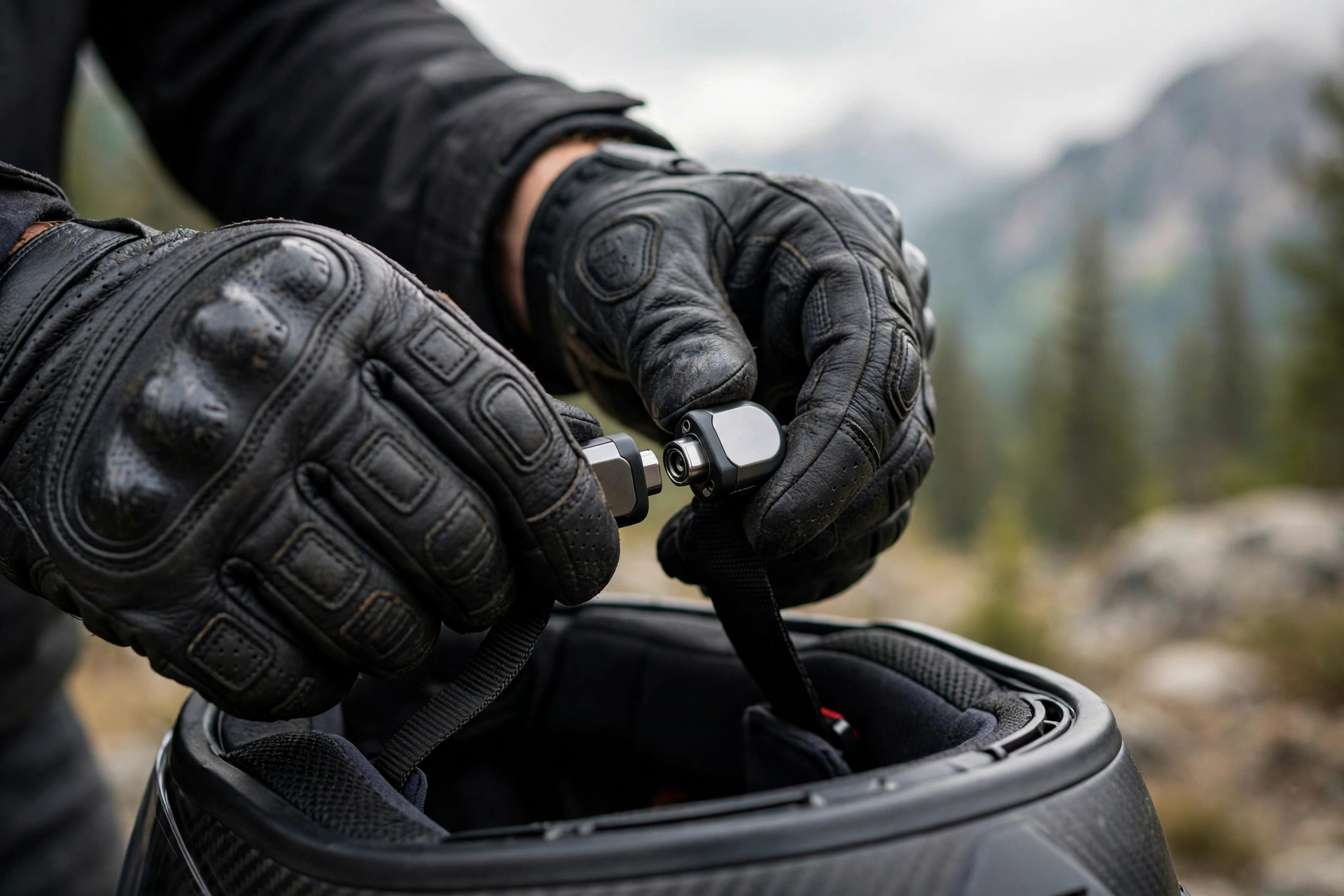
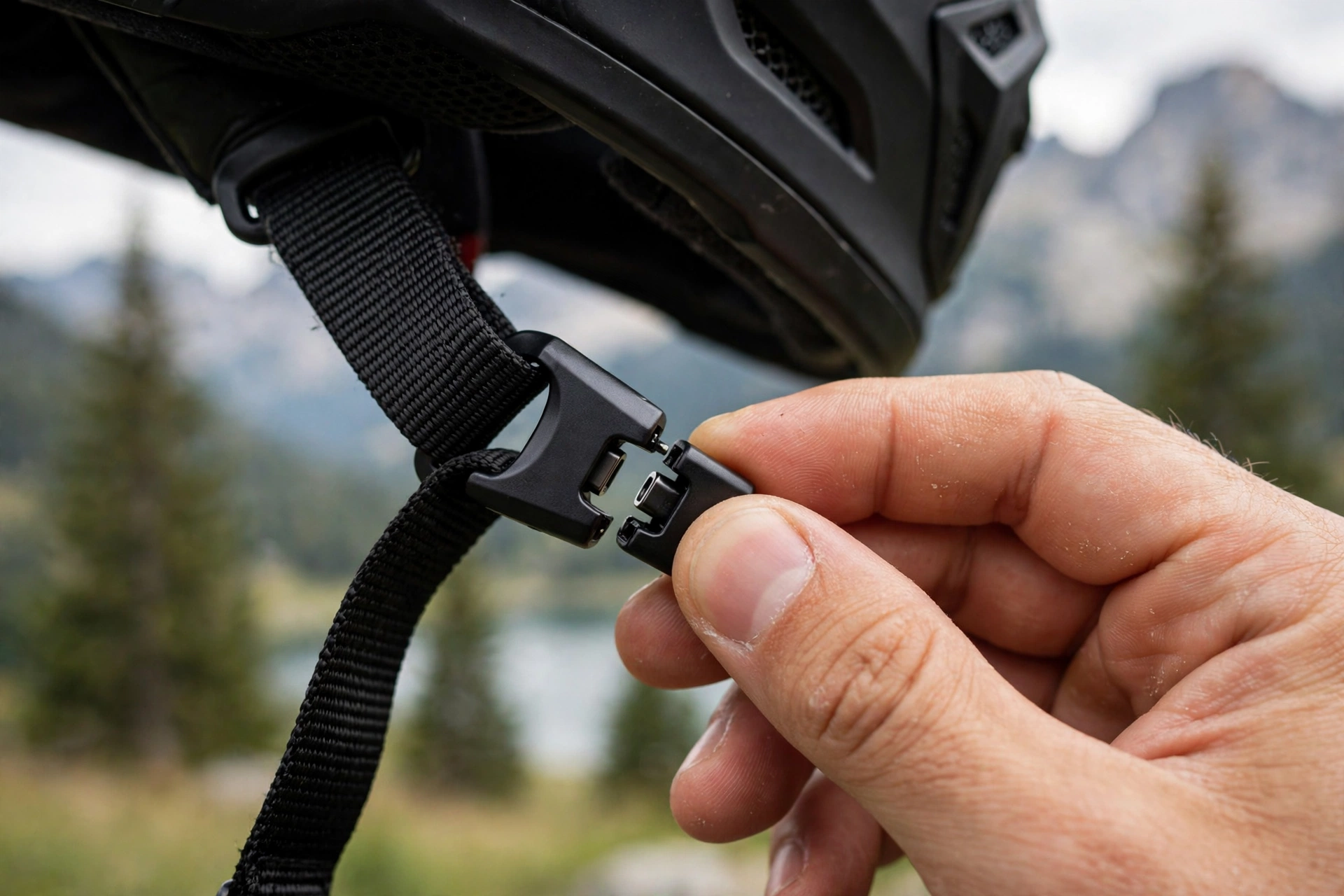
A magnetic buckle uses two parts that snap together with the help of magnets, then lock mechanically so the strap cannot simply pull apart. The magnet guides the two halves into alignment, and a latch, hook, or sliding lock holds them in place. To open the buckle you usually press a release tab or slide a sleeve, which frees the mechanical lock and lets the magnets separate.
This design is deliberately glove-friendly. With a D-ring, you thread the strap through two rings, pull it snug, and tuck the loose end — a fiddly sequence with thick gloves or cold hands. With a magnetic buckle, you bring the two halves near each other and they find each other. For commuters, winter riders, and anyone who takes a helmet on and off many times a day, that ease of use is the main selling point.
Adjustment works differently too. On a D-ring, the strap length sets the fit, and you adjust it each time you thread it. On a magnetic buckle, the strap is usually adjusted once with a slider, and the buckle then opens and closes at the same setting. That can make the fit more consistent from ride to ride, provided the slider does not creep over time.
Are Magnetic Buckles as Secure as D-Rings?
In general terms, a well-made magnetic buckle holds securely under the loads of normal riding, and reputable designs are tested to the same retention standards as D-ring helmets. Helmet certification tests include a retention check, where the strap system is loaded to confirm the helmet stays in place. A helmet that passes its certification with a magnetic buckle has demonstrated that its closure holds under that test.
The D-ring’s reputation comes from its simplicity. There are no moving parts to jam, no magnets to weaken, and the friction of the strap through two rings resists loosening. It is also self-tightening in a sense: tension on the strap pulls it tighter through the rings. That is why many race organisations and trackday rules still specify D-rings, and why the D-ring remains the default on most full-face motorcycle helmets.
Magnetic buckles introduce different failure modes rather than weaker strength. Grit, mud, or metal debris can interfere with the magnets or the latch, and a buckle caked in dirt may not seat fully. A buckle that looks closed but is not fully latched is the real risk — and it is a risk that careful design, with a clear click and a visual check, is meant to remove. In practice, most problems with magnetic buckles come from incomplete closure or worn parts, not from the magnets themselves failing.
When Do D-Rings Still Make More Sense?
D-rings still make more sense wherever rules require them. Some racing bodies, track events, and training courses specify D-ring closures, and a magnetic buckle — however good — will not pass a rule that names D-rings explicitly. If you plan to ride on track, check the rules before buying.
D-rings also suit riders who ride in heavy mud, dust, or grit. A D-ring can be rinsed and threaded even when filthy, while a magnetic buckle needs its mating surfaces reasonably clean to seat properly. Off-road riders and adventure riders who regularly end the day covered in mud may find the D-ring more forgiving.
Finally, D-rings suit riders who like a fresh adjustment every ride. Because you re-thread the strap each time, you naturally check the fit each time. A magnetic buckle’s set-and-forget adjustment is convenient, but it can hide gradual strap stretch or slider creep if you never re-check the fit. Whichever system you use, a quick tug test before every ride is good practice.
How Do You Maintain a Magnetic Buckle?
Keep the buckle clean. Wipe the mating surfaces with a damp cloth after muddy or dusty rides, and check for trapped grit, small stones, or metal filings attracted by the magnet. A buckle that does not click shut cleanly, or that feels gritty when closing, needs cleaning before the next ride.
Check the strap and slider regularly. Look for fraying near the buckle, a slider that slips under a firm pull, or a release tab that feels loose or sticky. Replace the strap assembly or retire the helmet if the closure no longer locks positively — a buckle you have to coax shut is not a buckle to trust.
Store the helmet so the buckle is not crushed or bent. Avoid letting the buckle dangle against hard objects in a pannier or top box, and do not hang the helmet by its strap from a hook for long periods. Small care here keeps the latch aligned and the magnets seating correctly.
Who Benefits Most From a Magnetic Buckle?
Riders with limited hand strength or dexterity benefit most. Arthritis, gloves, cold hands, and injuries can all make threading a D-ring frustrating, and a buckle that closes one-handed can be the difference between wearing a helmet correctly and wearing it loose. For these riders, the magnetic buckle is not a luxury — it is the closure that gets worn properly every time.
Commuters and daily riders also benefit. If you put a helmet on several times a day, the seconds saved and the consistent fit add up. Parents fitting helmets on children, and anyone who shares a helmet between riders, may also prefer the simpler closure, though shared helmets still need a fit check for each wearer.
As with every helmet choice, the fundamentals come first: fit, certification for your activity, and condition. A closure is only one part of the system, and it works alongside the shell and liner, including liners designed to reduce rotational forces, as explained in this guide to what MIPS means for helmets. Choose the closure you will use correctly on every ride, and the safest buckle is the one that is actually fastened.
Frequently Asked Questions
Q: Can a magnetic helmet buckle open by itself in a crash?
A: In general terms, a properly latched magnetic buckle should not open on its own, because the mechanical lock holds it shut and the magnet alone is not what resists the load. Always check for a positive click and give the strap a tug before riding.
Q: Do magnetic buckles weaken over time?
A: The magnets themselves do not weaken noticeably in normal use, but the latch, slider, and strap can wear. If the buckle stops clicking shut firmly, or the strap slips, have it inspected or replace the helmet.
Q: Are magnetic buckles allowed for racing?
A: It depends on the rules of the event or organisation. Some require D-rings specifically, so check before you buy if you plan to race or ride trackdays.

Olivia
Writer at Helmet Today, covering helmet reviews, fit and riding safety.