Yes, you can retrofit Bluetooth to a regular helmet by fitting a universal Bluetooth headset kit, which clamps or sticks to the outside of the helmet and places small speakers inside the lining. These kits are made to work with almost any full-face or open-face helmet, and they add music, calls, intercom, and navigation audio without requiring a new helmet. Installation usually takes well under an hour with no special tools.
This guide explains how retrofit Bluetooth kits work, how to fit one, what to expect from the sound, and when a purpose-built smart helmet might be the better choice.
What Is in a Retrofit Bluetooth Helmet Kit?
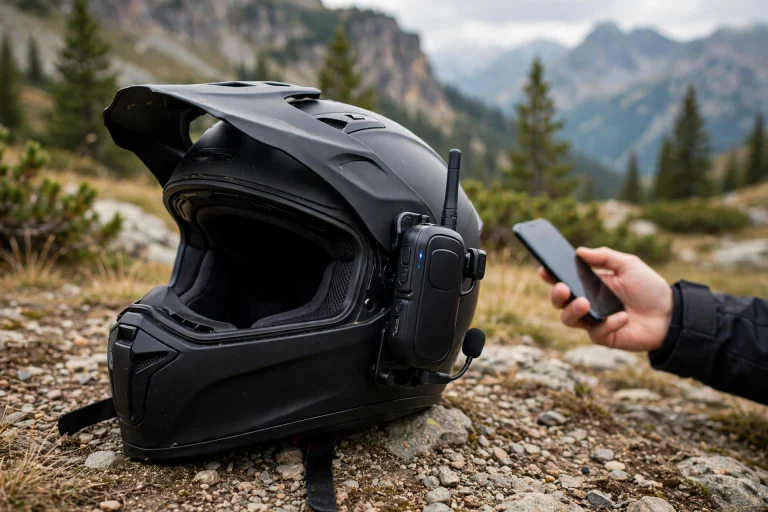
A typical kit contains a main control unit, two speakers, a microphone, and mounting hardware. The control unit clamps to the side of the helmet shell or sticks on with an adhesive mount, and it holds the battery, Bluetooth radio, and buttons. The speakers connect by thin wires and sit inside the helmet near your ears.
The microphone comes in two styles. Full-face helmets use a small boom microphone that sits in front of the mouth, while open-face helmets use a wired microphone that sticks to the inside of the chin area. Both are designed to pick up your voice while rejecting wind noise as far as possible.
Most kits also include a charging cable, spare mounts, and adhesive pads. Higher-end kits add mesh intercom for group riding, voice assistants, and water resistance, while budget kits cover music and calls only. The core idea is the same across the range: add electronics to a helmet you already own and like.
How Do You Fit a Bluetooth Kit to a Regular Helmet?
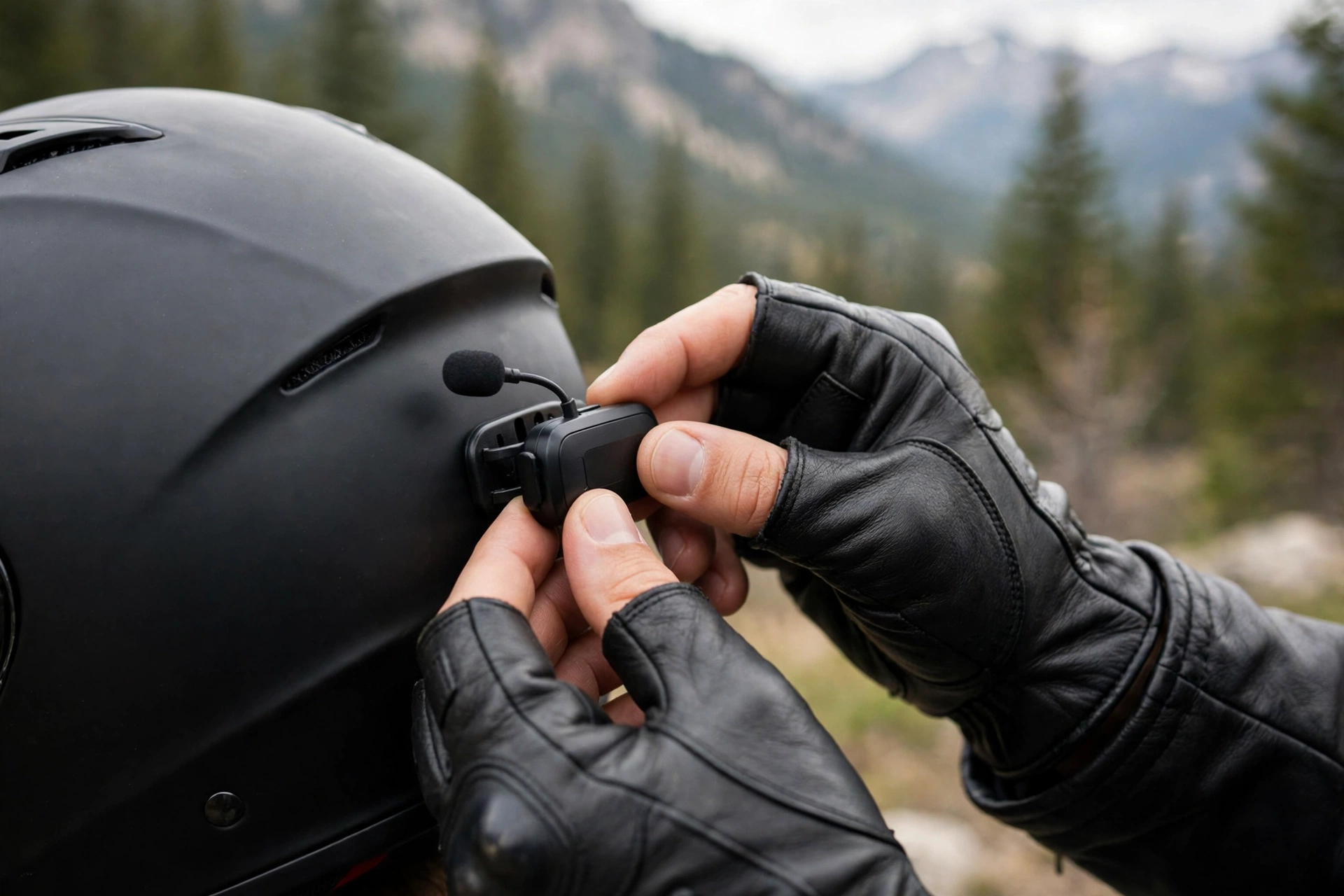
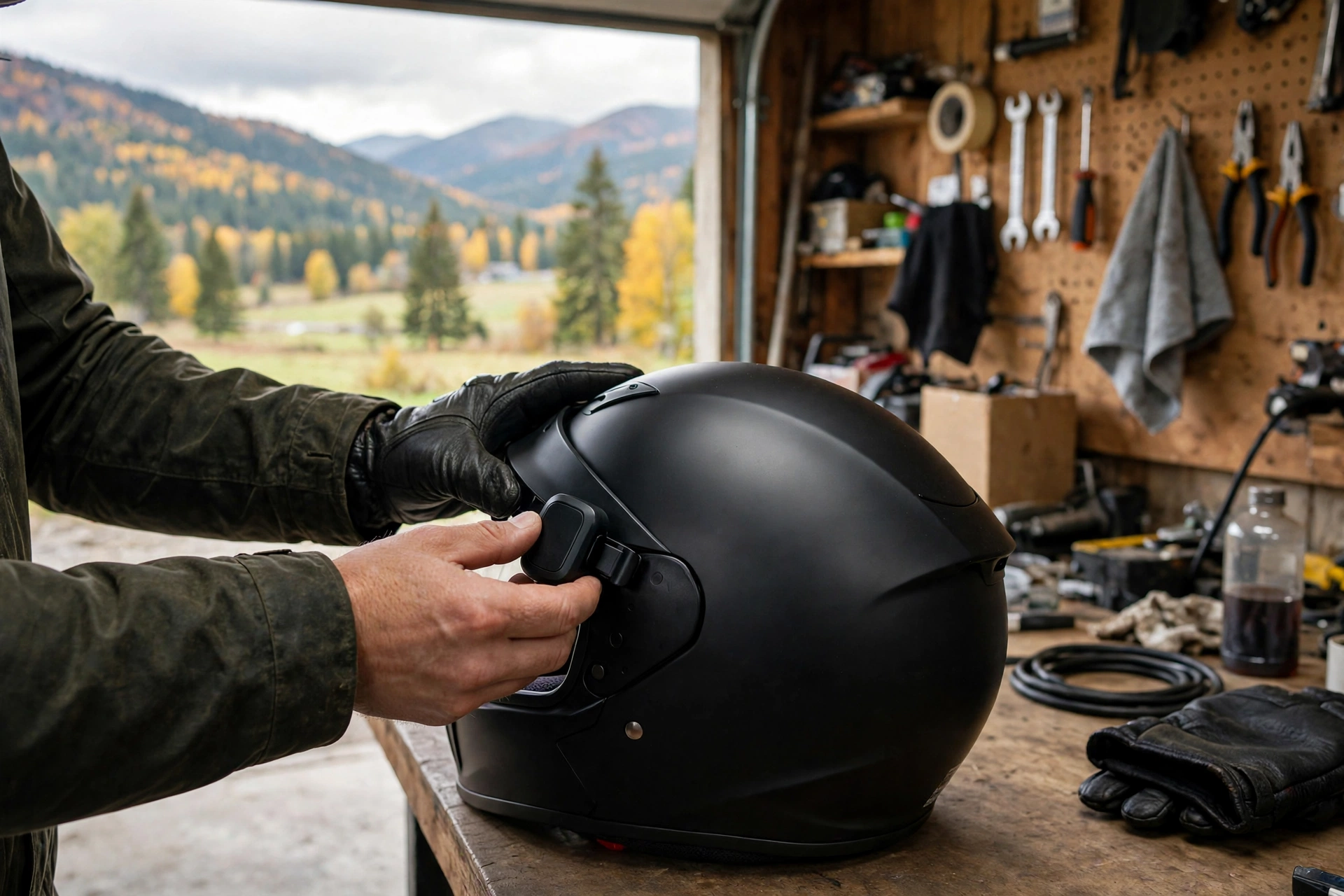
Start by choosing the mounting side, usually the left, and fitting the clamp or adhesive mount to the helmet’s lower edge. The clamp style grips the shell without damage, while the adhesive style suits helmets with thick edges that a clamp cannot grip. Make sure the unit sits where you can reach its buttons with a gloved hand.
Next, place the speakers. Many helmets have ear pockets in the lining designed for exactly this, and the speakers slip straight in. If your helmet has no pockets, the speakers can usually be fixed under the lining with hook-and-loop pads — just check they do not create pressure points against your ears on a long ride.
Then route the wires neatly inside the lining, position the microphone, and pair the unit with your phone. Test everything before your first ride: play music, make a call, and check that the speakers sit comfortably and the microphone picks up your voice clearly.
How Good Is the Sound and Call Quality?
Music quality is decent for riding but not audiophile grade. The small speakers deliver clear mids and highs for podcasts and background music, with limited bass, and wind noise competes with the audio at higher speeds. Most riders find the sound perfectly enjoyable at city and country-road speeds.
Call quality is generally good at low speeds and acceptable at higher speeds. Modern kits use noise-reduction processing to cut wind noise, but no system eliminates it entirely, and callers may hear some rushing sound on a fast open road. A well-positioned microphone close to the mouth makes the biggest difference.
Intercom range varies by kit. Basic Bluetooth intercom works over short distances between two riders, while mesh systems maintain a group connection over longer distances and reconnect automatically if a rider drops out. If group riding matters to you, check the intercom specification before buying, not just the music features.
Does Fitting Bluetooth Affect Helmet Safety?
In general terms, a properly fitted kit does not reduce a helmet’s protection. The speakers sit inside the lining without altering the shell or foam, and the control unit mounts on the outside. The helmet’s impact-absorbing structure is untouched, which is the key point.
There are two cautions. First, do not drill holes in the shell or cut into the foam to fit a kit — that can weaken the helmet and void its certification. Use the clamp or adhesive mounting the kit provides. Second, check that speakers and wires do not create hard pressure points against your head, since a pressure point that distracts you is itself a safety issue.
Also think about distraction. Music and calls are enjoyable, but they divide attention, so keep volumes moderate and keep your ears open to traffic. Helmet speakers leave the ears unblocked, which is safer than sealed earbuds — a point worth remembering when you set up your audio.
Retrofit Kit or Purpose-Built Smart Helmet?
A retrofit kit wins on cost and choice. It lets you keep a helmet you already trust and that fits you well, and it costs much less than a new smart helmet. If your current helmet is in good condition, a kit is the sensible upgrade.
A purpose-built smart helmet wins on integration. Its electronics are designed into the helmet from the start, so the fit is cleaner, the controls are better placed, and features like built-in lights and crash alerts may be included. If you are buying a new helmet anyway, comparing a smart model with a conventional helmet plus a kit is worthwhile.
Either way, the helmet underneath matters more than the electronics on top. Fit, coverage, and impact protection come first, and modern liners that reduce twisting forces in angled crashes deserve attention too. For a clear explanation of one widely used system, see how MIPS helmet technology works.
One final tip: keep the kit’s firmware updated. Makers regularly release updates that improve noise reduction, fix pairing quirks, and add features, and updating is usually just a matter of connecting the unit to its app for a few minutes. A kit that is a year old but fully updated will often outperform a brand-new kit running launch software. Combined with a quick check of mounts, wires, and speaker position before each season, that habit keeps a retrofit setup working well for years.
Frequently Asked Questions
Q: Will a Bluetooth kit fit any helmet?
A: In general terms, yes. Universal kits fit most full-face and open-face helmets using a clamp or adhesive mount, though very thin or unusually shaped shells can be trickier. Check the kit’s compatibility notes before buying.
Q: Do I need to drill holes in my helmet to fit Bluetooth?
A: No. Retrofit kits use clamp or adhesive mounts and slip speakers into the lining. Never drill or cut a helmet shell or foam, as that can weaken its protection.
Q: Can I move a Bluetooth kit to a new helmet later?
A: Usually yes. The unit unclips or peels off, and the speakers lift out of the lining, so you can transfer the kit to a replacement helmet when the old one is retired.

Olivia
Writer at Helmet Today, covering helmet reviews, fit and riding safety.