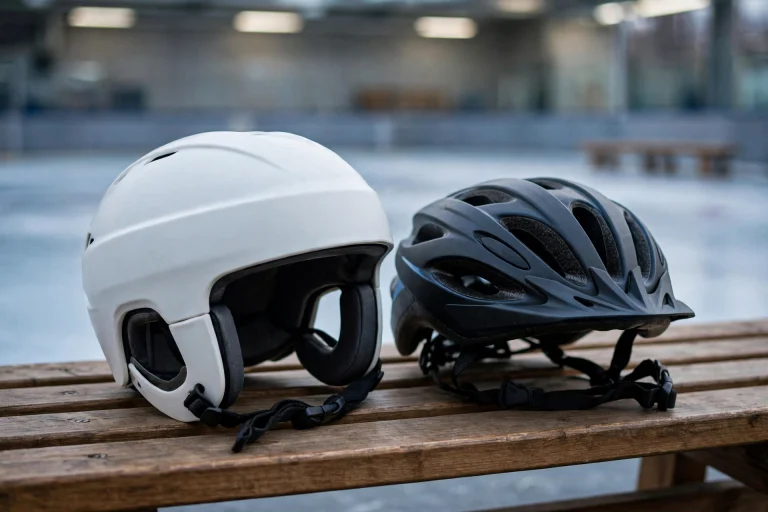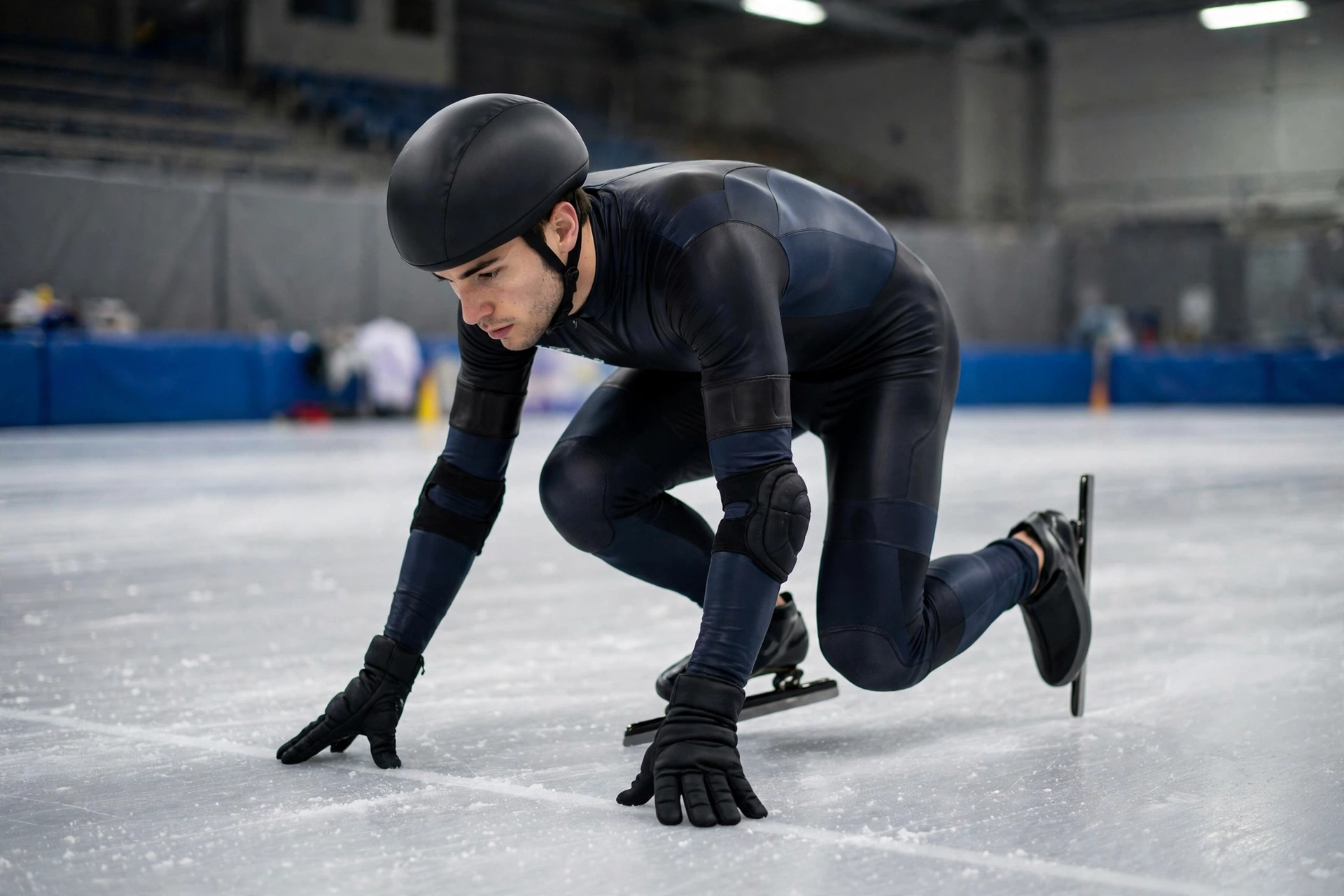
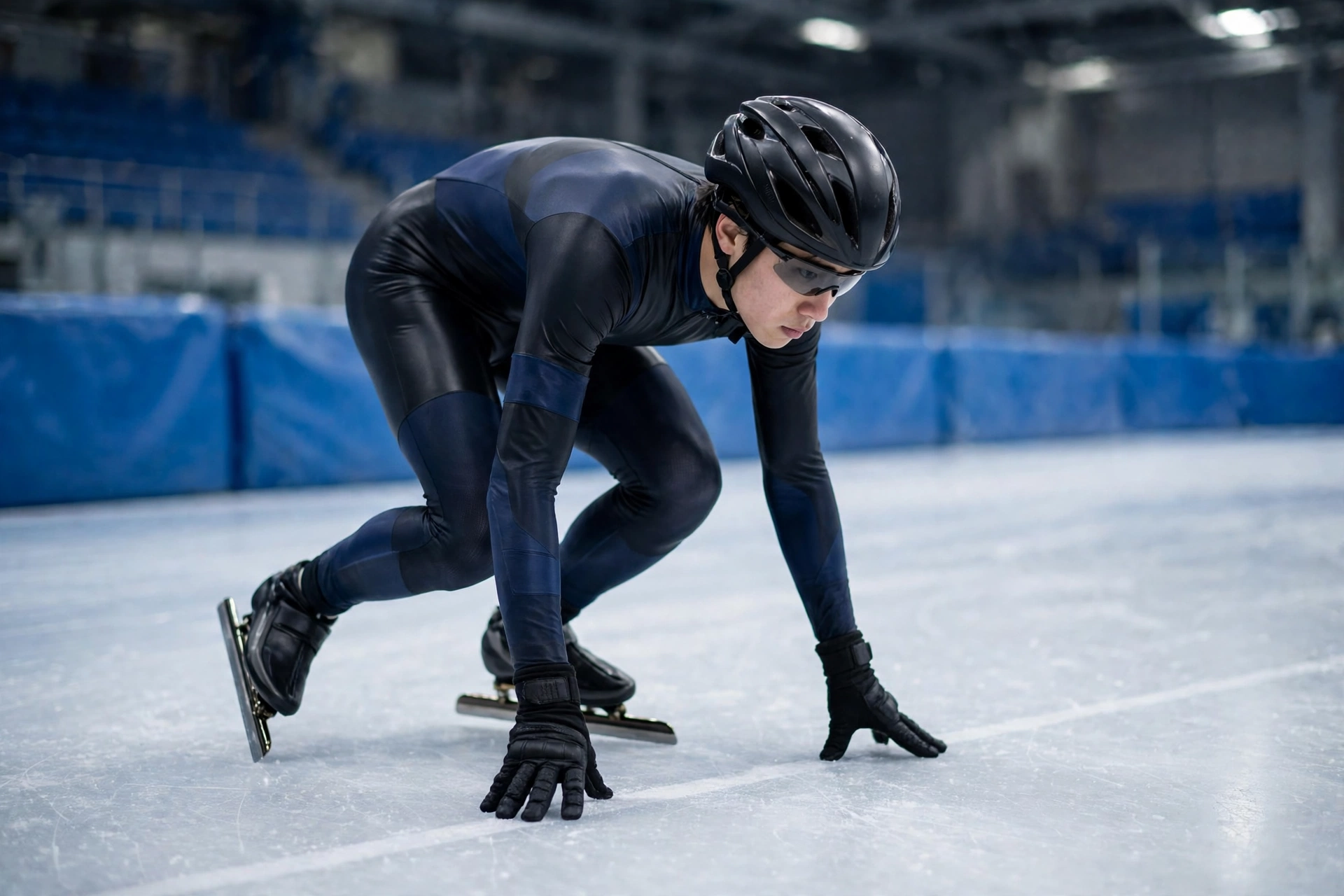
In short track speed skating, helmets are compulsory: every skater must wear a helmet that meets the required standard, fastened securely, for every race and usually for training too. The rules also cover other protective kit, but the helmet is the one item no skater can race without. If you are entering a competition, knowing the helmet rules in advance saves an unpleasant surprise at the start line.
This guide explains the helmet rules for short track in general terms, what other protection is required, and how the rules are checked — so you can arrive prepared and race without worry.
What Do the Rules Say About Helmets?
The rules of short track speed skating require every skater to wear a helmet. The helmet must be a hard-shell design that covers the head properly, and it must be worn and fastened for the whole race. A skater whose helmet comes off during a race, or who starts without one, will not be allowed to continue.
The rules also set out that the helmet must meet a recognised safety standard. Which standard applies can depend on the competition and the organisation running it, so it is worth checking with your club or the event organiser before you buy. A helmet that meets the standard for one event may not be accepted at another if the requirements differ.
What Other Protective Equipment Is Required?
Alongside the helmet, short track rules generally require skaters to wear protective gloves, which shield the fingers from other skaters’ blades when a hand touches the ice in a corner. Skaters also wear cut-resistant clothing or underlayers, which protect against blade cuts during falls. Some competitions require specific types of protective clothing, so check the rules for your event.
Eye protection is not generally required in short track, unlike in ice hockey, and most skaters race without it. Shin protection and knee protection are also worn by many skaters, though the exact requirements vary. The common thread is that short track is a contact sport on ice, and the rules are written to reduce the risk of the most serious injuries.
Your club or coach is the best source for the exact kit list for your level. Junior competitions may have additional requirements, such as neck protection, that do not apply to senior races.
How Are the Rules Checked at a Competition?
At most competitions, officials check protective equipment before the race, often at the call room or the start line. They look for the helmet first: is it on, is it fastened, and does it look like it meets the standard? They may also check gloves and clothing. A skater who fails the check will be given a chance to fix the problem if there is time, but a skater who cannot meet the rules will not race.
During the race, officials watch for helmets coming loose or coming off. If a skater’s helmet comes off, the race may be stopped or the skater may be withdrawn, depending on the situation and the rules in force. This is a safety measure, not a punishment: a skater without a helmet on the ice is at real risk.
Do the Rules Differ for Juniors and Seniors?
In general terms, the helmet rule is the same for juniors and seniors: everyone wears one. Where the rules differ is usually in the extra protection required for younger skaters. Junior competitions may require additional items such as neck guards, and clubs often set stricter rules for young skaters in training, because children are still learning to fall safely.
Parents of junior skaters should check with the club about the full kit list, including any club-specific rules that go beyond the competition rules. A club may require helmets for all on-ice sessions, including warm-ups and cool-downs, even when the competition rules only cover racing.
If you are learning about helmet technology in general, reading about what MIPS is for helmets can help you understand one of the features found in modern helmets.
What Happens If Your Helmet Does Not Meet the Rules?
If your helmet does not meet the required standard, you will not be allowed to race with it. The usual advice is to sort this out well before the competition: check the standard with the organiser, check the label inside your helmet, and if in doubt, ask your coach to look at it. Borrowing a helmet at the last minute is possible at some events, but it is not a plan to rely on.
Also check the condition of your helmet. A cracked shell, a broken strap, or padding that has come loose can all fail an equipment check, even if the helmet met the standard when it was new. Inspect your helmet before every competition, and replace it if anything is damaged.
One more thing worth checking is how the rules are published for your event. Most competitions publish an equipment list or a rulebook in advance, and reading it before you travel saves stress on the day. If the rules mention a specific standard by name, check the label inside your helmet — it should state which standard the helmet meets. If the label is worn or missing, the helmet may fail the check even if it is a good helmet, so keep the label readable and keep any paperwork that came with the helmet. When in doubt, email the organiser or ask your coach: a quick question beforehand is far easier than sorting out a problem at the start line with the race about to begin.
Frequently Asked Questions
Q: Is a helmet required for short track training, or only for races?
A: The competition rules cover racing, but most clubs require helmets for training too. Check your club’s rules, and wear one either way — falls happen in training as well.
Q: Do short track rules require a specific helmet brand?
A: In general terms, no. The rules specify a standard and a proper fit, not a brand. Any helmet that meets the required standard and fits you well should be accepted.
Q: Can a skater be disqualified for a loose helmet?
A: In general terms, a skater whose helmet is not properly fastened may be stopped from racing for safety reasons. Officials treat a loose helmet seriously because it may not protect the skater in a fall.

Olivia
Writer at Helmet Today, covering helmet reviews, fit and riding safety.