Karate headgear protects your head, face, and ears from light and accidental contact during training and some forms of competition. In general terms, it cushions glancing blows, reduces cuts and bruising, and shields the ears and cheekbones, but it does not make full-power strikes to the head safe, and it does not prevent concussion.
Karate is unusual among combat sports because many styles train with controlled, pulled contact rather than full-power strikes. That shapes what karate headgear is for: it is a safety net for the times when control slips, not armour for hard sparring. This guide explains what protection it gives, where its limits are, and how it differs from the headgear used in other combat sports.
What Is Karate Headgear Designed to Protect?
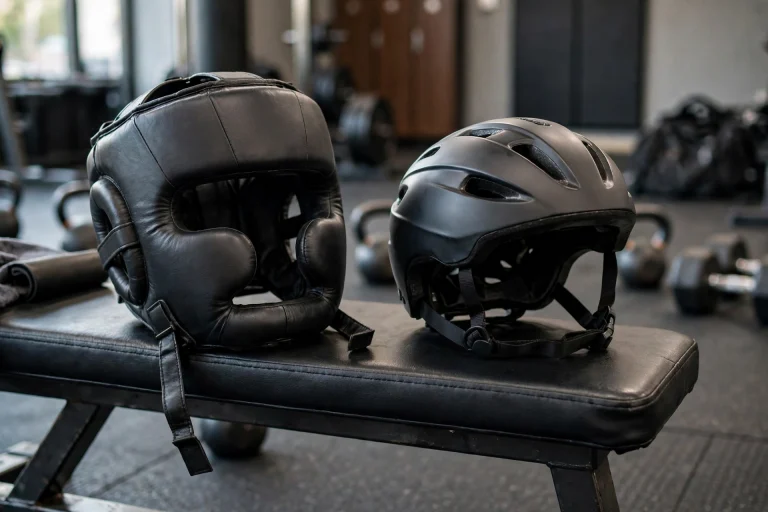
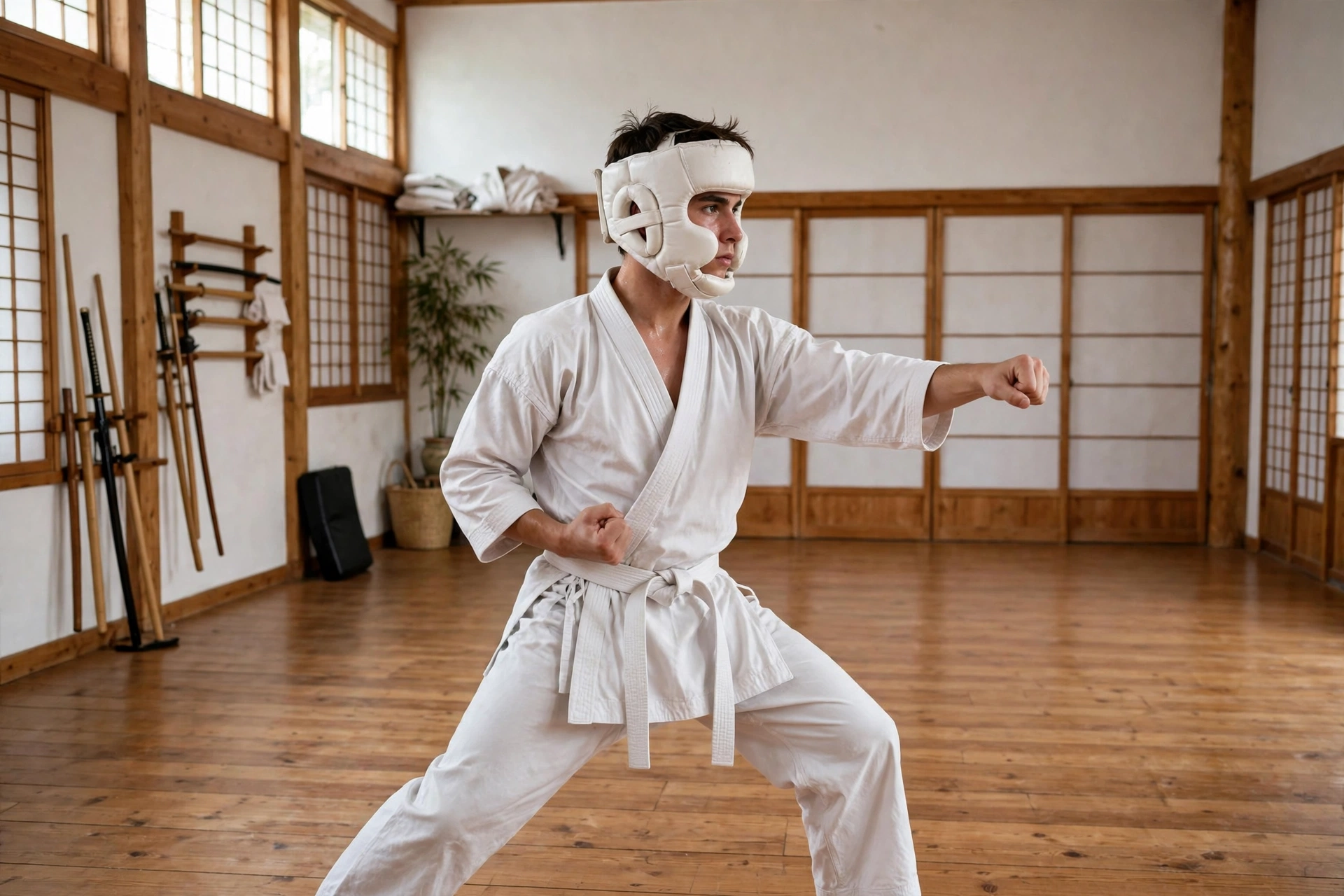
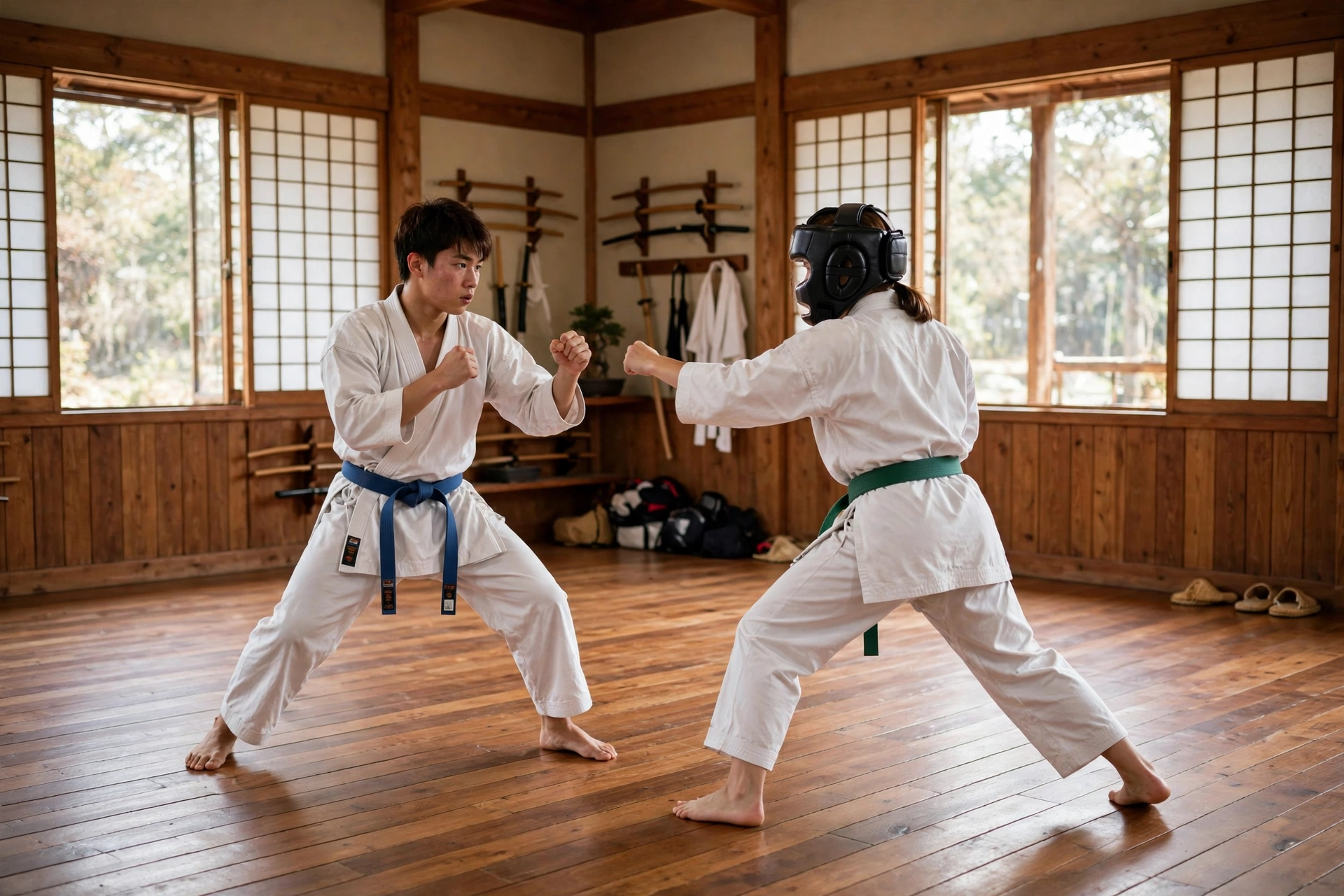
Karate headgear is designed to protect the areas most likely to be caught by a stray technique: the forehead, temples, cheeks, ears, and the back of the head. Most designs are a padded shell that covers the top, sides, and back of the head, with an open face or a clear face shield depending on the style and the rules in use. The padding absorbs the edge of a light strike and spreads the force across a wider area.
Ear protection is a key part of the design. Karate training involves a lot of close-range work, and ears can be caught by a glancing punch, a sweep, or a fall. Padded ear cups reduce friction and impact on the ears, which helps protect against the swelling and damage that can build up over years of training. The back of the head is covered too, because falls during throws and takedowns are part of many karate styles.
Some karate headgear includes a clear face shield or a padded face guard. These protect the nose, mouth, and eyes from accidental contact, which matters for younger students and for styles that allow light contact to the face.
What Are the Limits of Karate Headgear?
The most important limit is that karate headgear does not prevent concussion. A strike that snaps your head back will still move your brain inside your skull, whether or not you are wearing padding. Headgear reduces the surface damage from a blow — the cut, the bruise, the swelling — but it cannot stop the movement that causes the most serious head injuries. Anyone who tells you headgear makes hard head strikes safe is mistaken.
Headgear can also create a false sense of security. A student wearing headgear may feel protected and stand in range longer, or a partner may strike with less control because the target looks padded. In karate, where control is a core skill, this is a real concern, and good instructors watch for it. Headgear is a backup for mistakes, not a replacement for control.
Vision and hearing are affected too. Padded cheek guards can narrow your peripheral vision, and ear cups can muffle sound. In a fast exchange, seeing a technique a fraction of a second late can mean taking it more cleanly. These are small effects, but they are part of why many karate styles train without headgear for most drills and reserve it for sparring.
How Does Karate Headgear Differ From Boxing Headgear?
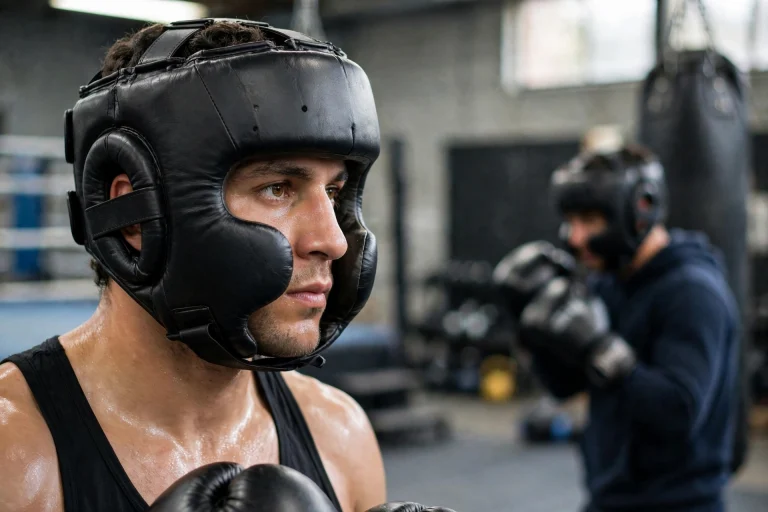
Karate headgear and boxing headgear look similar at a glance, but they are built for different sports. Boxing headgear is designed for repeated, full-power punches to the head, so it tends to have thicker padding over the forehead, temples, and cheekbones, and a more enclosed design. Karate headgear is generally lighter and less bulky, because it is meant for light and occasional contact rather than constant heavy punches.
The coverage differs as well. Boxing headgear often has large cheek pads and a chin strap that holds everything firmly in place through long rounds of head shots. Karate headgear may have slimmer cheek protection and a lighter fit, since the wearer needs to move freely, turn quickly, and hear the instructor.
That does not mean one is better than the other; they are tools for different jobs. If you cross-train in boxing sparring, you may want boxing headgear for those sessions and karate headgear for karate. If you are comparing headgear and helmet protection language across sports, reading about what MIPS is for helmets can help you understand how impact protection is described on product pages, even though MIPS is a feature of hard-shell helmets rather than soft martial arts headgear.
When Is Karate Headgear Required?
Whether karate headgear is required depends on the style, the organisation, and the age of the student. Many karate organisations require headgear for junior competitors and for certain categories of kumite, or sparring, while adult competitors in some styles fight without it under controlled-contact rules. Others require it for all sparring, regardless of age. Because karate is practised under many different federations and styles, there is no single rule that covers everyone.
In training, the decision usually rests with the instructor or the club. Some clubs ask all students to wear headgear for sparring, others only for juniors or beginners, and others leave it to the individual. If you are joining a new club, ask about their headgear policy before your first sparring session.
For competition, check the rules of the specific event well in advance. The rules will say whether headgear is required, what type is allowed, and whether a face shield is needed. If headgear is required, train in it during your preparation so the fit, weight, and vision feel familiar on the day. Turning up with unfamiliar equipment is an avoidable disadvantage.
How Should Karate Headgear Fit?
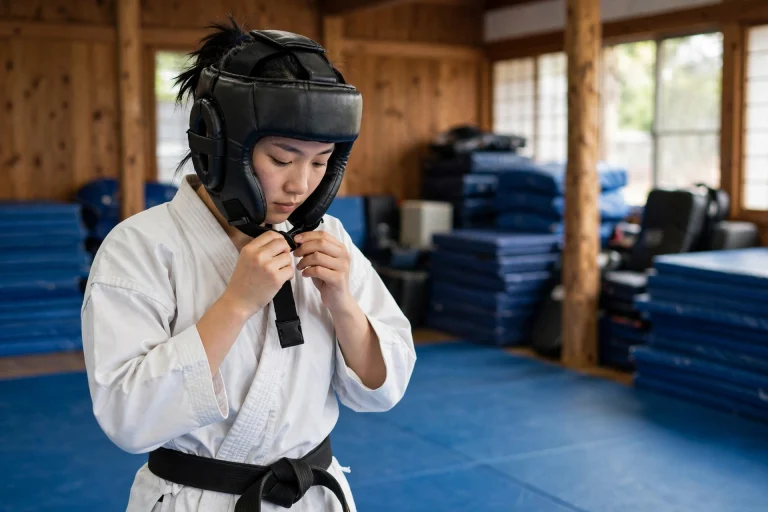
Karate headgear should sit level on your head, low enough to cover your forehead to just above your eyebrows, and snug all around with no gaps between the padding and your skin. It should not rock side to side when you shake your head, and it should not slide forward over your eyes when you look down or bow. The chin strap should fasten snugly under your chin, with room for one finger between strap and skin.
Check the ear cups separately. They should sit directly over your ears and cover them fully without pressing them painfully flat. If the ear cups sit in front of or behind your ears, the headgear is the wrong size or shape. Check the face shield, if there is one, for a clear view: it should not distort your vision or press against your nose when you breathe hard.
Try the headgear on with anything else you wear for training, such as a mouthguard, and move in it before deciding. Shadowbox, turn quickly, duck, and practise a few techniques. If the headgear shifts during those movements, it will shift more in sparring.
Frequently Asked Questions
Q: Does karate headgear stop you getting hurt in sparring?
A: It reduces cuts, bruising, and ear damage from light and accidental contact, but it does not prevent concussion and does not make full-power head strikes safe. Control and good technique are still the main protection in karate sparring.
Q: Do adults need to wear karate headgear?
A: It depends on the style and the organisation. Some styles require it for all sparring, others only for juniors or beginners, and some adult divisions fight without it under controlled-contact rules. Your club or event rules will tell you what applies to you.
Q: Is karate headgear the same as boxing headgear?
A: No. Karate headgear is generally lighter and less bulky, built for light and occasional contact, while boxing headgear has thicker padding for repeated full-power punches. They are designed for different sports, so use the type that matches your training.

Olivia
Writer at Helmet Today, covering helmet reviews, fit and riding safety.