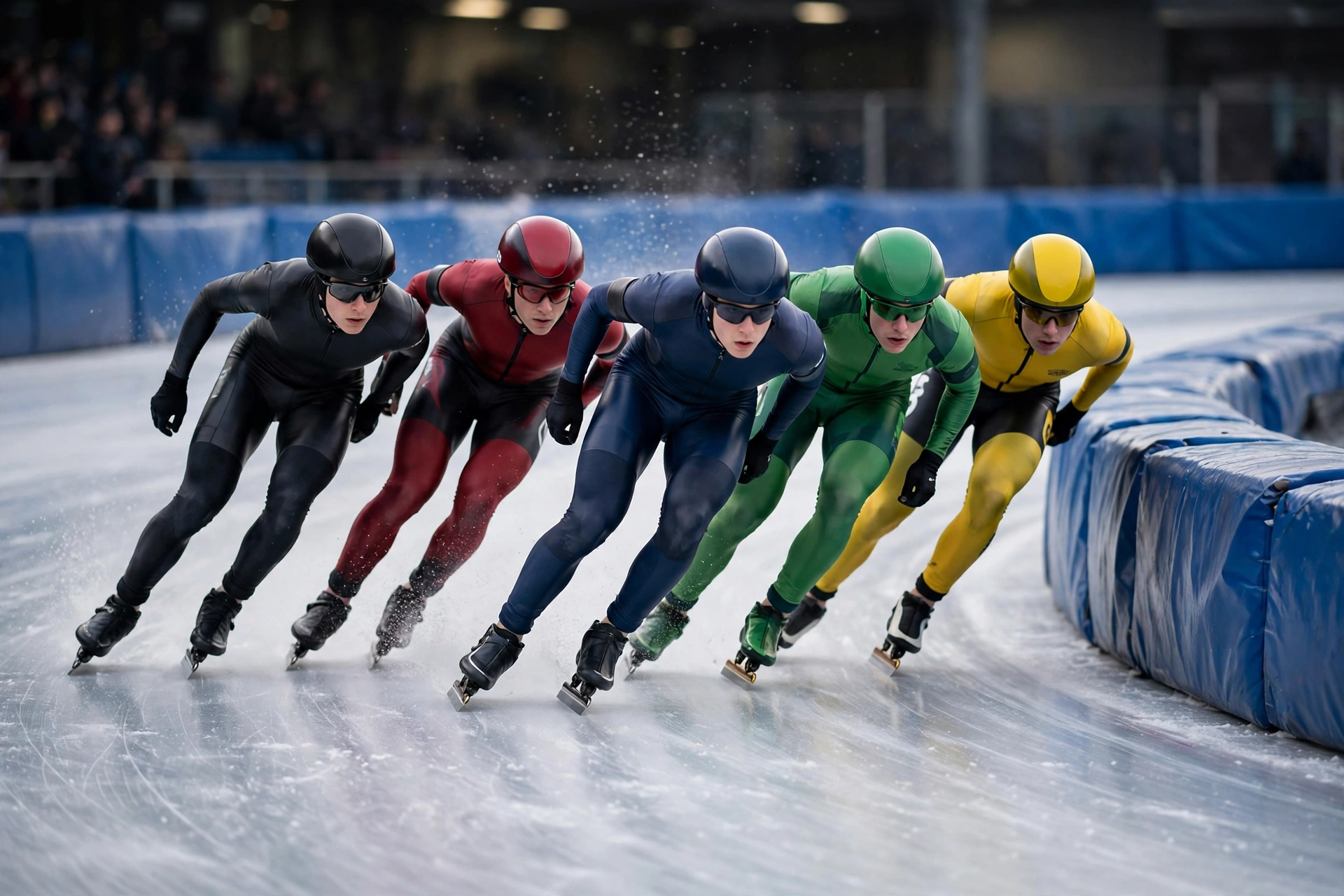
Yes, short track speed skaters need a helmet — in short track, helmets are required for racing, and most skaters wear one for training too. Short track is skated on a small oval with several skaters racing close together at high speed, and falls are a normal part of the sport. A helmet is the basic protection every skater wears, along with gloves and protective clothing.
If you are new to speed skating, the helmet rules can be confusing, because long track speed skating looks similar but has different rules. This guide explains why short track skaters wear helmets, what kind they wear, and what to look for when choosing one.
Why Do Short Track Skaters Wear Helmets?
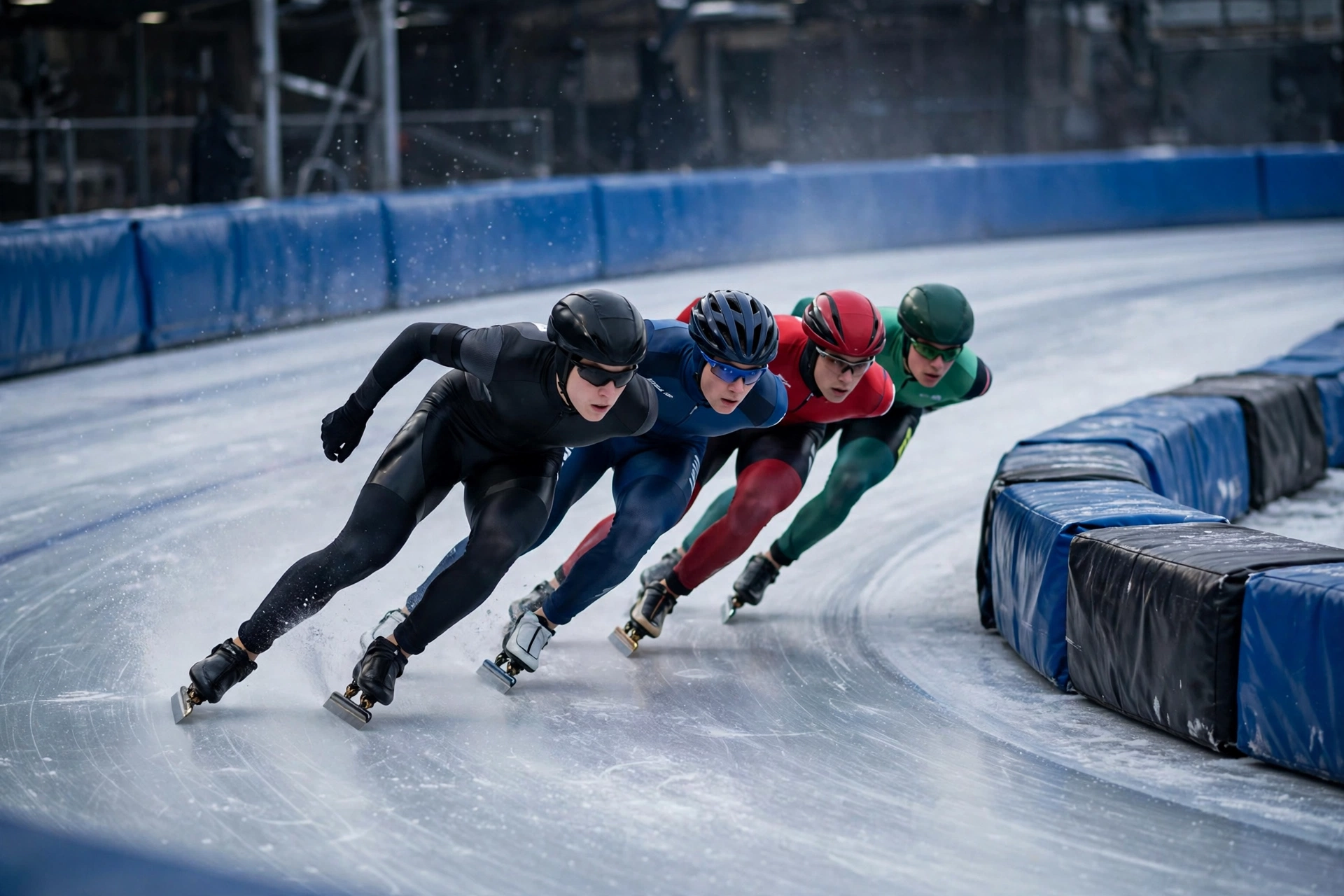
Short track is raced on a 111-metre oval, much smaller than a long track oval, with four to six skaters racing together. The tight corners, the close racing, and the high speeds mean skaters often fall, and when one falls, others can fall too. A skater who falls can slide into the boards, into another skater, or onto the ice itself.
The helmet protects against head contact with the ice, the boards, and other skaters’ blades and boots. In general terms, the risk in short track is not just the speed but the closeness: you are racing shoulder to shoulder with people who are also trying to overtake you, and a small touch can send several skaters down at once. The helmet is the one piece of kit that protects your head in all of those situations.
What Kind of Helmet Do Short Track Skaters Wear?
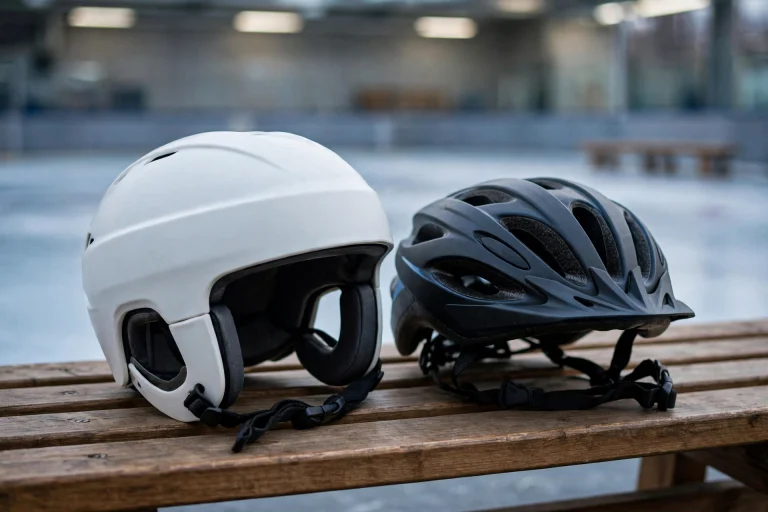
Short track skaters wear a hard-shell helmet that covers the top, sides, and back of the head. It looks a little like a bike helmet, but it is built for ice: the shell is smooth and hard, and it fits snugly so it does not shift during a fall. Some helmets have a small brim or a smooth, rounded shape that helps the head slide rather than catch on the ice.
The helmet must fit well and be fastened securely. A loose helmet can come off in a fall, and a helmet that slides around will not protect properly. Skaters usually wear the helmet with a thin hat or balaclava underneath in cold rinks, and the fit should be checked with that layer on.
Unlike some sports, short track helmets do not have a faceguard or a visor. The skater’s face is open, which gives a wide field of view — important when you need to see other skaters around you. The trade-off is that the face is not protected, which is why the helmet’s coverage of the rest of the head matters so much.
Is a Helmet Required or Just Recommended?
For racing, a helmet is required. The rules of the sport set out the protective equipment skaters must wear, and a helmet is at the top of that list. A skater who arrives at the start line without a helmet will not be allowed to race. For training, most clubs and rinks also require helmets, even for experienced skaters, because falls happen in training just as they do in races.
Beginners should treat the helmet as non-negotiable from the first session. Learning to skate fast on a small oval involves falling, and a beginner who falls without a helmet risks a head injury that a helmet would have prevented. In general terms, if you are on the ice for short track, you should be wearing a helmet.
How Is a Short Track Helmet Different from a Long Track Helmet?
The main difference is that long track skaters usually do not wear helmets at all. Long track is raced on a 400-metre oval, with skaters racing in pairs in separate lanes, so there is far less close contact and far fewer falls. The risk profile is different, and the rules reflect that.
Short track helmets are also different from bike helmets, even though they look similar. A bike helmet is designed for a fall onto a road at cycling speeds, while a short track helmet is designed for falls onto ice, often at speed and sometimes involving contact with other skaters. The shell shape and the padding are tuned for ice, and the helmet must stay on through the sliding and tumbling of a fall on a hard, slippery surface.
If you are learning about helmet technology in general, reading about what MIPS is for helmets can help you understand one of the features found in modern helmets.
What Should You Look for When Choosing a Short Track Helmet?
Fit comes first. The helmet should sit level, cover your forehead, and feel snug all round without pressing painfully. Shake your head gently: the helmet should stay put. Try it on with whatever you will wear underneath, and check the strap fastens securely under your chin.
Next, check the shell. It should be smooth and hard, without cracks or damage, and it should meet the standard required by your club or competition. Ask your coach or club which standard applies before you buy, because different organisations may have different requirements.
Finally, think about comfort. A helmet you find comfortable is one you will wear every session without thinking about it. Ventilation matters in a warm rink, and removable padding that can be washed is a practical plus, because helmets get sweaty fast in training.
It is also worth noting that helmet rules can vary between countries and between levels of competition, so a helmet that is accepted at a local club night may need checking before a bigger event. The safest approach is to buy a helmet from a recognised maker, keep the documentation that shows which standard it meets, and ask your coach to check it before your first competition. That way there are no surprises at the equipment check. Some clubs keep a small stock of loan helmets for beginners, which is a good way to try the sport before buying your own — but a loan helmet should still be checked for fit and condition before every session, just as your own would be.
Frequently Asked Questions
Q: Do short track skaters wear helmets in training?
A: In general terms, yes. Most clubs require helmets for training as well as racing, because falls are common in practice too.
Q: Can I use a bike helmet for short track speed skating?
A: In general terms, a bike helmet is not the right choice. Short track helmets are built for falls on ice, and your club or competition may require a helmet that meets a specific standard for the sport.
Q: When should a short track helmet be replaced?
A: After a hard impact, or if the shell is cracked or the padding is worn out. In general terms, a helmet that has taken a serious hit should be replaced even if the damage is not obvious.

Olivia
Writer at Helmet Today, covering helmet reviews, fit and riding safety.