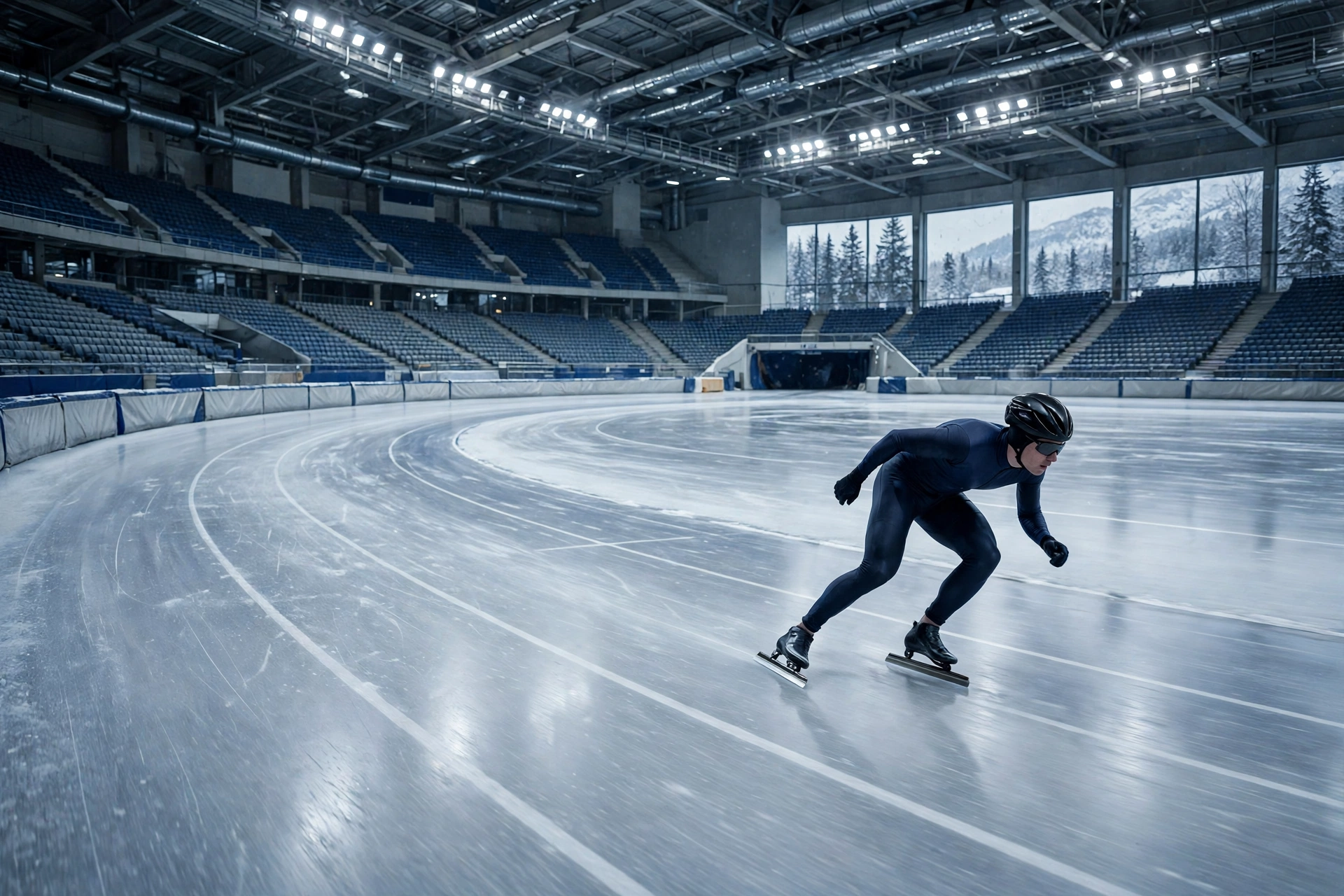
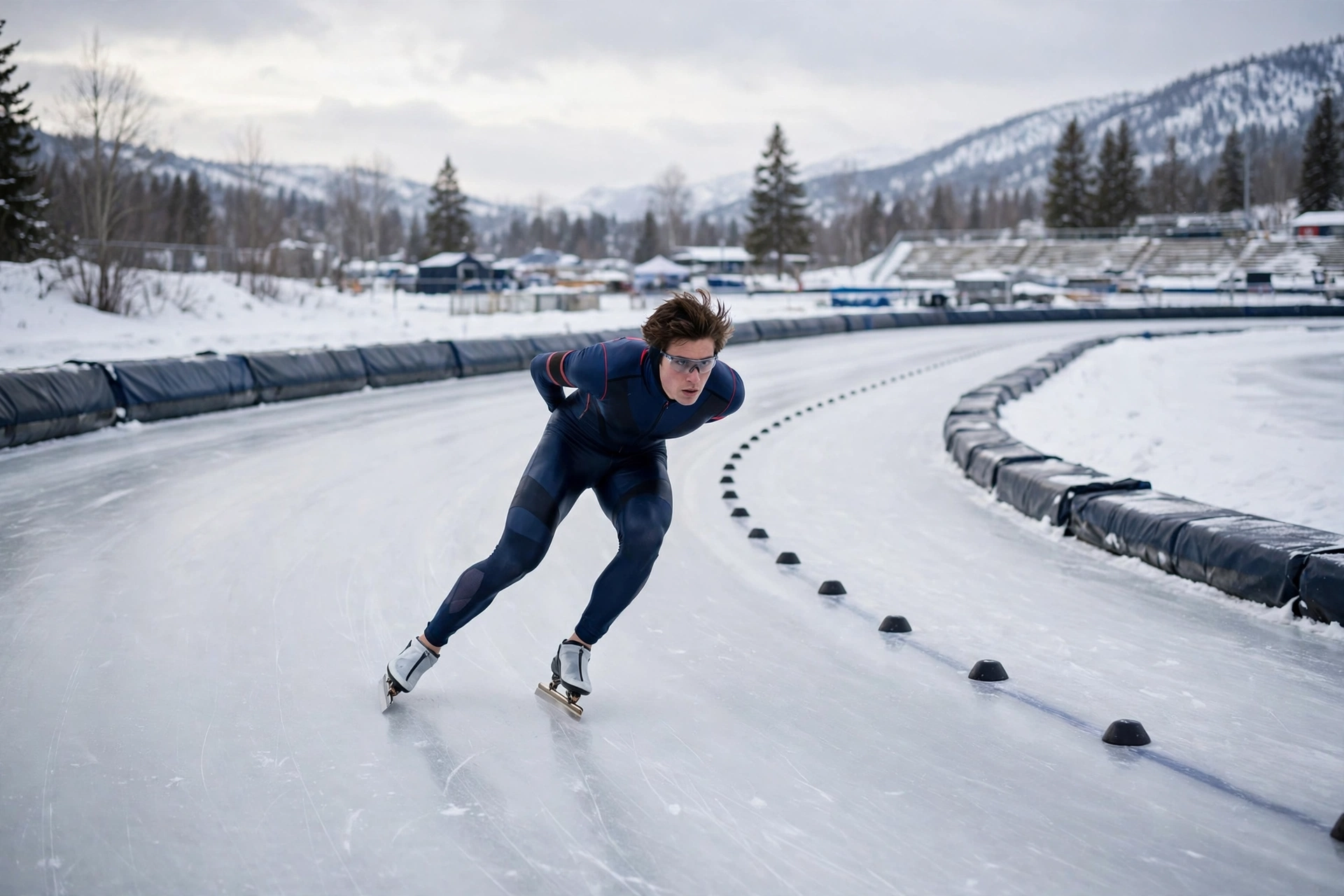
No, long track speed skaters do not usually wear a helmet — in long track, helmets are not required, and most skaters race without one. That surprises people who know short track, where helmets are compulsory, but the two forms of speed skating are very different sports in practice. Long track is raced in separate lanes on a large oval, with far less close contact and far fewer falls.
This guide explains why long track skaters skate bare-headed, when a helmet might still be a good idea, and what the rules actually say — so the difference between the two disciplines makes sense.
Why Don’t Long Track Skaters Wear Helmets?
The main reason is the format. Long track is raced on a 400-metre oval, with two skaters racing at a time in separate lanes. There is no pack racing, no overtaking in a crowd, and no tight pack of skaters jostling for position. Each skater races against the clock as much as against the other skater, and the risk of colliding with another skater is very low.
Falls still happen in long track — a skater can catch an edge, lose balance in a corner, or clip the ice — but they are far less frequent than in short track, and when a skater falls, they usually fall alone, without other skaters piling into them. The rules reflect this lower risk: helmets are not required, and most skaters choose not to wear one.
What Are the Risks Without a Helmet?
Skating without a helmet does not mean skating without risk. A long track skater travels at high speed, and a fall onto hard ice can still injure the head, especially if the skater falls backwards or sideways onto the ice. The corners are taken at speed, and a loss of balance there can send a skater into the boards or onto the ice with force.
In general terms, the risk is lower than in short track, but it is not zero. Some skaters, particularly beginners and younger skaters, choose to wear a helmet in training even though the rules do not require it. That is a personal choice, and coaches generally support it for anyone who feels more confident with one on.
There is also the question of other skaters. In mass-start long track races, where several skaters race together, the risk of contact rises, and some events may have different rules. Always check the rules for the specific event you are entering.
Do Any Long Track Skaters Wear Helmets?
Yes, some do. Beginners often wear a helmet while they learn, and some clubs require helmets for junior skaters in training. A skater returning from injury may wear one too, and some skaters simply prefer the extra protection. There is no rule against wearing a helmet in long track — the rules simply do not require one.
In mass-start events, where the pack format is closer to short track, helmets are more common and may be required by the event rules. If you are entering a mass-start race, check the event’s equipment rules in advance rather than assuming the usual long track position applies.
How Do the Rules Differ Between Long Track and Short Track?
The difference comes down to the format. Short track is pack racing on a small oval, with frequent contact and frequent falls, so the rules require helmets, gloves, and cut-resistant clothing. Long track is mostly time-trial racing in lanes on a large oval, with little contact, so the rules are lighter.
The two disciplines are governed by the same international body, but the rules for each reflect the different risks. A skater who competes in both needs to know both sets of rules and have the right kit for each. If you are learning about helmet technology in general, reading about what MIPS is for helmets can help you understand one of the features found in modern helmets.
Should a Beginner Wear a Helmet for Long Track?
In general terms, yes — a beginner should wear a helmet for long track training, even though it is not required. Beginners fall more often than experienced skaters, they are still learning to balance at speed, and they have not yet learned how to fall safely. A helmet gives a margin of safety while those skills develop.
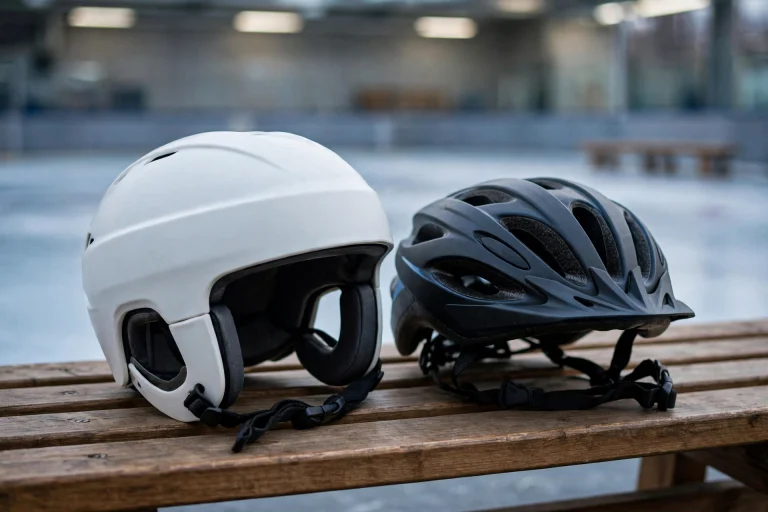
Choose a helmet that fits well, sits level, and feels snug without pressing. A short track helmet or a well-fitting hard-shell skate helmet is a reasonable choice for a beginner. As your balance and confidence improve, you can decide with your coach whether to keep wearing one. Many experienced skaters stop wearing a helmet for racing but keep one for training sessions where they are trying new things.
There is also a cultural side to the difference. Long track skating has a tradition of minimal kit: the skater, the suit, and the blades, with nothing extra. That tradition comes from the sport’s origins as a test of speed over distance, where every gram and every bit of drag was seen as a disadvantage. Short track, by contrast, grew up as a pack-racing sport where contact was part of the game from the start, so protective kit was built into its culture early on. Neither tradition is right or wrong — each matches the risks of its own format. What matters for you is not the tradition but your own situation: your level, your confidence, and the kind of skating you are doing on the day.
Frequently Asked Questions
Q: Is it allowed to wear a helmet in long track racing?
A: Yes. Nothing in the rules forbids it — helmets are simply not required. A skater who wants the extra protection is free to wear one.
Q: Why do short track skaters wear helmets but long track skaters do not?
A: Short track is pack racing on a small oval with frequent contact and falls, while long track is mostly raced in separate lanes with little contact. The rules match the risk of each format.
Q: Do long track skaters wear helmets in mass-start races?
A: In general terms, mass-start races carry more risk because skaters race together, and helmets are more common there. Check the event rules, as some mass-start events require them.

Olivia
Writer at Helmet Today, covering helmet reviews, fit and riding safety.