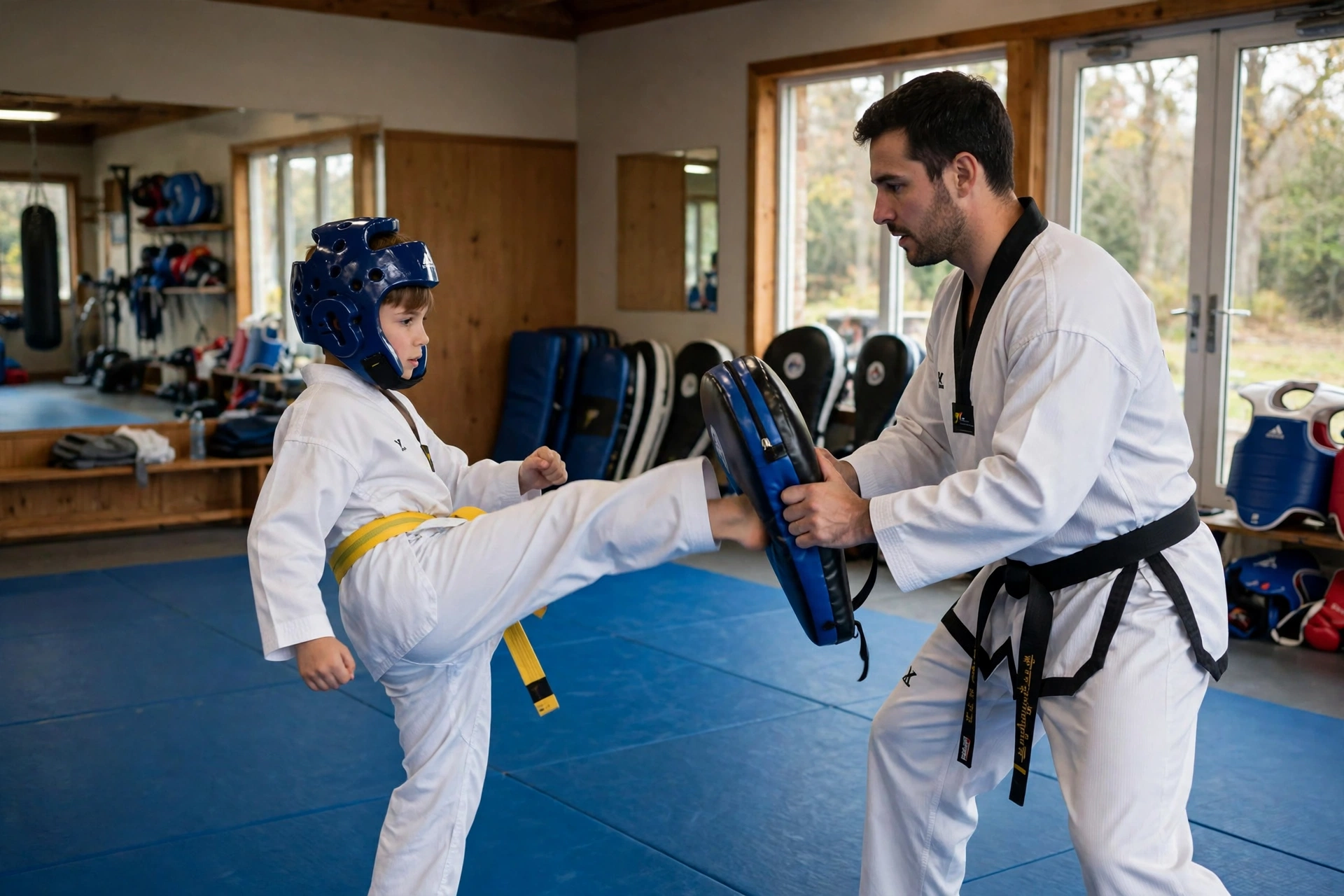
To choose taekwondo headgear for juniors, pick a model made for young students that fits snugly without pressing, covers the ears and the back of the head, and stays in place during kicks, blocks, and light sparring. In general terms, the best junior headgear is the one your child will wear happily for a full class, that their instructor accepts, and that does not slide over their eyes or muffle their hearing. Size, padding, and fit matter far more than colour or brand.
Junior taekwondo students are still growing, so headgear that fitted last year may be too tight or too loose this year. A good choice balances protection with comfort and visibility. This guide explains what to look for, how to fit junior headgear, and the mistakes parents often make when buying it.
What Is Taekwondo Headgear for Juniors?
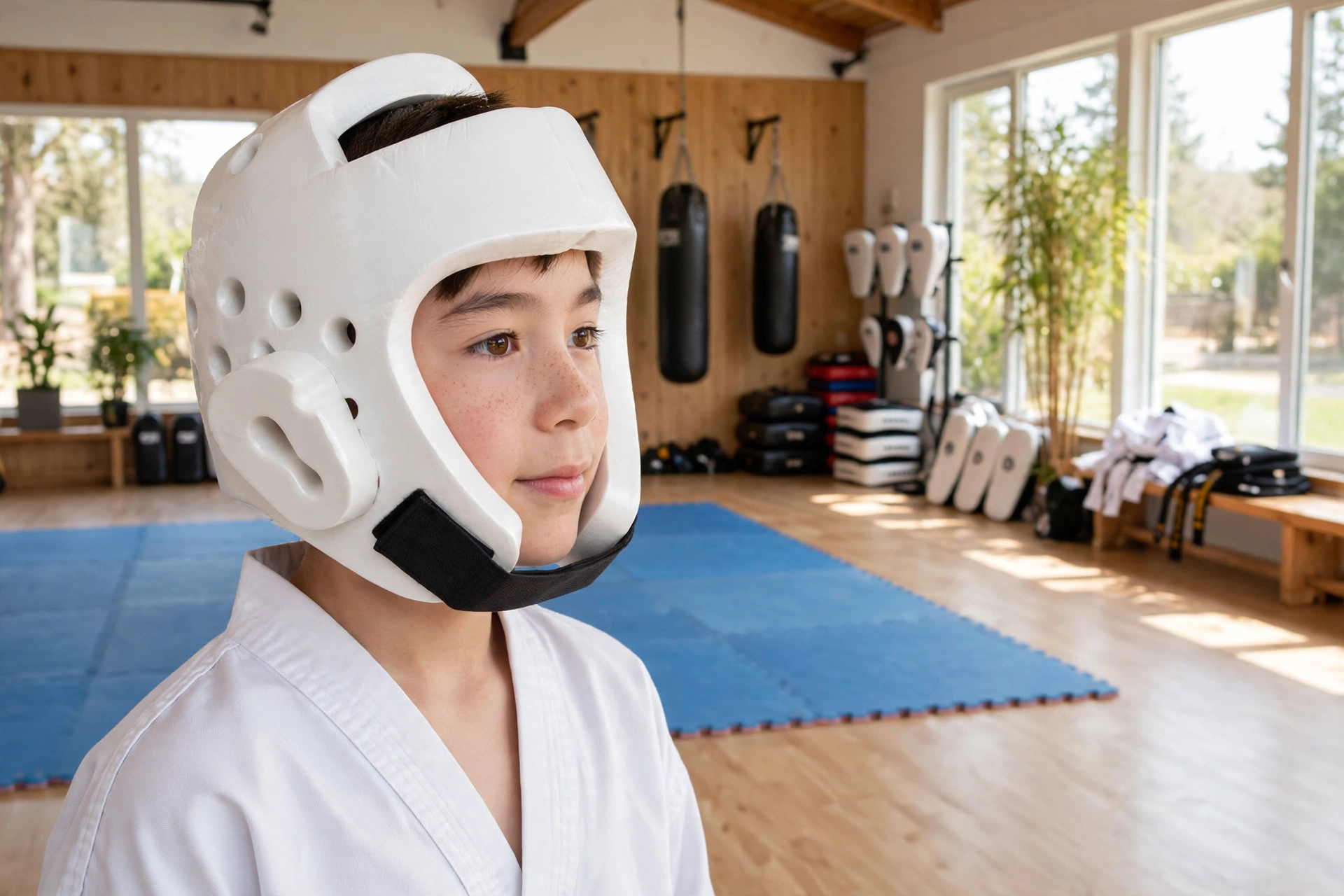
Taekwondo headgear for juniors is padded head protection designed for young students, usually made from foam, vinyl, or a soft shell with a padded lining. It typically covers the top, sides, and back of the head, with ear protection built in, and fastens under the chin or at the back. Some models have an open face so the student can see clearly, breathe easily, and be seen by their partner. Others have a fuller face guard for younger or less experienced students.
Junior headgear is not the same as adult headgear in a smaller size. It is shaped for a child’s head, with lighter padding and a closer fit around the ears and jaw. It is used mainly in class drills and supervised sparring, where light contact can happen even when students try to control their kicks.
Many clubs have their own rules about which type is allowed. Before buying, ask the instructor what style the club uses and whether a face guard is needed. Buying the wrong style can mean buying twice.
How Should Junior Taekwondo Headgear Fit?
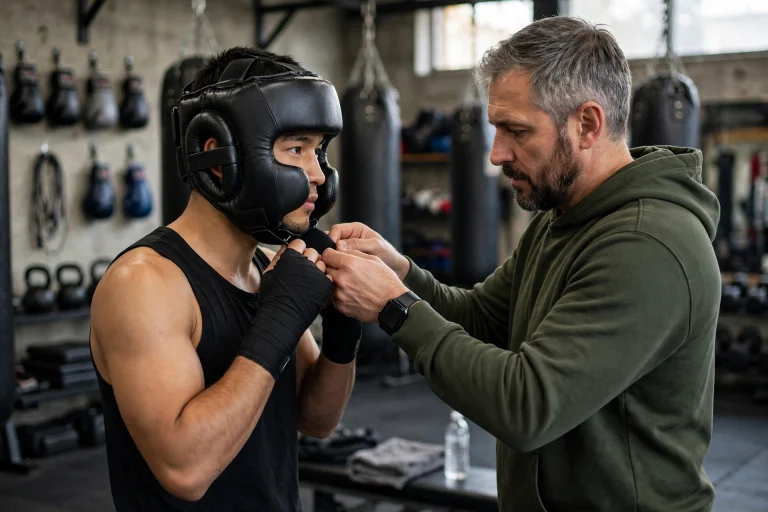
Fit is the first test, and it is worth doing properly in the shop or at home before a class. The headgear should sit level on the head, low enough to cover the forehead, without tilting back or sliding forward. It should feel snug all around, with no gaps at the temples and no pressure points that throb after a few minutes. Ask your child to shake their head gently from side to side: the headgear should move with the head, not slide on its own.
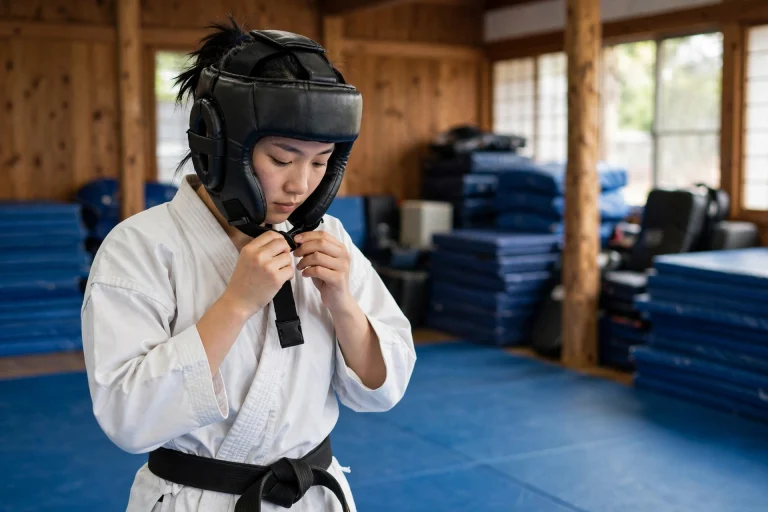
Check the ears next. The ear cups or padding should sit over the ears without folding them or pressing hard. If the ears hurt after a short try-on, they will hurt far more after a full class. Check the chin strap too: it should be snug enough to keep the headgear in place, but not so tight that it digs in or makes swallowing uncomfortable. A strap that is left loose defeats the purpose of the headgear.
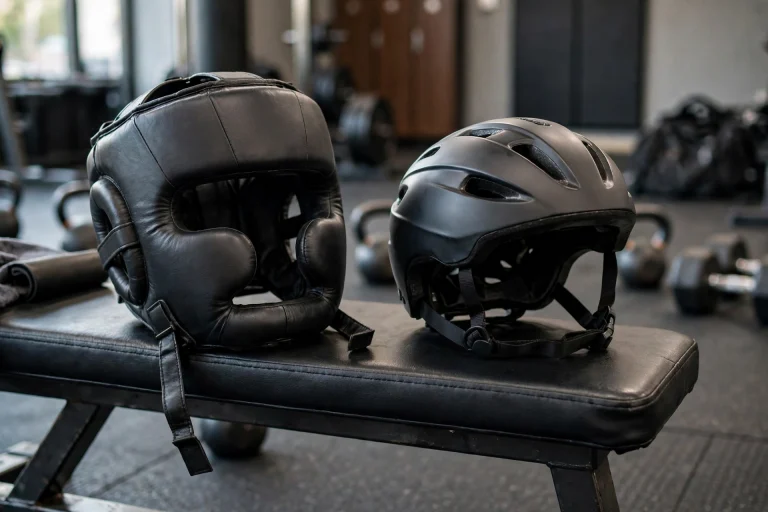
Vision matters as much as padding. Ask your child to look up, down, left, and right while wearing it. They should be able to see a partner’s foot coming in from the side and the instructor at the front of the class. If the headgear blocks the edges of their vision, they may turn their whole head to look around, which slows their reactions. If you are learning about helmet technology, reading about what MIPS is for helmets can help you understand one of the features you may see listed on protective headgear.
What Padding and Coverage Should Parents Look For?
Look for even padding that feels firm but not hard, and that springs back when you press it. Thin padding over the temples or the back of the head is a warning sign, because those are the areas most likely to take a glancing blow. The padding should be stitched or fixed in place, not loose inside the cover, so it does not bunch up during use.
Coverage is a balance. Full coverage protects more of the head, but it can also feel hotter and heavier for a young student. Open-face junior headgear is common in taekwondo because it keeps the face visible and makes breathing easier, which suits light sparring and drills. A model with a clear or padded face guard may suit a very young beginner who is still learning distance and control. In general terms, match the coverage to the level of contact in the class, not to the most dramatic option on the shelf.
Check the materials as well. A wipe-clean outer surface is practical for a child’s headgear, which will get sweaty. Removable or washable lining is a bonus, because headgear that smells bad is headgear a child will resist wearing. Light weight matters too: a heavy model can tire a young neck over a long class and make the student want to take it off early.
When Should Junior Headgear Be Replaced?
Junior headgear should be replaced when it no longer fits, when the padding has gone flat, or when the straps, stitching, or fastenings are worn. Children grow quickly, so check the fit every few months rather than once a year. If the headgear now sits high on the forehead, pinches the ears, or slides around, it is time for the next size up.
Padding wears out with use, even if the outside still looks tidy. Foam that stays dented after you press it, or that feels thin in one spot, is no longer giving even protection. Cracks in a hard outer shell, torn seams, or a strap that slips are also reasons to replace it. In general terms, headgear that has taken a hard knock should be checked closely, and replaced if you can see or feel damage.
What Mistakes Should Parents Avoid When Buying?
The most common mistake is buying a size up to grow into. Headgear that is too big slides, blocks vision, and can shift at the wrong moment. It is better to buy the size that fits now and replace it sooner. Another mistake is choosing by colour or by a favourite athlete’s model without checking the club’s rules or the fit.
Avoid headgear that is hard to put on or take off, because a child who struggles with straps before every class will soon dislike wearing it. Avoid models with loose parts, dangling straps, or rough edges inside that could rub the ears or forehead. And avoid assuming that more padding always means more protection: padding that is too thick can be hot, heavy, and poorly fitted, which can make a student less safe, not more.
Finally, involve your child in the choice. Let them try on two or three models and say which feels best. A junior student who helped choose their headgear is far more likely to wear it without complaint.
Frequently Asked Questions
Q: Does my child need headgear for every taekwondo class?
A: In general terms, headgear is mainly needed for sparring and contact drills. Ask your child’s instructor when it is required, because rules vary between clubs and class types.
Q: Can junior taekwondo headgear be shared between children?
A: It can be shared only if it fits the second child well and the padding and straps are in good condition. Sharing headgear that is the wrong size or worn out is not a good idea.
Q: How do I clean junior taekwondo headgear?
A: Wipe the outside with a damp cloth after use, let it air-dry away from direct heat, and follow the maker’s care instructions for any removable lining. Do not soak it unless the instructions say you can.

Olivia
Writer at Helmet Today, covering helmet reviews, fit and riding safety.