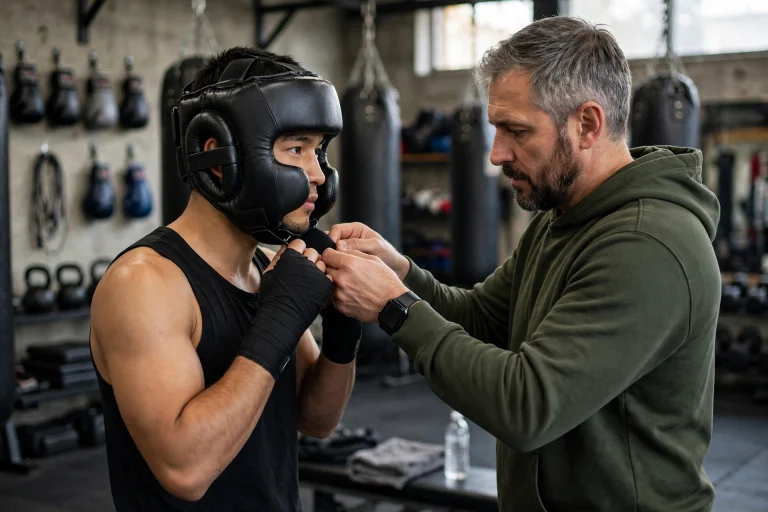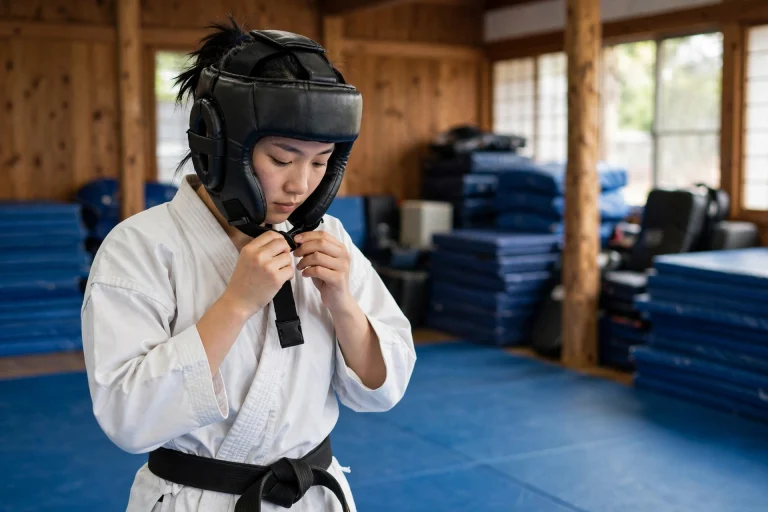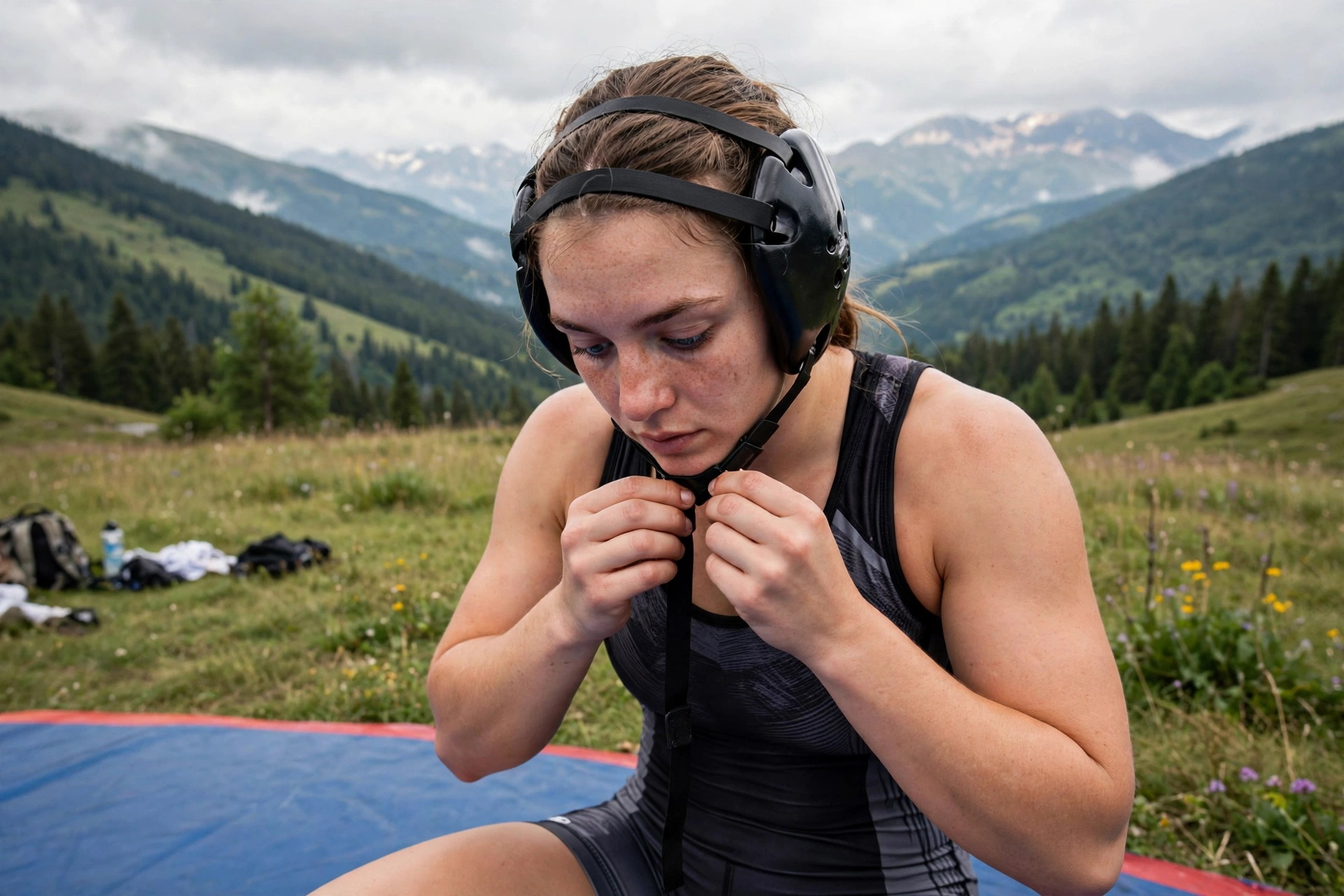
To fit wrestling headgear correctly, place the ear cups directly over your ears, tighten the straps until the headgear moves with your head rather than sliding on its own, and check that you can still hear your coach and see clearly in every direction. In general terms, a good fit is snug but not painful: the cups should cover the whole ear, the straps should sit flat, and the headgear should stay put through a shot, a sprawl, and a scramble.
A poorly fitted pair is worse than it looks. Loose headgear slips at the wrong moment, tight headgear hurts and distracts, and cups that sit off the ear leave the very part they are meant to protect exposed. This guide walks through fitting wrestling headgear step by step, so you can get it right before you step on the mat.
How Do You Put Wrestling Headgear On Correctly?
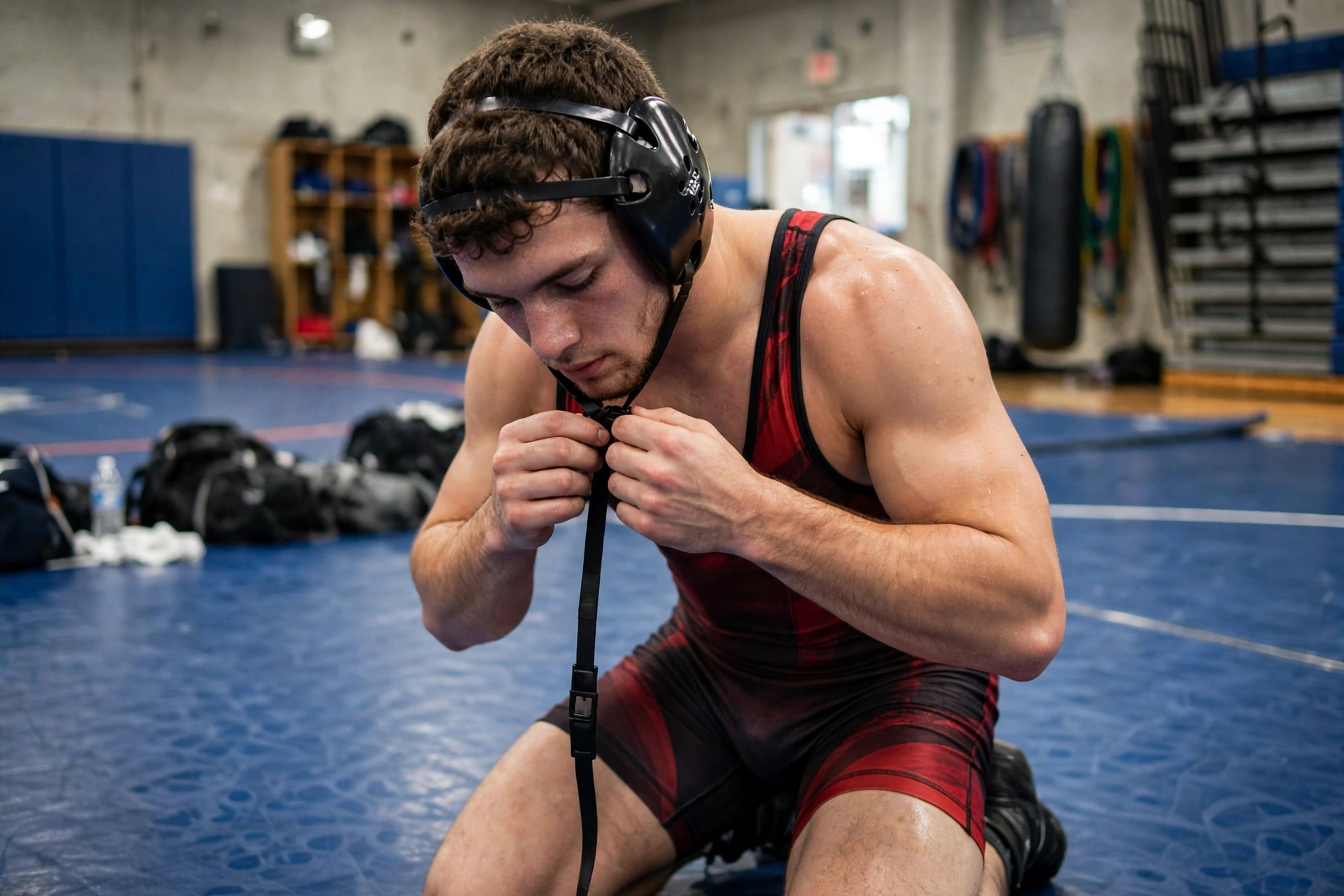
Start with the straps loosened. Hold the headgear with the ear cups facing your ears and the straps over the top of your head. Place the cups over your ears first, making sure each ear sits fully inside its cup, not folded or half out. The cups should feel centred, not pushed forward toward your cheek or back toward the back of your head.
Next, bring the straps into place. The top straps should run over the crown of your head, and the back strap should sit at the back, not riding up or slipping down your neck. If your model has a chin strap, bring it under your chin and fasten it so it is snug but not tight. Take a moment to check in a mirror if you can: the headgear should look level from the front, with both cups at the same height.
How Tight Should the Straps Be?
The straps should be tight enough that the headgear does not shift when you move, but loose enough that you can wear it for a full session without pain. A useful test is to shake your head gently from side to side and nod up and down. The headgear should move with your head, not lag behind or slide across your skin. If it slides, tighten the straps a little at a time until it holds.
Tighten the straps evenly. If one side is much tighter than the other, the headgear will pull to one side and one ear will be less protected. Adjust in small steps, checking the feel after each change, rather than pulling one strap as tight as it will go. The goal is even pressure all around, with no single strap digging in.
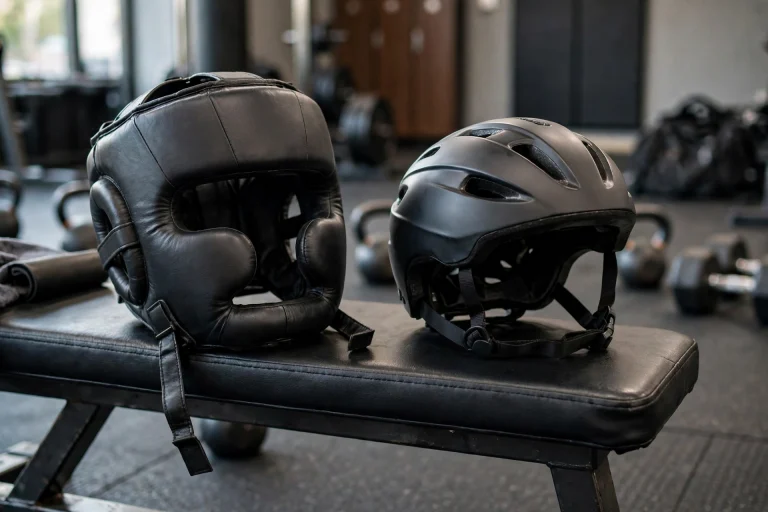
Watch for pressure points. Straps that cut behind the ears, across the forehead, or under the chin will become painful as you sweat and move. If you feel a hot spot after a few minutes of wearing the headgear at home, it will feel worse after a full training session. Loosen that strap slightly or try a different model if the pressure does not ease. If you are learning about helmet technology, reading about what MIPS is for helmets can help you understand one of the features you may see listed on protective headgear.
How Do You Check the Ear Cups Are in the Right Place?
The ear cups are the heart of wrestling headgear, so their position matters most. Each cup should cover the whole ear, with the ear sitting in the hollow of the cup rather than pressed flat against it. Run a finger around the edge of the cup: you should feel the cup, not the edge of your ear poking out. If part of the ear is outside the cup, loosen the straps, re-centre the cup, and tighten again.
Check that the ears are not folded. A folded ear inside the cup is uncomfortable and can be sore after a session. Take the headgear off, let the ear sit naturally, and put the cup back on carefully. Young wrestlers in particular should be shown how to do this, because they may not notice a folded ear until it hurts.
Also check your hearing. Talk to a training partner or coach while wearing the headgear. You should be able to hear instructions clearly, even if the sound is slightly muffled. If voices sound very distant or you have to ask people to repeat themselves often, the cups may be too deep, too tight, or the wrong model for you. Try loosening the straps slightly first, then try another model if hearing does not improve.
What Are the Signs That Wrestling Headgear Does Not Fit?
The clearest sign of a bad fit is movement. If the headgear slides forward over your eyes when you shoot, or slips back when you sprawl, the straps are too loose or the size is wrong. If it twists to one side during a scramble, the straps are uneven or the cups are not centred. Any of these mean the headgear is not doing its job when you need it most.
Pain is another warning sign. Sore spots behind the ears, a headache after a short session, or red marks that last long after you take the headgear off all point to a fit problem. Some discomfort in the first few wears is normal as you get used to it, but pain that grows during a session is not. Do not try to tough it out: a painful pair will be worn less often, and a pair left in the bag protects no one.
Vision problems are a third sign. If the straps or cups block the edges of your vision, or the headgear sits so low that you have to tilt your head back to see, the fit is wrong. Wrestling needs good peripheral vision to spot a shot or a change of direction. If you find yourself turning your whole head to look around, refit the headgear or try a different size.
How Often Should You Re-Check the Fit?
Check the fit at the start of every session, not just when the headgear is new. Straps stretch and slip over time, and a pair that fitted well last month may have loosened since. A quick check before you step on the mat — cups centred, straps even, head shake test — takes less than a minute and can save a frustrating bout.
Re-check the fit after any change, too. If you have washed the straps, replaced a buckle, or lent the headgear to someone else, the settings may have moved. Young wrestlers should have their fit checked more often, because they grow quickly and a pair that fitted at the start of the season may be tight by the end of it.
Frequently Asked Questions
Q: How do I know if my wrestling headgear is too small?
A: In general terms, headgear is too small if the cups press your ears flat, the straps feel very tight even when loosened, or the headgear gives you a headache after a short wear. Try the next size up.
Q: Should wrestling headgear feel uncomfortable at first?
A: A new pair can feel strange for the first few sessions, but it should not hurt. If pain, red marks, or blocked hearing persist after a few wears, the fit or the model is probably wrong.
Q: Can I wear wrestling headgear over a headband or hair?
A: Yes, but fit the headgear with the headband or hair in place, as you will wear it in a bout. Check that the cups still sit over the ears and the straps still hold evenly.

Olivia
Writer at Helmet Today, covering helmet reviews, fit and riding safety.