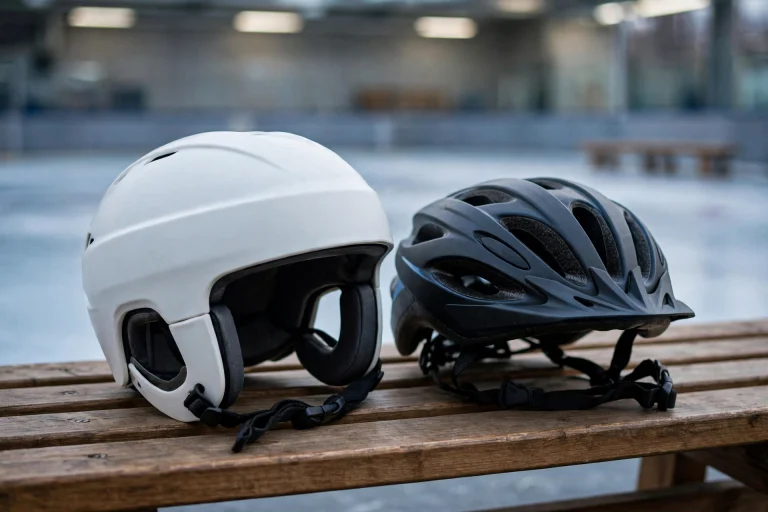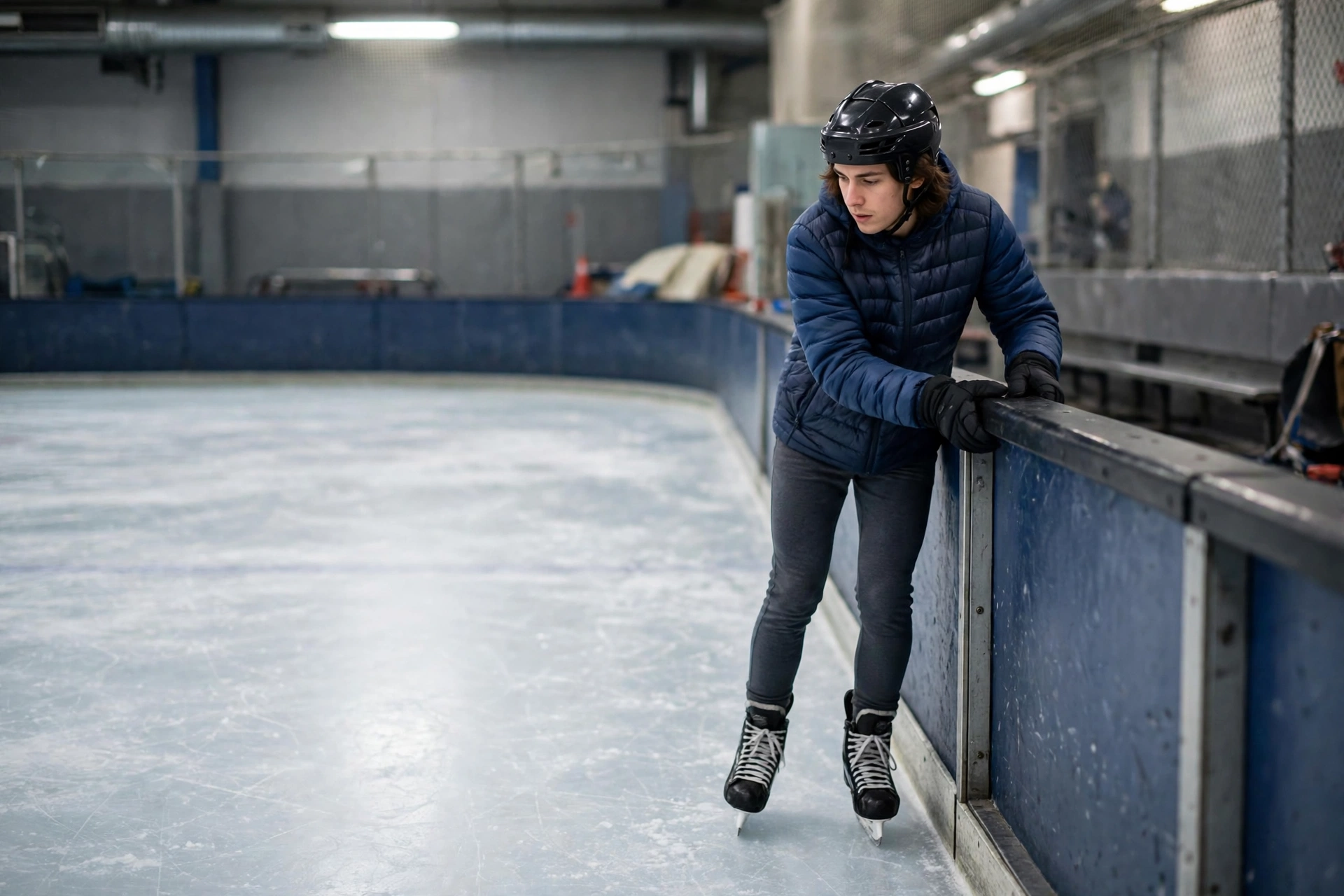
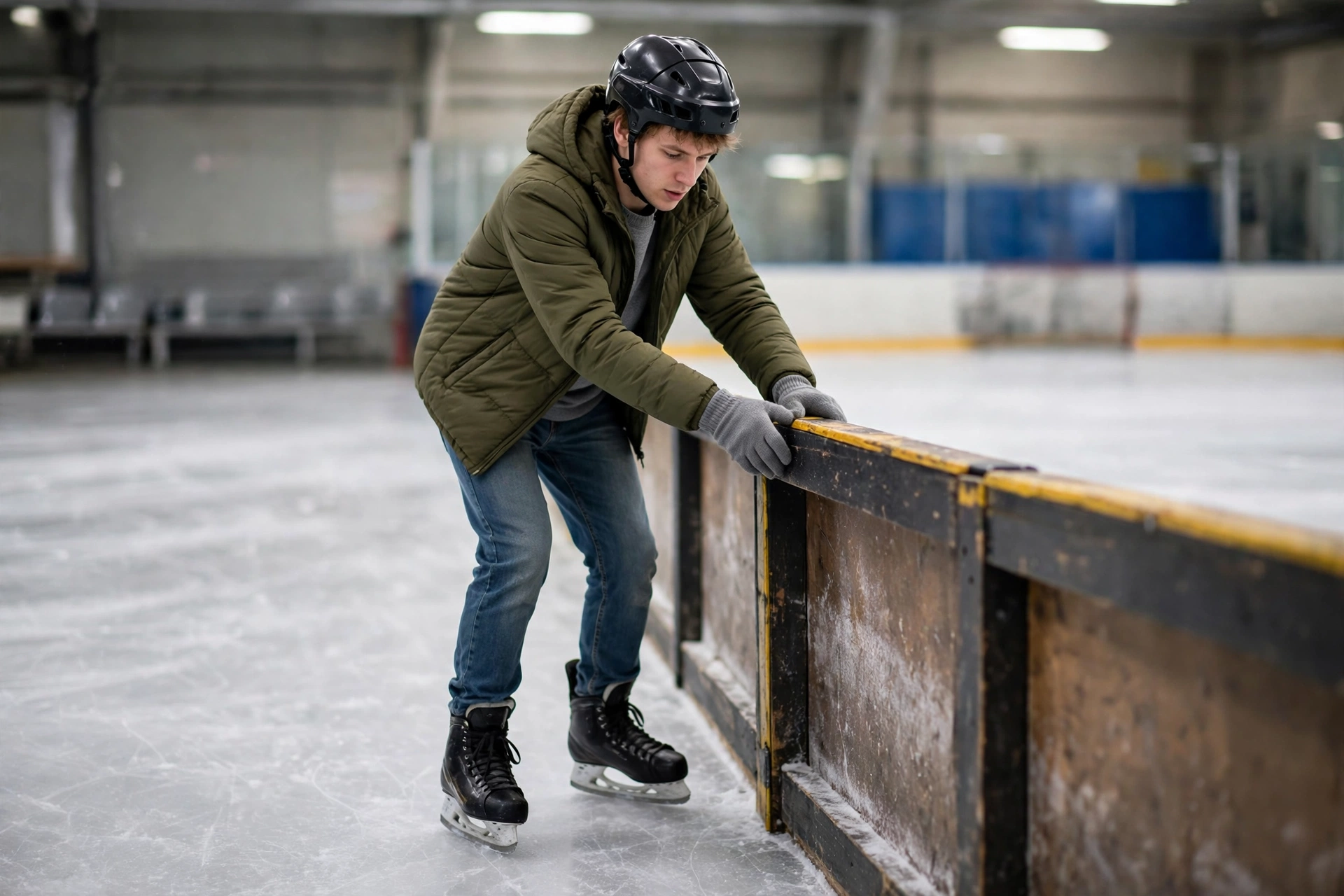
For a beginner ice skater, the best helmet is a well-fitting, hard-shell helmet that sits level, feels snug, and stays put — a ski helmet or a multi-sport skate helmet is usually the most comfortable choice. You do not need a specialist ice hockey helmet or a racing helmet. What matters is fit, coverage, and warmth, because you will be falling, and you will be cold.
This guide explains what to look for in a beginner’s ice skating helmet, what to avoid, and how to make sure the helmet you buy or hire actually protects you.
What Makes a Good Beginner Ice Skating Helmet?
A good beginner helmet covers the top, sides, and back of the head, and sits low enough to cover the forehead. The shell should be hard and smooth, so it slides on the ice rather than catching. Inside, the padding should feel even all round, with no pressure points that throb after a few minutes.
Warmth matters more than it does in most sports. A rink is cold, and a helmet with good ear coverage and insulation will keep you comfortable for a whole session. A ski helmet is popular for this reason: it is designed for cold conditions, it covers the ears, and it works well with a thin hat underneath.
Should Beginners Buy or Hire a Helmet?
If you are trying skating for the first time, hiring a helmet at the rink is the sensible choice. Most rinks hire helmets cheaply, and hiring lets you find out whether you enjoy skating before you spend money on kit. Ask for help with the fit — rink staff fit helmets every day and can tell quickly whether one is right for you.
If you decide to skate regularly, buying your own helmet is worth it. Your own helmet will fit you properly, you will know its history, and you will not have to queue for hire each time. Buy from a shop where you can try helmets on, rather than ordering online based on a size chart alone, because shape matters as much as size.
Either way, check the helmet before you use it. Look for cracks in the shell, a strap that fastens properly, and padding that is clean and intact. A hired helmet that looks damaged should be swapped for another one.
How Should the Helmet Fit?
The helmet should sit level on your head, about one or two fingers above your eyebrows. It should feel snug all round: push it gently from side to side and it should move your skin with it, not slide freely. Shake your head gently — the helmet should stay put.
Fasten the strap snugly under your chin. You should be able to fit one or two fingers between the strap and your chin, but no more. A loose strap lets the helmet shift in a fall, and a helmet that comes off in a fall protects no one.
Try the helmet on with whatever you will wear underneath it. If you wear a thin beanie, fit the helmet over it. A helmet fitted without the beanie may be too tight once you put it on, and a helmet fitted over a thick hat may be too loose without it.
What Mistakes Do Beginners Make with Helmets?
The most common mistake is wearing the helmet too far back, tilted so the forehead is exposed. The helmet should sit level and cover the forehead: that is the part of the head most likely to hit the ice in a backwards fall. If the helmet keeps sliding back, it is the wrong size or shape, or the strap is too loose.
Another mistake is choosing a helmet for looks rather than fit. A helmet that looks good but presses on your temples will be a distraction, and a helmet that is too big will shift when you fall. Comfort and fit matter far more than colour or style.
A third mistake is borrowing a helmet that does not fit. A helmet that belonged to someone else may be the wrong size, and it may have damage you cannot see. If you must borrow, check the fit carefully and inspect the shell and strap before you skate.
If you are learning about helmet technology in general, reading about what MIPS is for helmets can help you understand one of the features found in modern helmets.
What Else Should a Beginner Wear?
Alongside a helmet, beginners often benefit from wrist guards and knee pads, especially in the first few sessions. Gloves are essential: they keep your hands warm and protect them if you put a hand down on the ice. Wear warm, flexible clothing that lets you move, and avoid scarves or loose items that could catch.
Most importantly, take a lesson. A good instructor will teach you how to fall safely — tucking your chin, landing on your side, and keeping your hands in — which reduces the risk of injury far more than any single piece of kit. A helmet protects your head; learning to fall protects everything else.
It is also worth thinking about how a beginner learns to fall, because a helmet works best alongside good falling technique. A coach will teach you to tuck your chin, keep your hands in, and land on the fleshy part of your hip or your side rather than on your hands or your head. Practising falls at low speed, on purpose, sounds strange, but it builds the habit of protecting your head automatically. Combined with a well-fitting helmet, that habit is the best protection a beginner can have. And remember that falling is not failing: every skater falls, including the ones gliding confidently around the rink. The difference between a beginner and an experienced skater is not that one falls and the other does not — it is that the experienced skater has learned to fall well and get up quickly.
Frequently Asked Questions
Q: Can I use a bike helmet for ice skating?
A: In general terms, a bike helmet will give some protection, but a ski helmet or multi-sport helmet is a better fit for the cold and for falls on ice. A bike helmet’s vents let in cold air and it offers less ear coverage.
Q: Do children need a different helmet from adults?
A: Children need a helmet sized for a child’s head, with the same rules: level fit, snug feel, secure strap. Many rinks require helmets for children, so check the rink’s rules before you go.
Q: How do I know when to replace a skating helmet?
A: Replace it after a hard impact, if the shell is cracked, or if the strap or padding is worn out. In general terms, a helmet that has taken a serious hit should be replaced even if the damage is not visible.

Olivia
Writer at Helmet Today, covering helmet reviews, fit and riding safety.