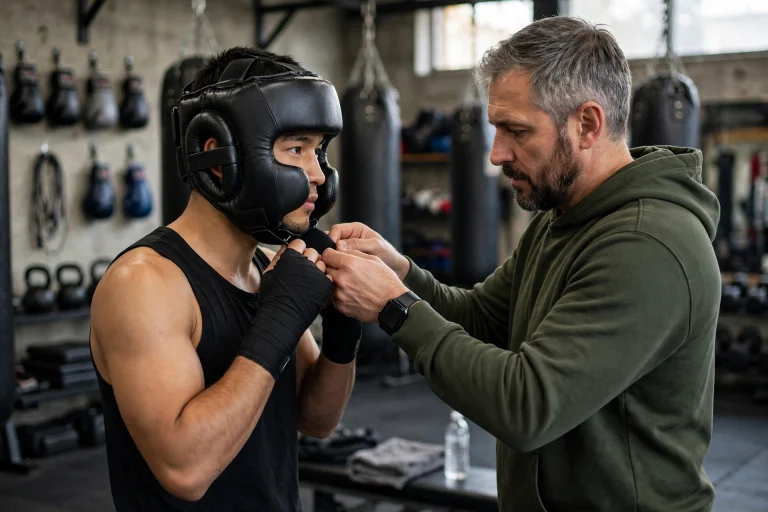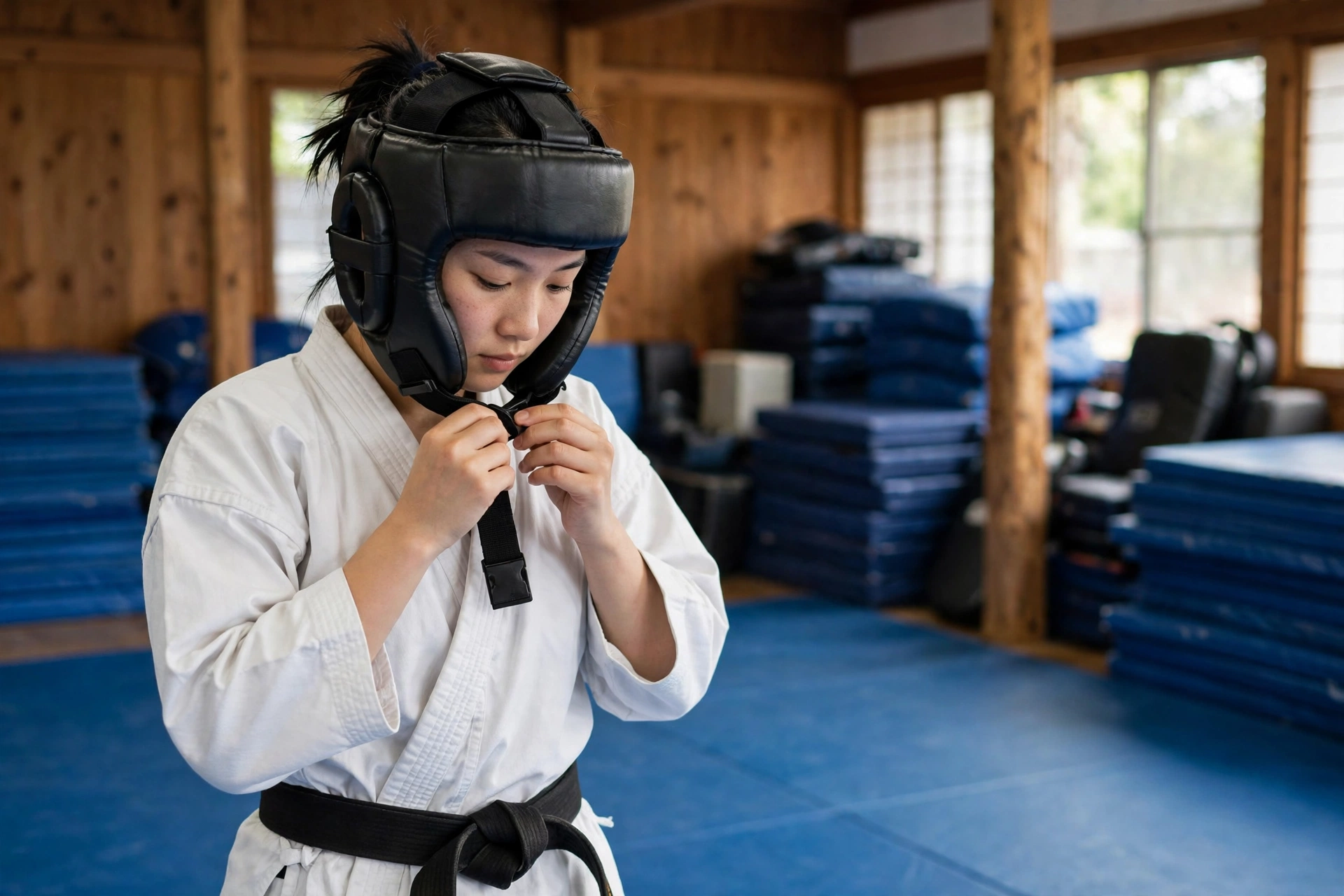
To stop a martial arts headguard slipping, fit it level on your head, tighten the straps evenly, and check the padding before every session. In general terms, most slipping comes down to a wrong size, loose straps, or worn padding — not a faulty design. A headguard that stays put protects you properly and lets you train without constantly adjusting it mid-round.
A slipping headguard is more than an annoyance. When it slides forward, it can block your vision; when it slides back, it leaves your forehead exposed; when it twists, it leaves one side of your head unprotected. It also breaks your focus, because you are thinking about the guard instead of your training. This guide covers the causes of slipping and the practical fixes that actually work.
Why Does a Martial Arts Headguard Slip in the First Place?
The most common reason is size. A headguard that is too large for your head has nothing to grip, so it moves every time you move. A guard that is too small may seem tight at first, but it can ride up and slip because it cannot sit low enough on your head to stay stable. Both problems come from the same mistake: guessing your size instead of measuring it.
Sweat makes slipping worse. As you train, sweat builds up between the lining and your skin, and the guard loses grip. A smooth lining, a sweaty forehead, and loose straps together are a recipe for a guard that slides at the worst moment. Hair plays a part too: long, smooth, or freshly washed hair gives the guard less to grip than short or slightly textured hair, and a guard worn over loose hair is more likely to move.
How Should a Headguard Fit to Stay in Place?
A headguard that stays in place starts with the right size. Measure around your head just above your eyebrows and ears, as the maker instructs, and compare the measurement with the size guide. If you are between sizes, ask your coach or the seller which way to go — in general terms, a snug fit that you can adjust is better than a loose fit you cannot tighten.
When you put the guard on, it should sit level, low enough to cover your forehead without covering your eyes. It should feel snug all around, with no gaps at the temples or the back of the head, and no pressure points that throb after a few minutes. Shake your head gently from side to side and up and down: the guard should move with your head, not slide across it.
Check the coverage as well. The guard should cover your forehead, temples, ears, and the back of your head, depending on its design. If it sits too high, it will feel unstable and leave your brow exposed. If it sits too low, it will block your vision and push down on your ears. Getting the height right is half the battle against slipping.
How Do You Tighten the Straps Correctly?
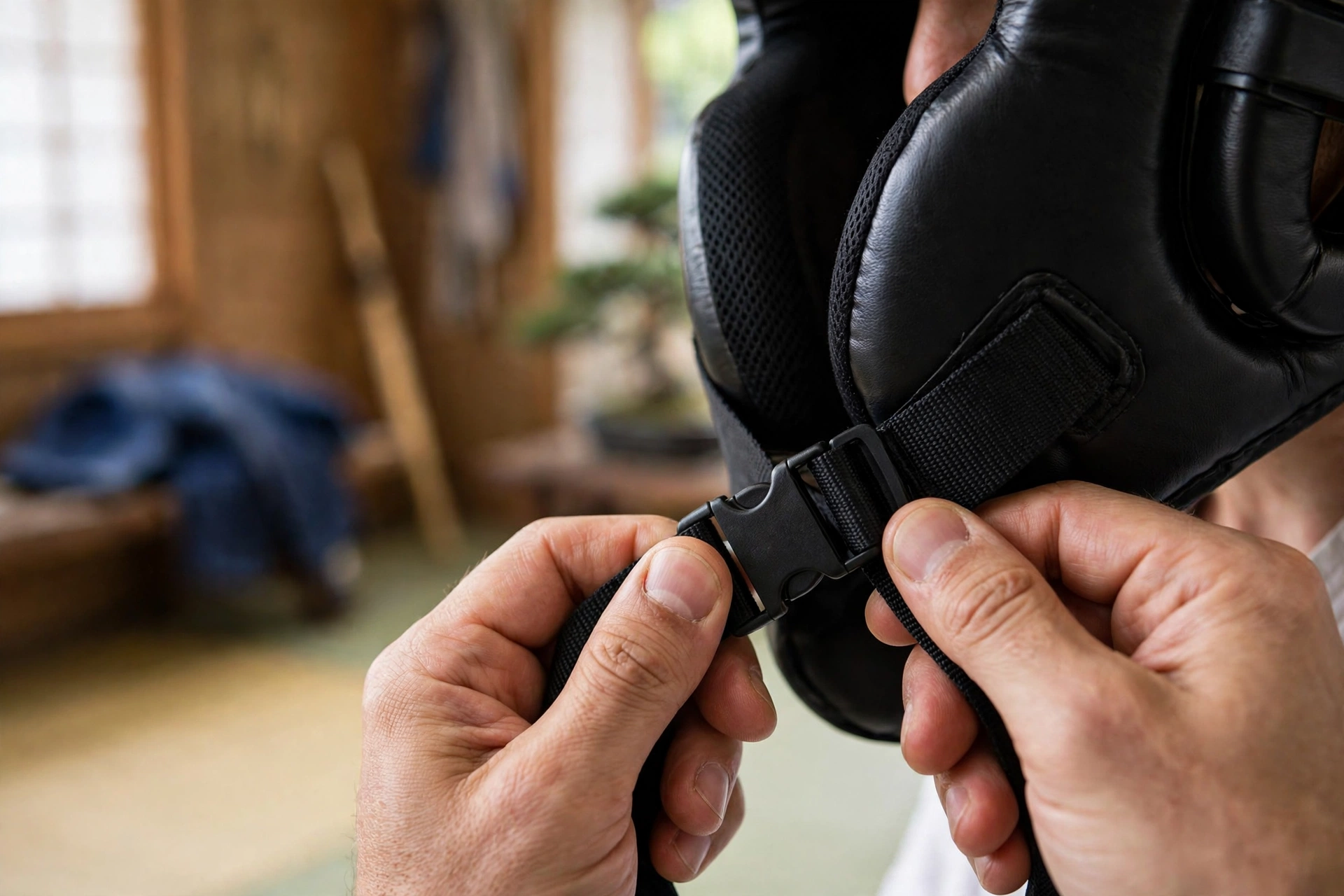
Start with the back fastening, which is usually a lace or a hook-and-loop strap. Tighten it so the guard feels snug around the back of your head, but not so tight that it gives you a headache. The back fastening does most of the work in holding the guard in place, so getting it right matters more than any other strap.
If your guard has a top strap, adjust it last. The top strap helps stop the guard from sliding down over your eyes, but it should not be doing all the work. If you find yourself pulling the top strap very tight to stop slipping, the problem is probably the size or the back fastening, not the top strap.
What Can You Wear Underneath to Improve Grip?
A snug skull cap is one of the simplest fixes for a slipping headguard. A thin, close-fitting cap gives the guard something to grip, absorbs sweat before it reaches the lining, and stops loose hair from getting in the way. Many martial artists wear one routinely, and it can turn a guard that slips into one that stays put.
A sweatband or headband can help too, especially if sweat is your main problem. A band worn across the forehead absorbs moisture and adds friction, which helps the guard hold. It is a cheap fix and worth trying before you buy a new guard. Make sure the band is thin enough not to change the fit of the guard — a thick band can make the guard sit too high.
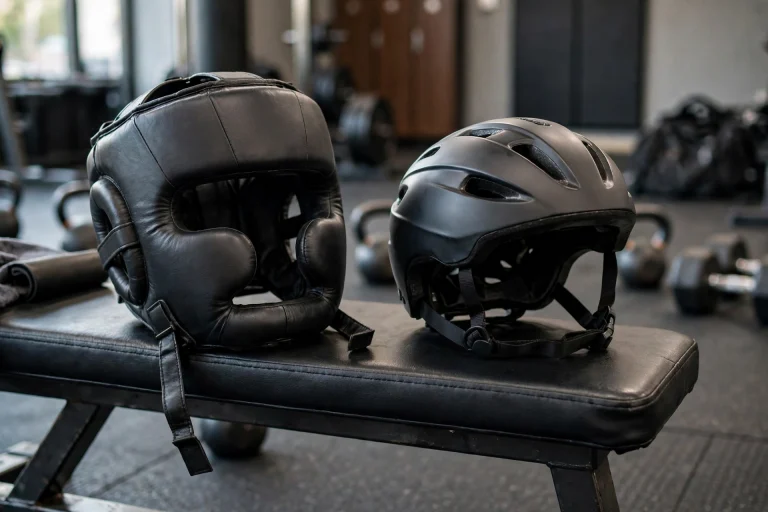
Some people use a small amount of grip tape or a non-slip liner inside the guard, but be careful with this. Anything you add inside the guard changes how it fits and how it absorbs impact, and it may not be allowed in competition. If you are learning about how protective headgear is built, reading about what MIPS is for helmets can help you understand why the fit and the lining matter so much, even though martial arts headguards use different materials from cycling helmets. For training, a skull cap is usually the safer and simpler option.
When Is Slipping a Sign You Need a New Headguard?
If you have tried the right size, even straps, and a skull cap, and the guard still slips, the guard itself may be the problem. Padding that has flattened or compressed will not hold the guard snugly, no matter how tight you pull the straps. Check the padding by pressing it with your fingers: if it stays flat, feels thin in places, or has bunched up to one side, it has worn out.
Stretched straps are another sign. Hook-and-loop fastenings lose their grip over time, laces fray, and chin straps stretch. If the straps no longer hold when you pull them tight, or if the hook-and-loop no longer sticks firmly, the guard will keep slipping. You can sometimes replace a strap, but if several parts are worn at once, a new guard is usually the better choice.
A guard that has changed shape is also worth replacing. Headguards can warp if they are stored badly, left in a hot car, or crushed in a bag. A warped guard will not sit level on your head, and no amount of strap adjustment will fix that. Store your guard somewhere cool and dry, with its shape kept as natural as possible, and it will last longer.
Frequently Asked Questions
Q: Should a headguard feel tight when I first put it on?
A: It should feel snug all around, without pressure points or pain. A new guard often feels tighter than a worn one, but it should not give you a headache or leave deep marks after a short session.
Q: Can I use hairspray or gel to stop my headguard slipping?
A: In general terms, it is better not to. Hair products can make the lining slippery or damage it, and they do not fix a size or strap problem. A skull cap or a correctly fitted guard is a more reliable solution.
Q: How often should I replace a headguard that keeps slipping?
A: If the padding has flattened, the straps no longer hold, or the guard has changed shape, it is time to replace it. For regular training, check the fit and condition every few months and replace the guard when it no longer stays put.

Olivia
Writer at Helmet Today, covering helmet reviews, fit and riding safety.