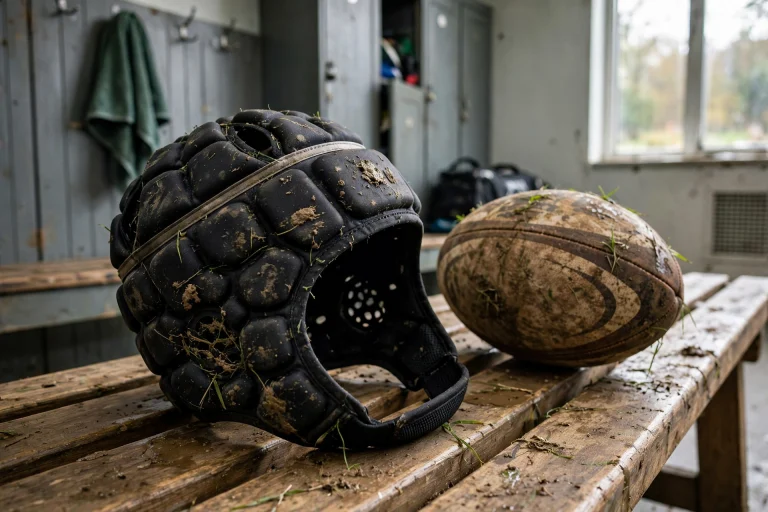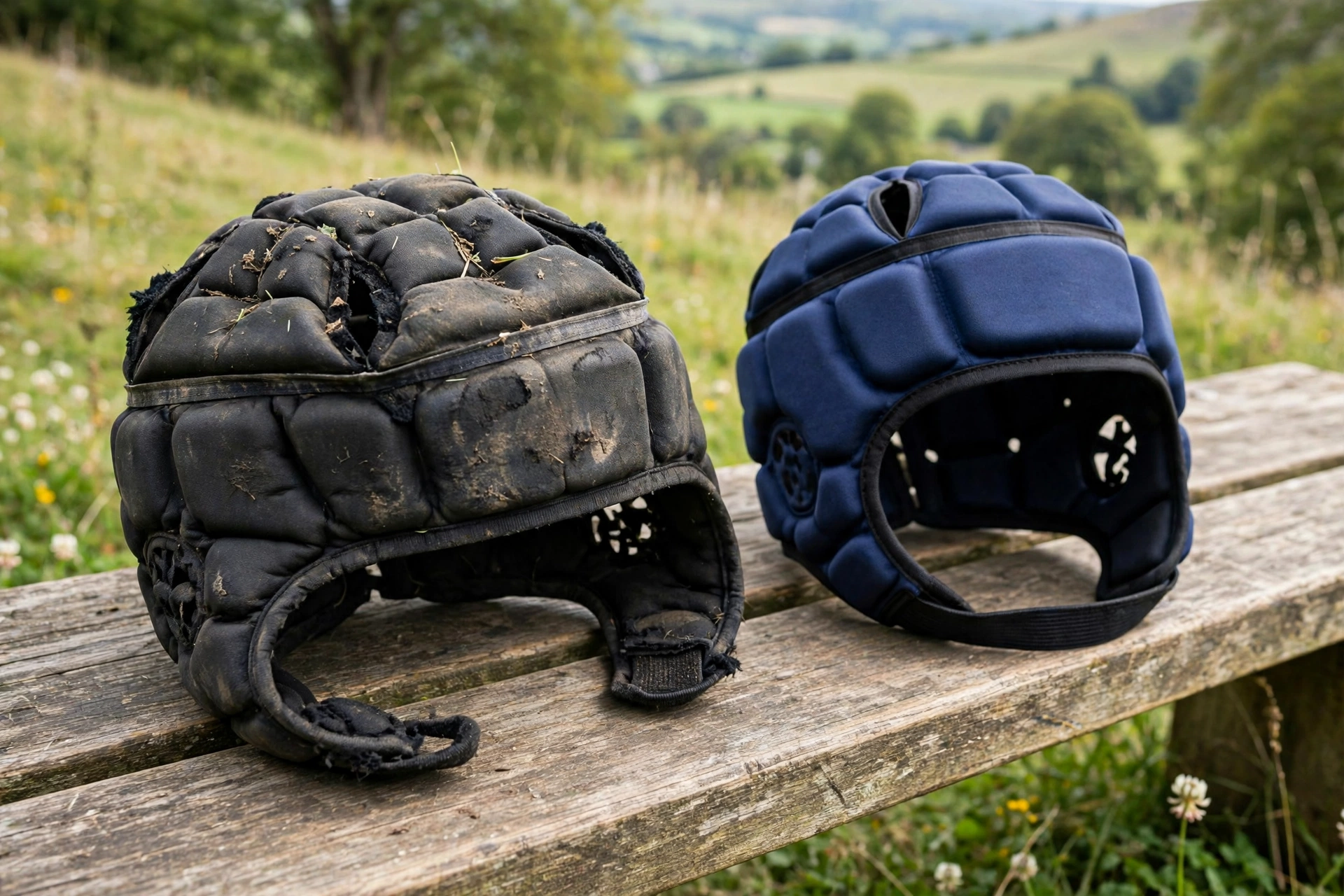
In general terms, you should replace rugby headgear when the padding has gone flat, the fit has loosened, the straps no longer hold it snugly, or the fabric is torn — because worn headgear will not stay in place where it is needed. There is no fixed expiry date printed on most headgear, so the decision comes down to regular checks. If your headgear no longer fits the way it did when it was new, it is time for a new one.
Rugby headgear is soft padded headgear, not a hard helmet, and it wears out in a different way from a hard shell. The foam compresses, the fabric stretches, and the straps lose their grip over a season of tackles, washes, and kit bags. This guide explains the signs that your headgear is worn out, how long it typically lasts, how to check it properly, and how to look after a new one so it lasts as long as it should.
How Long Does Rugby Headgear Usually Last?
How long rugby headgear lasts depends on how often you play, how hard the contact is, and how well you look after it. A player who trains and plays every week through a full season will wear headgear out faster than a player who wears it occasionally. In general terms, a season of regular use is a reasonable expectation for a well-made scrum cap, but that is a rough guide, not a guarantee — some headgear lasts longer, and some needs replacing sooner.
The foam is usually the first part to change. Each wash and each game compresses it a little more, and over time it becomes thinner and less springy. The fabric stretches with wear too, especially around the chin strap and the ear holes, which are pulled and tugged every time the headgear is put on and taken off. The straps and laces also weaken, and once they stop holding the headgear firmly, the fit is gone.
What Are the Signs Your Rugby Headgear Needs Replacing?
The clearest sign is a change in fit. If your headgear used to sit snugly and now slides, rotates, or rides up during a game, the fabric has stretched or the foam has compressed, and it is no longer holding its shape. Do the shake test: put it on, fasten the strap, and shake your head. If it moves on its own, it is too loose, and adjusting the strap will only help for so long before the stretch wins.
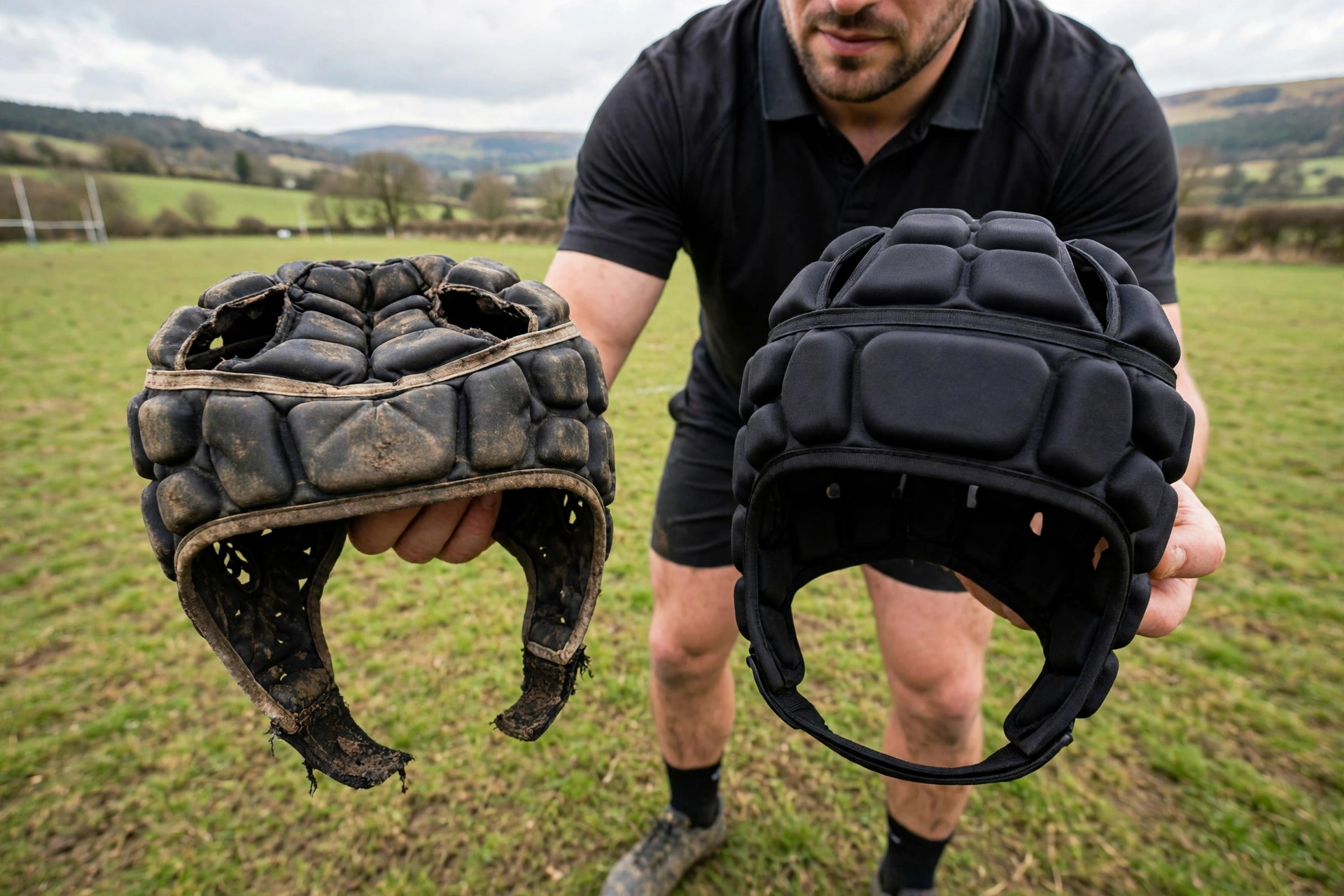
Look closely at the padding next. Press the foam over the crown and the ears: it should feel springy and even. If it feels flat, thin, or lumpy, or if you can feel hard spots where the foam has bunched up, the padding is worn out. Check the fabric too — thinning, tearing, or holes over the ears or at the seams are signs that the headgear is coming apart, and a tear can quickly become a bigger split in the next game.
How Do You Check Your Headgear Properly?
Get into the habit of checking your headgear at the start of each season and every few weeks during it. Lay it flat and look at the shape: does it still hold the shape of a head, or has it gone baggy and shapeless? Press the foam all over, feeling for thin spots or lumps. Pull the fabric gently at the seams and around the ear holes, looking for tears or thinning that could split under pressure.
Then try it on and run through the fit checks you used when it was new. Does the front edge sit just above your eyebrows? Do the ear holes line up with your ears? Does the chin strap hold snugly with one finger’s width underneath? Does it stay put when you shake your head and jog on the spot? If any of these checks fail and adjusting the straps does not fix them, the headgear has worn out rather than simply needing an adjustment.
Does a Hard Knock Mean You Should Replace Headgear?
With a hard helmet, a serious impact usually means replacing the helmet, because the liner may be damaged even if the shell looks fine. Rugby headgear works differently: it is soft padding, not a hard shell with a crushable liner, so a single knock does not automatically mean it must be replaced. What matters is whether the knock has changed the headgear — flattened the foam in one spot, torn the fabric, or stretched the straps.
After a heavy game, check the headgear for damage in the same way you would after any other game, paying extra attention to the area that took the knock. If the foam there feels flat or lumpy, or the fabric is torn, replace the headgear. If it looks and feels the same as before, and the fit is unchanged, it can keep being used. The key point is to check, not to assume — a headgear that looks fine on the outside can have flattened foam underneath the fabric.
There is one more consideration after a head injury. If you have had a knock to the head, the most important step is to follow your club’s concussion guidance and get checked by a medical professional if you have any symptoms. Headgear is not a treatment for a head injury, and replacing it does not make you safe to play again. Only proper assessment and rest can do that. If you are learning about helmet technology in general, reading about what MIPS is for helmets can help you understand one of the features used in hard helmets, even though soft rugby headgear does not use that system.
How Can You Make New Rugby Headgear Last Longer?
Looking after new headgear starts with washing it properly. Follow the maker’s instructions, which usually mean a gentle hand wash or a cool machine wash, and air-dry it away from direct heat. Do not tumble dry it, and do not leave it in a hot car. Wash it after games rather than letting mud and sweat dry into the fabric, and let it dry fully before you put it back in your kit bag.
Frequently Asked Questions
Q: Does rugby headgear expire after a certain number of years?
A: In general terms, no fixed expiry date applies to most rugby headgear. Replace it when the padding flattens, the fit loosens, or the straps wear out, rather than by the calendar alone.
Q: Can I keep using headgear with a small tear in the fabric?
A: A small tear may seem minor, but it can spread quickly in contact and expose the foam underneath. In general terms, it is safer to replace torn headgear than to keep playing in it.
Q: Should I replace headgear if I have outgrown it?
A: Yes. If your head has grown and the headgear feels tight, rides up, or no longer lines up with your ears, it no longer fits properly and should be replaced with the correct size.

Olivia
Writer at Helmet Today, covering helmet reviews, fit and riding safety.