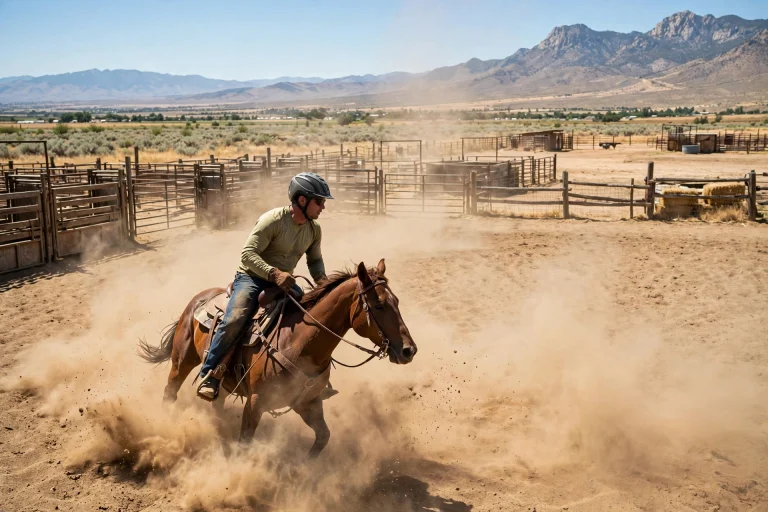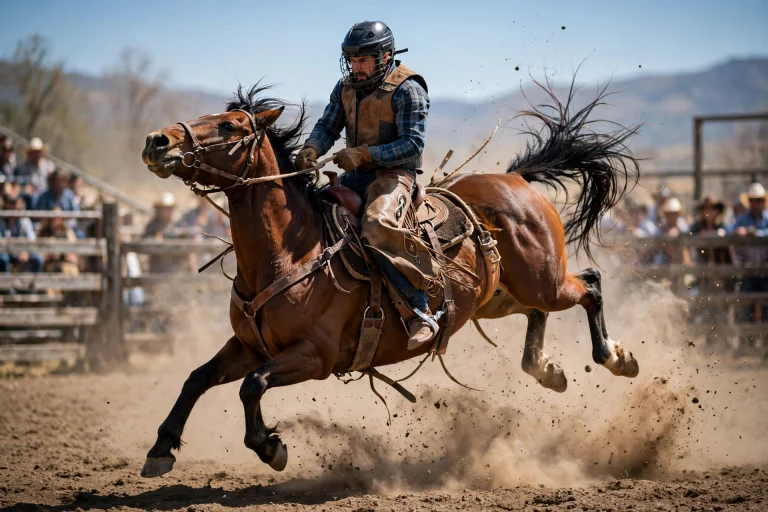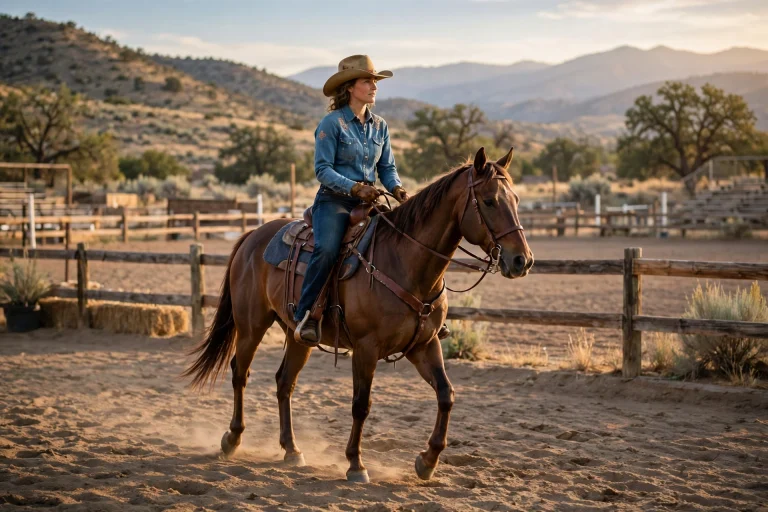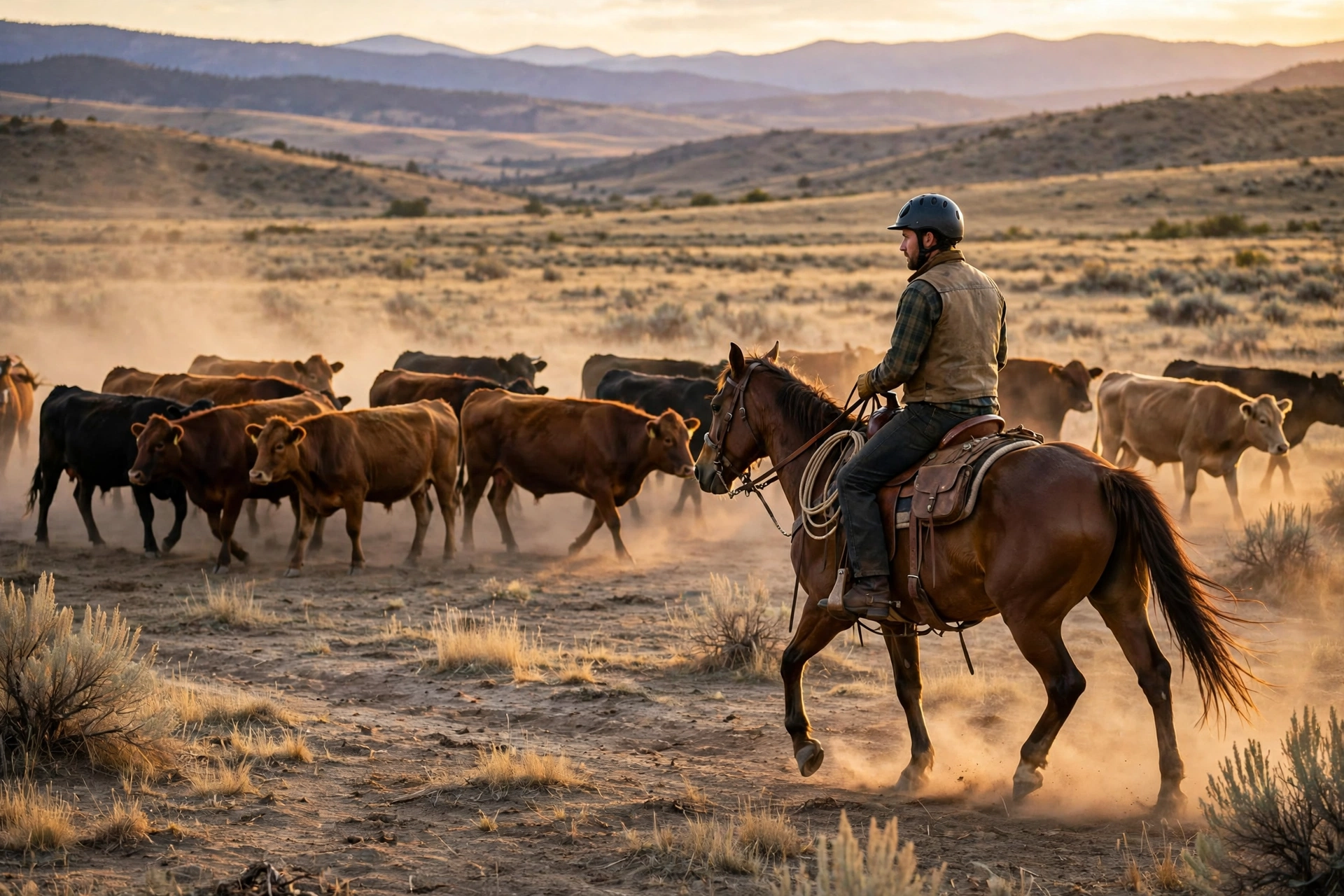
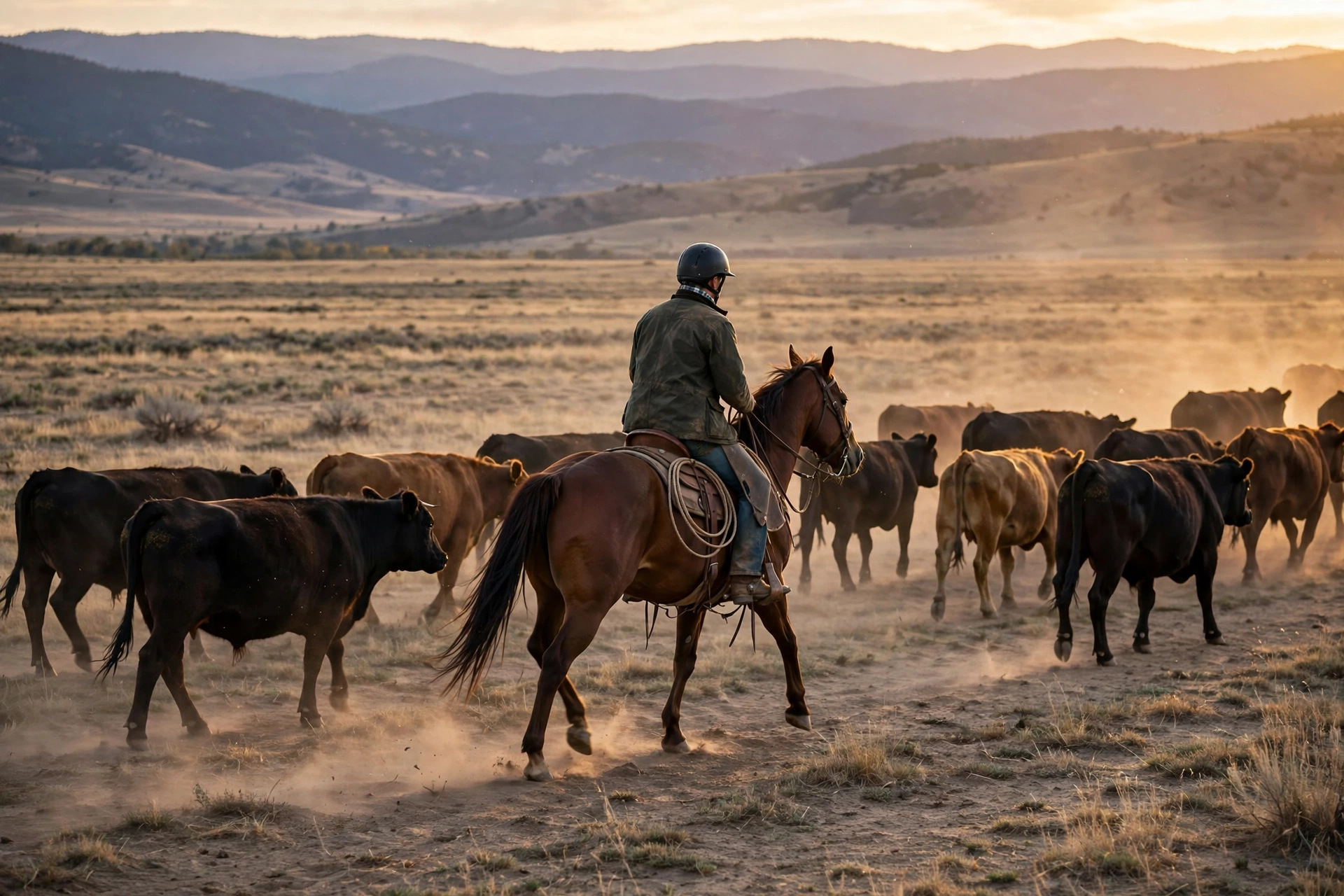
In general terms, the best helmet for ranch work on horseback is a well-fitting, certified riding helmet that is comfortable enough to wear all day, tough enough for outdoor work, and ventilated enough for long hours in the sun. Ranch work is not show riding: there is no judge, no dress code, and no reason to choose looks over protection. You are moving cattle, checking fences, and covering rough ground, often far from help, and a helmet is practical safety equipment in the same way as boots and gloves.
This guide explains what makes ranch work different from arena riding, what kind of helmet suits it, how to get the fit right, and which features matter most when you are in the saddle from morning to evening.
What Makes Ranch Work Different From Arena Riding?
Ranch work happens outdoors, on uneven ground, and over long distances. You might be riding through brush, crossing a creek, pushing cattle through a gate, or roping a calf. The ground under you changes constantly: soft dirt, rock, mud, and ruts. A horse can stumble on a hidden hole, shy at a snake, or slip on a wet crossing. In an arena, the footing is prepared and the surprises are few. On a ranch, the surprises are part of the job.
Distance matters too. If you come off in an arena, help is usually close by. On a ranch, you may be a long ride from the house, out of sight and out of earshot, possibly without phone signal. An injury that would be an inconvenience near the barn can become a serious problem miles from help. That is why ranch riders who wear helmets often say they wear one because of where they ride, not because of how they ride.
What Kind of Helmet Suits Ranch Work?
A standard certified equestrian riding helmet is a sound choice for ranch work. It is tested for falls from a horse, it is widely available, and it comes in designs that suit outdoor riding. Look for a helmet certified to a recognised equestrian safety standard for your region, and check the label inside the helmet to confirm which standard it meets.
Some ranch riders prefer a western-style helmet, including low-profile designs styled to look like a cowboy hat, because they fit with ranch culture and are easy to wear with other western gear. Others wear a straightforward schooling helmet and do not worry about the look. Both can be good choices as long as the helmet is certified and fits properly. The shape matters far less than the standard and the fit.
How Should a Ranch Work Helmet Fit?
Fit is the single most important factor in choosing a ranch work helmet, because a helmet that does not fit properly protects less and is worn less. The helmet should sit level on your head, low enough to cover your forehead, with the front edge roughly two fingers above your eyebrows. It should feel snug all around, with no pressure points that throb after a few minutes, and it should not rock side to side or slide forward when you shake your head.
Try the helmet on with your hair as you wear it to ride, and with anything else you wear on your head, such as a bandana or a sun-protective layer. If you wear a hat over your helmet in cold weather, try that combination too. Sizing varies between makers, so a size label is only a starting point: always try before you buy, and try more than one model if the first does not feel right.
What Features Matter Most for Long Days in the Saddle?
Ventilation is near the top of the list. A helmet with good airflow will be far more bearable through a long, hot day than a sealed, heavy one. Look for vents that allow air to move through the helmet rather than a design that traps heat. A light-coloured shell can also help, as it absorbs less heat from the sun than a dark one.
Weight is worth checking. A lighter helmet is easier to wear for hours, and less tiring on your neck by the end of the day. That said, do not chase the lightest helmet at the expense of coverage or certification. A few grams matter less than protection when a fall goes wrong. If you are comparing helmets, reading about what MIPS is for helmets can help you understand one of the safety features you may see listed on the box.
When Should You Replace a Ranch Work Helmet?
Replace your helmet after any hard fall or impact, even if it looks undamaged. The energy-absorbing liner inside a helmet can be compressed by an impact in ways that are not visible from the outside, and a helmet that has already absorbed one hard knock may not protect as well the next time. If you come off and your head hits the ground, or your helmet hits a fence, a gate, or a tree, treat the helmet as used up.
Age matters too. In general terms, helmets wear out over time, even without a crash, as materials age and the fit loosens. Makers usually give a recommended replacement period, often around five years from first use, and it is worth following that guidance. A helmet that has spent years in a hot truck or a dusty tack room may age faster than one stored indoors.
Check your helmet regularly for signs of wear: cracks in the shell, a loose or frayed strap, padding that has gone flat, or a fit that has become sloppy. Any of these is a reason to replace it. A ranch helmet is not an heirloom; it is a piece of safety equipment with a working life, and replacing it on time is part of looking after yourself.
Frequently Asked Questions
Q: Do ranch riders usually wear helmets?
A: Helmet use on ranches is growing, though many ranch riders still wear a cowboy hat by tradition. There is no judge on a ranch, so the choice is personal — and a helmet is the safer choice for work on rough ground far from help.
Q: Can I wear a cowboy hat over a riding helmet for ranch work?
A: Some low-profile helmets are designed to fit under a hat-shaped cover, which can be a good compromise. Make sure the combination still fits snugly and does not push the helmet out of position, and never wear a hat instead of a helmet if you want impact protection.
Q: Is a cheap riding helmet good enough for ranch work?
A: Price is not the test — certification and fit are. A lower-priced helmet that meets a recognised equestrian standard and fits you well is a better choice than an expensive one that does not fit or is not certified.

Olivia
Writer at Helmet Today, covering helmet reviews, fit and riding safety.