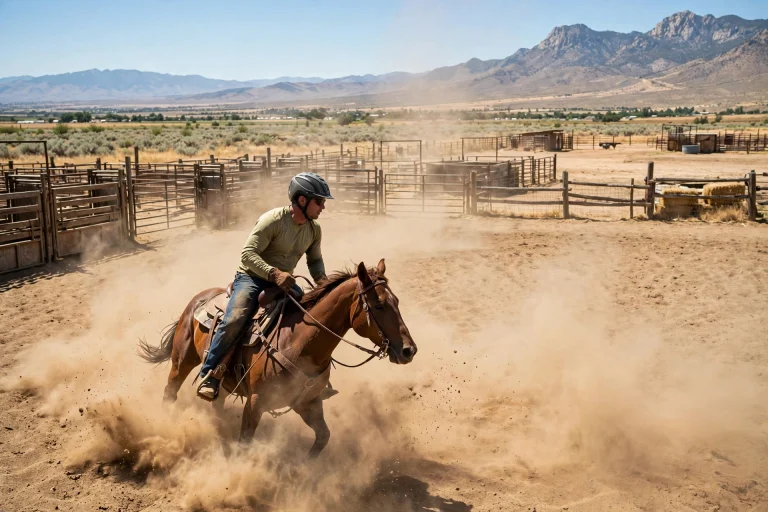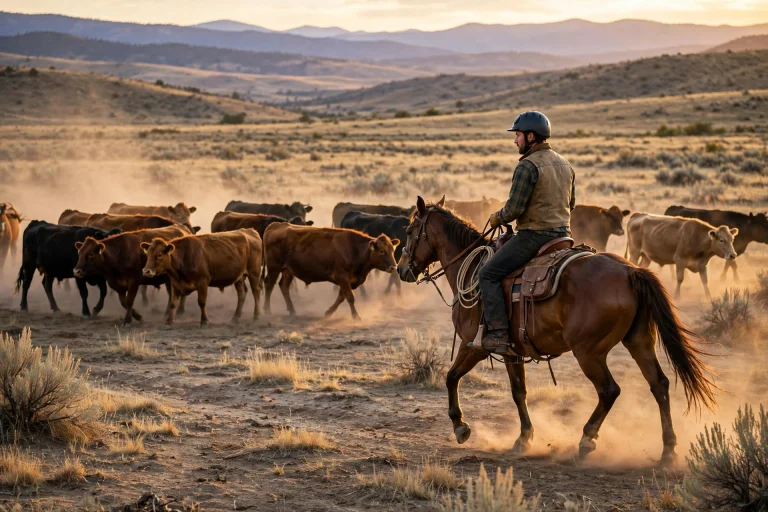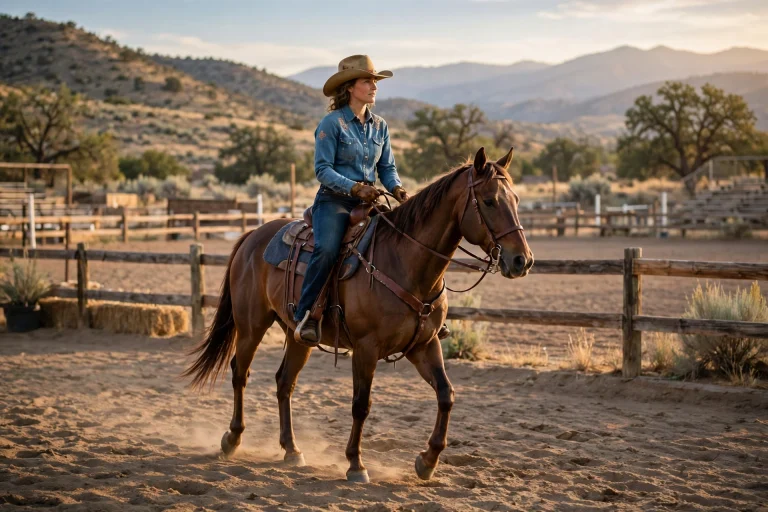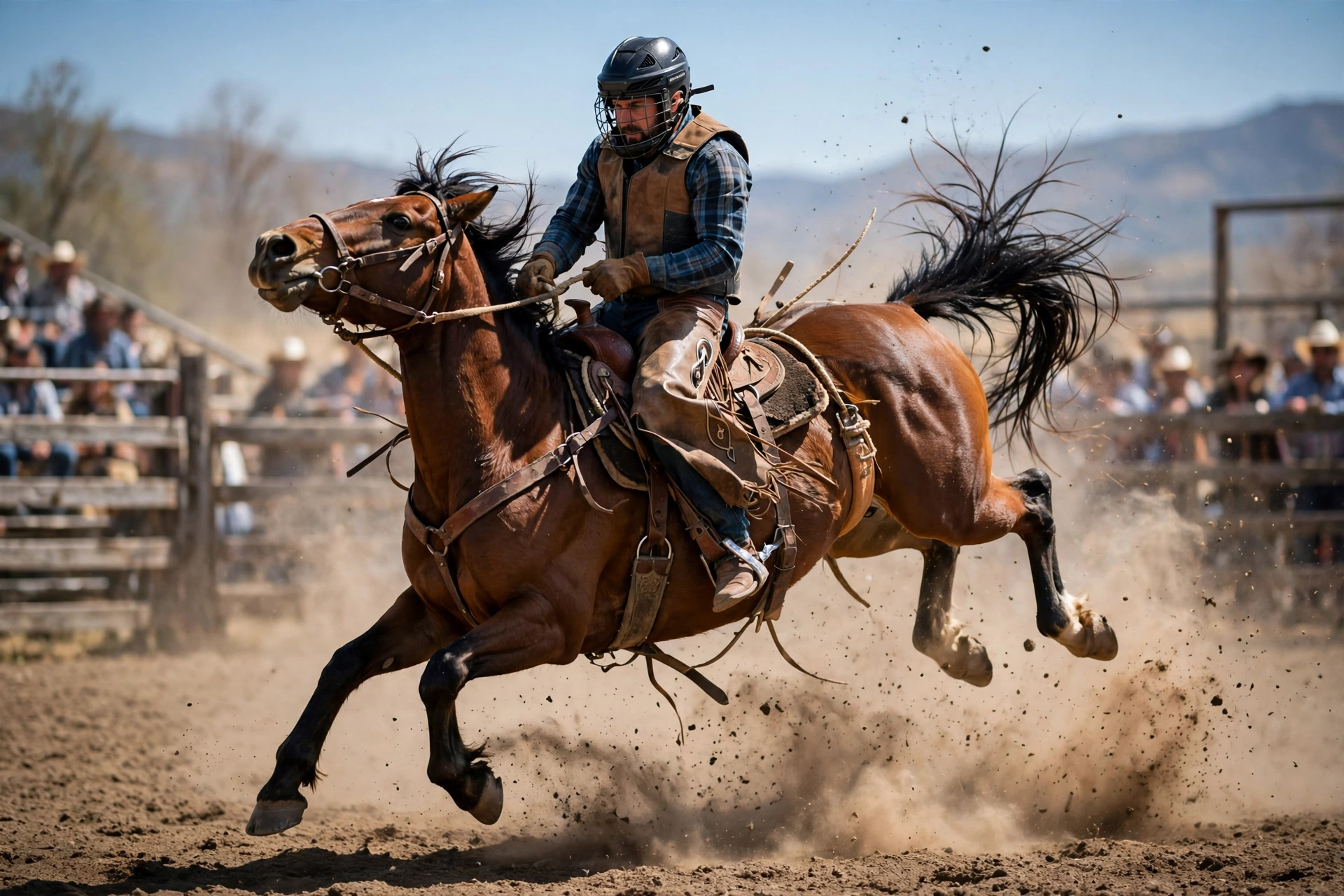
In general terms, a rodeo helmet and an equestrian helmet are built for different kinds of riding, and the difference goes well beyond how they look. A rodeo helmet is designed for the fast, rough, and unpredictable world of rodeo events, where a rider may be thrown, stepped on, or hit by a horn. An equestrian helmet is designed for general horse riding, from hacking out to show jumping, where the main risk is a fall from height onto the ground. Both protect the head, but they are shaped by different hazards, different traditions, and different rules.
This guide explains what each helmet is, how they differ in design and coverage, and which one suits which kind of riding. If you ride in both worlds, or you are crossing from one to the other, understanding the difference will help you choose wisely.
What Is a Rodeo Helmet?
A rodeo helmet is a protective helmet worn for rodeo events such as bull riding, bronc riding, steer wrestling, and barrel racing. Rodeo is rough riding: the animal bucks, twists, and spins, and the rider’s job is to stay on for a set time or complete a fast run. Falls are not a possibility in rodeo; they are an expectation. Every ride ends with the rider coming off, whether by design or by being thrown.
Because of that, a rodeo helmet has to cope with more than a simple fall to the ground. A rider may be thrown into a fence, hit by a horn, or landed on by the animal. Rodeo helmets therefore tend to be tough, close-fitting, and built to stay put through violent movement. Many are modelled on the shape of a cowboy hat or a low-profile skull cap, so they fit with the western look that rodeo audiences expect.
What Is an Equestrian Helmet?
An equestrian helmet is the standard riding helmet worn for general horse riding: hacking, schooling, dressage, show jumping, eventing, and hunting. It is the helmet most riders picture when they think of a riding hat, and it is what riding schools and most equestrian competitions expect. In many equestrian sports, wearing a certified helmet is a condition of competing.
Equestrian helmets are designed around the most common riding accident: a fall from the horse onto the ground. They spread the force of an impact across the shell and the energy-absorbing liner, reducing the force that reaches the head. They are tested to recognised equestrian safety standards, and the label inside the helmet states which standard it meets.
The classic equestrian helmet has a smooth, rounded shape with a small peak at the front, a harness that fastens under the chin, and ventilation to keep the rider cool. Modern designs come in many styles, from traditional velvet-covered show helmets to lightweight, ventilated schooling helmets, and some include features such as rotational impact protection. If you want to understand one of those features, reading about what MIPS is for helmets is a useful starting point.
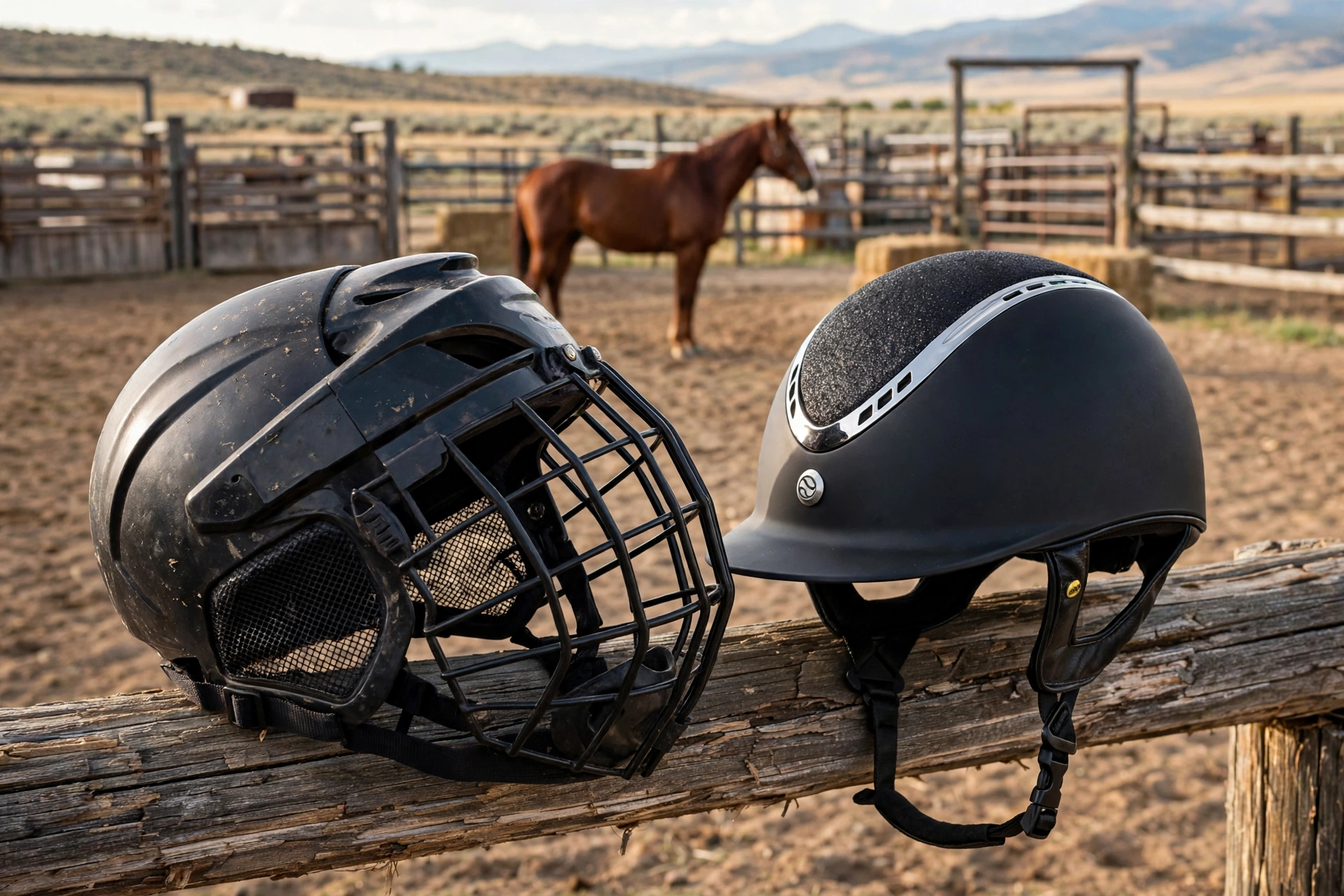
How Do Rodeo and Equestrian Helmets Differ in Design?
The most obvious difference is shape. Rodeo helmets often have a lower profile and a flatter, wider shape, sometimes styled to resemble a cowboy hat, with a brim or a hat-like outline. Equestrian helmets are usually more rounded and dome-shaped, with a small peak and a smooth silhouette. These shapes reflect different traditions as much as different engineering: rodeo is a western sport, and its helmets look western; equestrian sport has its own classic look.
Certification is another difference, and it matters. Equestrian helmets are generally certified to recognised equestrian helmet standards, and many competitions require that certification. Rodeo helmets may be certified to a different standard, or may be sold as protective headgear without the same competition certification. A helmet that is accepted in a rodeo arena may not be accepted at an equestrian show, and the other way round. Always check the standard a helmet meets before relying on it.
Which Helmet Suits Which Kind of Riding?
For general riding, schooling, and equestrian competition, an equestrian helmet is the right choice. It is what riding schools require, what equestrian competitions expect, and what is tested for the risks of ordinary riding. If you hack out, take lessons, or compete in dressage, show jumping, or eventing, an equestrian helmet is the natural and usually the required option.
For rodeo events, a rodeo helmet is the right choice. It is designed with the rodeo arena in mind: the violent movement, the risk of being hit by the animal, and the western setting. A rider who turns up to a rodeo in a standard equestrian helmet may find it accepted, but it is not designed for the specific hazards of rodeo, and it may not meet the event’s own rules. In general terms, the helmet built for the sport you are doing is the helmet to wear.
Can One Helmet Cover Both Rodeo and Equestrian Riding?
In general terms, a helmet that is certified to a recognised equestrian safety standard will protect your head in either setting, because the basic physics of a fall do not change. A good helmet spreads impact force and reduces what reaches your head, whether you fall from a show jumper or a bucking bronc. So in a purely practical sense, one well-chosen helmet can serve for both.
But there are limits to that answer. First, competition rules may not accept the same helmet in both settings, so a helmet that is fine for a rodeo may be turned away at an equestrian show, or the other way round. Second, the hazards differ: a rodeo helmet may offer features, such as extra rear coverage, that an equestrian helmet does not, and an equestrian helmet may be lighter and better ventilated for long schooling sessions.
Third, fit and comfort matter. A helmet that fits well for one kind of riding may not feel right for another, especially if you wear different headgear or ride in different weather. The safest approach is to choose a helmet for your main discipline, check its certification, and if you compete in the other discipline, ask the organisers what they accept before the day. Guessing at the gate is a poor way to find out your helmet does not meet the rules.
Frequently Asked Questions
Q: Is a rodeo helmet the same as a bull riding helmet?
A: A bull riding helmet is a type of rodeo helmet, often worn with a face guard for extra protection. Not every rodeo helmet has a face guard, so if you ride bulls, look for a helmet designed for that event and check what your rodeo requires.
Q: Can I wear an equestrian helmet for rodeo?
A: In general terms, an equestrian helmet will protect your head in a fall, but it may not meet rodeo event rules or suit the specific hazards of the arena. Check the rules for your event before you ride, and consider a helmet designed for rodeo.
Q: Do rodeo helmets meet the same safety standards as equestrian helmets?
A: Not always. Equestrian helmets are usually certified to recognised equestrian standards, while rodeo helmets may be certified to different standards or sold without the same certification. Always check the label inside the helmet before you buy.

Olivia
Writer at Helmet Today, covering helmet reviews, fit and riding safety.