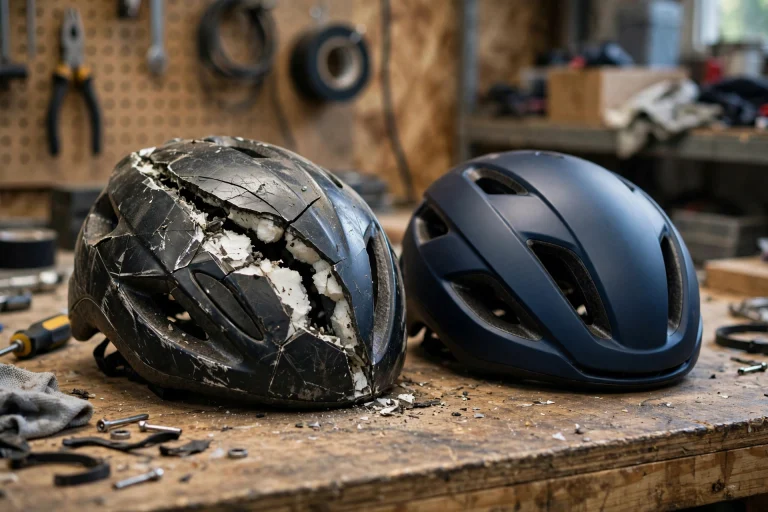
EPS helmet foam is recycled, in general terms, by collecting old helmets, taking them apart to separate the foam from the shell and straps, and then compacting, melting, and reprocessing the foam into new plastic products. EPS — expanded polystyrene — is the light, crushable foam inside most helmets. It is technically recyclable, but it is bulky, light, and mixed with other materials, which makes the process harder than recycling a plastic bottle.
This guide explains how EPS recycling works, why helmets need to be taken apart first, and what limits the process today.
What Is EPS Foam, and Why Is It Hard to Recycle?
EPS is made of tiny polystyrene beads fused together, with air trapped between them. That air is what makes it light and good at absorbing impact — but it also makes it mostly air by volume, which means a truckload of loose EPS foam weighs very little. Transporting it to a recycling plant is expensive relative to the amount of material recovered, and that is the first problem.
The second problem is contamination. A helmet’s foam is glued to a plastic shell, stitched to straps, and covered in comfort padding. None of those materials is EPS, and they must be removed before the foam can be recycled. A recycling plant that receives whole helmets cannot simply feed them into a machine — the mixed materials would spoil the batch.
The third problem is that EPS foam from a helmet has been used. It may be dirty, sweaty, or damaged, and it may have absorbed substances over its life. Recycling plants need clean material to produce good-quality recycled plastic, so dirty or mixed foam is often rejected.
How Is EPS Foam Collected?
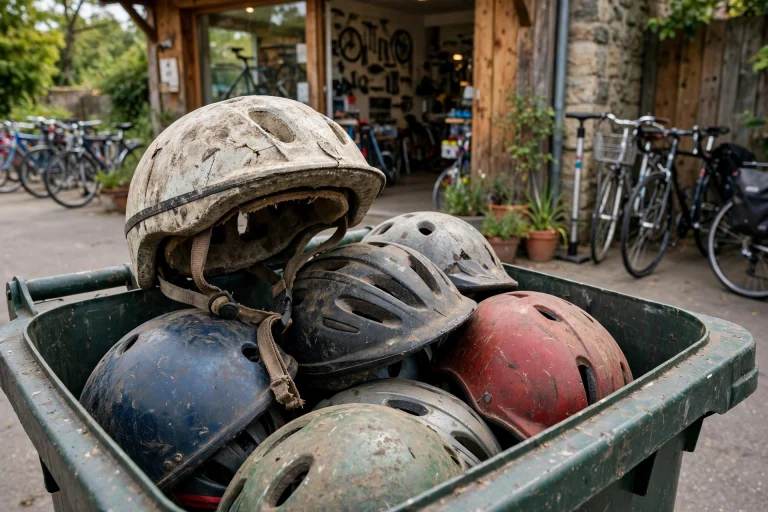
EPS foam is usually collected through specialist schemes rather than household recycling. Many household recycling programmes do not accept EPS, because it is bulky and easily contaminated, and a helmet in a household bin is likely to be treated as general waste. Specialist collection — through a helmet take-back scheme, a bike shop, or a recycling centre that accepts EPS — is the usual route.
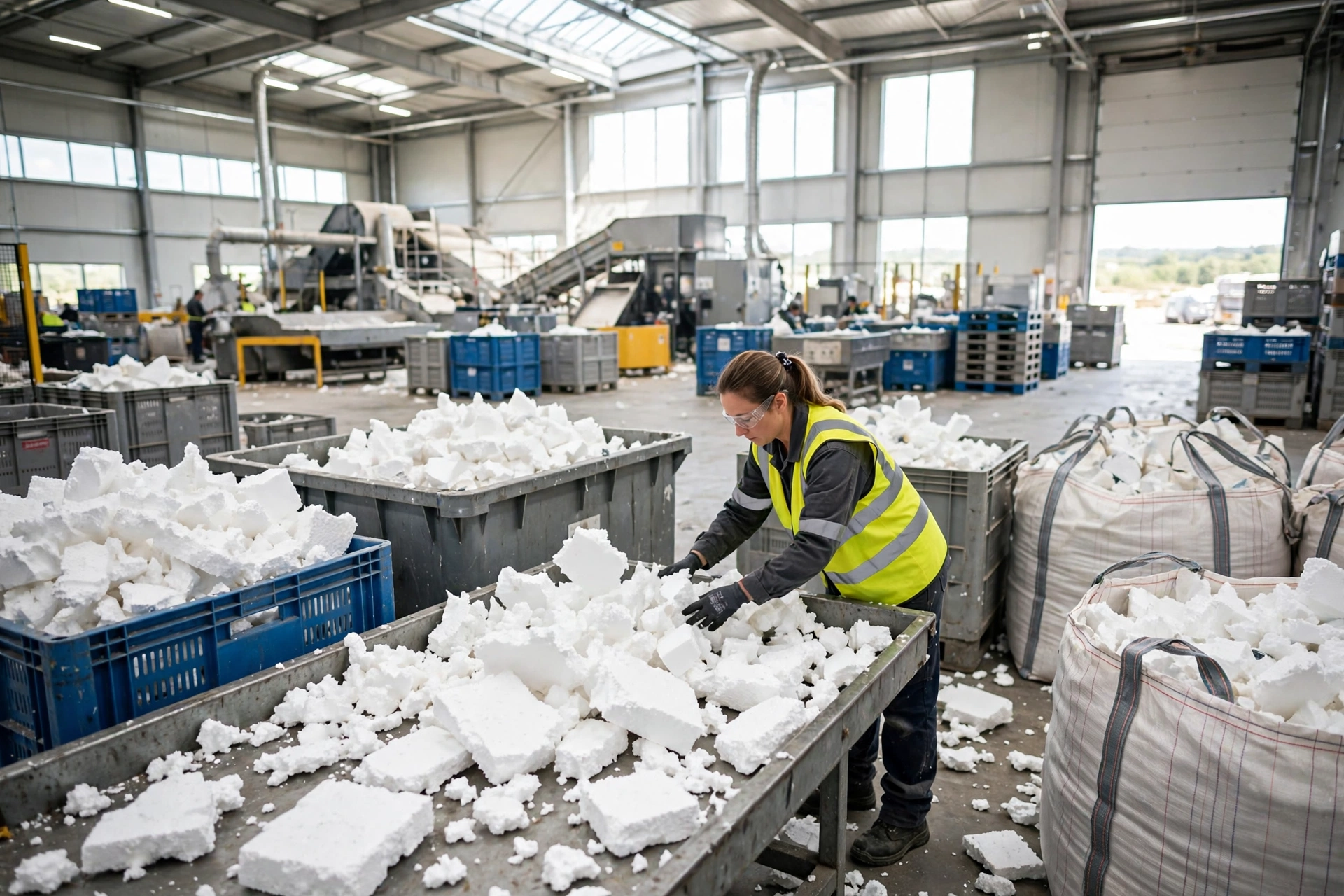
Some schemes collect helmets specifically, while others collect EPS from many sources: packaging, insulation, and food containers as well as helmets. The foam from all of these is the same material, so it can be processed together once it has been cleaned and separated. The more EPS a scheme collects, the more economical the recycling becomes, because the cost of transport and processing is spread across a larger volume.
Collection is the bottleneck. In general terms, the recycling technology exists, but the collection network does not — at least not for helmets specifically. A rider who wants to recycle a helmet usually has to seek out a scheme, rather than finding one at the kerb.
How Is the Foam Processed Once Collected?
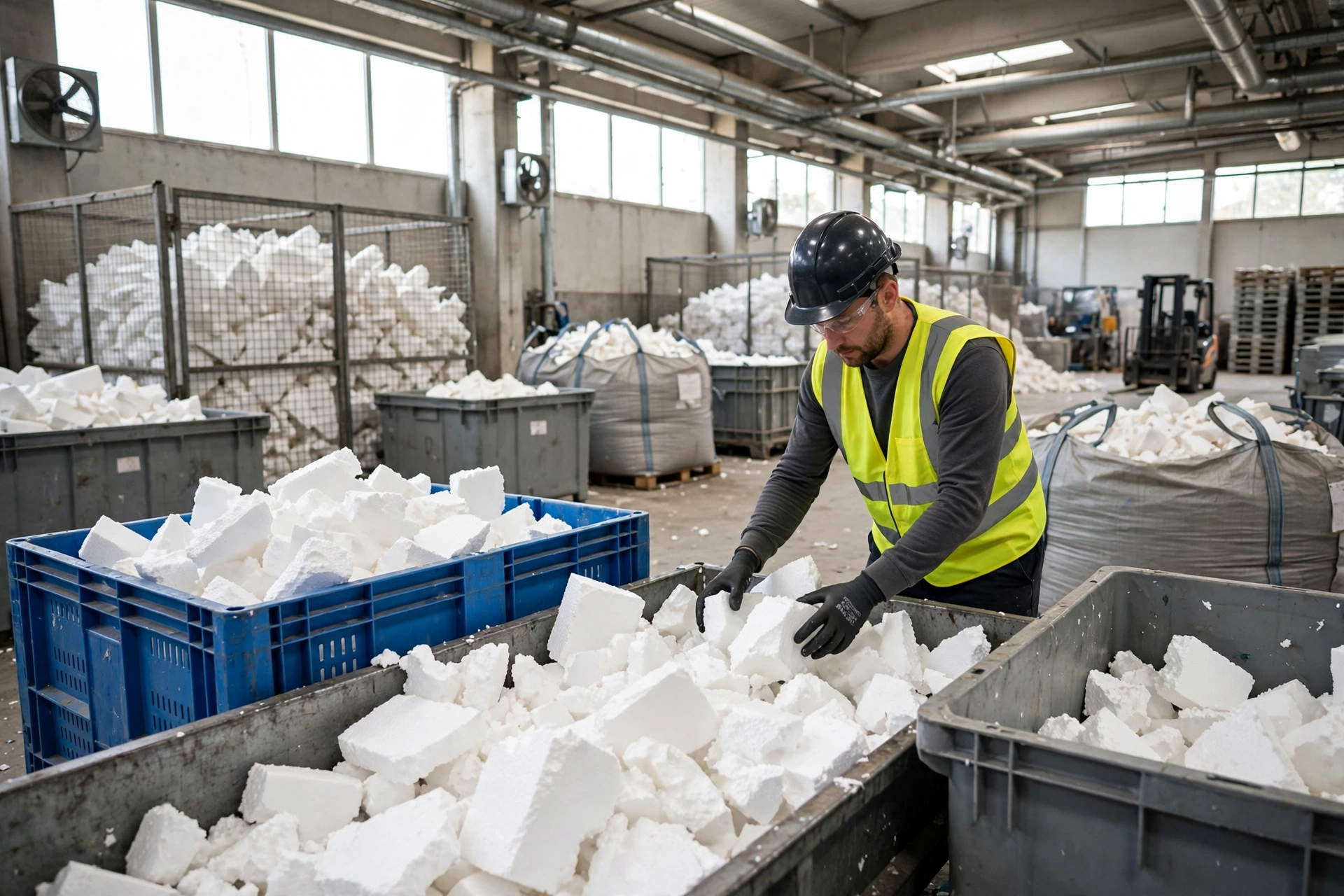
Once the foam reaches a recycling plant, it is first sorted and cleaned. Any non-EPS material — shell fragments, straps, pads, glue — is removed, and the foam is checked for contamination. Clean foam is then compacted: it is crushed and heated to squeeze the air out, which reduces its volume dramatically and makes it economical to transport and store.
The compacted foam is then melted and extruded into pellets, which are the raw material for new plastic products. Those pellets can be used to make new polystyrene products, such as picture frames, coat hangers, plant pots, and insulation. They are not usually made back into helmet foam, because helmet foam must meet strict safety standards and recycled material is harder to certify for that use.
An alternative process turns EPS into a denser material by dissolving it, but that is less common. The standard route — compact, melt, pelletise — is the one most recycling plants use, and it is well established for clean EPS from packaging and insulation.
What Happens to the Rest of the Helmet?
A helmet is not only foam. The outer shell is usually a hard plastic, the straps are nylon webbing, the buckle is plastic or metal, and the comfort padding is fabric and foam. Each of those materials has its own recycling route, and they must be separated before any of them can be recycled.
In practice, the shell is the easiest part to recycle after the foam, because it is a single type of plastic. The straps and buckles are harder: nylon webbing can be recycled, but the volumes are small and the material is often mixed with other fibres. The comfort padding is usually not recyclable, and it is often discarded.
That is why taking a helmet apart matters. A helmet sent whole to a recycling plant is likely to be treated as mixed waste, because separating it is labour-intensive. A helmet that arrives already dismantled — or that is dismantled by a take-back scheme — has a much better chance of its parts being recycled. The foam is the largest part by volume, and if you want to understand what that foam layer does inside a helmet, reading about what MIPS is for helmets explains one of the liner systems fitted alongside it.
What Limits EPS Helmet Recycling Today?
The main limit is economics. EPS is cheap to make and light to ship, so the recycled material competes with cheap new material. Unless collection is efficient and volumes are large, recycling EPS costs more than making new EPS, and that gap has to be closed by a subsidy, a regulation, or a maker’s willingness to pay for it.
Design is another limit. Helmets are designed to be strong and durable, not to come apart easily. Glue, rivets, and moulded parts hold the foam, shell, and straps together, and separating them takes time and effort. Helmets designed for easier disassembly — with fewer glued joints and more mechanical fixings — would be easier to recycle, but that design change has been slow to arrive.
Even so, the direction is positive. More makers run take-back schemes, more recycling plants accept EPS, and more riders ask what happens to their old helmet. The technology to recycle EPS foam exists; the challenge now is building the collection and the economics to use it at scale.
Frequently Asked Questions
Q: Can I put an old helmet in my household recycling?
A: In general terms, no — most household programmes do not accept EPS foam or mixed-material helmets. Use a helmet take-back scheme or a recycling centre that accepts EPS instead.
Q: Is recycled EPS foam made back into helmets?
A: Usually not. Recycled EPS is made into products such as picture frames, plant pots, and insulation. Helmet foam must meet strict safety standards, which makes recycled material harder to certify for that use.
Q: Why does a helmet need to be taken apart before recycling?
A: Because a helmet mixes several materials — foam, shell plastic, nylon straps, metal buckles — and each needs a different recycling route. Mixed material fed into a recycling machine would spoil the batch.

Olivia
Writer at Helmet Today, covering helmet reviews, fit and riding safety.