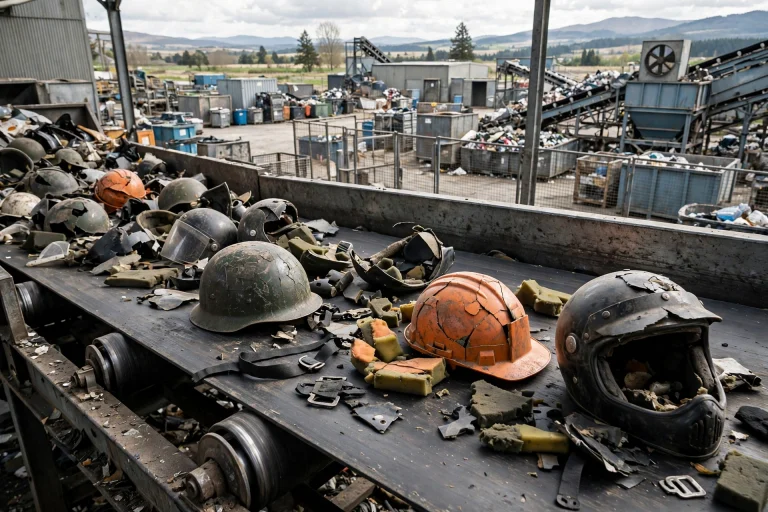
Old helmets can be used for training in general terms, but only if they are undamaged, have never been in a crash, and are clearly marked as training-only helmets. A helmet that is too old or too worn for real riding may still be useful for practice, demonstrations, and teaching, where the risk of a real impact is low. The key is to be honest about what the helmet can and cannot do. A training helmet is not a safety helmet, and it should never be used as one. If the helmet is cracked, crushed, or has taken a hard knock, it should not be used at all, even for training.
Is it safe to train in an old helmet?
Training in an old helmet is safe only when the training itself is low-risk and the helmet is in good condition. A helmet that is simply old but undamaged can still protect against a light bump, and it is fine for slow-speed drills, balance practice, and fitting lessons. The risk is low because the rider is moving slowly, often on a flat surface, and is not likely to fall from height or at speed. In that setting, an old helmet is better than no helmet, and it teaches the habit of always wearing one.
The danger comes when an old helmet is used for training that involves real speed or real risk. A helmet that has been in a crash, or one whose foam has gone soft with age, may not absorb an impact the way it should. The shell may look fine while the foam inside is weakened, and that weakness only shows up when the helmet is needed most. If the training involves jumps, fast descents, or contact with other riders, an old helmet is not a safe choice. The rider should wear a helmet that is in date and undamaged.
When is an old helmet fine for practice?
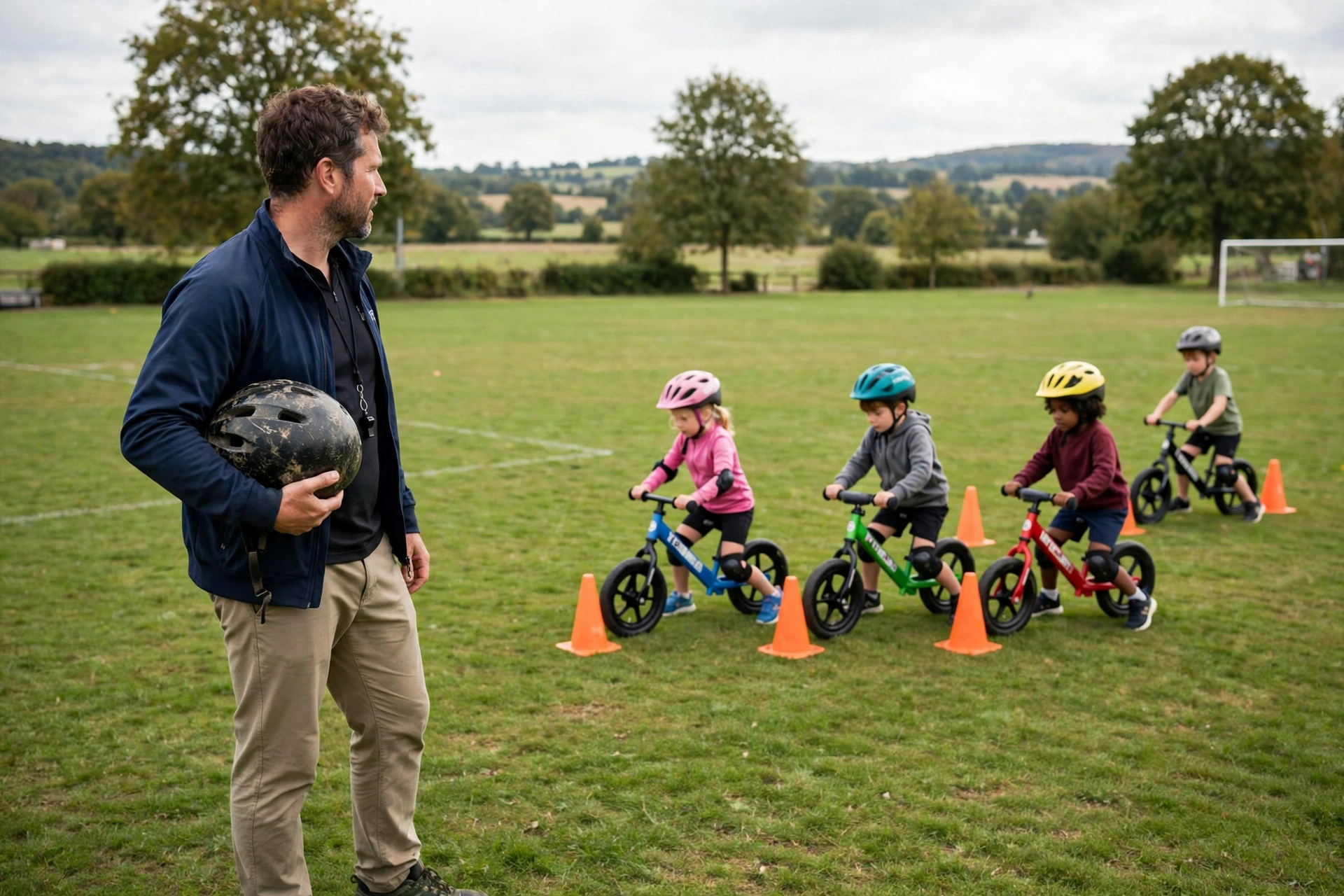
An old helmet is fine for practice when the practice is slow, controlled, and on a safe surface. Fitting lessons are the best example: a new rider can try on several old helmets, learn how to adjust the dial and the straps, and find out what a good fit feels like. The helmet does not need to protect against a crash in that setting, because the rider is standing still or moving very slowly. The old helmet is a teaching tool, not safety equipment.
Balance drills and slow-speed handling practice are also good uses for an old helmet. A rider learning to ride in a straight line, to turn, or to stop smoothly is moving slowly and is unlikely to fall hard. The old helmet gives a little protection and, just as importantly, it builds the habit of putting a helmet on before every ride. Young riders who always wear a helmet in practice are more likely to wear one on the road.
When should an old helmet never be used?
An old helmet should never be used when it has been in a crash, when it is cracked, or when the foam liner is crumbling or compressed. A crash can damage the foam in ways that are not visible from the outside, and a helmet that looks fine may have lost much of its ability to absorb an impact. The same is true of a helmet that has been dropped hard onto a concrete floor. If you know a helmet has taken a hard knock, retire it completely.
An old helmet should also never be used for high-speed or high-risk training, such as downhill runs, jumps, or racing practice. These activities carry a real risk of a hard fall, and the rider needs a helmet that is in good condition and within its recommended life. Using an old helmet in that setting gives a false sense of security: the rider thinks they are protected, but the helmet may not perform when it is needed. A similar idea applies to any helmet that is too small or too large for the rider, because a poor fit means the helmet may not stay in place in a fall.
How can coaches use old helmets safely?
Coaches can use old helmets safely by setting clear rules and sticking to them. The first rule is to separate training helmets from riding helmets. Keep the old helmets in a different box, mark them clearly, and never let a training helmet be used for a real ride. A simple label inside the helmet, or a coloured sticker on the outside, makes it obvious which helmets are for training only. Every coach and every rider should know what the marking means.
The second rule is to inspect the training helmets regularly. Check them for cracks, test the straps and buckles, and look at the foam liner. A training helmet that becomes damaged should be thrown away, not kept in the box. Coaches should also keep a note of how old each helmet is and retire helmets that are very old, even if they look fine. Foam degrades over time, and a helmet that is many years old may not offer the protection it once did.
What are better training uses for retired helmets?
Retired helmets have several good training uses that do not involve wearing them at speed. The most useful is as a teaching aid: a helmet cut in half shows the layers of shell and foam, and a coach can point to each layer and explain what it does. New riders can see why a helmet works, and why a cracked helmet should be replaced. A cut-open helmet is also a good way to show the difference between a helmet with MIPS and one without, because the slip layer is easy to see once the helmet is open.
Old helmets are also useful for practising fitting and adjustment. A rider can learn how to use the dial, how to tighten the straps, and how to fasten the buckle, all without wearing a good helmet that might get dropped or scratched. The old helmet can be handled, passed around, and tried on by many riders, which would wear out a new helmet quickly. It is a practical tool for a skill every rider needs.
How do you mark a helmet as training only?
Marking a helmet as training only is simple, but it needs to be done clearly and in a way that cannot be missed. A bright sticker on the outside of the shell, with the words training only written on it, is the most visible method. A permanent marker can be used to write the same words inside the shell, where the wearer will see them when they put the helmet on. Some clubs use a coloured paint mark or a ribbon tied to the strap, so the training helmets stand out at a glance.
Can I use my old helmet for training rides?
Yes, in general terms, if the helmet is undamaged, has never been in a crash, and the training is slow and low-risk. Never use a crashed or cracked helmet, and never use a training helmet for fast or high-risk riding.
How do I know if an old helmet is safe to wear?
Check for cracks in the shell, look at the foam liner for crumbling or compression, and test the straps and buckle. If you are unsure about the helmet’s history or condition, do not wear it for riding.
What should I do with a helmet that is too damaged for training?
Retire it completely. Take it apart and recycle the parts your local services accept, or hand it to a maker’s take-back scheme if one is available.

Olivia
Writer at Helmet Today, covering helmet reviews, fit and riding safety.