EPP foam is a type of expanded polypropylene foam used in some helmets because it can take more than one impact without losing all of its cushioning, unlike the single-impact EPS foam found in most helmets. EPP stands for expanded polypropylene. It is a bead foam, like EPS, but its beads are springier and can bounce back after being compressed, which gives it a useful property called multi-impact recovery.
You will find EPP in some skate, BMX, ski and multi-sport helmets, often alongside EPS. This guide explains what EPP foam is, how it differs from EPS, where it is used, and what its limits are.
What Is EPP Foam?
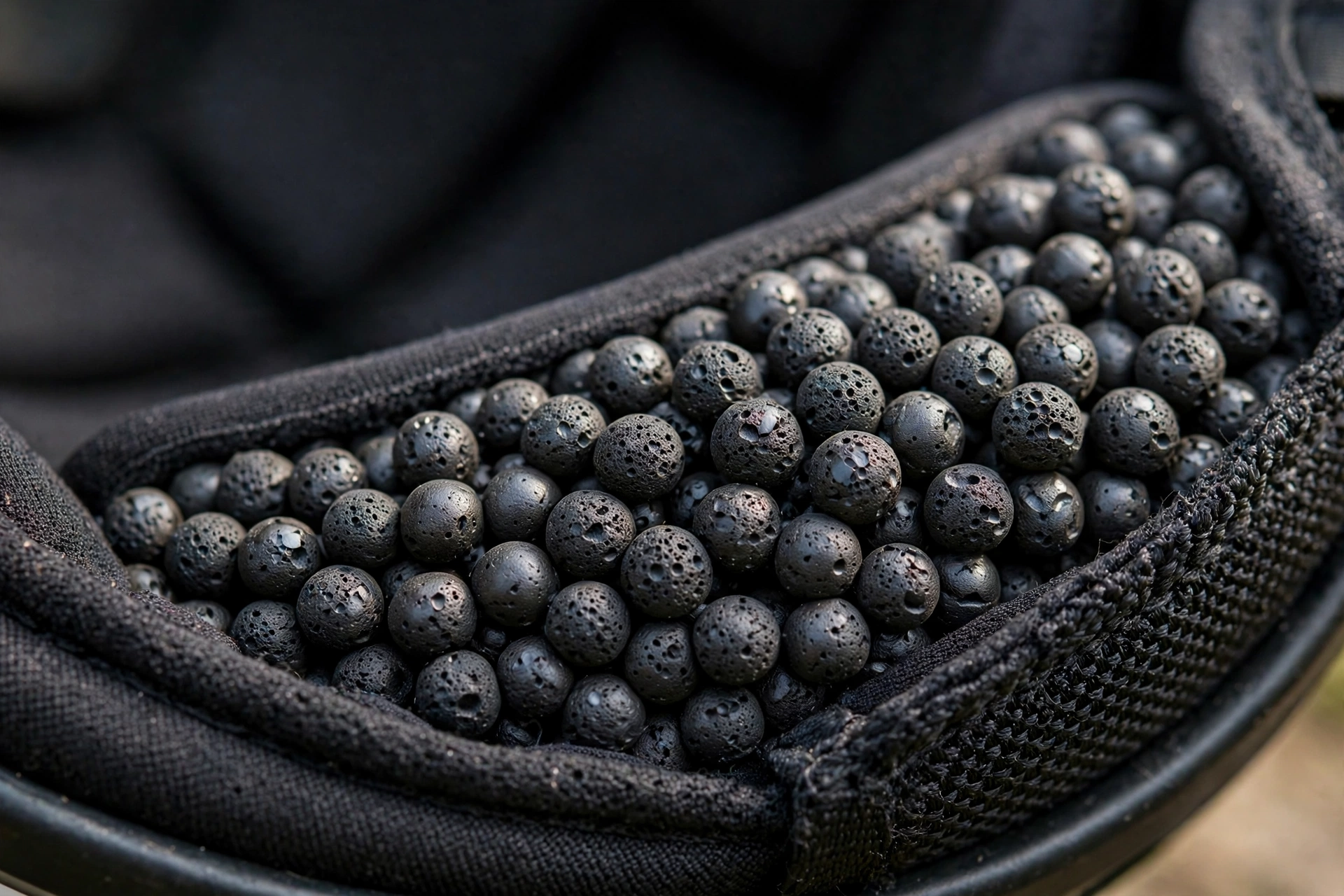
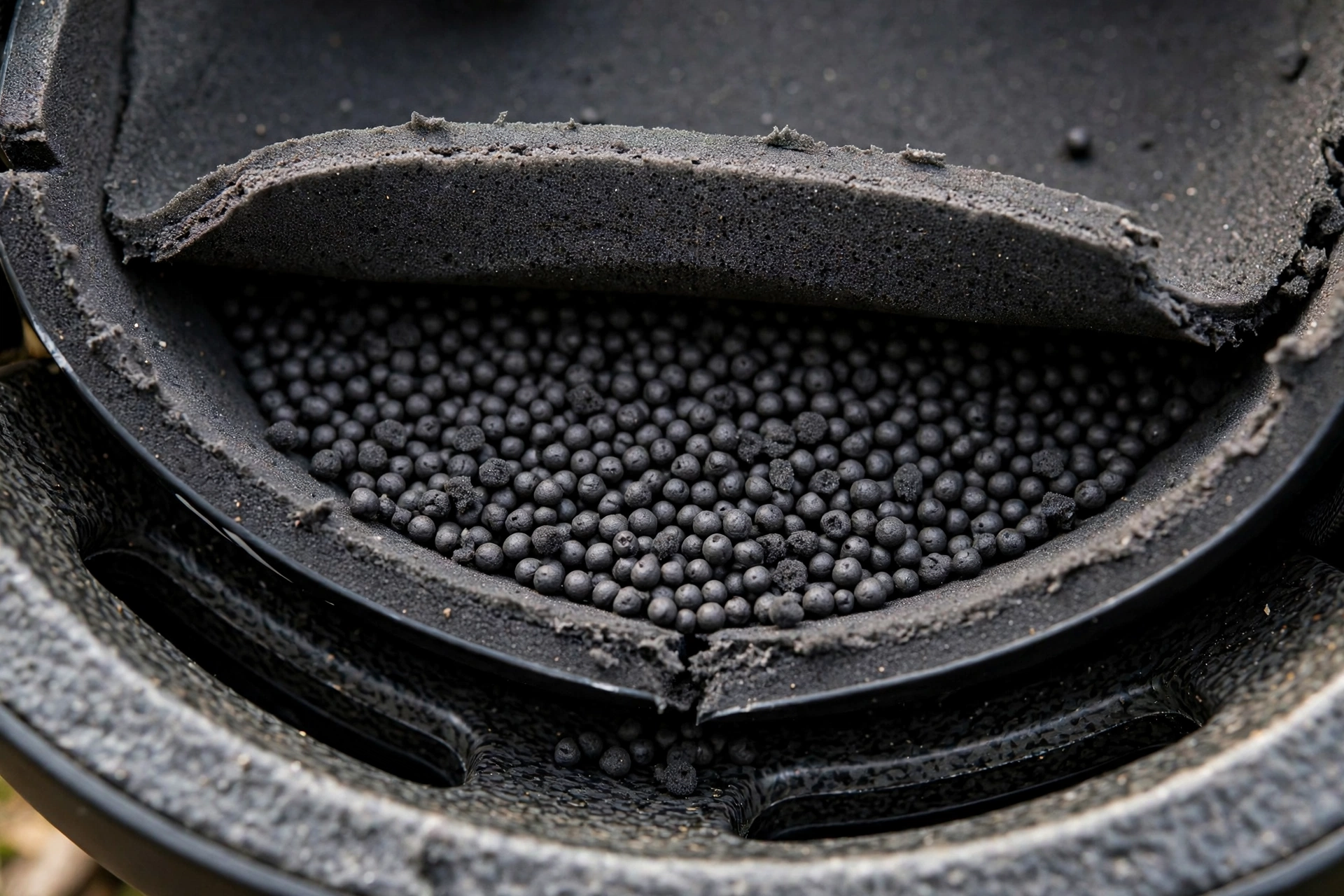
EPP is made by expanding small beads of polypropylene, a common plastic, with heat and pressure until they fuse into a light, springy foam. The result is a material that is tough, flexible and resistant to water and many chemicals. It is used in car parts, packaging and protective gear, as well as in helmets.
The key difference from EPS, the foam in most helmets, is recovery. When EPS is crushed in an impact, it stays crushed, which is why a helmet must be replaced after a significant crash. EPP, by contrast, can spring back towards its original shape after a lighter impact, so it can cushion a second knock in the same area.
That does not mean an EPP helmet is indestructible or reusable after a hard crash. It means the foam behaves differently under repeated light impacts, which suits helmets used in sports where small knocks are frequent.
Where Is EPP Foam Used in Helmets?
EPP appears most often in helmets for sports where the wearer may take several small knocks in a session, such as skateboarding, BMX and some ski and snowboard helmets. In those sports, a helmet may be bumped or dropped more than once, and a foam that recovers from light impacts can be a practical advantage.
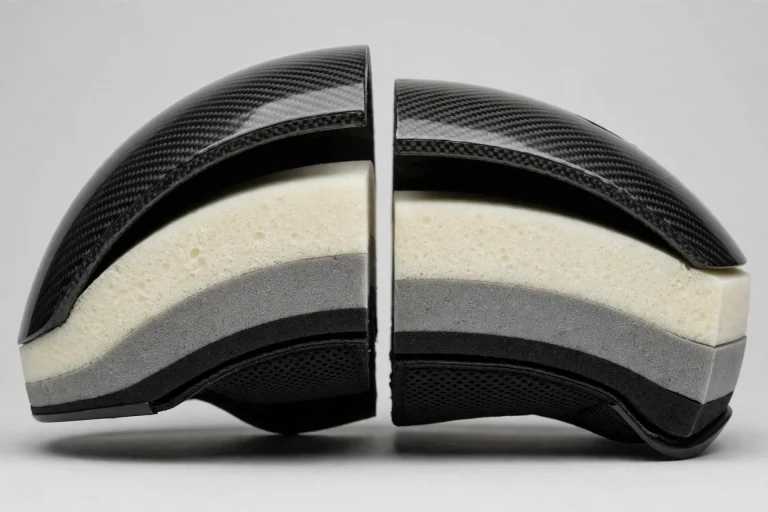
Some makers use EPP for the whole liner. Others use it in combination with EPS, placing EPP in zones where repeated light impacts are likely and EPS where a single hard impact is the main concern. A mixed liner like this aims to get the best of both materials.
EPP is also used in some children’s helmets and multi-sport helmets, where the helmet may be used for different activities and may take knocks of different kinds. Its water resistance is another plus: EPP does not soak up sweat or rain the way some foams can.
How Does EPP Compare with EPS?
EPS, or expanded polystyrene, is the standard liner foam in most helmets. It is very good at absorbing energy in a single hard impact, because its beads crush and do not spring back, turning the energy of the impact into deformation. That one-way crushing is what makes EPS so effective, and also why an EPS helmet must be replaced after a crash.
EPP is springier and recovers after light impacts, but in general terms it is less effective than EPS at absorbing the energy of a single very hard impact. That is why many helmets use EPS as the main liner and add EPP only in specific zones, or use EPP in helmets designed for repeated light knocks rather than single hard crashes.
Weight is similar between the two, and both are light. EPP tends to be more expensive than EPS, which is one reason it is not in every helmet. The choice between them depends on the sport, the likely impacts and the safety standard the helmet must meet.
What Are the Limits of EPP Foam?
The biggest limit is the one that surprises people: multi-impact recovery does not mean unlimited reuse. After a hard impact, an EPP liner may look fine but may still have lost some of its ability to protect. Makers and safety guidance are clear that a helmet should be replaced after any significant crash, whatever foam it uses.
EPP also has limits in very cold weather, where it can become stiffer, and it is not as widely tested or as widely used as EPS, so there is less long-term data on how it ages. Like all foams, it can degrade with heat, sunlight and time, so storage matters.
Finally, EPP on its own is not a guarantee of a particular safety standard. A helmet’s protection depends on the whole design: shell, liner, fit and testing. An EPP liner in a poorly fitting helmet is no better than an EPS liner in the same helmet.
Should You Choose a Helmet with EPP Foam?
Consider EPP if you ride or skate in a sport where small, repeated knocks are part of the session, such as skateboarding or BMX, and you want a liner that can handle more than one light impact. A helmet with EPP, or a mix of EPP and EPS, can be a practical choice for those uses.
For road cycling or motorcycling, where a single hard impact is the main concern, a helmet with an EPS liner is the more common choice, and there is no strong reason to seek out EPP instead. The safety standard and the fit matter far more than the foam type.
Price is worth weighing too. EPP helmets often cost a little more than comparable EPS helmets, because the material is more expensive and less widely used. If your sport involves frequent light knocks, that extra cost can be worth it. If you mainly need protection for a single hard impact, a good EPS helmet will serve you just as well for less money. Either way, the fit and the safety standard should come first.
Whichever foam your helmet uses, replace it after a significant impact, check it regularly for cracks or compression, and store it away from heat and sunlight. If you are learning about helmet technology, reading about what MIPS is for helmets can help you understand another feature that may sit alongside the foam inside your helmet.
Frequently Asked Questions
Q: Can an EPP helmet be reused after a crash?
A: Not after a hard crash. EPP recovers from light knocks, but a significant impact can still damage the liner. Replace the helmet after any serious crash, whatever foam it uses.
Q: Is EPP foam better than EPS foam?
A: It depends on the use. EPP handles repeated light impacts better, while EPS is very effective at absorbing a single hard impact. Many helmets use one or the other, or a mix of both.
Q: How can I tell if my helmet has EPP foam?
A: Check the maker’s description. Helmets with EPP liners usually mention it in the product details, sometimes under a brand name. The foam itself is hard to identify by sight alone.

Olivia
Writer at Helmet Today, covering helmet reviews, fit and riding safety.