To stop an adaptive cycling helmet slipping, fix the fit first: tighten the retention system at the back, set the straps so they form a V below each ear, and do the chin strap up snugly — then test it in your riding position. A helmet that slips is usually a helmet that is the wrong size, the wrong shape, or simply not adjusted properly. It is rarely a problem you have to live with, and it is not one you should ignore, because a helmet that moves in a fall protects less well.
Adaptive cyclists face a few extra causes of slipping. A reclined riding position changes how gravity pulls on the helmet, a headrest or neck support can push it out of place, and limited mobility can make it harder to re-adjust a helmet mid-ride. This guide works through the causes one by one, from the simplest fixes to the ones that mean a different helmet.
Why Does an Adaptive Cycling Helmet Slip?
The most common cause is size. A helmet that is too big will slide no matter how much you tighten it, because there is simply too much room inside. If you can rock the helmet easily from side to side, or push it forward over your eyes with one finger, it is probably too large. Measure your head and compare it with the maker’s size guide — and remember that shapes vary between makers, so a medium in one brand can fit very differently from a medium in another.
The second common cause is a loose retention system. Most cycling helmets have a dial or cradle at the back that tightens around your head. If that is loose, the helmet has nothing holding it in place. The third cause is strap position: if the side straps sit too far forward or back, or the chin strap is loose, the helmet can creep forward every time you lean or look down.
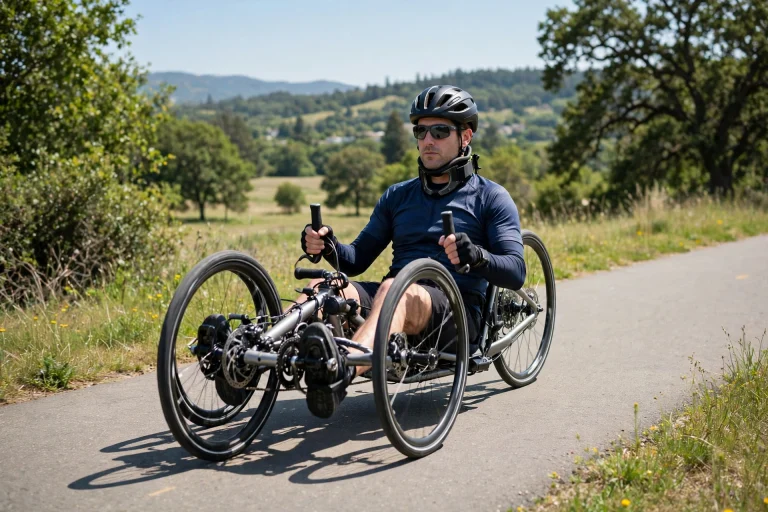
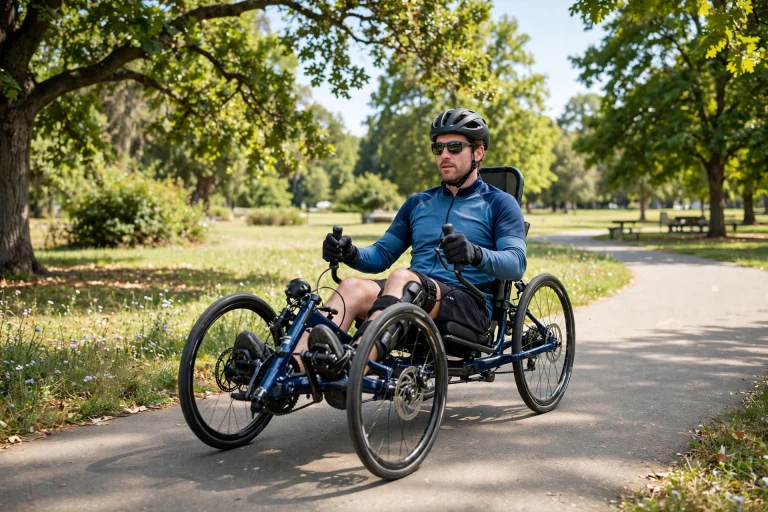
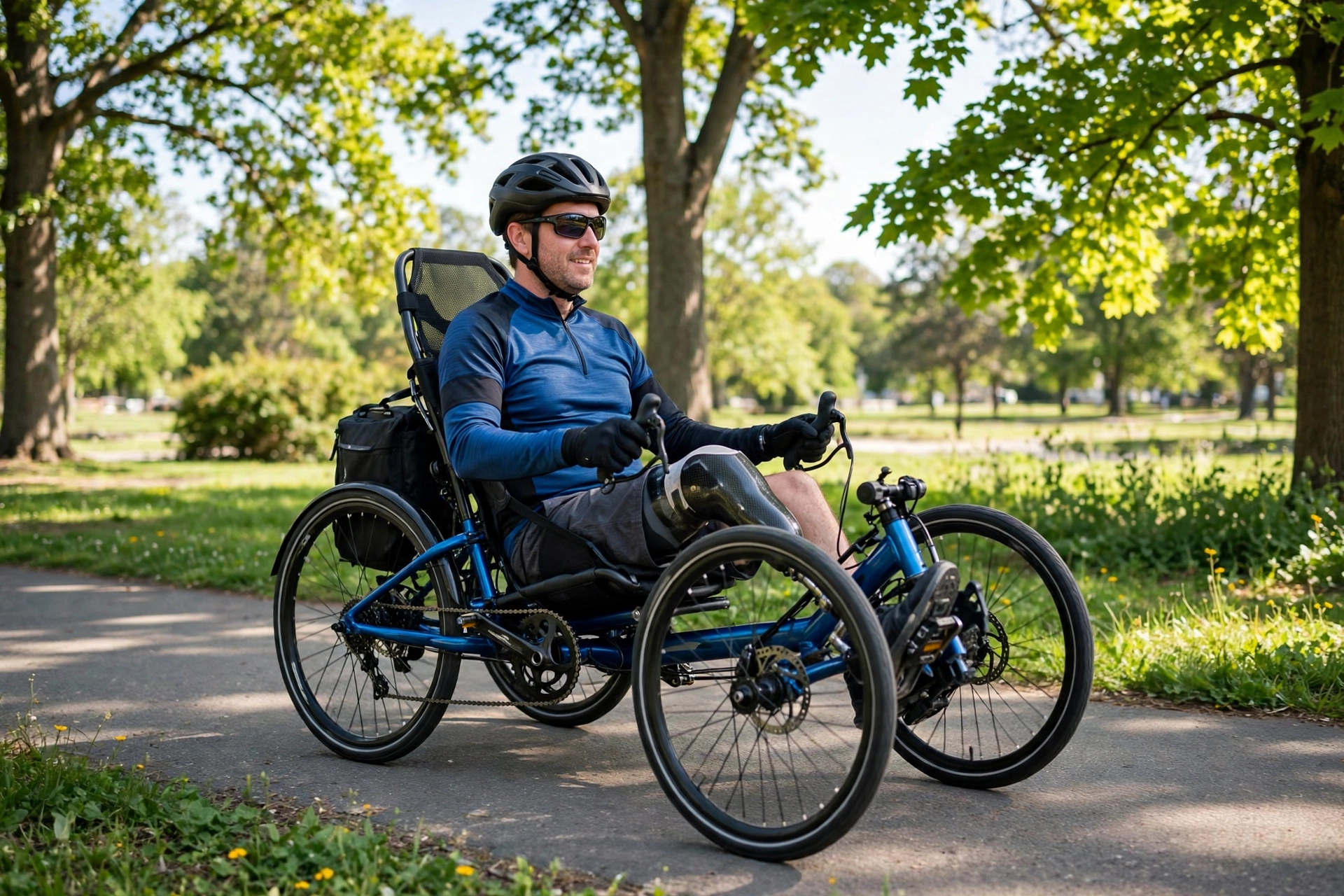
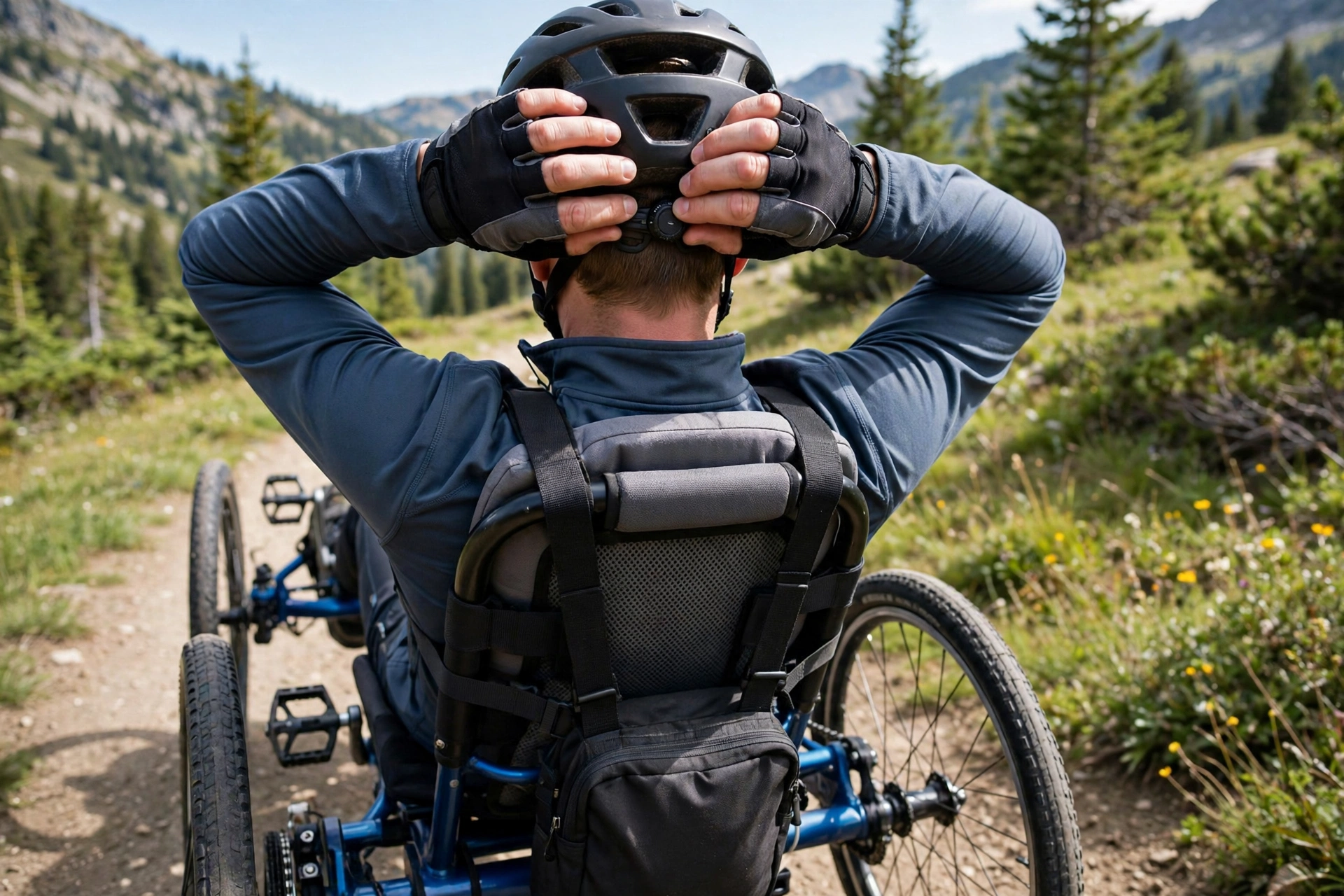
For adaptive cyclists, there are extra causes. A headrest or neck support can push the back of the helmet upward and forward. Sweat can make the pads slippery and let the helmet move. And a reclined position on a handcycle or recumbent trike pulls the helmet in a different direction than an upright position does, so a fit that feels fine standing up can slip badly once you are riding.
How Do You Fix the Fit Step by Step?
Work through the fit in order, sitting on your cycle in your riding position. First, check the size: the helmet should sit level, low enough to cover your forehead, and feel snug all around without pressure points. If it is clearly too big, no amount of adjusting will fix it — you need a smaller size.
Second, tighten the retention system. Turn the dial or adjust the cradle until the helmet stays put when you shake your head gently. It should feel snug, not painful. If you have limited grip strength, ask someone to help set it, and look for a helmet with a large, easy-to-turn dial when you next buy one.
Third, set the straps. The side straps should form a V just below each ear, and the chin strap should be snug, with about two fingers’ width between the strap and your chin. Do the buckle up, then pull gently at the front edge of the helmet — it should not lift or slide. If you are learning about the features on your helmet, reading about what MIPS is for helmets can help you understand one of the systems you may see listed on the box.
What If the Helmet Still Slips After Adjusting?
If the fit is set correctly and the helmet still slips, look at the pads. Flat, worn, or sweaty pads let a helmet move around far more than fresh ones. Replace the pads, or try a thicker pad set if your helmet offers one. Some helmets come with pads in different thicknesses — a thicker pad at the front or sides can take up the slack that lets a helmet rock.
Next, check for interference. Is a headrest, neck support, or the back of your seat pushing the helmet forward? If so, adjust the support position or try a helmet with a lower profile at the back. A helmet that is constantly being pushed out of place by your own kit will never stay put, however well you adjust it.
Also consider sweat. A thin skull cap or sweatband worn under the helmet can improve grip and soak up sweat, which helps the helmet stay in place. But be careful: a thick cap can change the fit and make the helmet sit higher, which can make slipping worse. Use a thin one, and re-check the fit with it on.
When Is It Time for a Different Helmet?
Sometimes the helmet itself is the problem. If you have set the size, the retention system, the straps, and the pads, and the helmet still slips in your riding position, the shape is probably wrong for your head. Some heads are rounder, some are longer, and a helmet shaped for one will not fit the other, whatever the size label says.
Try a different maker or a different model, and try it in your riding position with your support in place. A bike shop that understands adaptive cycling can help you compare shapes. Look for a helmet with a good retention system — a dial that tightens evenly, a cradle that holds the back of your head, and straps that stay where you set them.
Also check the helmet’s condition. A helmet with stretched straps, a worn-out retention dial, or compressed pads may have fitted well when it was new and slipped as it wore out.
How Do You Keep a Helmet from Slipping on Long Rides?
Check the fit before every ride, not just when you first buy the helmet. Pads compress, straps stretch, and a fit that was perfect last month can loosen over time. A quick shake test — gently shake your head and see if the helmet moves — takes seconds and tells you a lot.
On long rides, stop and re-check if the helmet starts to move. Sweat builds up, pads get damp, and a helmet that was snug at the start can loosen as you ride.
Finally, keep the helmet clean and stored properly. Wash the pads following the maker’s instructions, keep the helmet out of strong heat and sunlight, and replace worn parts promptly.
Frequently Asked Questions
Q: Why does my helmet slip forward when I lean back on my handcycle?
A: In general terms, a reclined position changes how the helmet sits, and a headrest or neck support may be pushing the back of the helmet. Tighten the retention system, check the strap position, and try adjusting the support so it clears the helmet.
Q: Can a skull cap stop my helmet slipping?
A: A thin skull cap or sweatband can help by improving grip and soaking up sweat. But a thick cap can change the fit and make slipping worse, so use a thin one and re-check the fit with it on.
Q: How tight should the chin strap be?
A: Snug enough that you can fit about two fingers between the strap and your chin, and tight enough that the helmet does not lift when you pull gently at the front edge. A loose chin strap is one of the most common causes of a slipping helmet.

Olivia
Writer at Helmet Today, covering helmet reviews, fit and riding safety.