


In general terms, you can stop a helmet visor fogging in foggy weather by keeping the visor clean, improving airflow through the helmet, and using an anti-fog treatment — and by cracking the visor open slightly when the mist is at its worst. Fogging happens when warm, moist air from your breath meets a cold visor, and the moisture condenses into tiny droplets that blur your view. The fix is to reduce that moisture, warm the visor, or let the air move — ideally all three.
Foggy weather is the hardest case, because the air outside is already damp and the visor is cold, so the usual tricks matter even more. This guide explains why visors fog in fog, what actually works to stop it, and how to keep your view clear on a damp, misty ride.
Why Does a Helmet Visor Fog in Foggy Weather?
Fogging is condensation. Your breath is warm and full of moisture, and the inside of your visor is cold — especially in foggy weather, when the air is damp and the temperature is often low. When the warm, moist air hits the cold surface, the moisture turns into tiny droplets, and those droplets scatter the light and blur your view.
Foggy weather makes it worse in two ways. First, the outside air is already close to saturation, so the visor stays damp and cold rather than drying out. Second, fog often means still air and low speed, which means less airflow through the helmet to carry the moisture away. A visor that stays clear on a dry, fast ride can fog badly in slow, misty conditions.
It is also worth knowing that a dirty visor fogs more easily than a clean one. Dust, fingerprints, and old cleaning residue give the moisture something to cling to, so the droplets form faster and spread more evenly. A clean visor is the first step, and it costs nothing.
What Actually Stops a Visor Fogging?
The most reliable fix is an anti-fog treatment. These come as sprays, wipes, or stick-on inserts, and they work by spreading the moisture into a thin, clear film instead of letting it form droplets. Apply the treatment to a clean, dry visor, following the maker’s instructions, and reapply it regularly — most treatments wear off after a few rides, especially in rain or fog.
A stick-on anti-fog insert, fitted to the inside of the visor, is often the most effective option. It creates a double layer with a pocket of air between the insert and the visor, which keeps the inner surface closer to the temperature of your breath and reduces condensation. If your helmet maker sells an insert for your visor, it is worth trying.
Ventilation is the other half of the fix. Open the helmet’s vents and, if the helmet allows it, crack the visor open a few millimetres. Even a small gap lets warm, moist air escape and cooler, drier air flow in, which can clear fogging in seconds. In heavy fog you may need to balance this against the damp air coming in, but a small gap usually helps more than it hurts.
How Should You Clean a Visor Before Treating It?
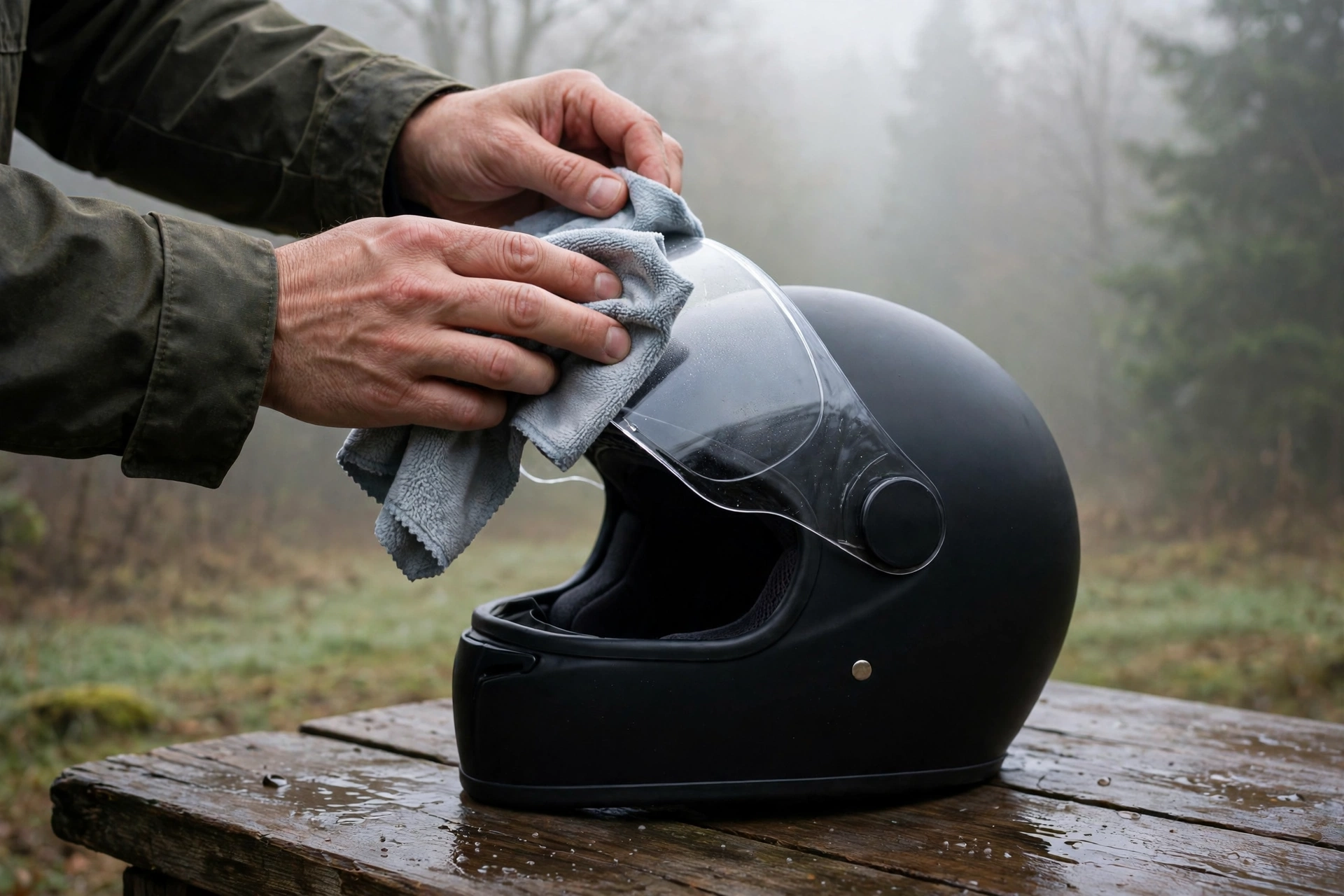
Clean the visor before you apply any anti-fog product, because the treatment will not work well on a dirty surface. Rinse the visor with lukewarm water to remove grit, then wash it gently with mild soap and water, using a soft cloth or your fingers. Avoid paper towels and abrasive cloths, which can scratch the surface and make fogging worse over time.
Dry the visor with a clean, soft cloth, or let it air-dry. Do not use a hair dryer or a radiator, because heat can damage the visor’s coatings. Once it is dry, apply the anti-fog treatment to the inside of the visor, following the product’s instructions — usually a thin, even coat, left to dry or buffed gently.
Avoid household glass cleaners and solvents, which can strip the visor’s coatings and damage the plastic. If the visor has a special coating, check the maker’s cleaning advice first. A scratched or damaged visor will fog more readily and is harder to see through in any case, so treat the visor gently and replace it when it is worn. If you want to understand the safety features of the helmet the visor sits on, reading about what MIPS is for helmets can help you compare helmets on more than the visor alone.
What Can You Do While Riding in Fog?
If your visor starts to fog while you are riding, crack it open slightly. Most helmets have a first detent — a small opening that lets in air without opening the visor fully. That small gap is often enough to clear the fog in a few seconds, and you can close the visor again once your view is clear.
Breathe through your nose and try to direct your breath downward, away from the visor. A balaclava, neck tube, or scarf that covers your mouth can make fogging worse, because it channels warm breath straight up onto the visor. If you wear one, try pulling it down slightly or choosing one that vents your breath downward.
Slow down if you cannot see clearly. Fog already reduces visibility, and a fogged visor makes it worse. It is better to ride slowly with a clear view than to press on with a blurred one. If the fogging will not clear, stop somewhere safe, wipe the visor, and reapply treatment if you carry it.
When Should You Replace the Visor Instead?
If a visor fogs no matter what you try, it may be worn out. Visors lose their coatings over time, pick up fine scratches from cleaning and from road grit, and eventually become harder to keep clear. A visor that is heavily scratched, yellowed, or has a damaged coating is due for replacement, not another coat of treatment.
When you buy a replacement, check whether the maker offers a visor with a factory anti-fog coating or a compatible insert. Some helmets are sold with an anti-fog visor as standard, and some offer it as an accessory. A visor designed to resist fogging from the start is usually more effective than a treatment applied later.
Also check the helmet’s ventilation. If your helmet has few vents, or the vents are blocked or hard to open, fogging will always be a problem in damp weather. A helmet with good, adjustable ventilation is easier to keep clear, and it is worth considering when you next buy a helmet.
Frequently Asked Questions
Q: Does an anti-fog spray really work in foggy weather?
A: In general terms, yes, but it works best on a clean visor and needs reapplying regularly. In heavy fog, combine it with ventilation — crack the visor open slightly — for the best result.
Q: Can I use washing-up liquid on my visor to stop fogging?
A: Some riders do, but it can damage the visor’s coatings and leave a film. A dedicated anti-fog product made for helmet visors is a safer choice — check the maker’s advice for your visor first.
Q: Why does my visor fog only on one side?
A: Fogging usually starts where your breath hits the visor, often on the side you breathe toward or where the visor is coldest. A draught from a vent, or a gap in the seal, can make one side colder than the other.

Olivia
Writer at Helmet Today, covering helmet reviews, fit and riding safety.