Helmet light mounts for road cycling are the brackets, straps, and clips that fix a small light to a road helmet, and in general terms the best choice is a low, centred mount that holds the light firmly without drilling the shell or changing how the helmet fits. Road helmets are light, heavily vented, and shaped for speed, so the mount has to work with those vents and curves rather than fighting them. A good mount keeps the light steady at speed and lets you remove it easily for charging.
This guide explains the main mount types, how they suit different road helmets, where to place a light, and what to check before a ride. It also covers the trade-offs of helmet lights on the road, so you can decide whether a helmet mount, a handlebar light, or both suits the way you ride.
What Are the Main Types of Helmet Light Mount for Road Cycling?
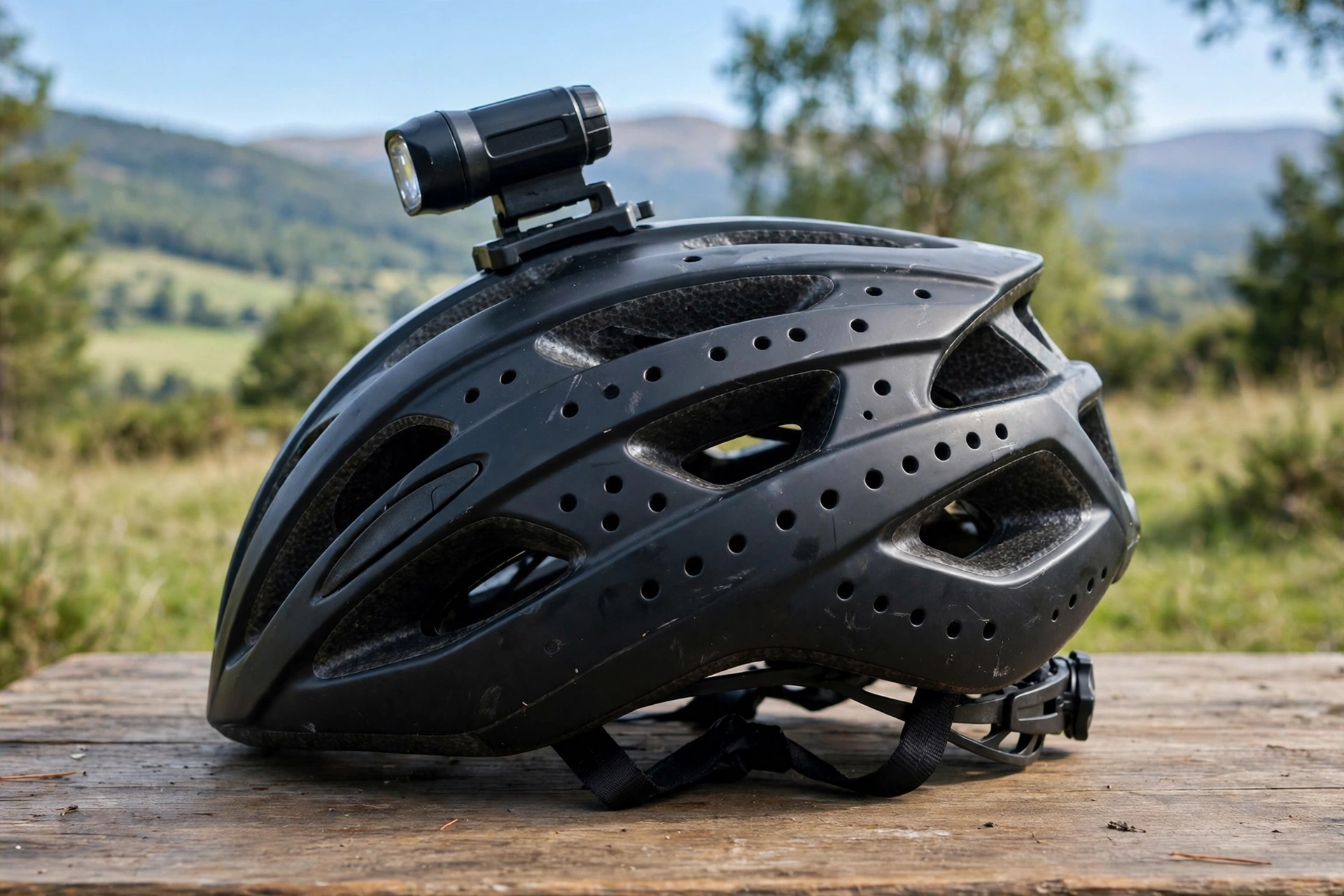
Strap mounts are the most common choice for road helmets. A strap threads through two vents, wraps around the light or its base, and pulls tight, spreading the load across the shell. They suit most vented road helmets, add very little weight, and can be moved between helmets. The main drawback is that they need vents in the right places, and a strap that is too loose can let the light shift on a rough road.
Clip mounts grip a vent edge or a ridge on the shell and hold the light with a spring or a screw clamp. They are quick to fit and remove, which suits riders who only use a helmet light now and then. Adhesive mounts stick to a smooth, flat part of the shell and work best on helmets with fewer vents, while bolt-on mounts use a fixing point the helmet maker has provided. Bolt-on mounts are the neatest option when they exist, but most road helmets do not have one, so check your helmet before assuming that route is open to you.
How Do You Choose a Mount for Your Road Helmet?
Start with your helmet, not the light. Look at the vents on the top and front: are they long slots, round holes, or a mix? A strap mount needs two vents close enough for the strap to span, while a clip mount needs a vent edge thick enough to grip. Hold the mount against the helmet in the shop, or check the maker’s fit guide, and make sure it sits flat without rocking. A mount that rocks on a curved shell will never feel secure, however tight you pull it.
Then think about the light itself. A small, light lamp suits a helmet mount far better than a large one, because weight on top of a helmet is felt more than weight on the bars, and a heavy light can pull the helmet forward on a long ride. Check that the mount and the light use the same fitting, as not all brands share one.
Where Is the Best Place to Mount a Light on a Road Helmet?
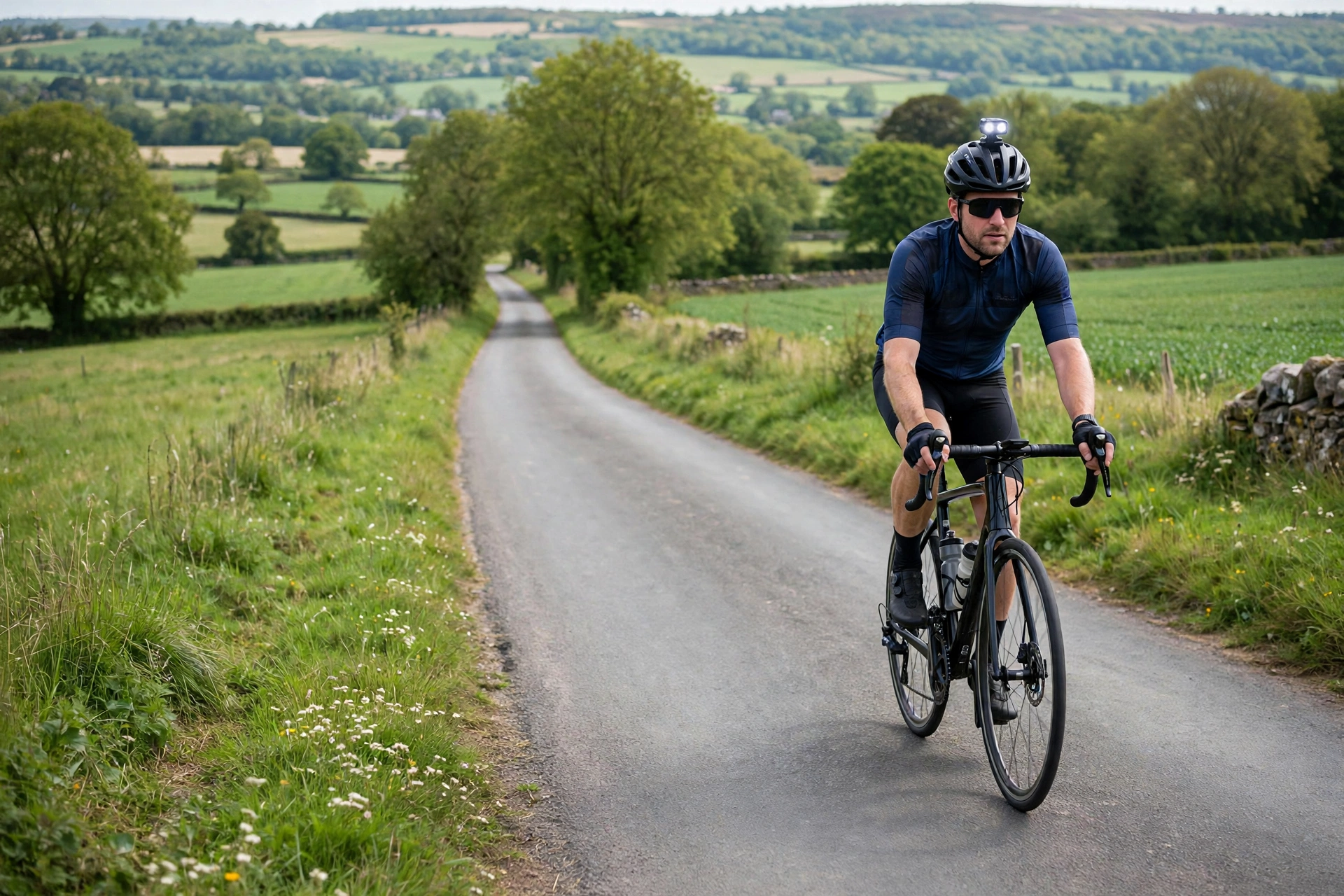
For a front light, the top centre of the helmet, just above the forehead, is the usual and usually the best position. It keeps the weight balanced, keeps the beam in line with your gaze, and keeps the light clear of the straps. Road riding involves looking ahead for a long time, so a centred light gives a steady view of the road surface, including potholes and debris that a handlebar light alone might miss at the edge of its beam.
A light mounted to one side can be useful if the centre vents do not suit a mount, but it is a compromise: the beam will point slightly away from where you look, and the weight can pull the helmet to that side. A rear light belongs at the back of the helmet, above the retention cradle, where it stays visible to traffic behind you. Wherever you place a light, check that it does not cover the vents you rely on most, and that it does not press on the cradle or the strap adjuster when the helmet is done up.
Are Helmet Lights Better Than Handlebar Lights for Road Cycling?
Neither is clearly better on its own, because they do different jobs. A handlebar light points where the bike points, which gives other road users a steady, predictable beam and lights the road ahead even when you turn your head. A helmet light points where you look, which helps you see around a bend, check a side road, or read a sign. In general terms, many road riders use both: a handlebar light as the main beam and a smaller helmet light as a supplement.
A helmet light has drawbacks on the road. It can dazzle other riders and drivers when you turn your head towards them, so a lower brightness or a flashing mode can be kinder in a group. It also adds weight to your head, which matters more on a long ride than on a short commute. And because it moves with your head, it can make it harder for others to judge your position at a junction. Used with care, and with a handlebar light as well, it adds visibility without those drawbacks taking over.
What Should You Check Before Riding with a Helmet-Mounted Light?
Check the mount first. Give the light a firm tug in each direction: it should not move on the mount, and the mount should not move on the helmet. Put the helmet on, do the straps up, and shake your head gently. The helmet should stay level and the light should not make it rock. Then check the beam on a wall or on the ground ahead of you, and aim it so it lights the road a sensible distance ahead without shining into the eyes of oncoming riders.
Also check the practical details. Is the light charged, and do you know how long it will last on the mode you plan to use? Can you switch it on and off with gloves on? Does the mount rattle at speed, and does the light stay put over a bumpy stretch? A short test ride in daylight will answer most of these questions. If you are learning about helmet technology, reading about what MIPS is for helmets can help you understand one of the features you may see listed when you choose a road helmet.
Frequently Asked Questions
Q: Will a helmet light mount damage my road helmet?
A: In general terms, no, if the mount is made for helmets and fitted as the maker advises. Avoid drilling, cutting, or using strong solvents on the shell, and remove the mount now and then to check the shell underneath for wear.
Q: Can I use the same mount on different road helmets?
A: Often, yes, especially with strap mounts, but it depends on the vent layout. A mount that fits one helmet well may sit poorly on another, so check the fit on each helmet rather than assuming it will transfer.
Q: Should a helmet light be steady or flashing on the road?
A: Either can work, and many riders use a steady beam to see the road and a flashing rear light to be seen. A flashing front light can be hard for others to judge, so a steady front beam is often the calmer choice in traffic.

Olivia
Writer at Helmet Today, covering helmet reviews, fit and riding safety.