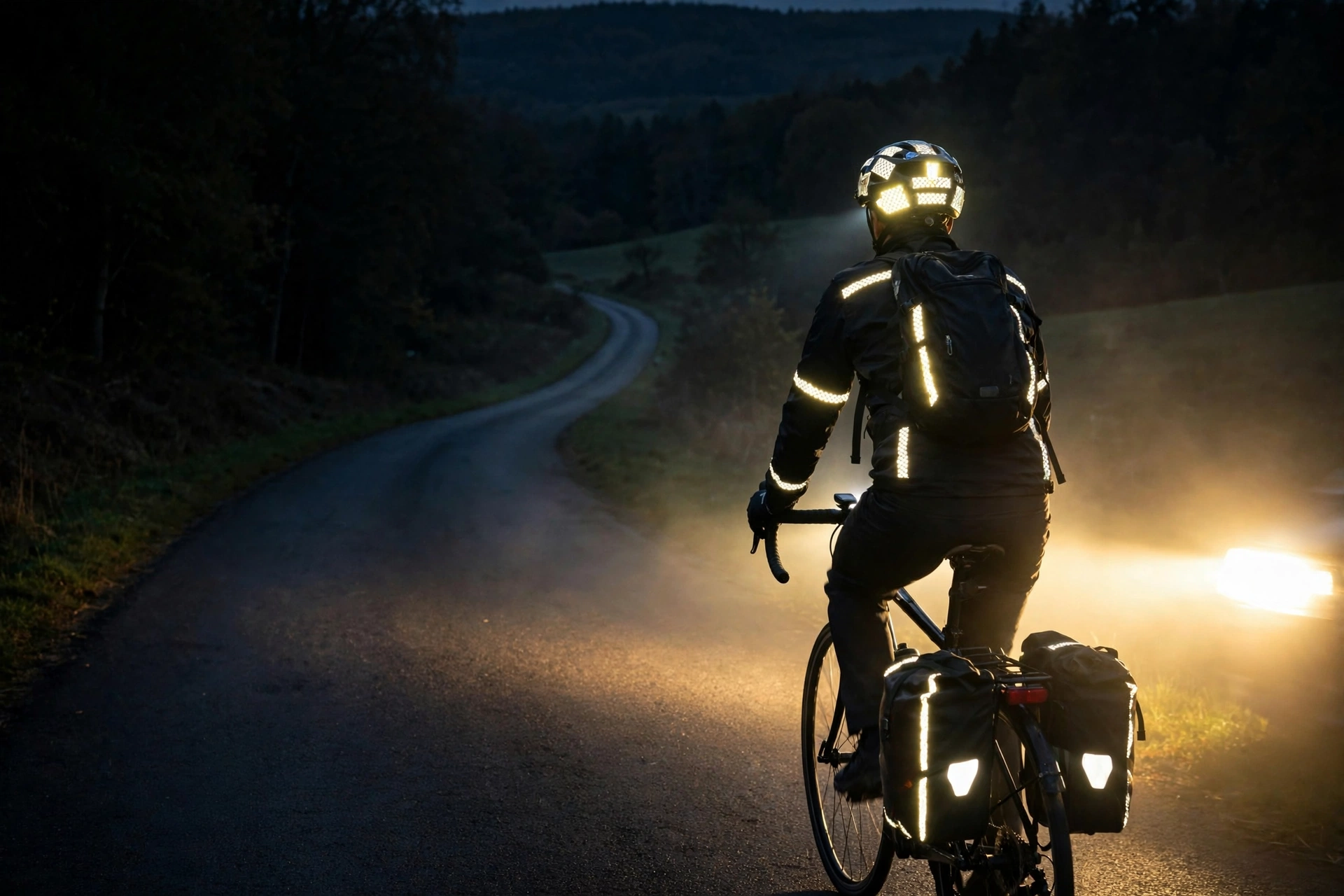
Retroreflective stickers on helmets can help visibility at night, in general terms, because they bounce light from car headlights and bike lights back towards the source, making the helmet stand out in the dark. They do not make light of their own, so they only work when another light is shining on them. In daylight they look like ordinary stickers, and in darkness without headlights they do almost nothing, which is why they are a useful extra rather than a replacement for lights.
Whether they are worth adding depends on where and when you ride. If you ride on lit roads after dark, or on unlit roads with traffic, a few well-placed reflective stickers can help drivers notice you sooner. This guide explains how they work, where to put them, what to avoid, and how they compare with lights and bright clothing.
How Do Retroreflective Stickers Work on a Helmet?
Retroreflective material is covered in tiny prisms or glass beads that send incoming light back in the direction it came from, rather than scattering it in all directions like an ordinary surface. That is why a reflective sticker can look bright white or brightly coloured in headlights, even from a distance, while the rest of the helmet stays dark. The effect is strongest when the light source is close to the person looking, which is often the case with a driver whose headlights are near their line of sight.
The key point is that the sticker needs light to reflect. On a dark road with no traffic, it will not help you see, and it will not help anyone else see you. It also needs a clear line of sight: a sticker hidden behind a bag strap, a hood, or a peak will not reflect light to a driver behind you. In general terms, reflective stickers are a passive safety aid, working only when lit, while a proper light is active and works whether or not anyone is shining a light at you.
Where Should You Place Retroreflective Stickers on a Helmet?
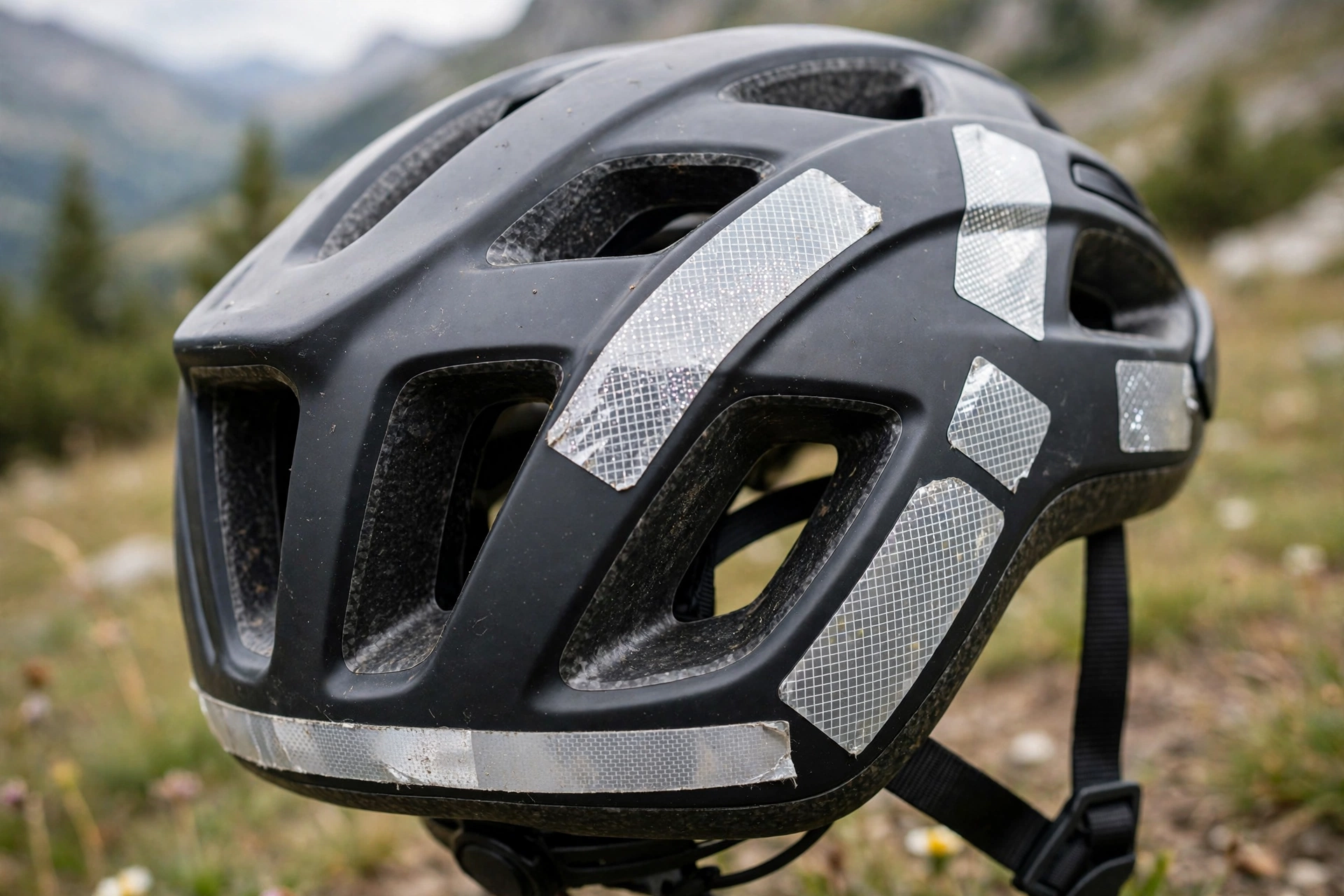
The back and sides of the helmet are usually the most useful places, because that is where traffic behind you and beside you will see them. A strip or a few small shapes across the rear of the shell, clear of the retention cradle, can make your head visible as a distinct shape in headlights. Small stickers on the sides can help at junctions, where a driver approaching from the side might otherwise miss you.
Keep stickers away from vents you rely on for cooling, and away from the strap adjusters and the retention dial, where they could interfere with fitting the helmet. Avoid the front of the helmet too, or at least keep the front clear of large reflective areas that could bounce your own light back at you. Place stickers on smooth, clean parts of the shell, press them down firmly, and leave a small gap between shapes so the shell can still flex slightly and the stickers do not peel at the edges.
Do Retroreflective Stickers Replace Lights?
No. Stickers and lights do different jobs, and a light is the more important of the two. A light makes you visible from a distance, in all directions, and even when there is no other light around. A reflective sticker only shows up when headlights or another light fall on it, and it does nothing on a dark road with no traffic. If you had to choose one, a good set of lights should always come first.
That said, stickers add something lights alone do not. A light is a single bright point, while a reflective shape on a helmet shows the size and position of your head, which can help a driver judge how far away you are and how fast you are moving. They also keep working when a battery runs flat, as long as another light is shining on them. The sensible approach is to treat them as a second layer: lights first, reflective stickers and bright clothing as a useful addition, not as a substitute.
Can Stickers Damage a Helmet Shell?
In general terms, a reflective sticker made for helmets should not damage the shell, but it is worth being careful about what you stick on and how you remove it. Some adhesives can affect certain shell materials, and some solvents used to remove old stickers can do more harm than the sticker itself. Choose stickers sold for helmets or for outdoor use, follow the maker’s guidance, and avoid anything that needs a strong solvent to apply or remove.
Before you apply a sticker, clean the shell with mild soap and water and let it dry fully. Do not stick anything over a crack, a deep scratch, or a damaged area, as that can hide damage you need to see. If you want to remove a sticker later, peel it slowly and use warm water and mild soap rather than scraping it off. If the shell shows any change in colour or texture under a sticker, take that as a sign to stop using that product. If you are learning about helmet technology, reading about what MIPS is for helmets can help you understand one of the features you may see listed when you choose a helmet.
Are Retroreflective Stickers Worth It for Daytime Riding?
For daytime riding, reflective stickers add very little. In daylight, what makes you visible is bright colour, contrast with the background, and movement, rather than reflection. A brightly coloured helmet, a high-visibility jacket, or a light-coloured top will usually do more in the day than any reflective sticker, because they stand out in normal light without needing headlights to shine on them.
That does not make stickers useless for a rider who only rides in the day, but it does mean they should not be the first thing you buy for visibility. If you ride at dawn, at dusk, or after dark, even occasionally, they become much more useful, because those are the times when headlights are on and drivers are looking for shapes in low light. A few small stickers cost little, weigh almost nothing, and stay on the helmet ready for the evening ride home, which is when many commuters need them most.
Frequently Asked Questions
Q: Do retroreflective stickers help drivers see me at night?
A: In general terms, yes, when headlights fall on them. They bounce light back towards the driver and can make your helmet stand out in the dark, but they do not replace lights, which work even when no other light is shining on you.
Q: Can I put reflective stickers on any helmet?
A: Most helmets will take them, but choose stickers made for helmets or outdoor use, apply them to a clean, smooth part of the shell, and keep them clear of vents, straps, and the retention system. Avoid strong solvents when you remove them.
Q: Will reflective stickers make me visible from the front?
A: They can help if they are placed where a driver in front can see them, but the back and sides are usually more useful. A front light is a better way to be seen from the front, especially on an unlit road.

Olivia
Writer at Helmet Today, covering helmet reviews, fit and riding safety.