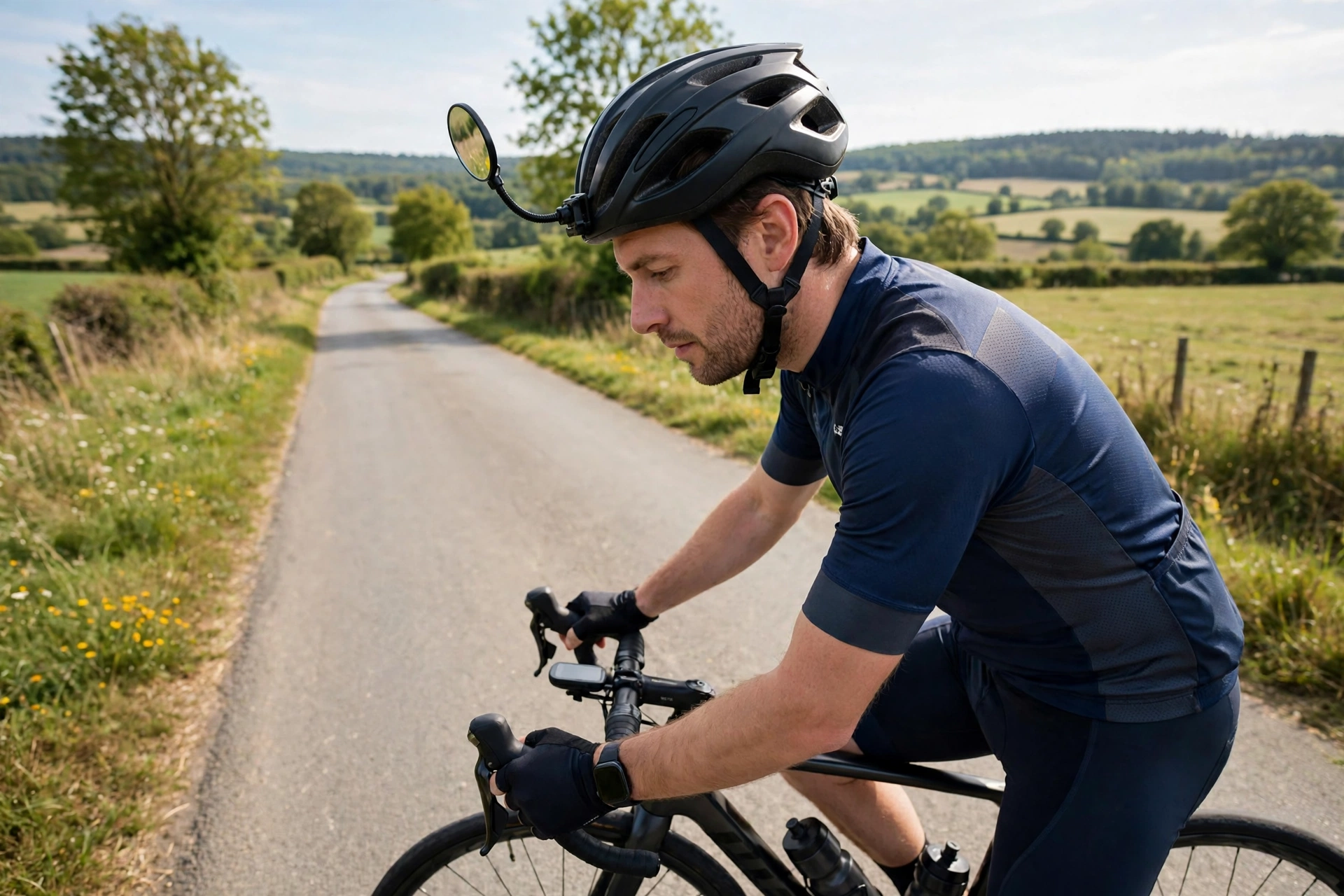
Helmet mirrors are small mirrors that mount on a helmet so you can see behind you without turning your head, and in general terms they can be worth it for riders who ride in traffic, on busy roads, or in groups, but they are not essential for everyone. They give a quick rear view with a glance, which can help you check for traffic before you move out, turn, or change lane. They do not replace a shoulder check, but they can make that check quicker and better timed.
Whether a helmet mirror suits you depends on how you ride and how much you are willing to practise with it. Some riders use one every day and would not ride without it, while others try one, find it distracting, and take it off. This guide explains the types available, the benefits and drawbacks, and how to decide whether one is worth trying.
What Is a Helmet Mirror and How Does It Work?
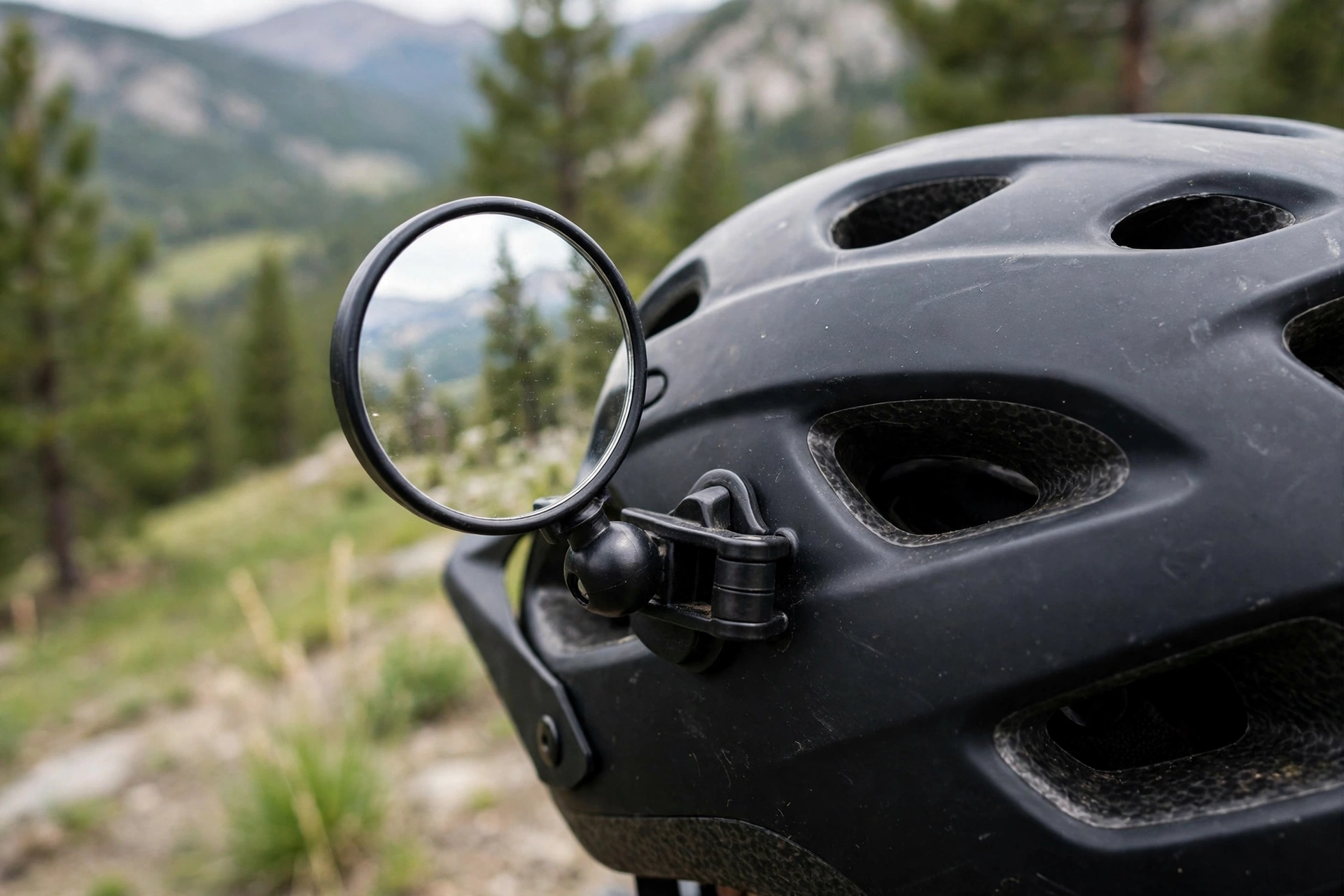
A helmet mirror is a small, usually round or oval mirror on a short arm that attaches to the side of a helmet, near the eye. It sits just outside your normal field of view, so you can glance at it without moving your head. The mirror is angled to show the road behind you, and once it is set up for your riding position, a small eye movement is enough to check what is coming up behind.
Most helmet mirrors mount with a small adhesive pad, a clip, or a strap that fits through a vent, and the arm can be bent or adjusted to set the angle. Some mount on the left side and some on the right, and the choice often depends on which side traffic passes you on. The mirror itself is small, so the image is limited, but it is usually enough to tell whether a vehicle is behind you and how close it is.
What Are the Benefits of a Helmet Mirror?
The main benefit is that you can check behind you without turning your head, which means you keep your eyes on the road ahead for longer and you do not wobble while you look back. Turning your head can make a bike drift to one side, especially at low speed, so a mirror can make a rear check steadier. It can also help you notice a vehicle approaching from behind sooner, giving you more time to decide whether to move out or hold your line.
A helmet mirror can also help in a group ride, where you need to know where the rider behind you is without turning around, and on a commute, where you need to check for traffic before you move around a parked car or a pothole. For riders who find a shoulder check difficult, perhaps because of a stiff neck, a mirror can be a practical aid. It does not give a full view of the road behind you, but it gives enough information to make a quick decision and to time a proper shoulder check well.
What Are the Drawbacks of a Helmet Mirror?
The most common drawback is distraction. A mirror in your peripheral vision can draw your eye away from the road ahead, especially when you first start using one. It can also vibrate on a rough road, making the image hard to read, and it can catch the wind, which some riders find annoying. In bright sunlight it can reflect glare into your eye, and in rain it can be hard to see through.
There are practical drawbacks too. A helmet mirror adds a small protrusion to the helmet, which can catch on a bag strap or a branch, and it can be knocked out of position if the helmet is dropped or stored carelessly. Some riders also find that the mirror blocks part of their side vision, or that they spend too much time looking at it and not enough time looking ahead. These issues often ease with practice, but if they do not, a mirror may not be the right aid for you.
Who Should Consider a Helmet Mirror?
Commuters and road riders who spend a lot of time in traffic are the most likely to benefit, because they need to check behind them often and in situations where a steady line matters. Touring riders, who ride long days on roads they do not know, can also find a mirror useful for keeping track of traffic without turning around constantly. Riders in groups may value the extra awareness, especially the rider at the back of a group.
A mirror is less useful if you mostly ride off-road, on quiet paths, or on a bike where a handlebar mirror would work better. Mountain bikers, for example, rarely need a rear view on a trail, and a mirror could be a snag hazard among branches. If you ride in a place where traffic passes on the other side of the road, check that the mirror can be mounted on the correct side for your riding. If you are learning about helmet technology, reading about what MIPS is for helmets can help you understand one of the features you may see listed when you choose a helmet.
Are Helmet Mirrors Better Than Handlebar Mirrors?
It depends on your bike and your riding. A helmet mirror moves with your head, so you can aim it by turning your head slightly, and it works on any bike, including one with drop handlebars where a bar mirror can be hard to fit. A handlebar mirror is fixed to the bike, so it gives a steadier image and does not add anything to your helmet, but it can be harder to see on a bike with a low, forward riding position.
Some riders use both, or try one and then the other, to see which suits them. A handlebar mirror is often the simpler choice if you have flat bars and room to fit one, while a helmet mirror is often the better choice if you ride a drop-bar bike or switch between bikes and want the mirror to stay with you rather than with one bike. There is no single right answer, so the best test is a short ride with each type, on a quiet road, before you commit to one.
Frequently Asked Questions
Q: Do helmet mirrors replace a shoulder check?
A: No. A helmet mirror helps you check behind you quickly, but it gives a limited view. Always do a proper shoulder check before you move out, turn, or change lane, especially in traffic.
Q: Are helmet mirrors legal to use?
A: In general terms, a helmet mirror is a simple accessory and is not restricted in most places, but rules can differ by area. If you are unsure, check the guidance that applies where you ride, and make sure the mirror does not obstruct your view.
Q: Will a helmet mirror fit any helmet?
A: Most helmet mirrors fit most helmets, but the mount matters. Check whether your helmet has a suitable vent, a flat area for an adhesive pad, or a clip point, and choose a mirror whose mount suits that helmet.

Olivia
Writer at Helmet Today, covering helmet reviews, fit and riding safety.