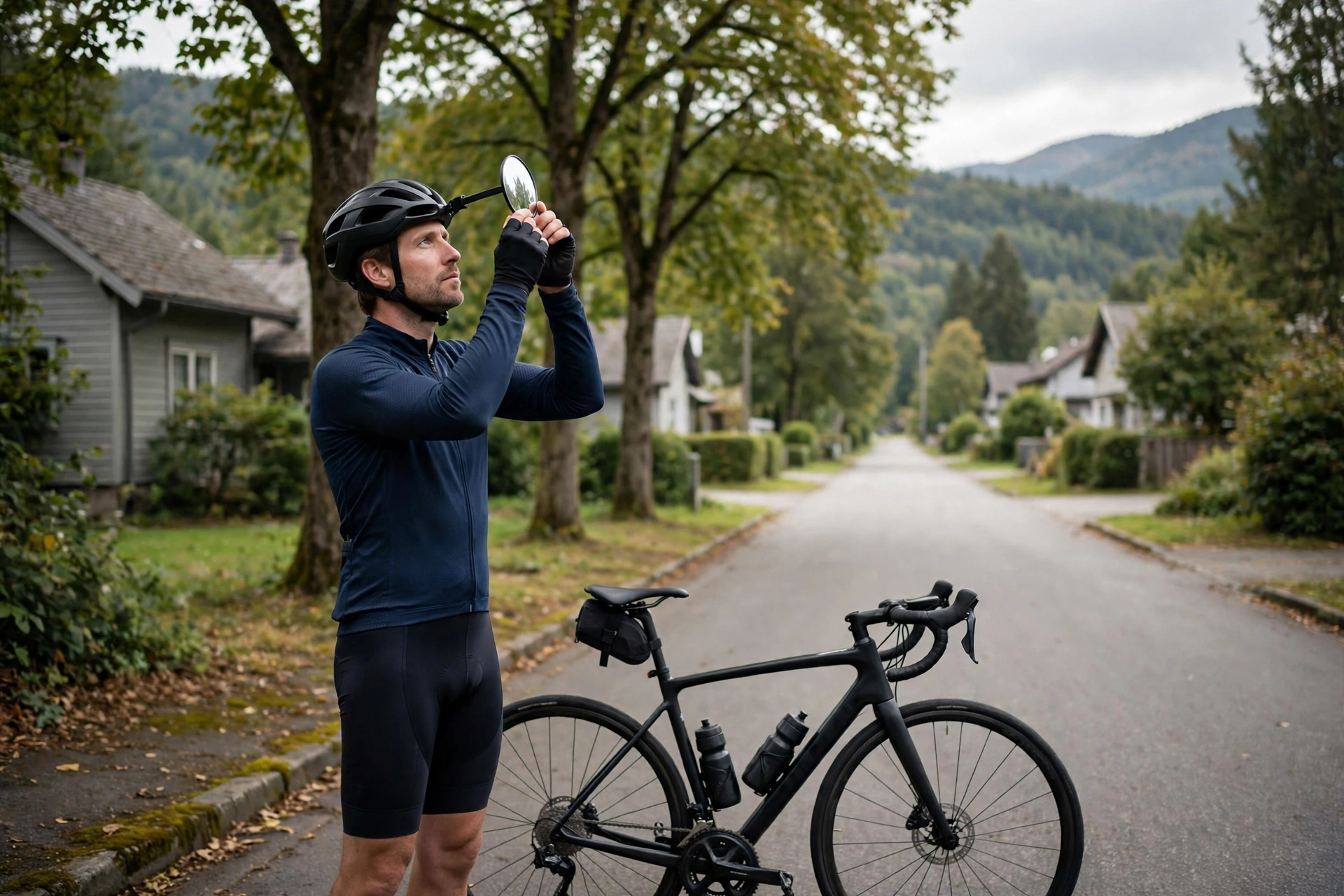
To fit a helmet mirror correctly, mount it on the side where traffic passes you, set the arm so the mirror sits just outside your normal field of view, and angle it so you can see the road behind you with a glance, without moving your head. A mirror that is too high, too low, or too far forward will show you the sky, the ground, or your own shoulder instead of the traffic behind you. A few minutes of careful setup makes the difference between a useful aid and a distraction.
This guide walks through choosing the side, fitting the mount, setting the angle, and testing the mirror on a quiet road. It also covers the common mistakes that make a mirror hard to use, so you can avoid them from the start.
Which Side Should a Helmet Mirror Go On?
In general terms, the mirror should go on the side where traffic passes you, so that it looks back along the side where vehicles will overtake. For many riders that is the left side, but it depends on which side of the road you ride on and where traffic passes. If you ride on the left, traffic usually passes on your right, so a right-side mirror may suit you better. Check the road rules where you ride, and choose the side that gives you a view of the traffic you need to watch.
Your dominant eye can also play a part. Some riders find a mirror easier to use on the side of their dominant eye, because they can glance at it more naturally. If you wear glasses, check that the mirror does not sit where the frame blocks it, and that you can see it clearly without tilting your head. If you are unsure which side to choose, try the mirror on one side for a short ride, then try the other, and keep the side that feels more natural.
How Do You Fit the Mirror Mount to the Helmet?
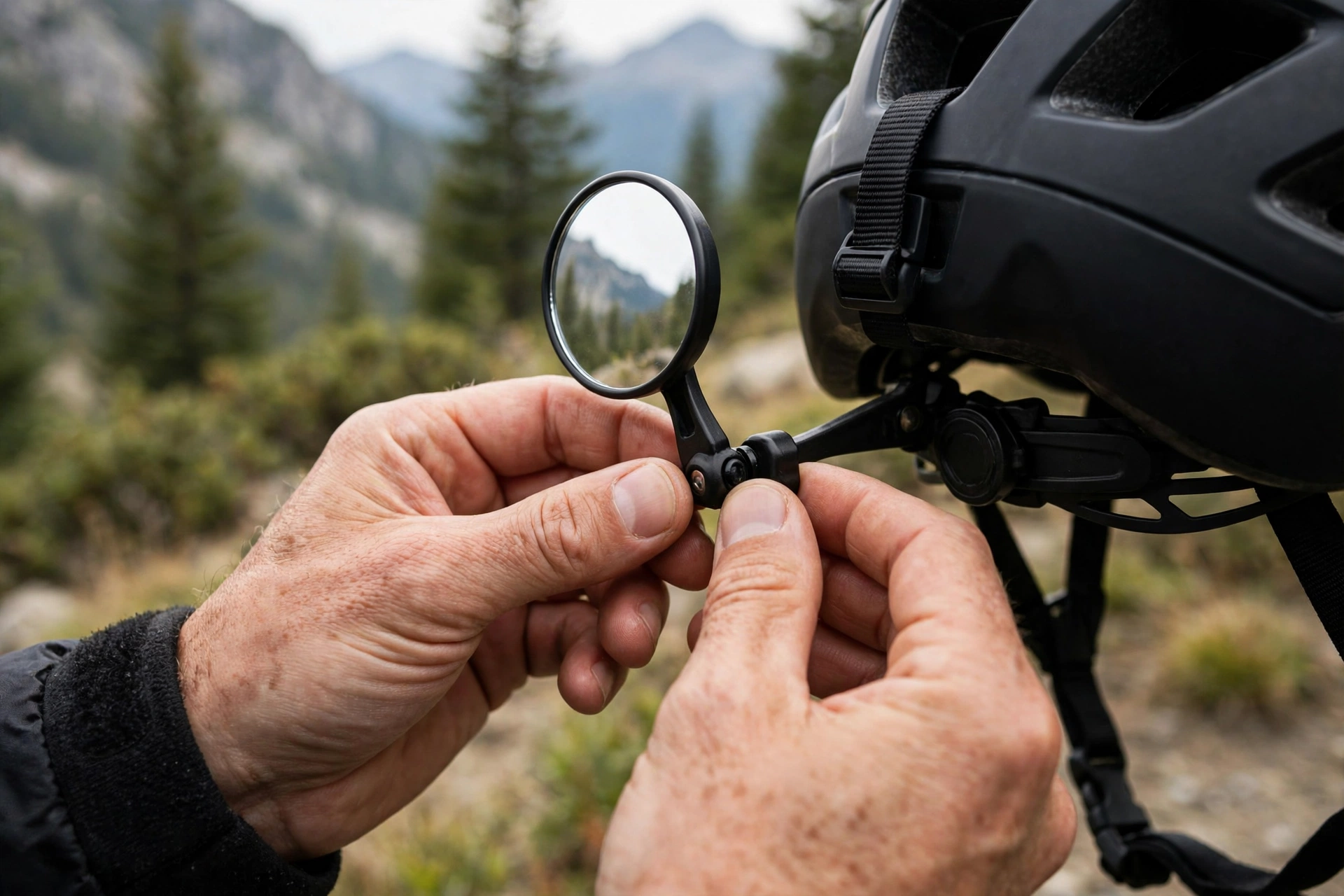
Start by reading the mount’s instructions, as different mounts fit in different ways. A clip mount grips a vent edge or a ridge on the shell, a strap mount threads through a vent, and an adhesive mount sticks to a clean, flat part of the shell. Whichever type you have, make sure the shell is clean and dry before you fit it, and that the mount sits flat without rocking. A mount that rocks will not hold its angle, however carefully you set it.
Fit the mount firmly but without forcing it. A clip that is too tight can mark the shell, and an adhesive pad that is pressed onto a dirty or curved surface may peel off later. Once the mount is in place, attach the mirror arm and check that it does not interfere with the strap, the retention cradle, or the vents. Put the helmet on, do the straps up, and check that the mount does not press on your head or change how the helmet sits.
How Do You Set the Angle of a Helmet Mirror?
Setting the angle is the part that takes the most patience. Sit on the bike in your normal riding position, with the helmet on and the straps done up, and look straight ahead. The mirror should sit just outside your normal field of view, so you can see it with a glance but it does not block your side vision. Bend the arm gently until the mirror shows the road behind you, not the sky above or the ground below.
Ask someone to stand behind you, or use a parked car as a reference, and check that you can see them in the mirror. Then check the view while you ride slowly on a quiet road: you should be able to see a vehicle approaching from behind and to judge roughly how far away it is. If the image is mostly your own shoulder, move the mirror out a little; if it shows mostly sky, tilt it down. Make small adjustments, one at a time, and test each change before you make another.
How Do You Test a Helmet Mirror Before Riding in Traffic?
Test the mirror on a quiet road or a car park before you use it in traffic. Ride slowly, glance at the mirror, and check that you can see the road behind you clearly. Ask a friend to ride or walk behind you at different distances, and check that you can spot them in the mirror and judge when they get closer. Then practise using the mirror as part of a routine: glance at the mirror, then do a shoulder check before you move out.
Also test the mirror at the speed you normally ride. A mirror that looks fine at a standstill can vibrate at speed, making the image hard to read. If it vibrates, check that the mount is tight and that the arm is not too long or too loose. Ride over a bumpy stretch and check that the mirror stays in position. If it moves, tighten the mount or choose a firmer fitting before you rely on it in traffic.
What Mistakes Should You Avoid When Fitting a Helmet Mirror?
The most common mistake is setting the mirror once and never checking it again. A mirror can be knocked out of position when the helmet is stored, dropped, or carried in a bag, so check the angle before every ride. Another common mistake is fitting the mirror too far forward, where it blocks your side vision, or too close to your eye, where it dominates your view and distracts you from the road ahead.
It is also a mistake to rely on the mirror alone. A helmet mirror gives a limited view, and it cannot show you everything behind you, especially in your blind spot. Always do a shoulder check before you move out, turn, or change lane. Finally, do not fit a mirror in a way that damages the helmet: avoid drilling, cutting, or using strong solvents on the shell. If you are learning about helmet technology, reading about what MIPS is for helmets can help you understand one of the features you may see listed when you choose a helmet.
Frequently Asked Questions
Q: How far from my eye should a helmet mirror sit?
A: In general terms, it should sit just outside your normal field of view, close enough to glance at easily but far enough that it does not block your side vision. The exact distance depends on the arm length and your helmet, so adjust it while sitting on the bike.
Q: Can I fit a helmet mirror to any helmet?
A: Most helmets will take a helmet mirror, but the mount matters. Check whether your helmet has a suitable vent, a flat area for an adhesive pad, or a clip point, and choose a mirror whose mount suits that helmet.
Q: Why does my helmet mirror keep moving out of position?
A: It is usually a loose mount, an arm that is too long, or a mount that does not sit flat on the shell. Check the mount is tight and flat, shorten the arm if you can, and re-check the angle before every ride.

Olivia
Writer at Helmet Today, covering helmet reviews, fit and riding safety.