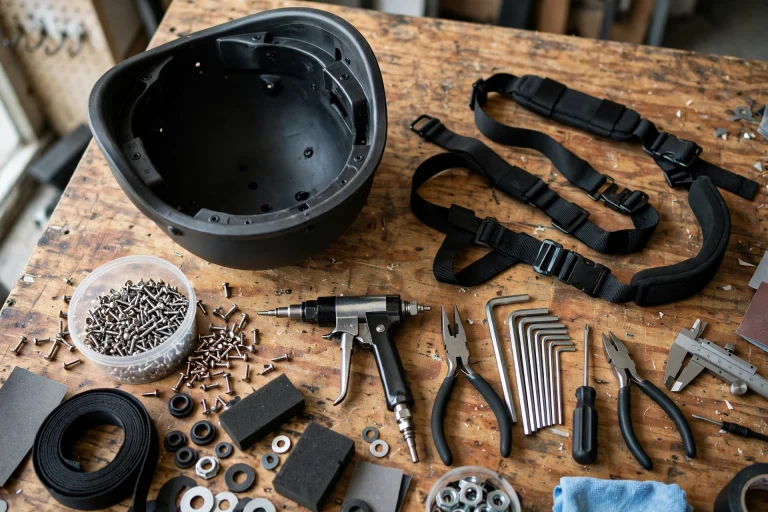
Helmet paint and finishes can affect the shell, in general terms, because some paints, solvents and stickers can soften or weaken the plastic or resin underneath, while a well-applied factory finish protects the shell from sunlight, moisture and scratches. The finish is not just decoration: it is the shell’s outer shield, and what you put on it matters.
This guide explains how factory finishes work, what can damage a shell, and what to avoid when you want to customise or clean your helmet.
What Does a Factory Finish Do?
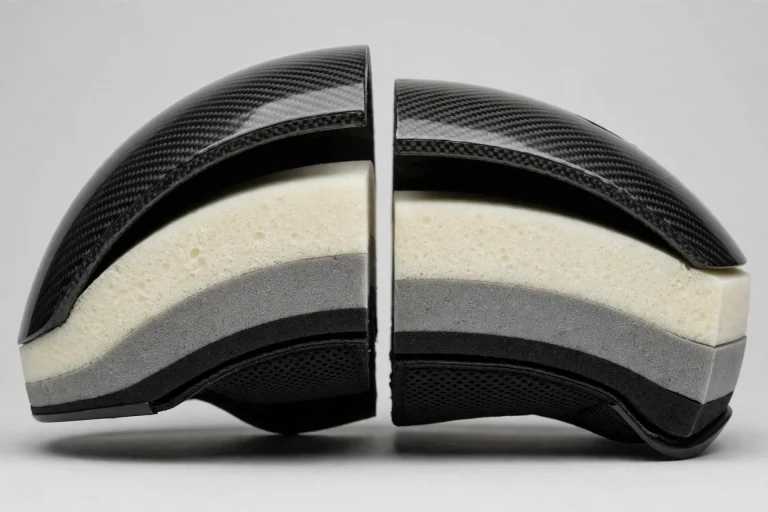
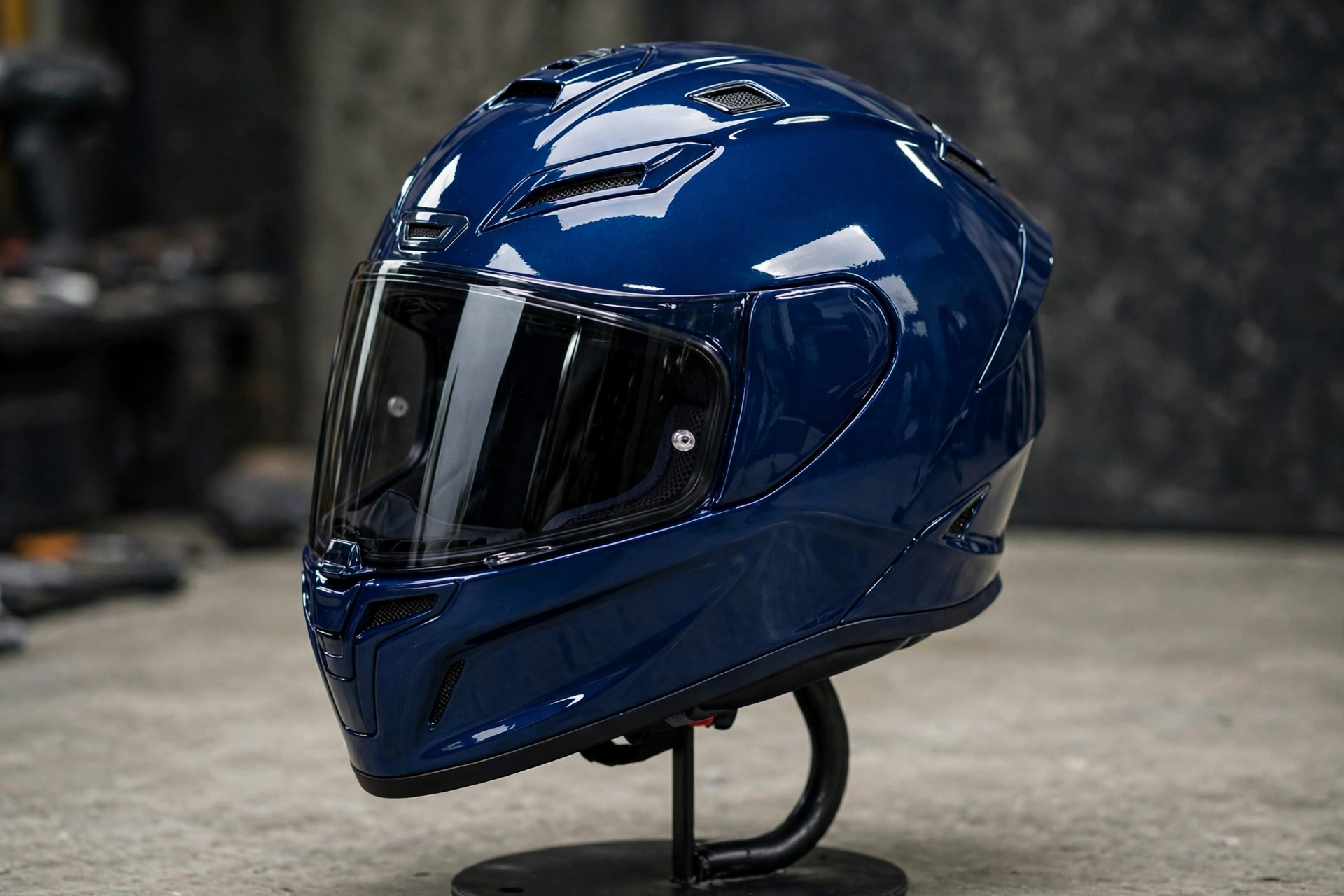
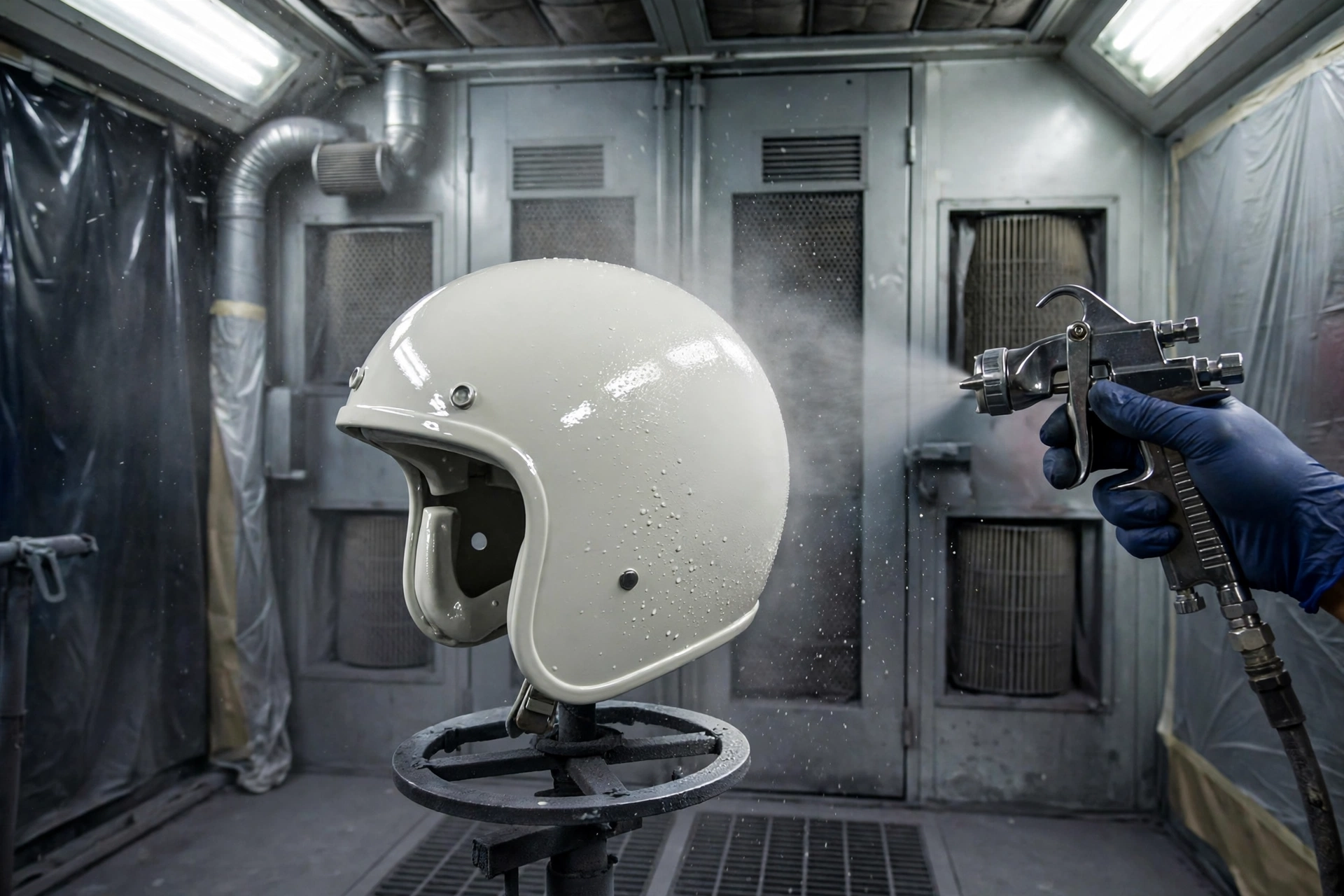
A factory finish usually has two parts: the colour coat, which gives the helmet its colour and graphics, and a clear coat on top, which protects the colour and the shell underneath. The clear coat seals the shell against moisture and sunlight, and it resists scratches and scuffs from everyday use.
The finish is applied in controlled conditions, with paints and coatings chosen to suit the shell material. The maker tests the finish to make sure it does not react with the plastic or the resin, and that it stays bonded to the shell over time.
A good finish also helps the shell slide across a surface in a fall, rather than catching and twisting the helmet. That is a small but real benefit of a smooth, well-finished shell.
Can Paint Damage a Helmet Shell?
Paint can damage a shell if it is the wrong type or applied badly. Some paints contain solvents that can soften ABS plastic or attack the resin in a composite shell. If the solvent soaks into the shell, it can weaken the material or make it more brittle, even if the damage is not visible from the outside.
That is why makers warn against repainting a helmet. A factory finish is applied with paints that are known to be safe for that shell, and a repaint with an unknown paint may not be. The risk is not just cosmetic: a weakened shell may not protect as well in an impact.
Heat can make the problem worse. If a painted helmet is left in strong sun or a hot car, the paint and the shell can expand at different rates, which can cause the finish to crack or peel. Once the finish is damaged, the shell underneath is exposed to sunlight and moisture, which can speed up its ageing. This is another reason to store a helmet away from heat and to avoid repainting it with paints that were not made for the shell.
Stickers and decals can also be a problem, though a smaller one. Some adhesives contain solvents that can affect the shell, and a sticker can hide damage underneath it. A small sticker on a well-finished shell is unlikely to cause harm, but large stickers, or stickers applied with strong glue, are best avoided.
How Do Finishes Affect Different Shell Materials?
ABS plastic is the most sensitive to solvents, because many paints and cleaners can soften it. A factory ABS shell is finished with paints chosen to be safe for ABS, but a repaint with a general-purpose paint may not be. If you own an ABS helmet, be especially careful about what you put on the shell.
Composite shells made from fibreglass, carbon fibre or aramid are less sensitive, because the resin is usually more resistant to solvents. But the resin can still be affected by strong chemicals, and a damaged finish can expose the fibres to moisture and sunlight, which can weaken them over time.
Polycarbonate shells, used in many in-mould helmets, are also sensitive to some solvents. The thin shell relies on its finish for protection, so any damage to the finish matters more than it would on a thicker shell.
The age of the helmet matters too. An older finish may have thinned or cracked with use, which leaves the shell less protected than it was when new. Regular cleaning and careful storage help the finish last, but no finish lasts forever. If the clear coat is peeling or the paint is flaking across a wide area, the shell is no longer well protected, and it may be time to replace the helmet.
How Should You Clean a Finished Shell?
Clean the shell with mild soap and water and a soft cloth, and dry it with a clean towel. Avoid solvents, petrol, abrasive cleaners and strong detergents, which can dull the clear coat or damage the plastic underneath.
If the shell has bugs or grime stuck to it, soak a cloth in warm soapy water and lay it over the area for a few minutes to soften the dirt, rather than scrubbing hard. Scrubbing can scratch the clear coat, which removes the protection it gives the shell.
Do not use a pressure washer on a helmet. The force of the water can drive dirt into the vents, damage the finish, and force water into the liner. A gentle hand wash is always the safer choice.
Should You Customise Your Helmet’s Finish?
If you want a different colour or design, the safest choice is to buy a helmet in that colour or with that design from the maker. A factory finish is tested and safe, while a repaint or a heavy customisation carries a risk you cannot easily check.
Vinyl wraps are sometimes suggested as a safe way to change a helmet’s look, but they carry their own risks. The adhesive can react with the finish, and removing the wrap can pull the clear coat off with it. A wrap can also hide damage underneath, so you may not notice a crack until the wrap is removed. If you want a different look, a new helmet in that colour is still the safest choice.
If you do want to add something to your helmet, use accessories that are made for helmets and fitted as the maker intends, such as a clip-on peak or a vent cover. Avoid drilling holes, applying strong adhesives, or painting over the shell.
If you are learning about helmet technology, reading about what MIPS is for helmets can help you understand another feature that may be listed on the box of your next helmet.
Frequently Asked Questions
Q: Can I repaint my helmet a different colour?
A: It is best not to. Some paints and solvents can weaken the shell, and a repaint may hide damage. Buy a helmet in the colour you want instead.
Q: Are stickers safe on a helmet shell?
A: Small stickers on a well-finished shell are usually fine, but strong adhesives can affect the shell, and stickers can hide damage. Keep stickers small and avoid covering large areas.
Q: How do I clean my helmet without damaging the finish?
A: Use mild soap and water and a soft cloth, and dry it gently. Avoid solvents, abrasive cleaners and pressure washers.

Olivia
Writer at Helmet Today, covering helmet reviews, fit and riding safety.