There is no single thickness a helmet shell should be, because the right thickness depends on the material, the type of helmet and the safety standard it must meet, but in general terms, a shell needs to be thick enough to spread the force of an impact and hold its shape, without being so thick that the helmet becomes heavy and unwieldy. A thin carbon fibre shell and a thick ABS shell can both be the right thickness for their design, even though one is much thinner than the other.
Thickness is a design choice, not a measure of quality on its own. This guide explains what decides shell thickness, how it varies between materials, and what it means for you as a buyer.
What Decides How Thick a Shell Should Be?
The main factor is the material. A stiff material such as carbon fibre can be thin and still hold its shape, while a softer material such as ABS needs more thickness to reach the same stiffness. The maker chooses the thickness that gives the shell the strength it needs for the material in question.
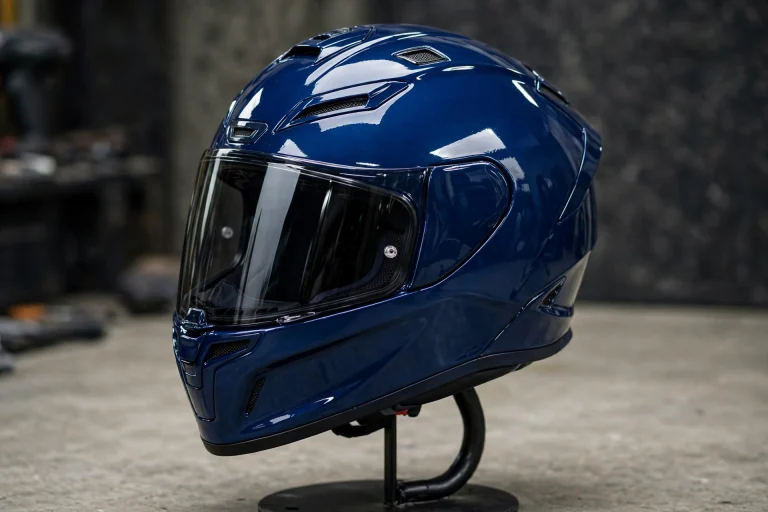
The type of helmet matters too. A motorcycle helmet, which must handle higher-speed impacts, usually has a thicker, stronger shell than a cycling helmet, where weight matters more and the impacts are different. A hard hat for a worksite has its own requirements again, shaped by the risks it is designed for.
The safety standard also plays a part. The standard sets the tests the helmet must pass, including impact and penetration checks, and the shell must be thick enough, and strong enough, to pass them. A shell that is too thin for its material will fail those tests.
How Does Thickness Vary Between Materials?
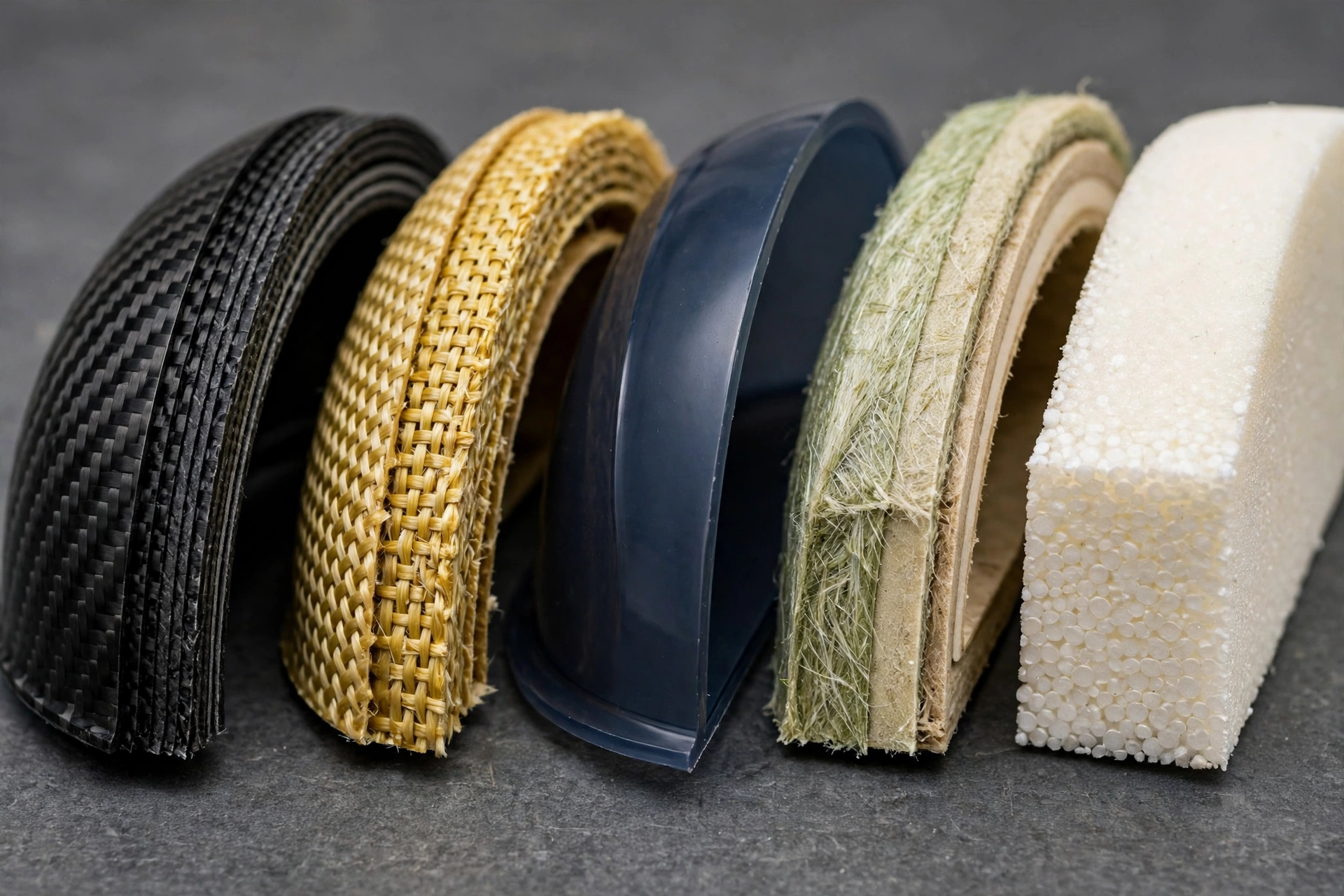
ABS shells are usually among the thickest, because the plastic needs a certain thickness to be stiff and tough. A typical ABS motorcycle helmet shell may be a few millimetres thick, which gives it the strength to spread an impact and resist dents.
Fibreglass and composite shells are often thinner, because the woven fibres are strong for their weight. A fibreglass shell can be thinner than an ABS shell and still be as strong, which is one reason composite helmets are often lighter.
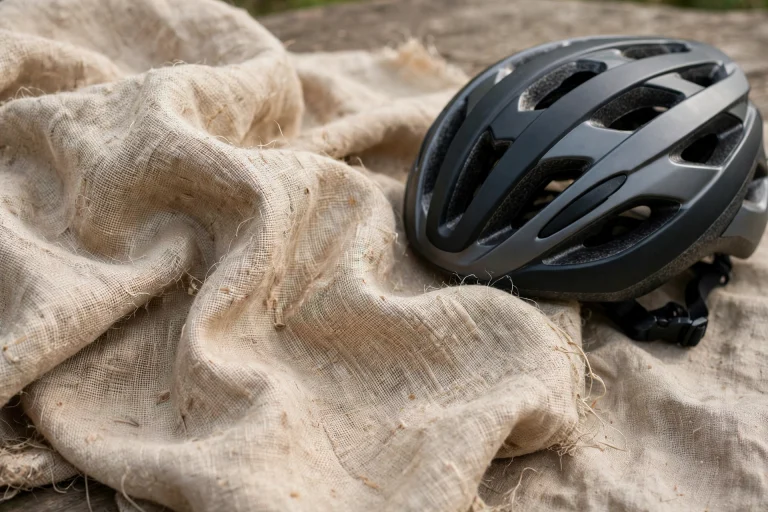
Carbon fibre shells can be the thinnest of all, because carbon fibre is very stiff. An in-mould cycling helmet shell, made from thin polycarbonate, is also very thin, but it relies on the foam liner bonded to it for much of its strength. In each case, the thickness is matched to the material, not chosen in isolation.
Does a Thicker Shell Mean a Safer Helmet?
Not necessarily. A thicker shell is not automatically safer than a thinner one, because safety depends on the whole helmet: the shell, the liner, the fit and the standard it meets. A thin carbon fibre shell on a well-designed helmet can protect as well as, or better than, a thick shell on a poorly designed one.
What matters is how the shell behaves in an impact. It needs to spread the force across the liner, resist penetration, and hold its shape long enough for the foam to do its work. A shell that is too thick can be heavy without adding protection, and a shell that is too thin for its material can crack or flex too much.
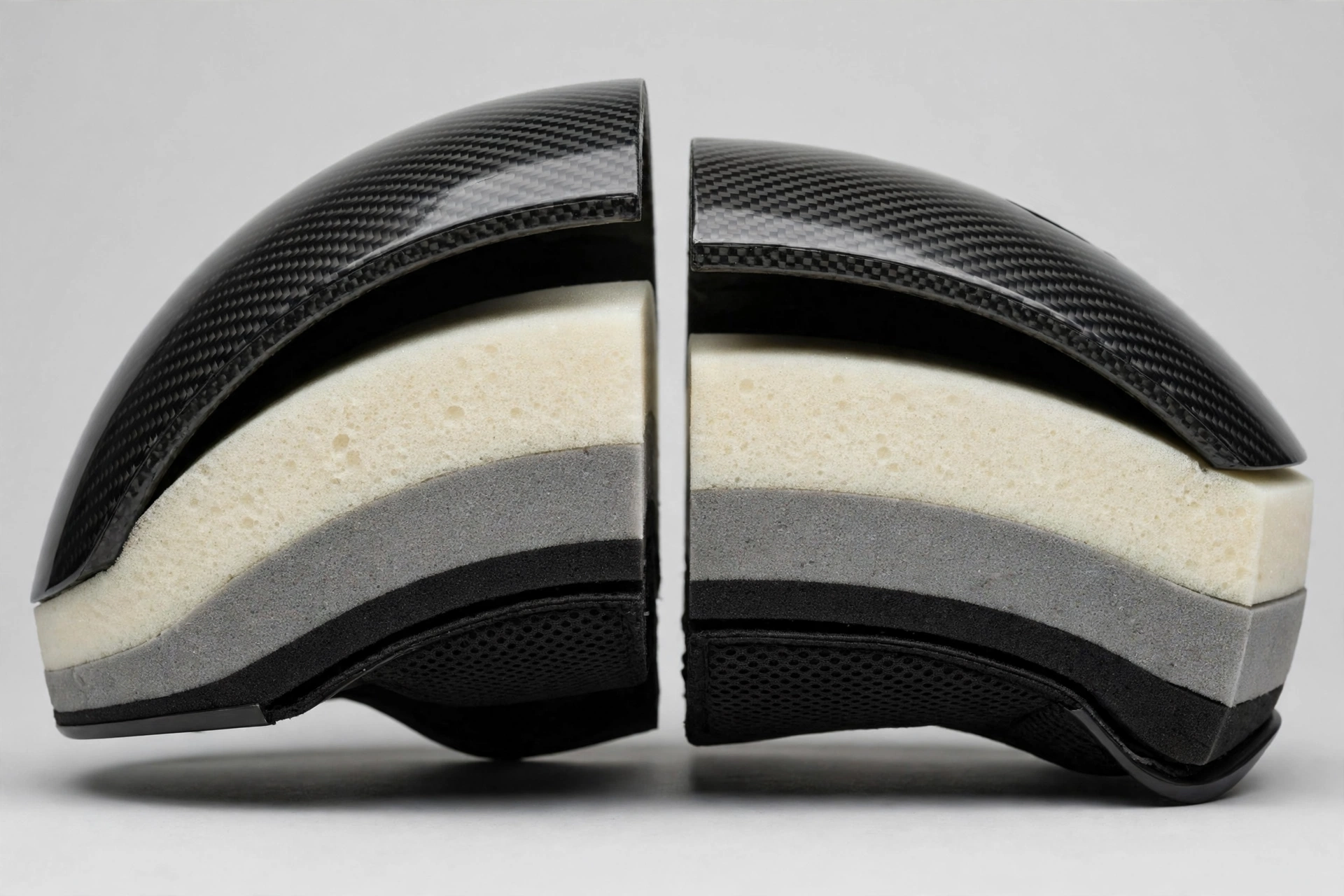
The liner matters as much as the shell. A helmet’s protection comes from the shell spreading the force and the foam liner absorbing it, and the two work together. A shell that is too stiff can pass too much force to the liner, while a shell that is too flexible may not spread the force widely enough. The maker balances the shell and the liner as a pair, so the thickness of one cannot be judged without the other. That balance is what the safety tests check.
Weight is the other half of the trade-off. A thicker shell adds weight, and weight affects comfort and neck strain over a long ride. Makers aim for the thinnest shell that still passes the tests, because a lighter helmet is easier to wear all day.
The best guide is the safety standard. A helmet that meets a recognised standard has been tested as a complete unit, shell thickness included, and has passed. Thickness alone tells you very little about how safe a helmet is.
Can You Measure a Shell’s Thickness?
As a buyer, you cannot easily measure a shell’s thickness, and you do not need to. The shell is covered by paint and finish on the outside and by the liner on the inside, so its thickness is not visible. The weight of the helmet gives a rough hint, but it is not a reliable guide, because the liner, the straps and the fittings also add weight.
What you can check is the finish and the feel of the shell. It should feel solid and even, with no thin spots or flexing when you press it gently. If the shell flexes easily under light pressure, or if it feels uneven, that is a sign to look more closely.
Do not try to measure the shell by cutting into the helmet or removing the liner. That will damage the helmet and may void its warranty. Trust the standard label and the maker’s reputation instead.
What Should You Look for When You Buy?
Look for a helmet that meets a recognised safety standard for your activity, fits you well, and feels comfortable to wear. The shell thickness is the maker’s job, not yours, and it is reflected in the test results, not in a number you can read on the box.
If you are choosing between two helmets, compare the weight, the fit, the ventilation and the price, rather than trying to guess which shell is thicker. A lighter helmet that fits well and meets the standard is a better choice than a heavier one chosen for its thickness alone.
If you are learning about helmet technology, reading about what MIPS is for helmets can help you understand another feature that may be listed on the box of your next helmet.
Frequently Asked Questions
Q: How thick is a typical helmet shell?
A: It varies widely by material and helmet type. An ABS shell may be a few millimetres thick, while a carbon fibre shell can be much thinner. There is no single number that applies to all helmets.
Q: Is a thicker shell always heavier?
A: In general terms, yes, for the same material. But a thin carbon fibre shell can be lighter and stronger than a thick ABS shell, so thickness and weight do not always go together.
Q: Does shell thickness affect comfort?
A: Indirectly, through weight. A thicker, heavier shell can tire your neck on a long ride, while a thinner, lighter shell is easier to wear. Fit and ventilation matter more for comfort than thickness alone.

Olivia
Writer at Helmet Today, covering helmet reviews, fit and riding safety.