Natural fibre helmet shells are a real option in a limited sense: a few makers use plant-based fibres such as flax, hemp or jute in composite shells, but they remain a niche choice and are not yet a mainstream alternative to fibreglass, carbon fibre or moulded plastic. The idea is appealing: a renewable material that can be grown rather than made from oil. In practice, natural fibres behave differently from synthetic ones, and the helmets that use them are still rare.
This guide explains which natural fibres are used, how they perform, where they appear, and what to check if you are considering one.
Which Natural Fibres Are Used in Helmet Shells?
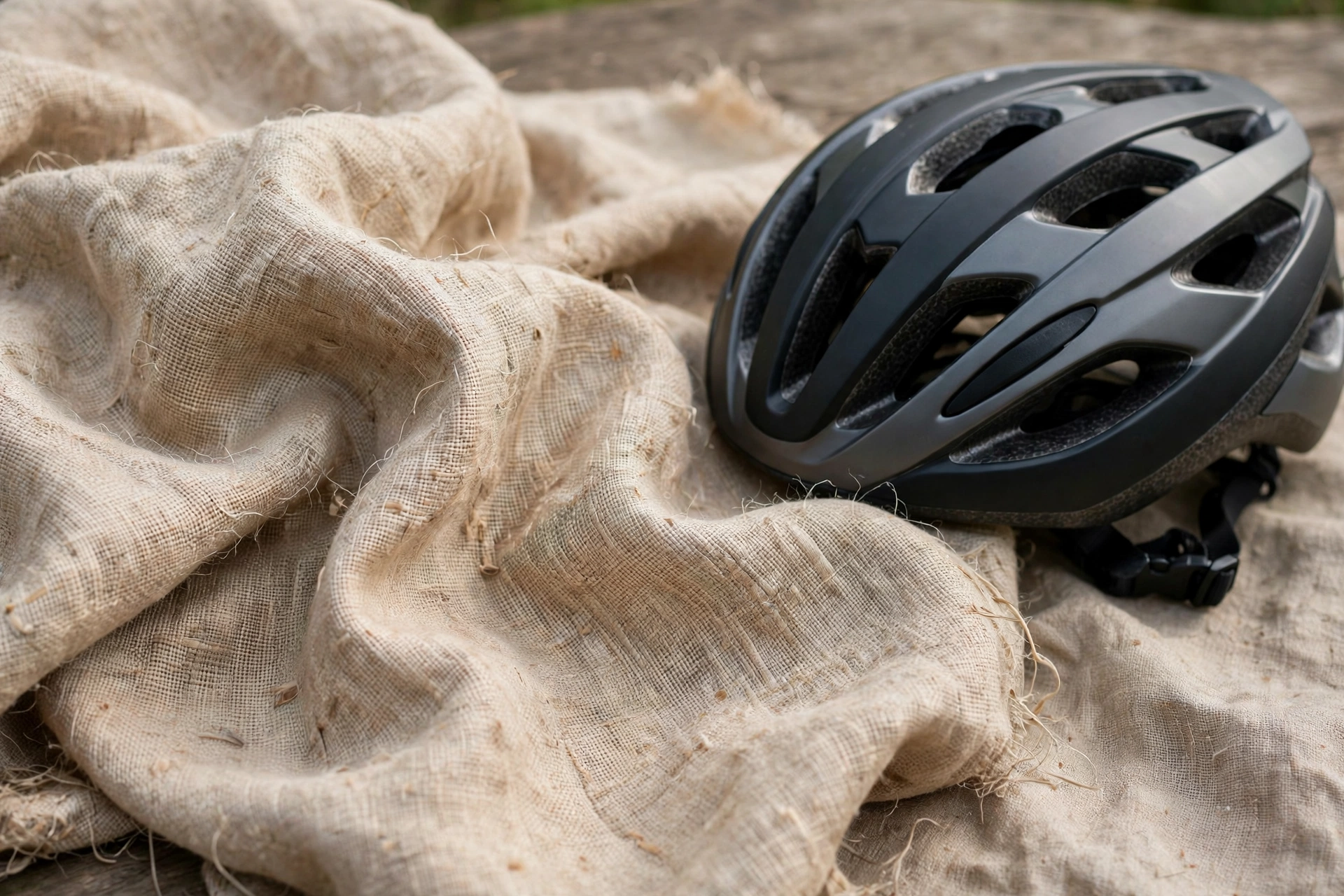
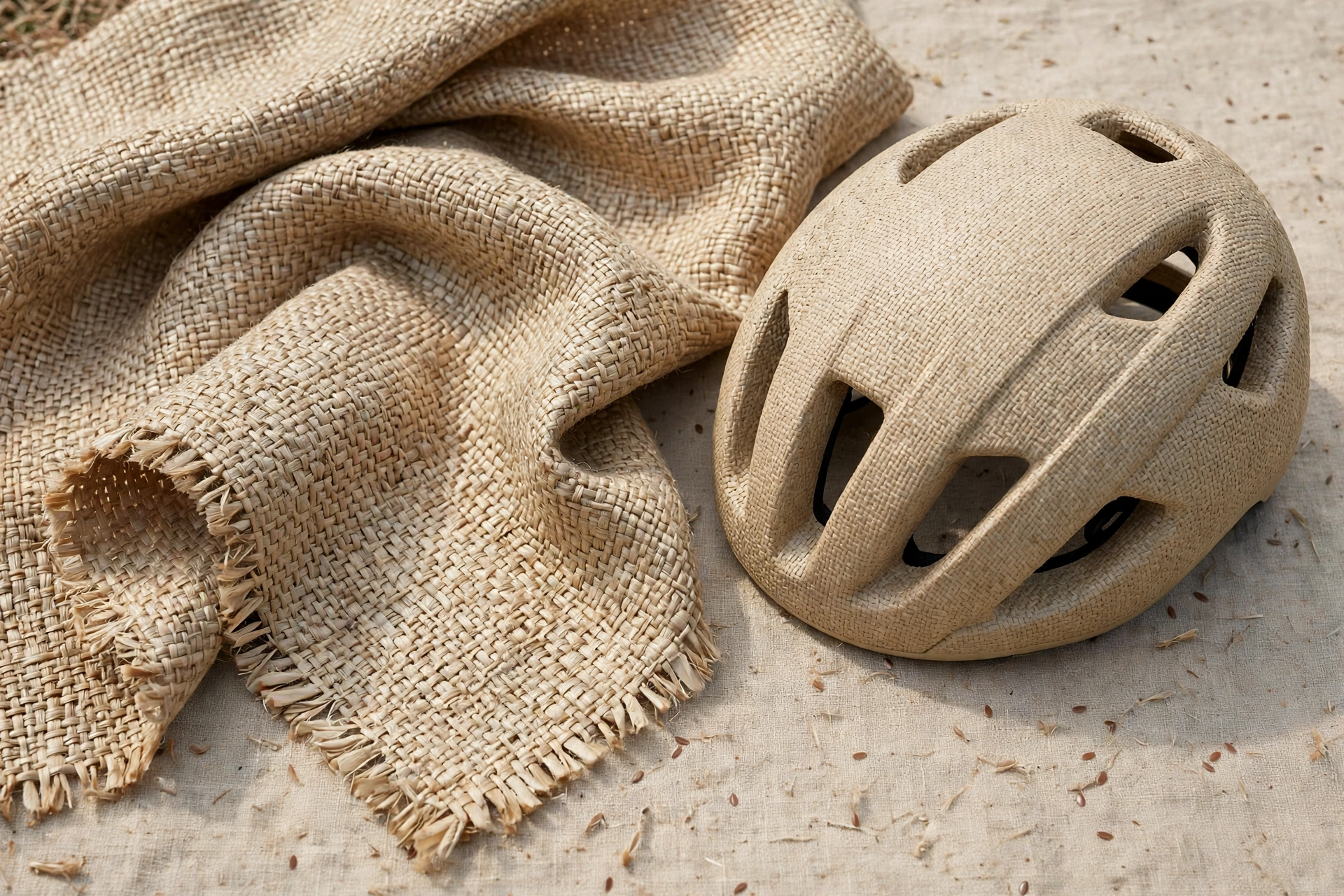
The most common natural fibre in helmet shells is flax, the fibre from the flax plant that is also used to make linen. Flax fibres are strong for their weight, stiff, and easy to weave into a fabric that can be layered with resin, much like fibreglass cloth. A few specialist makers use flax in cycling and motorsport helmet shells.
Hemp is another fibre that has been tried, valued for its strength and toughness. Jute, a coarse fibre from a tropical plant, has also been used in experimental shells. Other plant fibres, such as kenaf and sisal, appear in research and in prototypes rather than in helmets you can buy.
In every case, the fibre is used as part of a composite: layers of woven natural fibre cloth are laid into a mould, soaked in resin, and cured until they harden into a shell. The fibre alone is not a shell; it is the reinforcement inside a resin matrix, just as fibreglass is.
How Do Natural Fibre Shells Perform?
Flax and hemp fibres are strong and reasonably stiff, and a well-made natural fibre shell can be lighter than a fibreglass shell of similar strength. Flax in particular has good vibration damping, which means it can absorb some of the buzz and shake that a rider feels, though this is a comfort benefit rather than a safety one.
The limits are real. Natural fibres absorb moisture more readily than glass or carbon fibre, which can weaken the bond with the resin over time if the shell is not well sealed. They are also less consistent than synthetic fibres: the strength of a plant fibre varies with the crop, the weather and the processing, so makers must test and sort the fibre carefully.
Impact performance is the key question, and here the evidence is limited. A natural fibre shell can meet a recognised safety standard, and a few have done so, but there is far less testing data behind them than behind fibreglass or carbon fibre shells. That does not mean they are unsafe, but it does mean buyers should check the certification carefully.
Where Do Natural Fibre Shells Appear?
Natural fibre shells appear mainly in specialist and premium helmets, often from small makers who build in low volumes and market the shell as a sustainable choice. You are most likely to find them in cycling helmets and in a small number of motorsport and motorcycle helmets.
They do not appear in most mainstream helmets, because the materials cost more, the supply is less reliable, and the manufacturing process needs more care. Large makers, who produce helmets in high volumes, tend to stick with fibreglass, carbon fibre and moulded plastics, which are consistent and well understood.
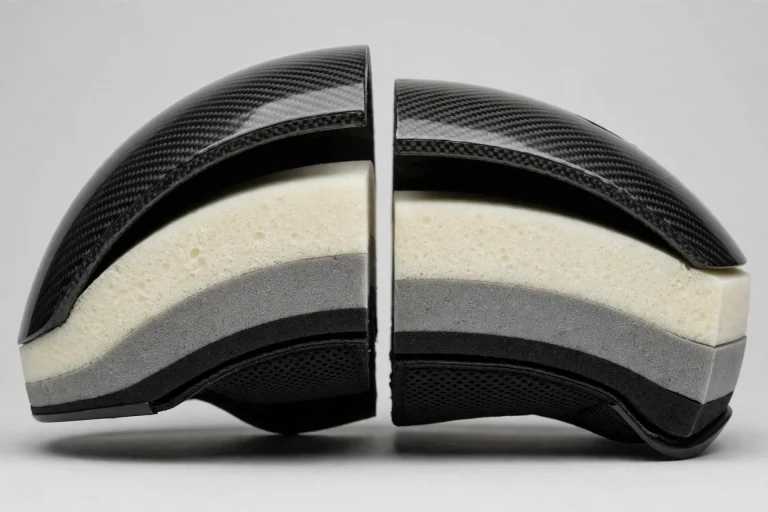
Some makers use natural fibres in a hybrid shell, combining flax with carbon fibre or fibreglass. This gives the shell some of the damping and sustainability benefits of the natural fibre while keeping the strength and consistency of the synthetic one.
What Should You Check Before Buying One?
Check the safety standard first. A natural fibre helmet should meet the same recognised standard as any other helmet for your activity, and the label inside should state which standard it meets. If there is no clear label, do not buy it, however appealing the material sounds.
Check the finish and the sealing. The shell should be well finished, with no exposed fibres or rough patches, because exposed natural fibres can absorb moisture. Look for a clear coat or a painted finish that seals the shell completely.
Ask about the maker’s testing and warranty. A reputable maker will be open about how the shell was tested and what the warranty covers. If you are learning about helmet technology, reading about what MIPS is for helmets can help you understand another feature that may be listed on the box.
Are Natural Fibre Shells the Future?
Natural fibre shells are a genuine area of research, and they may become more common as makers look for lower-impact materials. Flax in particular has attracted interest, because it grows with relatively little water and few chemicals, and it can be processed without the energy-intensive steps that glass and carbon fibre need.
But the barriers are real. Consistency, moisture resistance and cost all need to improve before natural fibres can compete with synthetics at scale. For now, they are a real option for buyers who want a sustainable shell and are willing to pay more for a niche product, not a mainstream replacement.
Research continues into new ways of using natural fibres. Makers are testing different weaves, resins and hybrid layouts to improve consistency and moisture resistance, and some are looking at fibres from agricultural waste, which would lower the environmental cost further. These developments are still early, but they suggest that natural fibres will keep appearing in helmets, even if they remain a small part of the market for now.
For buyers, the message is simple: judge a natural fibre helmet the way you would judge any helmet. Check the standard, try it on, and make sure it fits. The fibre in the shell is a bonus, not a substitute for the basics.
If sustainability matters to you, a natural fibre shell is worth considering, provided it meets a recognised standard and fits you well. The shell material is one part of the helmet, and the fit, the liner and the standard matter just as much.
Frequently Asked Questions
Q: Are natural fibre helmets as safe as fibreglass helmets?
A: A natural fibre helmet that meets a recognised safety standard has passed the same tests as any other helmet. Check the label inside, and do not buy a helmet without a clear standard.
Q: Do natural fibre shells absorb water?
A: The fibres can absorb moisture if they are exposed, which is why a good finish matters. A well-sealed shell should not take in water in normal use.
Q: Why are natural fibre helmets so rare?
A: The fibres cost more, vary more in quality, and need more care in manufacturing than fibreglass or carbon fibre. Most large makers stick with materials they know well.

Olivia
Writer at Helmet Today, covering helmet reviews, fit and riding safety.