In general terms, yes — a longer-lasting helmet is more sustainable, because the biggest environmental cost of a helmet is making it, shipping it, and throwing it away. A helmet that stays in use for its full service life spreads that cost over more rides. A helmet replaced early, for whatever reason, doubles the footprint for the same amount of riding.
But there is an important limit to this idea. A helmet should never be kept past the point where it can still protect you. Durability only counts as sustainability when the helmet is still safe. This guide explains where longer life genuinely helps, where it does not, and how to make a helmet last without compromising safety.
Why Does Helmet Life Matter for Sustainability?
Every helmet carries an environmental cost before you ever wear it: the raw materials, the energy used to mould the foam and shell, the packaging, and the shipping from factory to shop to your home. That cost is roughly the same whether you wear the helmet for one year or five. So the longer the helmet is used, the smaller the footprint per ride.
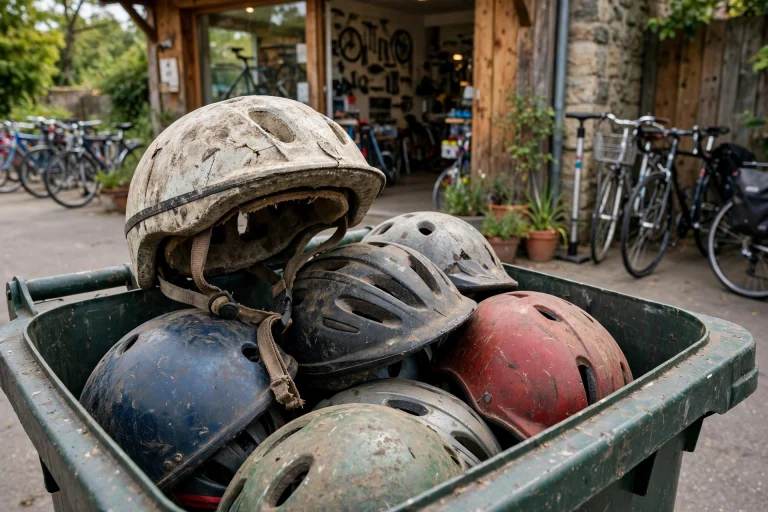
This is why replacing a helmet early is wasteful in a way that has nothing to do with the materials it is made from. A helmet made from recycled plastic but replaced after a year may have a larger footprint than a conventional helmet worn for its full life. The material matters, but the lifespan matters more.
The same logic applies to the rest of your kit. A helmet you buy carefully — the right size, the right type for your riding, comfortable enough to wear every time — is a helmet you are less likely to replace on a whim. Buying well once is usually greener than buying cheaply twice.
When Does Keeping a Helmet Longer Become Unsafe?
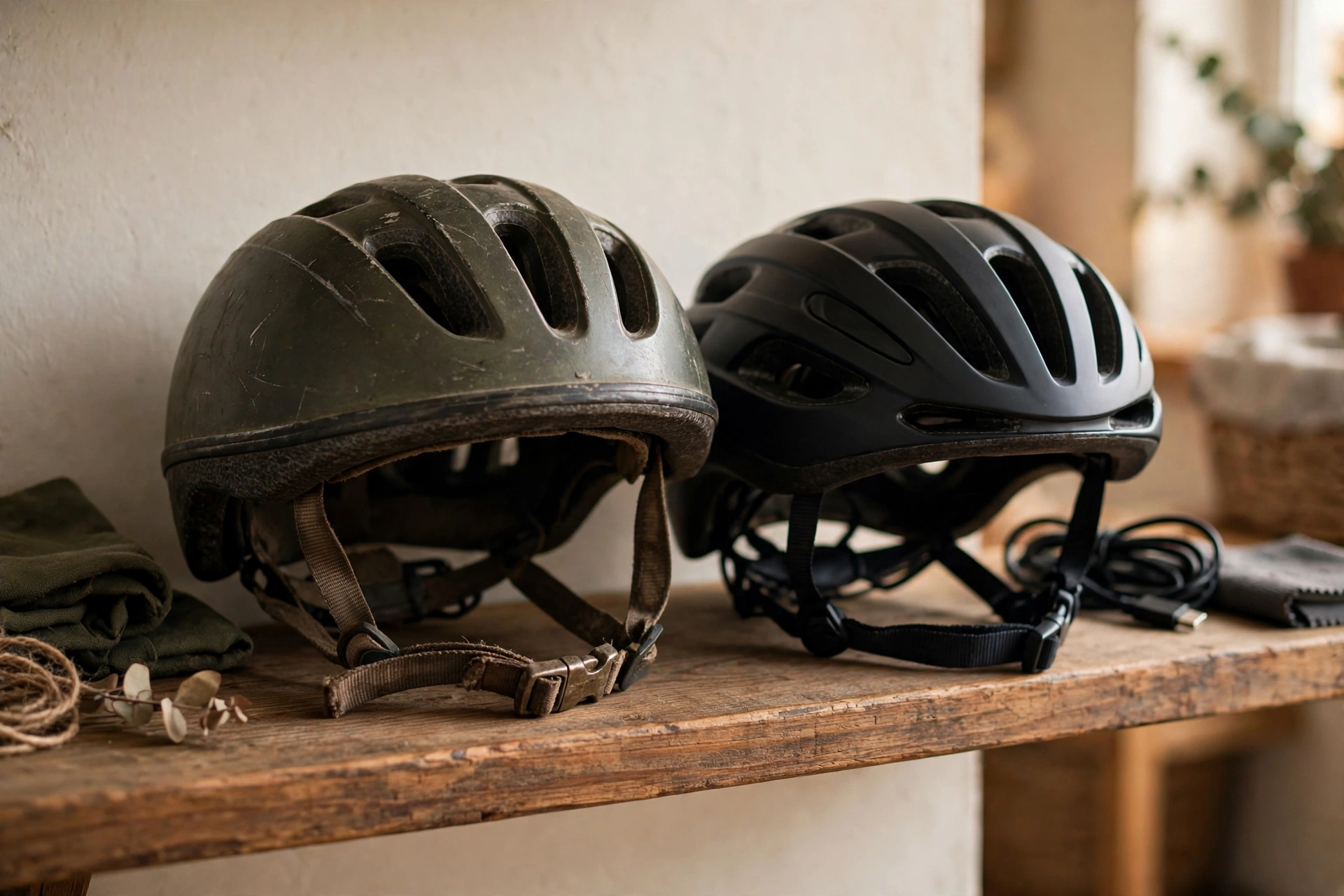
A helmet’s protective foam ages even when it is not crashed. Heat, sunlight, sweat, and everyday knocks gradually change the foam’s structure, and after several years it may not absorb impact as well as it did when new. Most makers suggest a service life of a few years of regular use, and that guidance is worth following.
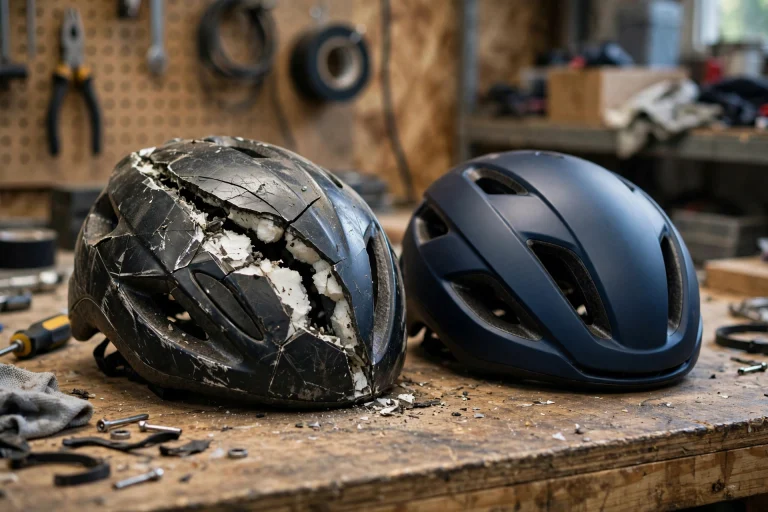
A hard impact is a clear line: a helmet that has been in a crash should be replaced, even if the damage is invisible. The foam crushes to absorb the impact, and crushed foam cannot crush again. The same applies to a helmet dropped hard onto concrete — the shell may look fine while the liner inside has been damaged.
Other warning signs are easier to spot. A strap that slips, a buckle that sticks, pads that have worn thin, or a fit that has loosened all mean the helmet is no longer doing its job properly. If any of these appear, the helmet’s life is over, however long or short it has been. Sustainability never justifies wearing a helmet you cannot trust.
What Makes One Helmet Last Longer Than Another?
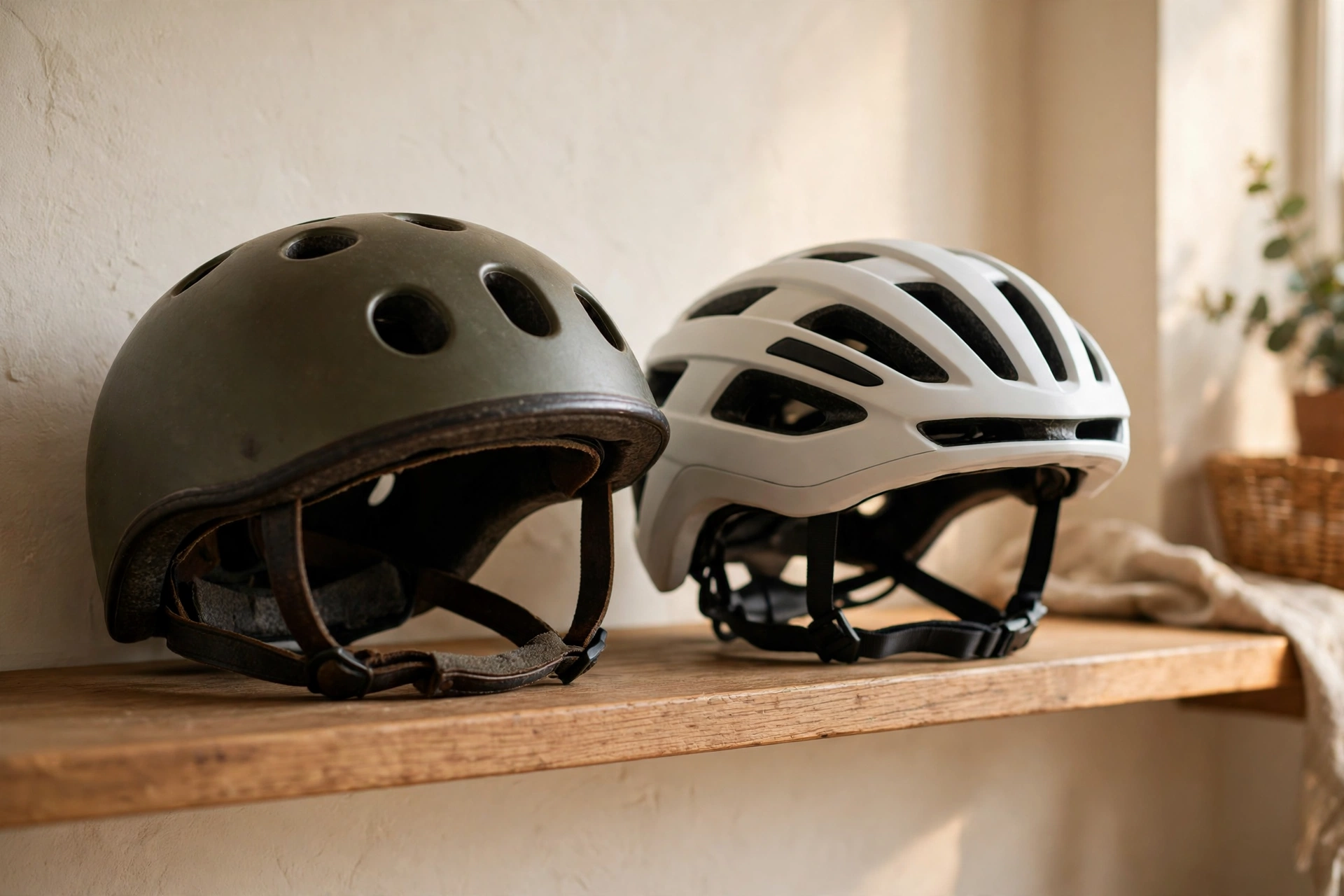
Build quality is the first factor. A helmet with a well-bonded shell, durable straps, and replaceable pads will usually outlast a cheaper helmet whose pads wear out and cannot be replaced. Removable, washable padding is one of the most useful features for longevity, because clean pads last longer and smell better.
The type of helmet matters too. A helmet designed for daily commuting, with a hard-wearing shell and simple fittings, may last longer in everyday use than a lightweight racing helmet built for minimum weight. That does not make one better than the other — it means you should match the helmet to the riding you actually do, rather than buying the lightest option for a daily commute.
How you treat the helmet matters as much as how it was made. A helmet stored in a cool, dry place out of sunlight will age more slowly than one left in a hot car or a damp shed. A helmet carried in a bag, rather than tossed in a boot with heavy gear, will pick up fewer knocks. Small habits add up to years of extra life.
Is Buying a More Expensive Helmet Greener?
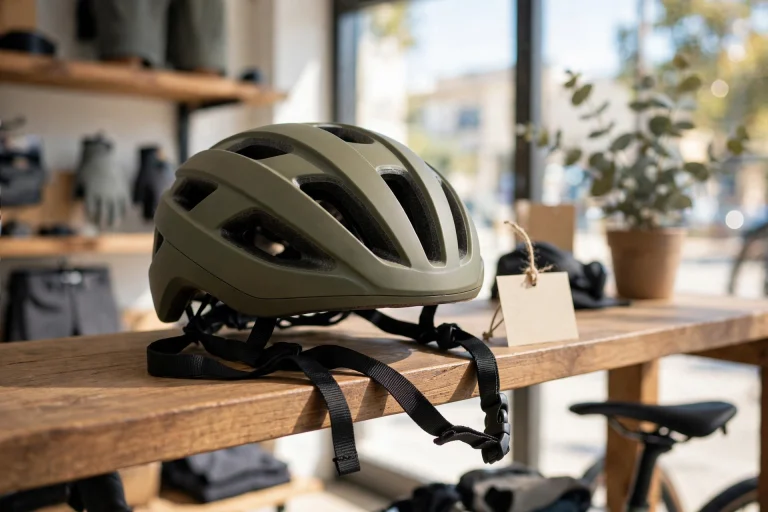
Not necessarily. A more expensive helmet may last longer because it is better made, with replaceable parts and a tougher shell — and in that case the extra cost can be justified on sustainability grounds as well as comfort. But an expensive helmet bought for a fashion colour or a brand name, then replaced early, is no greener than a cheap one.
The question to ask is not “how much does it cost?” but “how long will I use it?” A mid-priced helmet that fits perfectly and suits your riding, worn for its full service life, is a sustainable choice. A top-of-the-range helmet that sits in a cupboard because it is uncomfortable is not.
It is also worth checking whether the maker sells spare pads, visors, and straps for the model you are buying. A helmet whose parts can be replaced is a helmet that can be kept going, and that is one of the clearest signs that a maker takes longevity seriously. If you are comparing helmets, reading about what MIPS is for helmets can help you weigh the safety features that matter alongside durability.
How Can You Get the Most Life from Your Helmet?
Store it well. Keep it somewhere cool and dry, out of direct sunlight, and away from solvents, petrol, and strong cleaning products. Do not hang it by its straps for long periods, which can stretch them, and do not stack heavy items on top of it.
Clean it regularly. Wash removable pads in mild soapy water and let them air-dry. Wipe the shell with a damp cloth and mild soap. Clear the vents of dust and insects so airflow stays good. A clean helmet is a helmet you will want to keep wearing, and clean pads last longer than dirty ones.
Finally, check the helmet every few months. Look for cracks in the shell, soft spots in the foam, fraying straps, and worn pads. Catching a small problem early — a loose pad, a sticky buckle — can save the helmet. Ignoring it can end the helmet’s life sooner than it needs to end.
Frequently Asked Questions
Q: How long should a helmet last?
A: In general terms, most makers suggest several years of regular use, but the exact guidance varies. Check the maker’s advice for your model, and replace the helmet sooner if it has been in a crash or shows signs of wear.
Q: Does a heavier helmet last longer?
A: Not necessarily. Weight is not a reliable sign of durability. A well-made lightweight helmet can outlast a heavy one, and a heavy helmet can still wear out quickly if its pads and straps are poor quality.
Q: Can I extend a helmet’s life by replacing the pads?
A: Yes — new pads can restore comfort and fit, and they are one of the best ways to keep a helmet in use. But pads cannot fix a damaged shell, crushed foam, or a worn strap, so check the whole helmet before deciding.

Olivia
Writer at Helmet Today, covering helmet reviews, fit and riding safety.