A helmet’s retention system is the set of parts that holds the helmet on your head: the chin strap, the buckle, the adjusters and, on many helmets, a dial or cradle at the back that tightens around the head. Its job is to keep the helmet in place during normal use and to stop it coming off in a crash. A helmet that fits well but has a poor retention system will not stay where it needs to be when it matters most.
Retention systems vary between helmet types, but the idea is the same everywhere. This guide explains the parts, how they work together, and how to adjust them properly.
What Are the Parts of a Retention System?
The main parts are the chin strap and the buckle, which fasten under your chin and hold the helmet down. The strap usually splits into two strands on each side, meeting at the buckle, and it can be adjusted so it sits snugly without pressing too hard.
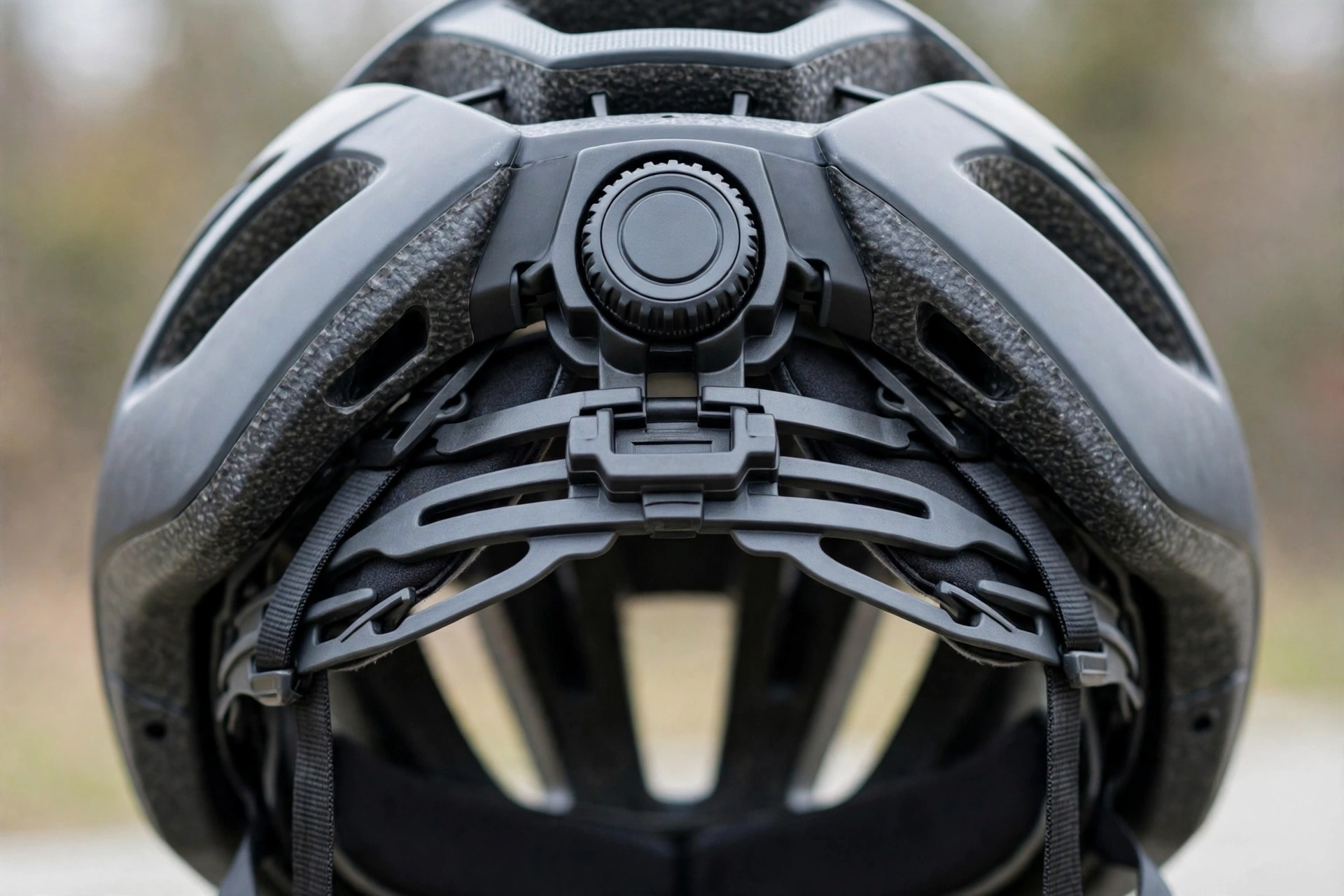
Many helmets also have a rear adjuster, often a dial at the back of the helmet that tightens a cradle or a band around the back of your head. Turning the dial pulls the band in, which helps the helmet sit snugly and stops it rocking forward or back. Some helmets use a sliding adjuster or a simple elastic band instead of a dial.
The side straps, where they exist, are adjusted by sliding a small clip up or down so the strap forms a V under your ear. The whole system works together: the chin strap holds the helmet down, the rear adjuster holds it snug, and the side straps keep it level.
How Does the Retention System Keep a Helmet On?
The retention system works by creating a snug fit that resists the forces trying to pull the helmet off. In a fall, those forces can be strong: the helmet may be tugged forward, back or sideways, and it may catch on the ground. The straps and the rear adjuster spread those forces across your head and jaw, so the helmet stays in place.
The chin strap is the most important part. If it is loose, the helmet can roll off the back of your head or slide forward over your eyes. If it is done up snugly, with no more than a finger or two of slack under the chin, the helmet is held firmly in place.
The rear adjuster helps by preventing the helmet from rocking. A helmet that rocks forward when you look down or back when you look up is not held well, and the rear adjuster is what stops that movement. Together, the strap and the adjuster keep the helmet level and stable.
The system also matters when you are not crashing. A helmet that fits well and stays put is more comfortable, because it does not slide around or need constant adjustment. It also keeps the vents in the right place and the peak where you want it. Riders often notice a good retention system most when they take the helmet off and realise they barely thought about it during the ride. A system that works quietly in the background is doing its job.
Children’s helmets often have simpler retention systems, with a single dial or a sliding adjuster, because young riders need something easy to use. The principle is the same, but the parts are sized and shaped for smaller heads and smaller hands.
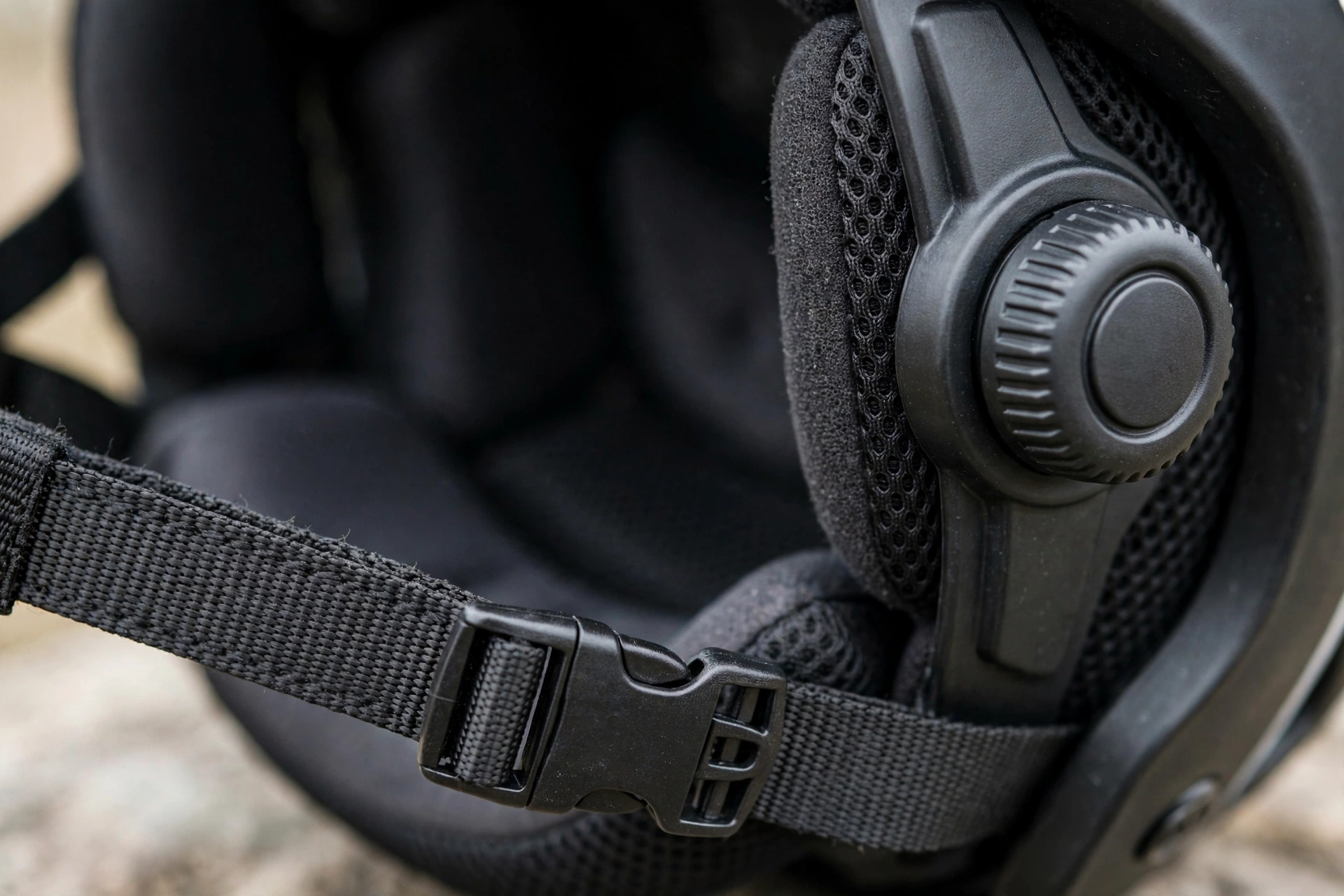
How Do You Adjust a Retention System Properly?
Start with the helmet sitting level on your head, low enough to cover your forehead. Tighten the rear dial until the helmet feels snug all around, but not so tight that it presses uncomfortably. The helmet should not rock side to side or slide forward when you shake your head.
Next, adjust the side straps so the V sits just under your ear, with the straps lying flat against your face. Then do up the chin strap and pull it snug, leaving only enough slack to fit one or two fingers between the strap and your chin. The buckle should sit under your chin, not on your throat or your jaw.
Check the fit by shaking your head gently and by trying to roll the helmet off from the front and the back. It should stay in place. If it moves a lot, tighten the system a little more. If it presses painfully, loosen it slightly or try a different size.
How Is a Retention System Tested?
Retention systems are tested as part of the safety standard the helmet meets. In a common test, the helmet is fitted to a headform, the straps are done up, and a weight is hung from the back of the helmet to see how far it rolls off. The helmet must not come off, and the strap must not stretch or slip beyond a set limit.
The buckle is also tested by pulling on it with a set force to make sure it does not open or break. These tests are done in the laboratory, but they are designed to reflect the forces a helmet faces in a real fall.
The tests check the system as a whole, not just the buckle or the strap alone. A strong buckle with a weak strap, or a good strap with a poor adjuster, will not pass. The whole system must work together.
How Should You Look After a Retention System?
Check the straps, buckle and adjuster regularly. Look for fraying on the straps, cracks in the buckle, and a dial that no longer turns smoothly. Clean away mud and grit, and make sure the buckle clicks shut firmly every time.
Do not hang the helmet by its strap, and do not leave the strap dangling where it can catch. If the rear dial becomes stiff, clean it gently and check for debris. If any part of the system is damaged, check whether the maker offers a replacement, or replace the helmet.
If you are learning about helmet technology, reading about what MIPS is for helmets can help you understand another feature that may sit alongside the retention system inside your helmet.
Frequently Asked Questions
Q: How tight should my chin strap be?
A: Snug enough that you can fit one or two fingers between the strap and your chin, but not so loose that the helmet can roll off. The helmet should stay in place when you shake your head.
Q: What does the dial at the back of my helmet do?
A: It tightens a cradle or band around the back of your head, which stops the helmet rocking forward or back and helps it sit snugly.
Q: Can I replace a broken retention system?
A: Sometimes. Some makers sell replacement straps, buckles and dials. If the parts are stitched into the helmet, a damaged system may mean replacing the helmet.

Olivia
Writer at Helmet Today, covering helmet reviews, fit and riding safety.