Climbing helmets evolved from simple leather caps, through hard plastic shells and suspension cradles, to today’s light foam helmets with deep coverage and big vents — a change driven by what climbers actually need protection from. For most of climbing’s history, the main danger was not a fall but a rock falling from above, and the helmet’s job was to stop that rock. The shape, material, and weight of the helmet all changed as that job became better understood.
This guide traces the path from leather to foam, and explains why modern climbing helmets look so different from the ones climbers wore a generation ago.
What Did the First Climbing Helmets Look Like?
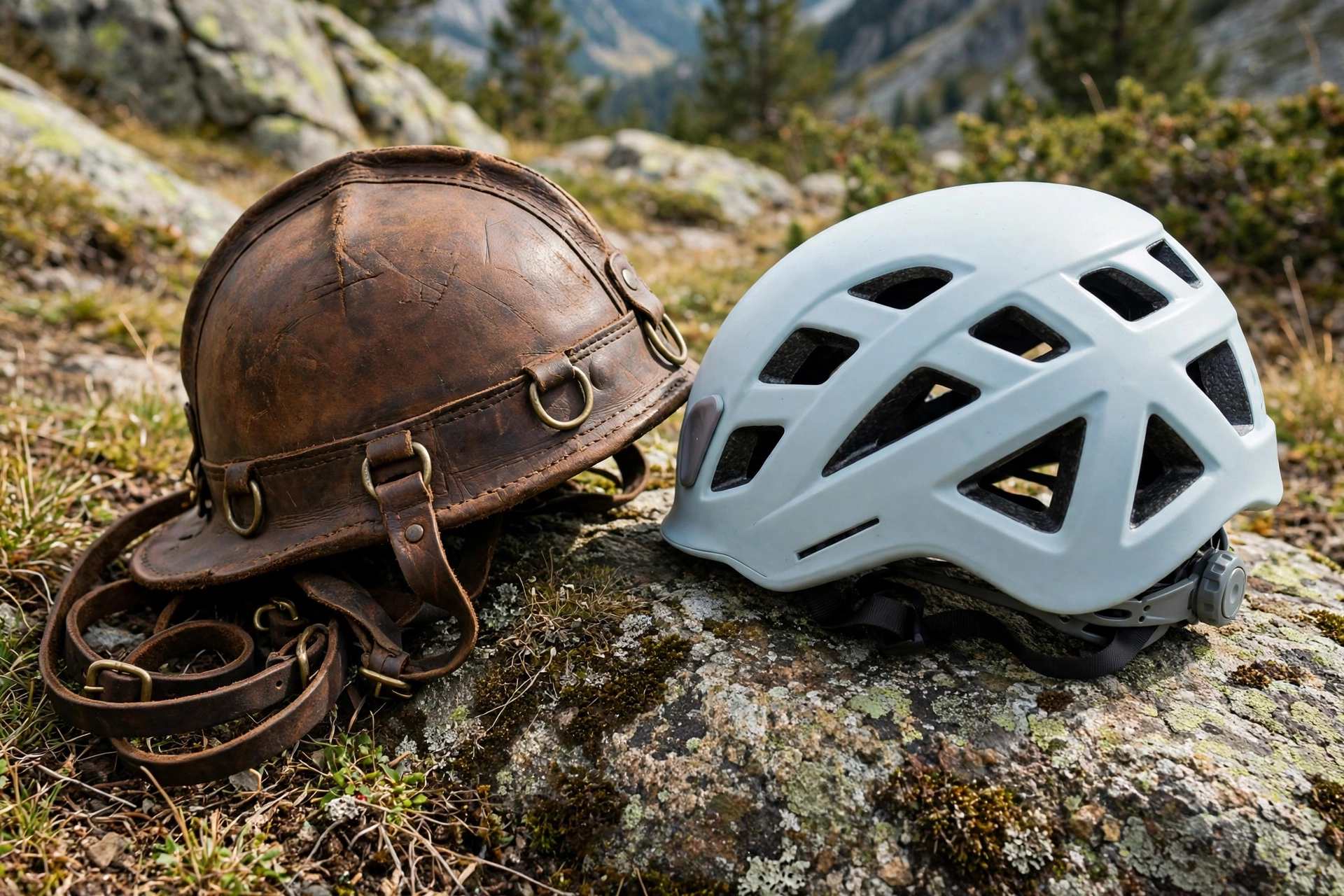
The first climbing helmets, from the mid-20th century, were adapted from other sports and other jobs. Climbers wore leather caps, caving helmets, and even modified hard hats, because no helmet was made specifically for climbing. The leather caps of the era offered little protection against a falling rock, but they were better than nothing, and they were light enough to climb in.
In the 1950s and 1960s, hard shell helmets arrived. These were rigid plastic domes with a suspension cradle inside, borrowed directly from industrial hard hats. They protected the top of the head well against falling rocks, but they were heavy, hot, and uncomfortable, and many climbers left them behind on anything but the most dangerous routes.
The suspension cradle was important. It held the shell away from the head, so the force of a rock strike was spread and absorbed before it reached the skull. That idea — a shell standing off from the head — has stayed in climbing helmet design ever since, even as the materials changed.
How Did Hard Shells Give Way to Foam?
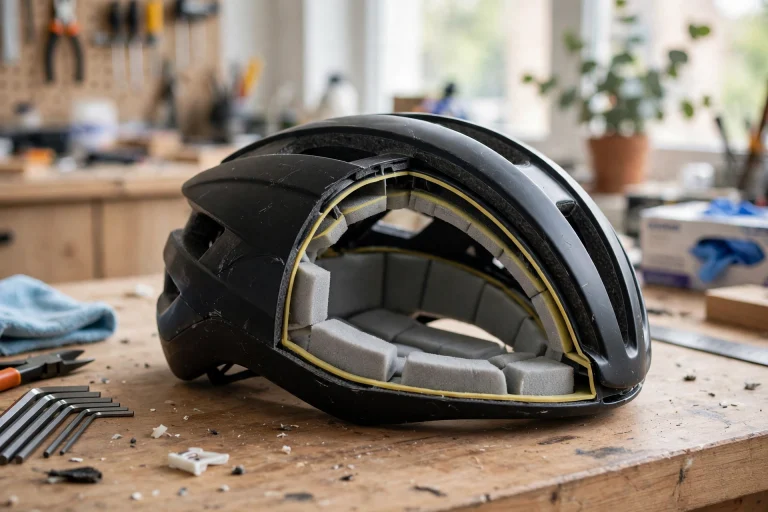
The big change came when makers began using expanded polystyrene foam — the same light foam used in cycling helmets — as the main protective layer. Instead of a hard shell with a cradle, the helmet became a thick foam dome with a thin plastic skin. The foam crushes on impact, absorbing energy, and the helmet is far lighter than a hard shell of the same protection.
Foam helmets changed who wore a helmet. A hard shell helmet might weigh twice as much as a foam one, and on a long climb that weight matters. Foam helmets were light enough to wear all day, and they were cooler too, because vents could be moulded straight into the foam. More climbers wore helmets, more often, which is the real safety gain.
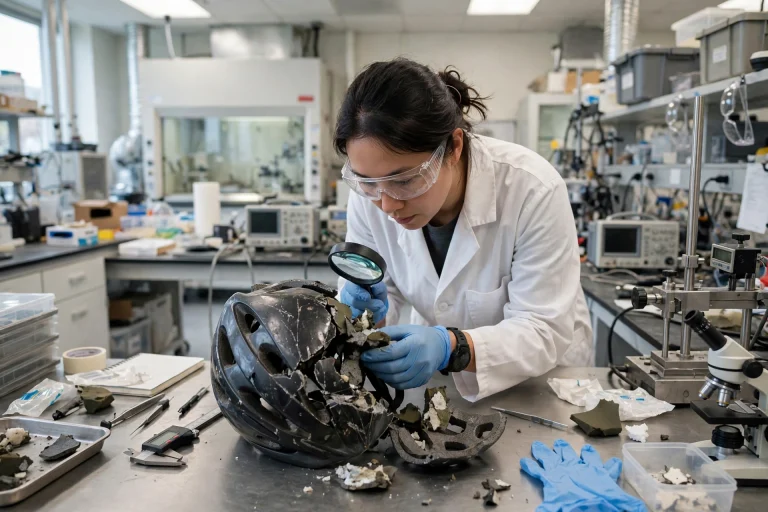
But foam has a trade-off. A foam helmet is designed for one serious impact: the foam crushes and does not recover, so the helmet must be replaced after a hard hit. Hard shell helmets could survive a glancing blow and keep being used. Modern climbing helmets balance the two ideas, with some models combining a foam liner and a harder shell for durability.
How Has Coverage Changed Over Time?
Early climbing helmets protected the top of the head and little else. The sides and the back of the head were barely covered, because the main worry was a rock falling straight down. Over time, makers realised that climbers also hit their heads in falls — against the rock face, on ledges, and during slips — and those impacts come from the side and the back as well as the top.
Modern climbing helmets extend much lower at the sides and the back, covering the temples and the back of the skull. That change came from studying real accidents, not from theory, and it is one of the most important improvements in climbing helmet design. A helmet that only protects the top leaves the most commonly injured areas exposed.
Vents changed too. Early foam helmets had small vents or none at all, and they were hot on sunny rock. Modern helmets have large vents placed to let air flow over the head without weakening the foam around them. The vent pattern is now part of the design, not an afterthought, and it is one reason climbers actually wear their helmets.
What Role Did Standards and Testing Play?
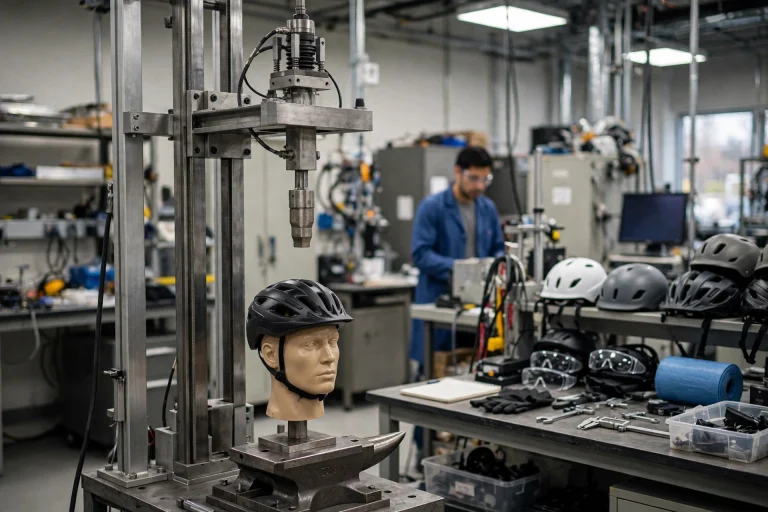
Climbing helmets are tested against recognised standards that set out how they should perform when struck from above and from the side. Those standards arrived later for climbing than for some other sports, and their arrival pushed makers to improve coverage and impact absorption rather than just making helmets lighter.
Testing also changed how helmets are sold. A climber buying a helmet today can check that it meets a standard, compare weights, and try the fit — all things that were hard or impossible in the leather-cap era. If you are interested in how impact protection is understood in modern helmets, reading about what MIPS is for helmets explains one system designed to manage the twisting forces that can happen in a fall.
The fit systems changed alongside the standards. Early helmets had a simple strap or a basic cradle; modern helmets have a dial at the back that adjusts the fit precisely, and many can be adjusted with one hand while wearing gloves. A helmet that fits well is a helmet that stays in place, and that matters as much as the foam inside it.
What Does the Modern Climbing Helmet Owe to Its History?
The modern climbing helmet keeps the best idea from each era. From the leather caps it keeps lightness — climbers will not wear a helmet that feels like a burden. From the hard shells it keeps the idea of a tough outer skin that resists scrapes and glancing blows. From the foam era it keeps the light, energy-absorbing liner and the deep coverage.
The next changes are likely to be in materials rather than shape. Makers are testing foams that recover after a small impact, shells made from tougher and lighter materials, and liners that manage rotational forces as well as straight-line ones. The aim is the same as it has always been: a helmet light enough to forget, strong enough to trust.
The history of the climbing helmet is a reminder that a helmet’s design follows its job. When climbers understood that the danger was not only falling rock but also the fall itself, the helmet changed shape. When they understood that weight decides whether a helmet is worn at all, it changed material. The helmet of today is the result of those lessons, learned one accident at a time.
Frequently Asked Questions
Q: Why are modern climbing helmets made of foam instead of hard plastic?
A: Foam is much lighter than a hard shell and absorbs impact energy by crushing. The lower weight means climbers actually wear the helmet all day, which is the biggest safety gain.
Q: Do I need to replace a climbing helmet after a rock hits it?
A: In general terms, yes if the impact was hard — foam crushes on impact and does not recover. Check the helmet for cracks or dents, and replace it if there is any doubt.
Q: Why do modern climbing helmets cover the sides and back more?
A: Because studies of real accidents showed that climbers often hit their heads on the side or back during falls, not just on top from falling rock. Deeper coverage protects those areas too.

Olivia
Writer at Helmet Today, covering helmet reviews, fit and riding safety.