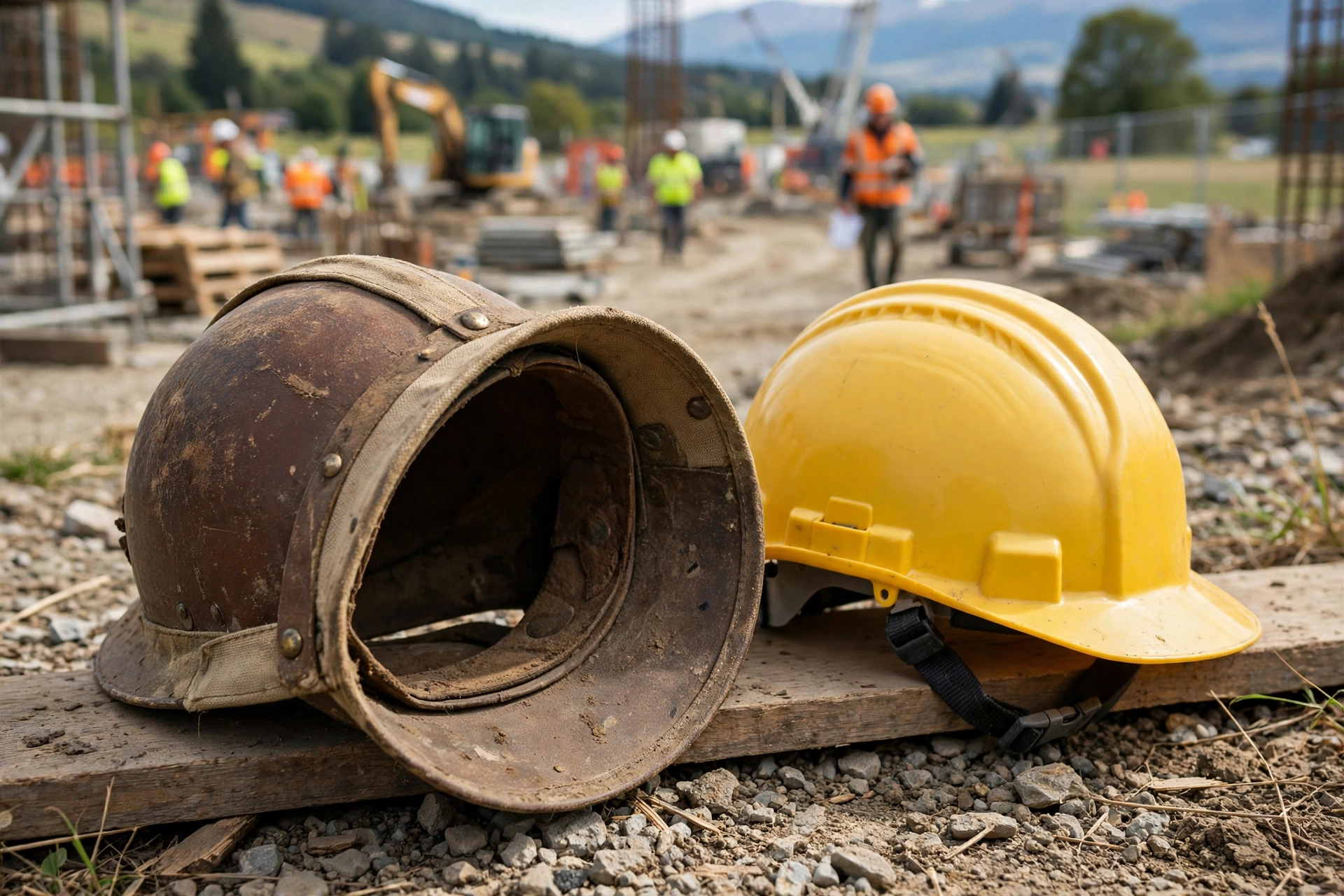
Hard hats first appeared on worksites in the early 1900s, with the first widely used design — the “Hard Boiled Hat” — patented in 1919 by Edward W. Bullard, a former soldier who had seen steel helmets protect troops in the First World War. Before that, construction workers, miners, and dock workers wore cloth caps or nothing at all, and head injuries from falling objects were a routine part of the job. The hard hat changed that in a single generation.
The story of the hard hat is the story of how a military idea became a worksite essential — and how a simple shell of hardened material came to be required by law on sites around the world.
What Did Workers Wear Before the Hard Hat?
Before the hard hat, most manual workers wore a cloth cap, a bowler hat, or nothing. None of these offered any real protection against a falling brick, a dropped tool, or a swinging beam. Head injuries were common on construction sites, in mines, and on the docks, and they were largely accepted as part of the work.
Some workers improvised. Miners in some regions wore leather caps, and a few workers put a metal bowl or a piece of leather inside a cloth cap. But there was no standard, no requirement, and no product designed for the purpose. A head injury was treated after the fact, not prevented.
The First World War changed that thinking. Steel helmets issued to soldiers — the British Brodie helmet and the French Adrian helmet — showed that a hard shell could save lives from falling debris and shrapnel. Workers who came home from the war had seen the evidence with their own eyes, and some of them brought the idea back to the worksite.
Who Invented the First Hard Hat?
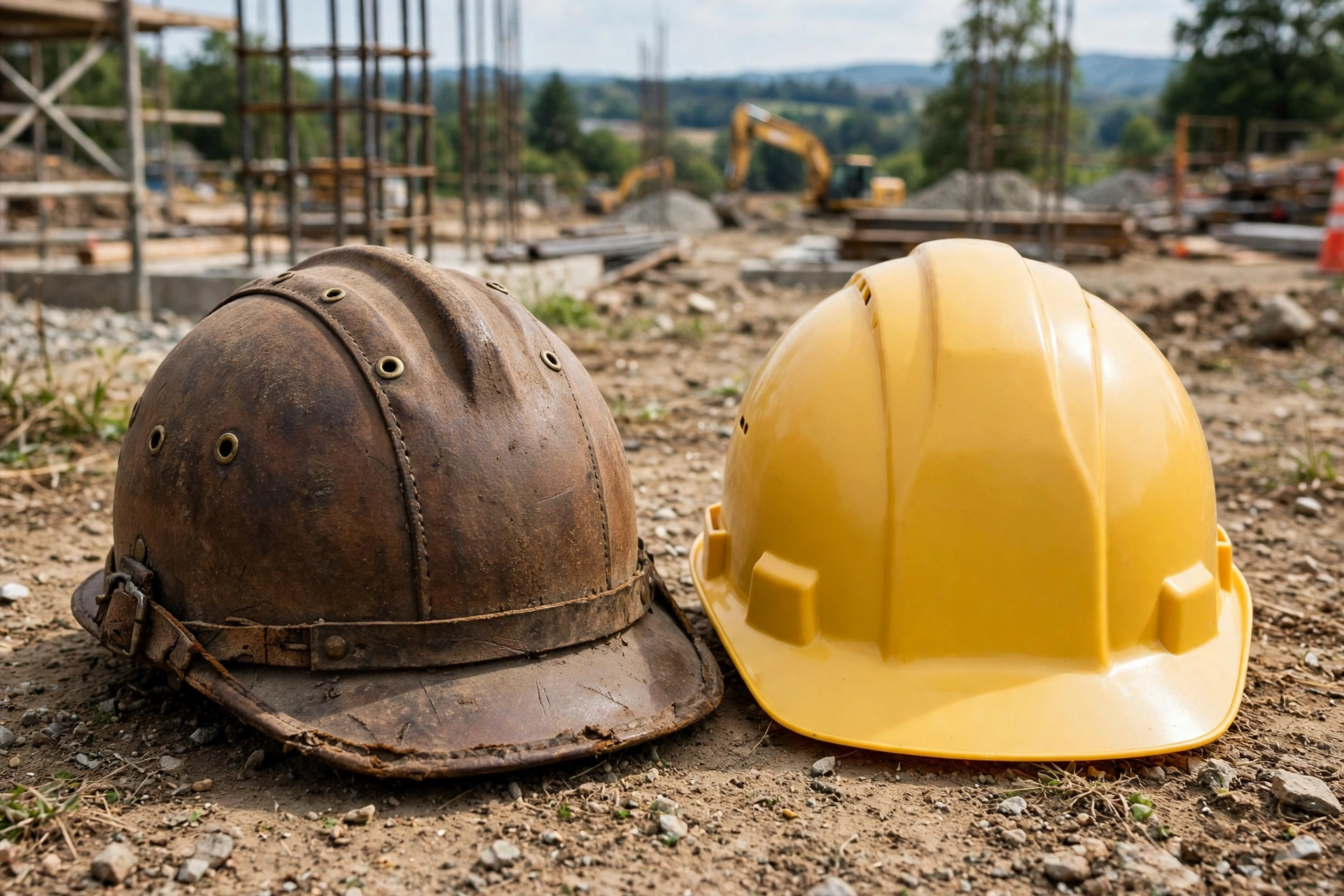
Edward W. Bullard is usually credited with the first modern hard hat. Bullard had served in the war and returned to his family’s mining equipment business in California. In 1919 he patented the “Hard Boiled Hat”, made from steamed canvas, glue, and black paint, with a suspension system inside that held the shell away from the head.
The suspension was the clever part. Bullard understood that the shell alone was not enough — the gap between the shell and the head, held by the suspension cradle, gave the impact somewhere to go. That idea, of a hard outer shell and a suspension system inside, is still the basis of every hard hat made today.
Bullard’s hard hats were first used in mining, then on major construction projects. They were worn by workers building the Golden Gate Bridge in the 1930s, where the site’s safety rules required them — an early example of a hard hat being mandatory rather than optional. The bridge project became famous for its safety record, and the hard hat got much of the credit.
How Did Hard Hats Spread to Every Worksite?
After the Second World War, hard hats spread quickly. New materials arrived: aluminium in the 1930s and 1940s, then fibreglass, and finally the high-density plastics used today. Each material was lighter and tougher than the last, which made the hats easier to wear all day and easier to require.
Governments and safety bodies began to write hard hats into the rules. In general terms, by the 1960s and 1970s, most industrialised countries required head protection on construction sites and in other hazardous workplaces. The hard hat went from a sensible choice to a legal requirement, and the familiar sight of a site full of coloured helmets became normal.
The colours themselves became a system. White for managers and engineers, yellow for general workers, blue for electricians, green for safety officers, red for firefighters — the exact code varies by country and site, but the idea is the same: the colour of a hard hat tells you something about the person wearing it.
How Has the Hard Hat Changed Since Then?
The basic shape has changed remarkably little since Bullard’s design — a dome, a small brim or peak, and a suspension inside. What has changed is the material and the details. Modern hard hats are made from tough plastics that resist impact, heat, and chemicals, and they are tested against recognised standards before sale.
Modern hard hats also do more than protect against falling objects. Some are rated for electrical insulation, some have slots for ear defenders, face shields, and lights, and some have ventilation to keep the wearer cool. The suspension systems have improved too, with adjustable cradles and comfort padding that make the hat wearable for a full shift.
One idea from the hard hat has spread to other helmets: the suspension gap. The principle that a shell should stand off from the head, with a system in between to manage the impact, appears in many modern helmets. If you are interested in how that idea developed in sports helmets, reading about what MIPS is for helmets explains one modern system that manages the movement between the shell and the head.
Why Does the Hard Hat’s History Still Matter?
The hard hat matters because it was one of the first helmets to be required by law, and one of the first to be designed around a clear job: protect the top of the head from falling objects. That clarity made it easy to test, easy to improve, and easy to require — and it set a pattern for helmet standards in other fields.
It also matters because the hard hat shows how safety equipment spreads. It started with one man’s wartime experience, was proven on a famous construction project, and then became a rule. The same pattern — invention, proof on a big project, then a standard — has repeated with helmets of many kinds.
Today, a hard hat is so normal that it is hard to imagine a worksite without one. A century ago, it was a strange new object, and workers resisted it. That change, from novelty to requirement, is the real story of the hard hat — and a reminder that helmets only protect people who actually wear them.
Frequently Asked Questions
Q: Who invented the hard hat?
A: Edward W. Bullard patented the “Hard Boiled Hat” in 1919, after seeing steel helmets protect soldiers in the First World War. His design used a hard shell with a suspension system inside.
Q: When did hard hats become mandatory on worksites?
A: In general terms, hard hats became a legal requirement on construction sites in most industrialised countries during the 1960s and 1970s, though some major projects required them as early as the 1930s.
Q: What do hard hat colours mean?
A: Colours usually show a worker’s role — white for managers, yellow for general workers, blue for electricians, and so on — but the exact code varies by country and site, so check the local rules.

Olivia
Writer at Helmet Today, covering helmet reviews, fit and riding safety.