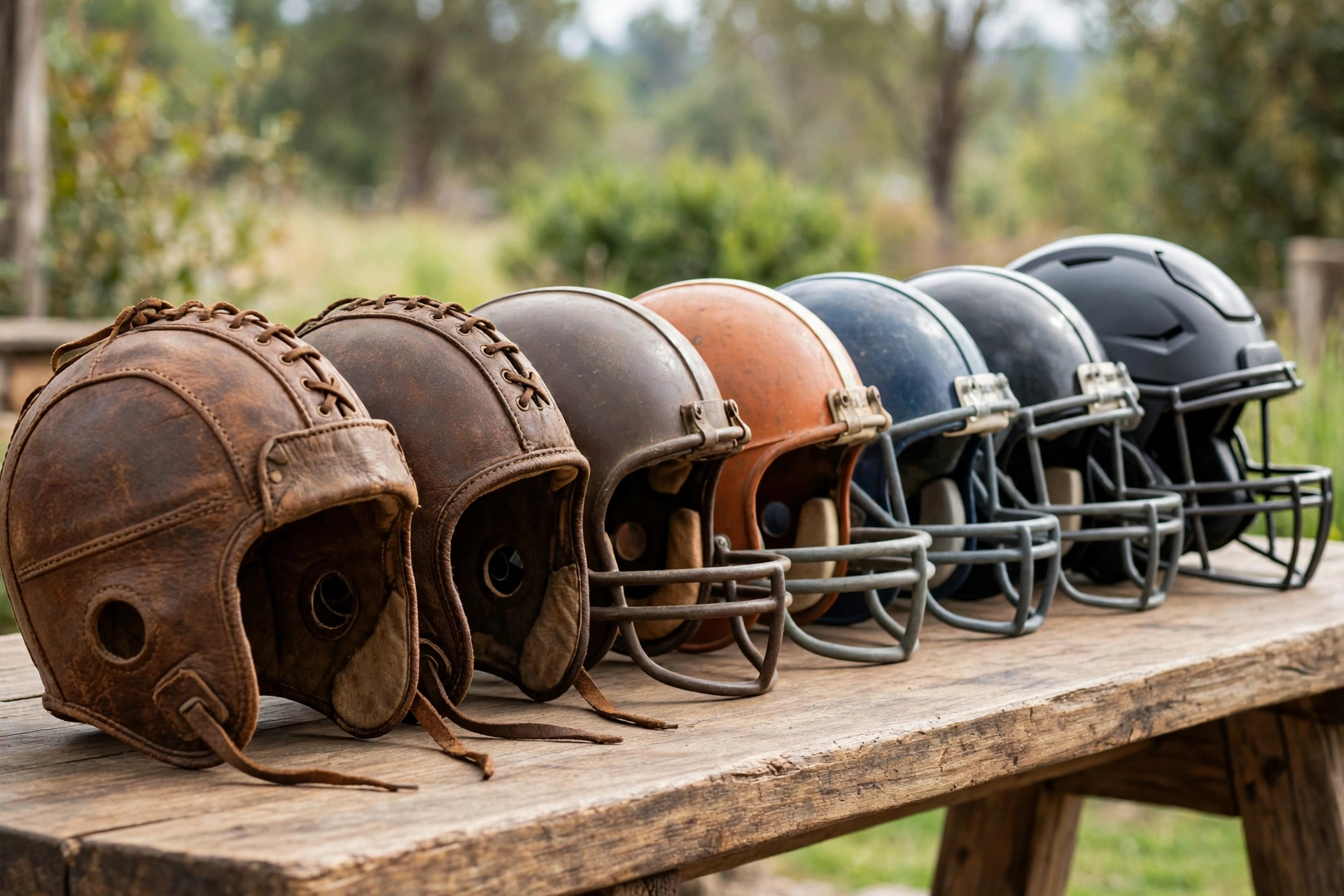
Football helmets have changed enormously over time — from soft leather caps in the early days, through hard plastic shells and facemasks, to today’s helmets with advanced padding, custom fitting, and sensors that measure impacts. Each change was driven by the same thing: players got bigger and faster, hits got harder, and the old helmets could not keep up. The history of the football helmet is, in many ways, the history of the sport learning about head injury.
This guide traces that story from the first leather headgear to the modern helmet, and explains what each stage was trying to solve — and what it created in turn.
What Did the First Football Helmets Look Like?
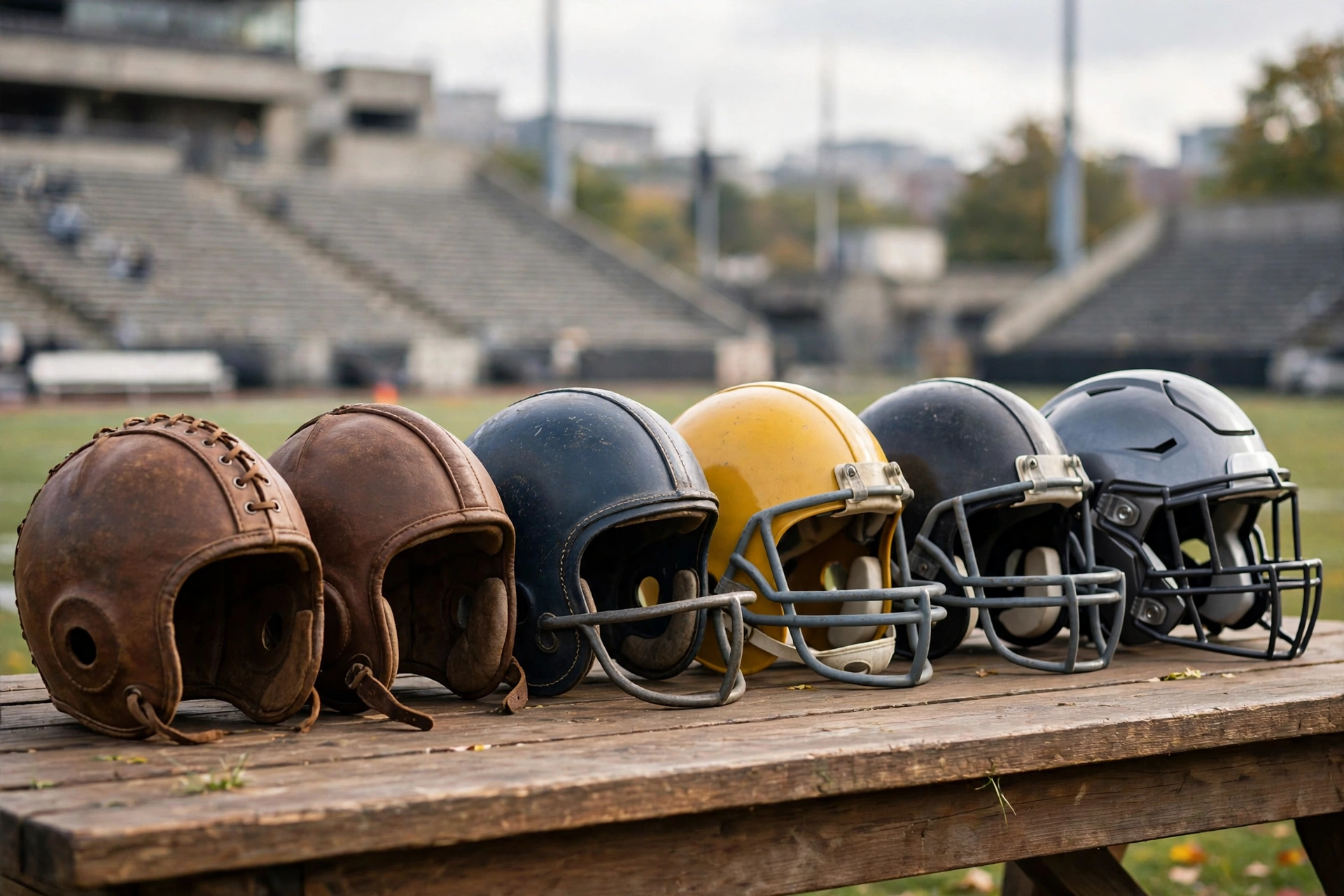
The earliest football helmets, from the late 1800s and early 1900s, were soft leather caps. They were little more than padded ear flaps held on with a chin strap, and their main job was to protect the ears from being torn or cauliflowered in the scrum, not to protect the brain. Players often wore them reluctantly, and many played without any head protection at all.
These early helmets were made from soft leather, sometimes with a little felt or wool padding inside. They offered almost no protection against a hard blow to the skull, but that reflected the game of the time: players were smaller, the game was slower, and the forward pass — which opened up high-speed collisions — had not yet changed how the sport was played.
By the 1920s and 1930s, helmets had become harder. Makers added stiffened leather and then early plastics, and the helmet began to look like a real piece of protective equipment rather than a cap. Even so, helmets were not required in the professional game until the 1940s, and some players resisted them for years.
When Did Hard Shells and Facemasks Arrive?
The hard plastic shell arrived in the 1940s and 1950s, and it changed the game. A rigid shell spreads the force of a blow across a wider area, which is far more effective than soft leather. Early plastic helmets were heavy and uncomfortable by modern standards, but they were a large step forward in protection.
The facemask came next, in the 1950s, and it solved a problem the shell alone could not: broken noses, lost teeth, and facial injuries. The first facemasks were a single bar across the face; over time they grew into the multi-bar cages players wear today. But the facemask also changed behaviour — players began to lead with their heads, using the helmet as a weapon, which created new kinds of injury.
Inside the shell, the padding changed too. Early helmets used simple foam or air bladders that could be inflated to fit. Later designs used thicker, more advanced foams and suspension systems that held the shell away from the head. Each change was an attempt to manage the energy of a collision better than the last.
How Did Helmets Change in the Modern Era?
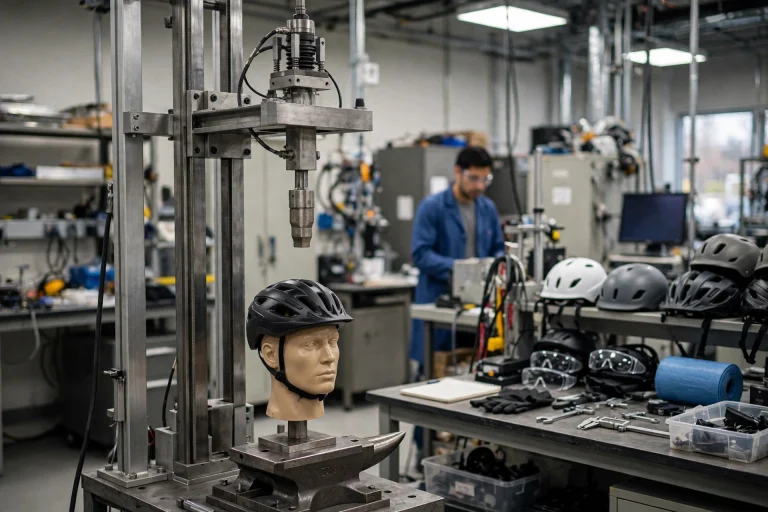
From the 1970s onwards, helmet design became a science rather than a craft. Makers began testing helmets in laboratories, dropping them onto hard surfaces and measuring the forces inside. Rules changed too: spearing — leading with the top of the helmet — was banned, and helmets had to meet recognised safety standards before they could be sold.
The 2000s brought a new understanding of concussion and the role of rotational forces — the twisting motion of the head in a collision, which is now known to matter as much as the straight-line impact. Helmet makers responded with new liner systems designed to manage rotation, including slip-plane liners that let the shell move slightly relative to the head. If you want to understand that idea, reading about what MIPS is for helmets explains how one such system works.
Modern football helmets are also fitted individually. Players are measured and scanned, and the helmet’s padding is adjusted to their head shape. Some helmets now carry sensors that record the size and direction of impacts, giving coaches and medical staff data they never had before. The helmet has gone from a leather cap to a piece of measured, fitted equipment.
What Problems Did Helmet Changes Create?
Every improvement in football helmets has had an unintended side effect. The hard shell made players feel safer, and safer players hit harder — a pattern researchers call risk compensation. The facemask protected the face but encouraged head-first tackling. Better helmets did not automatically mean fewer head injuries, because the game changed around them.
Weight is another trade-off. Modern helmets are heavier than the leather caps they replaced, and a heavy helmet puts more strain on the neck, especially for younger players. Makers have worked to reduce weight while keeping protection, but the balance between the two is still a live question in helmet design.
Cost is a third issue. A modern fitted helmet costs far more than a leather cap ever did, which matters for schools and youth programmes. The best helmet in the world does not help a player who cannot afford one, and that gap between professional and youth equipment is part of the story too.
What Comes Next for Football Helmets?
The direction of travel is towards helmets that are lighter, better fitted, and smarter. Researchers are working on new liner materials that absorb energy more efficiently, shells that deform and recover, and fitting systems that adapt to each player’s head. The aim is a helmet that protects against both straight-line and rotational forces without adding weight.
Rules will keep changing alongside the equipment. Limits on contact in practice, stricter penalties for head-first hits, and better concussion protocols all reduce the number of big impacts a helmet has to deal with. In general terms, the safest helmet is the one that has to work the least often.
The history of the football helmet shows a pattern that applies to helmets of every kind: each generation solves the last generation’s problem and reveals a new one. The leather cap protected ears; the hard shell protected skulls; the modern helmet tries to protect the brain. The next generation will be judged by how well it does that job.
Frequently Asked Questions
Q: When were football helmets first required?
A: Helmets were not required in the professional game until the 1940s, and in college football the requirement came around the same time. Before that, many players wore soft leather caps or nothing at all.
Q: Did better helmets make football safer?
A: Better helmets reduced skull fractures and facial injuries, but they also changed how players tackled, which created new risks. Helmet design, rules, and coaching all had to change together to improve safety.
Q: What is the biggest change in modern football helmets?
A: The shift from simply absorbing straight-line impacts to managing rotational forces as well, along with individual fitting and impact sensors that give coaches and medical staff real data.

Olivia
Writer at Helmet Today, covering helmet reviews, fit and riding safety.