Helmet design changed after crash research in a clear pattern: researchers studied real crashes, found that helmets were failing in ways the laboratory tests had not predicted, and makers redesigned shells, liners, and fit systems in response. The most important lesson was that real crashes are messier than lab tests. Heads do not only hit things straight on — they twist, glance, and strike at angles — and helmets designed only for straight-line impacts left riders less protected than anyone thought.
This guide explains what crash research found, and how helmet design changed because of it.
What Did Early Crash Research Find?
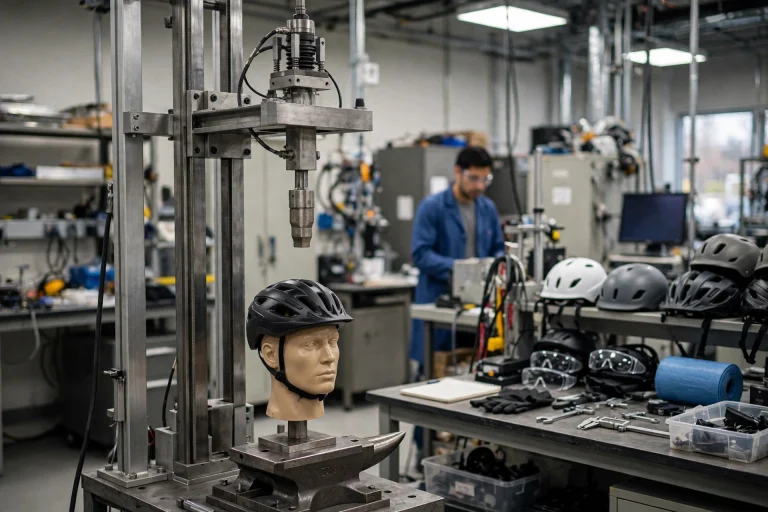
Early helmet research was mostly laboratory work: dropping helmets onto flat surfaces and measuring the forces inside. That testing improved helmets a great deal, but it missed something important. Real crashes rarely look like a laboratory drop. A cyclist who falls usually hits the ground at an angle, with forward speed as well as downward speed, and the head twists as it strikes.
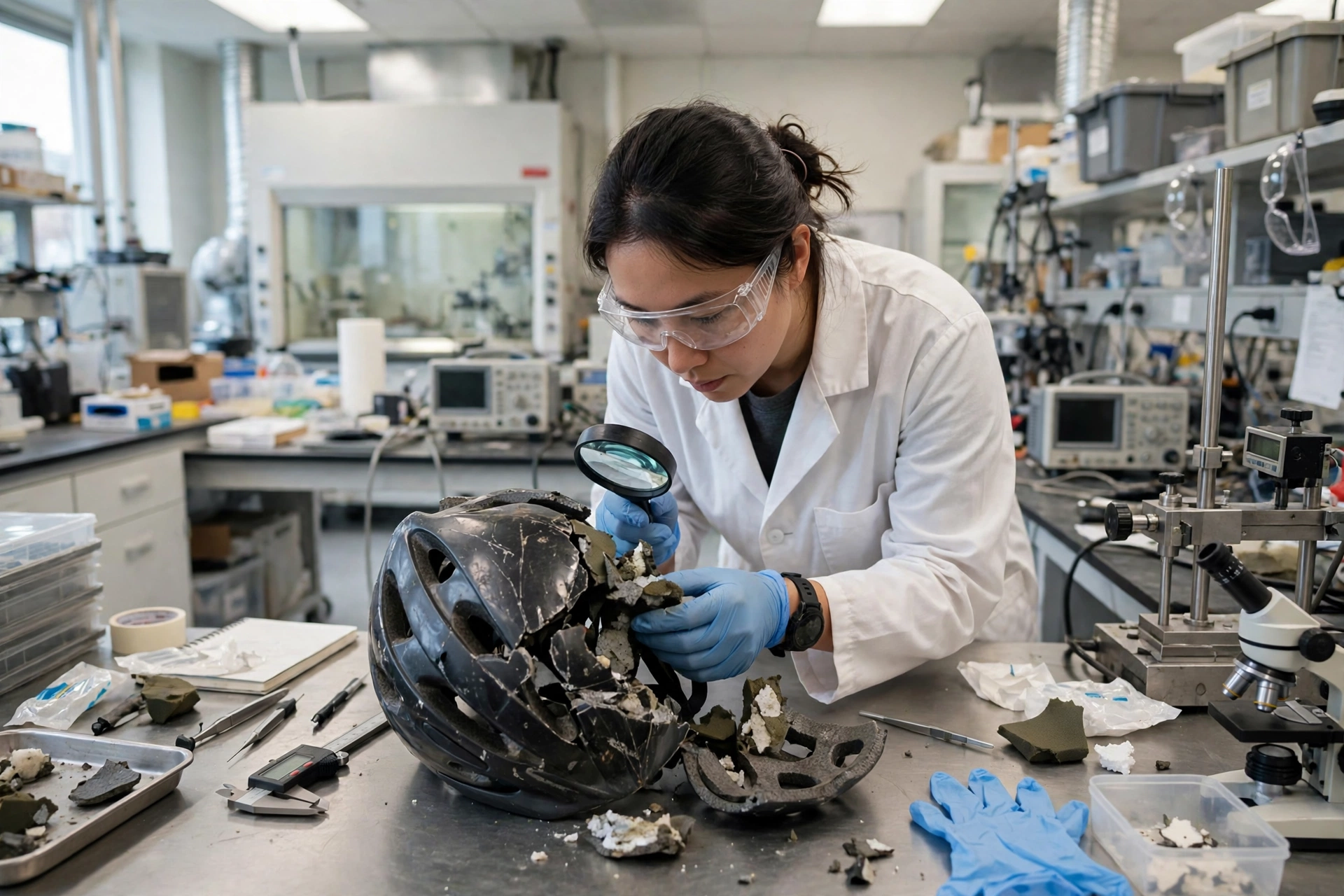
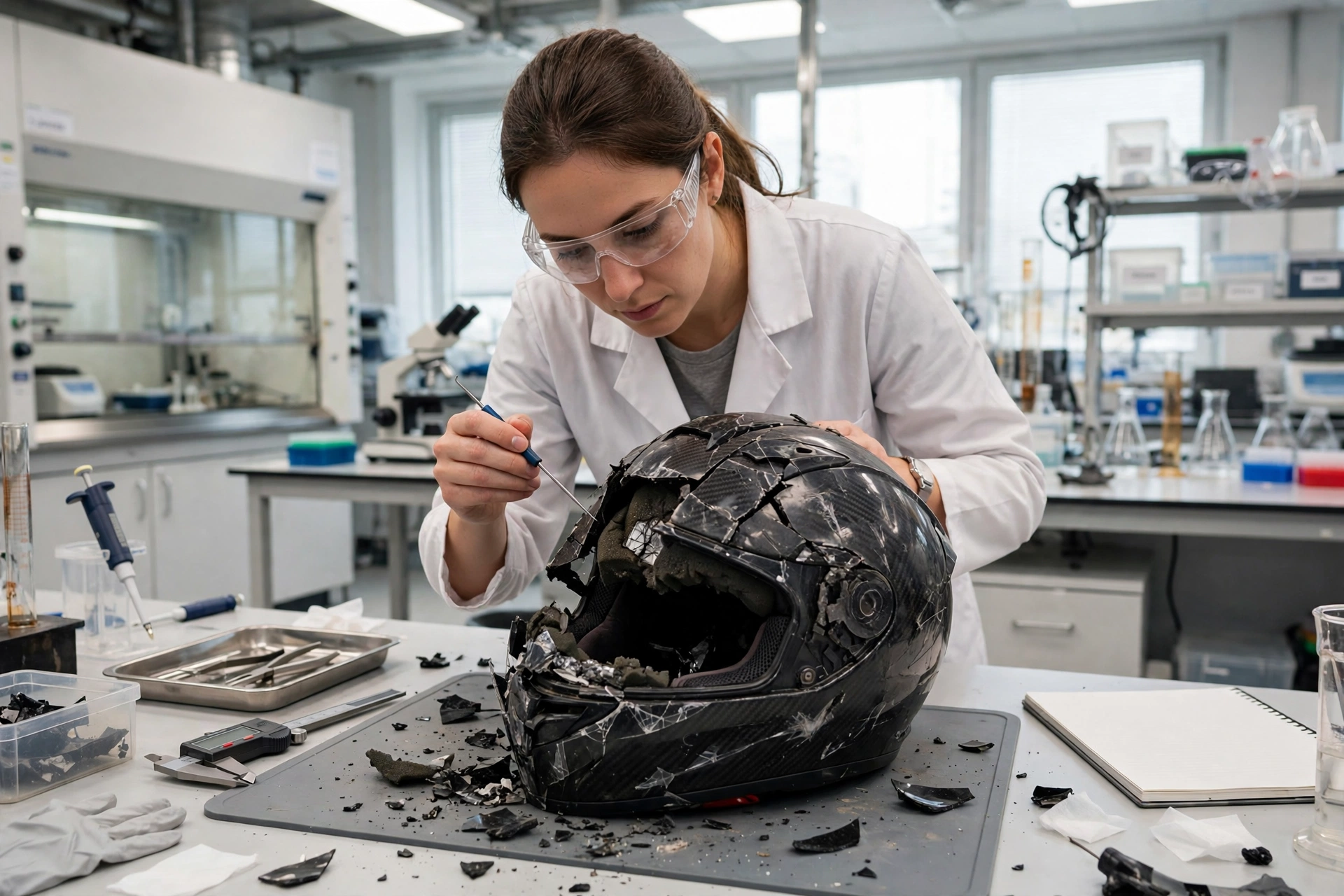
Researchers who studied real crashes — by examining damaged helmets, hospital records, and accident reports — found a pattern. Many riders who wore helmets and still suffered serious head injuries had been hurt by rotational forces: the twisting of the brain inside the skull as the head rotated on impact. The laboratory tests of the time did not measure rotation at all, so helmets were not designed to manage it.
The research also showed that coverage mattered more than people thought. Helmets that protected only the top of the head left the temples and the back of the skull exposed, and those were the areas often injured in real falls. A helmet that passed the lab test could still leave a rider’s most vulnerable areas unprotected on the road.
How Did Liners Change After Crash Research?
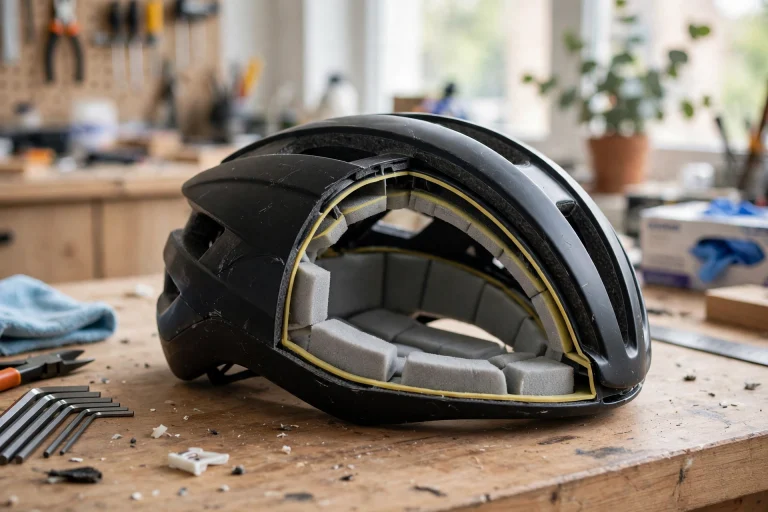
The biggest design change was the arrival of liners that manage rotation. The best-known is the slip-plane liner: a thin layer inside the helmet that lets the outer shell move slightly relative to the head on an angled impact. That small movement reduces the twisting force passed to the brain. It was the result of research in Sweden in the 1990s, where a neurosurgeon and a researcher studied how the brain is injured in angled impacts.
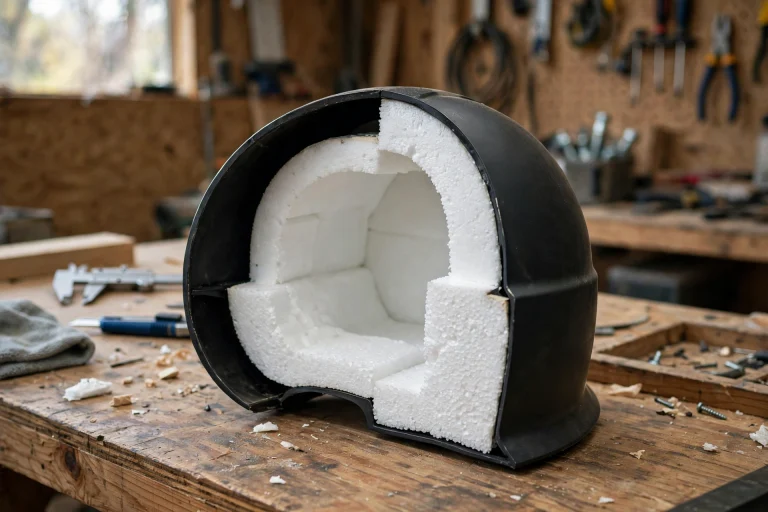
Foam liners changed too. Researchers found that a single-density foam handles one size of impact well but not others, so makers began using multi-density foam — softer foam in some areas, firmer in others — to manage a wider range of crashes. Some helmets now use foams that recover after a small impact, or structures that crush in a controlled way across different speeds.
Shells changed as well. Crash research showed that a shell that is too stiff can pass force through to the head, while a shell that deforms slightly can absorb energy. Makers began designing shells that work with the liner, not just as a hard cover but as part of the energy management system. If you want to understand the slip-plane idea in more detail, reading about what MIPS is for helmets explains how one such system works.
How Did Coverage and Fit Change?
Coverage was one of the clearest changes. After crash research showed that side and rear impacts were common, helmets began to extend lower at the sides and the back. Cycling helmets, climbing helmets, and ski helmets all gained deeper coverage at the temples and the back of the head over the past two decades, and that change came directly from studying where real helmets were damaged.
Fit systems improved for the same reason. Researchers found that a helmet that shifts in a crash protects less well, because it may not be in the right place at the moment of impact. Modern retention systems — dials, cradles, and adjustable pads — are designed to keep the helmet stable, and they are a direct response to crash data showing how often helmets moved before the impact.
Ventilation changed too, though for a different reason. Crash research showed that riders would not wear a helmet that was hot and uncomfortable, however safe it was. Makers learned to design vents that keep the head cool without weakening the shell, because a helmet left at home protects no one.
How Did Testing Change?
Crash research changed the tests as well as the helmets. Standards bodies began adding angled impact tests, which measure rotational forces as well as straight-line ones. Independent test programmes started rating helmets by how they performed across a range of impacts, not just whether they passed a minimum standard.
That rating changed how buyers choose helmets. A rider can now compare helmets by their test performance, and makers compete on safety rather than only on weight or style. The result is a market where the safest helmets are often the best-selling ones — a change that would have been hard to imagine when the first standards were written.
Research methods changed too. Sensors in helmets, video of real crashes, and detailed accident studies all give researchers data that the early drop tests never could. Each new dataset reveals something the previous generation missed, and each revelation pushes the design forward again.
What Is the Next Change Crash Research Will Bring?
The next changes are likely to be in materials and in personalisation. Researchers are testing liner materials that respond differently to different impact speeds, shells that adapt to the shape of the impact, and fitting systems that adjust to each rider’s head. The aim is a helmet that protects well across the whole range of real crashes, not just the ones in the laboratory.
There is also growing interest in helmets that record what happened in a crash. Sensors that measure the direction and size of an impact can help medical staff assess a rider, and the data they collect feeds back into research — so the next generation of helmets is designed with better information than the last.
The pattern of the past seventy years is likely to continue: research finds a gap, design closes it, and the next round of research finds the next gap. That is how helmet design got from a leather cap to a modern helmet, and it is how it will keep improving.
Frequently Asked Questions
Q: What is the most important thing crash research taught helmet makers?
A: That real crashes usually involve angled impacts and twisting forces, not just straight-line drops — and that helmets needed to manage rotation as well as direct impact.
Q: Do modern helmets protect better than helmets from twenty years ago?
A: In general terms, yes. Deeper coverage, multi-density foam, slip-plane liners, and better fit systems all come from crash research, and independent testing shows modern helmets perform better across a range of impacts.
Q: Why do helmets still change if the old ones passed the tests?
A: Because the tests keep improving as research reveals more about real crashes. A helmet that passed an old test may still leave gaps — such as rotational forces — that newer designs address.

Olivia
Writer at Helmet Today, covering helmet reviews, fit and riding safety.