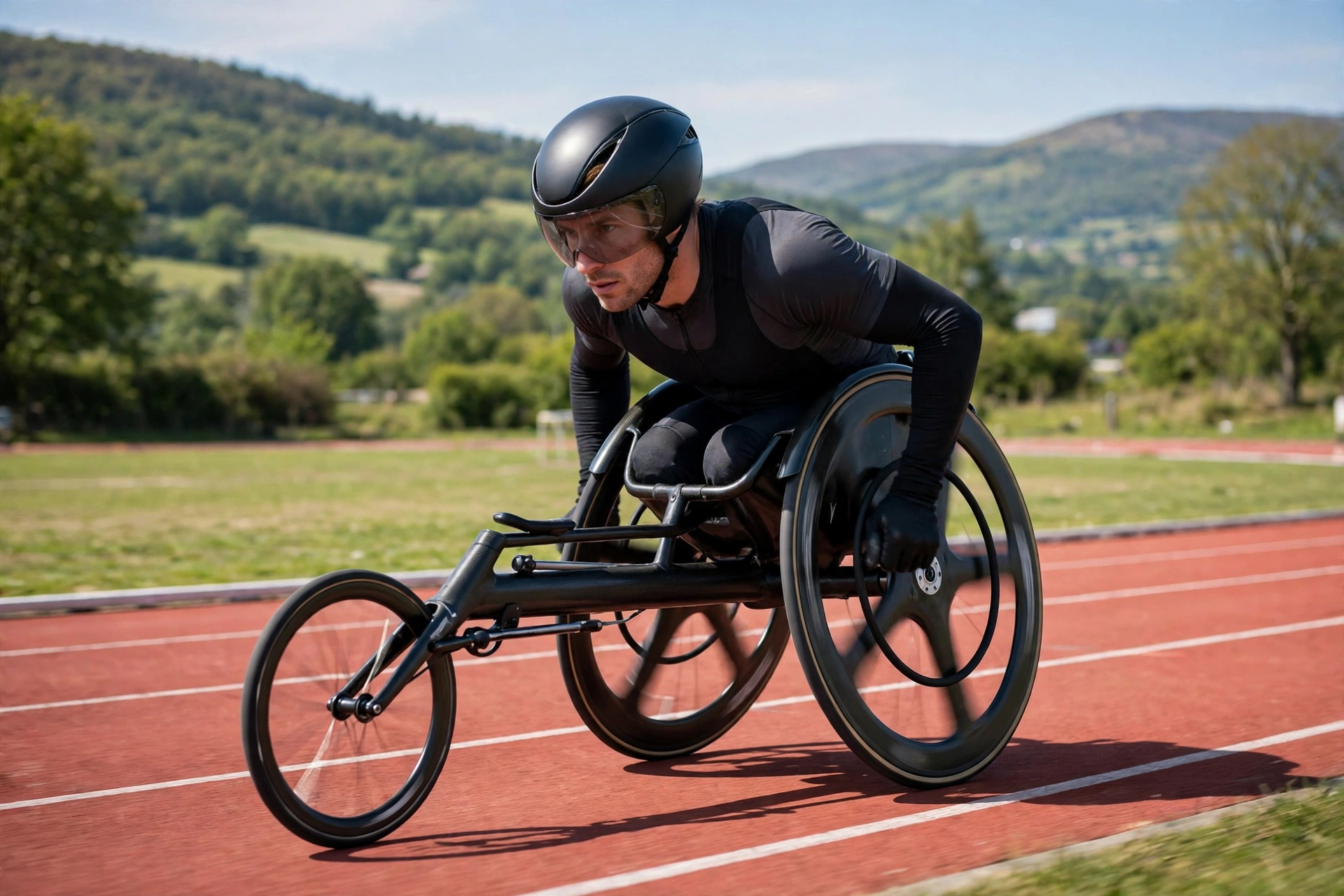
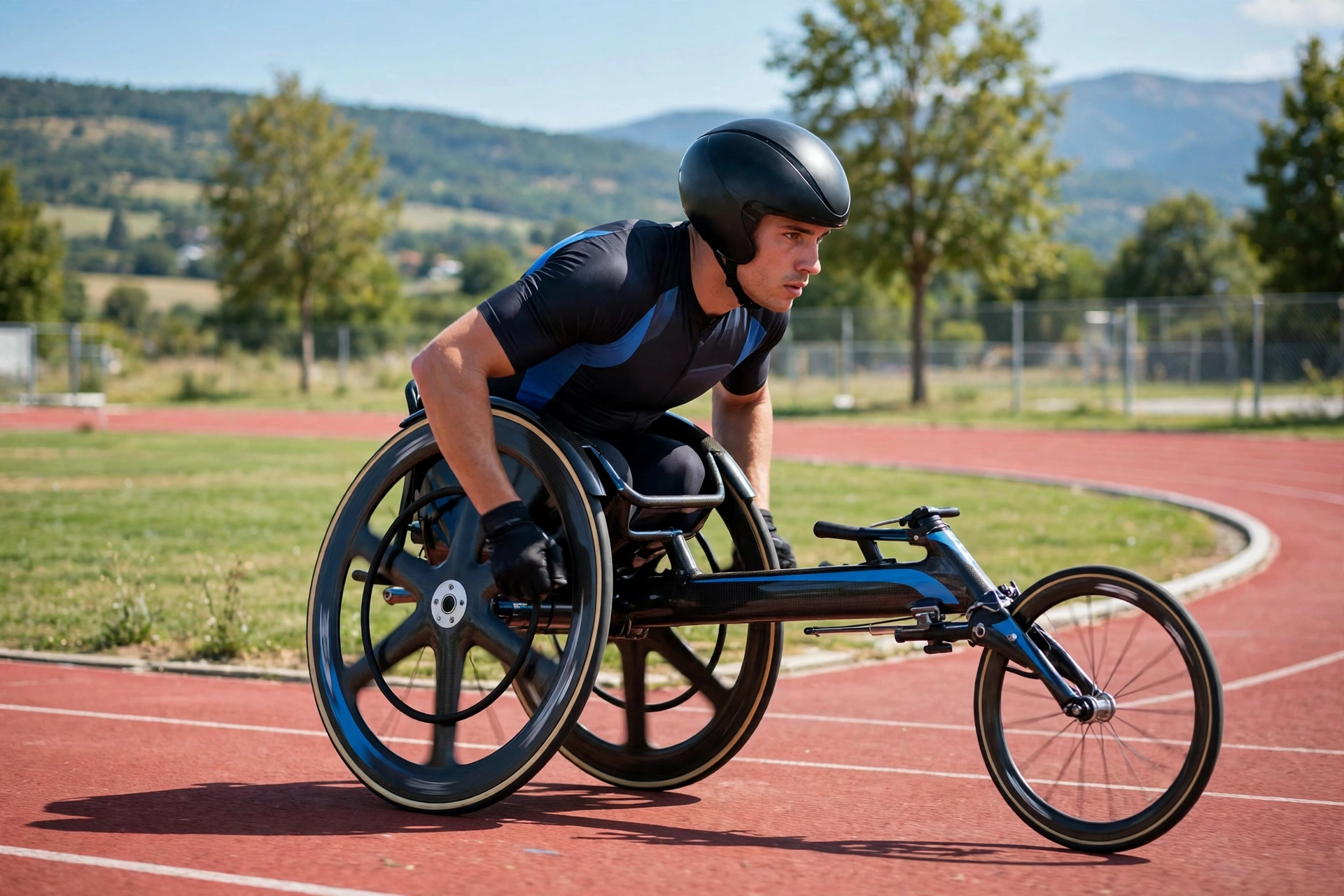
A wheelchair racing helmet is a lightweight, aerodynamic helmet worn by wheelchair racers to protect their head at high speed, and in general terms it resembles a cycling helmet with a smooth, rounded shape and a fit designed for a seated, forward-leaning racing position. Wheelchair racing is fast — racers can reach speeds that make a fall dangerous — and the helmet is an essential part of their kit. This guide explains what a wheelchair racing helmet is, how it differs from other helmets, and what to look for when choosing one.
Wheelchair racing takes place on the track and on the road, from sprint distances to the marathon. The racing wheelchair is a specialised machine with large rear wheels and a small front wheel, and the racer sits low, leaning forward, pushing the wheels with gloved hands. In that position, a fall can send the racer head-first, which is why the helmet matters.
What Makes a Wheelchair Racing Helmet Different?
The main difference is the shape. A wheelchair racing helmet is designed for a low, forward-leaning head position, so it is smooth and rounded, with no peak or brim to catch the wind. The shape is similar to a time-trial cycling helmet, because the aerodynamic demands are similar: a racer pushing hard at speed needs a helmet that cuts through the air cleanly.
The fit is different too. A wheelchair racer’s head position is more horizontal than a cyclist’s, and the helmet must stay stable in that position without sliding forward or pressing on the forehead. The retention system — the dial or cradle at the back — needs to work with the racer’s head shape and hair, and it must be adjustable enough to be tightened with gloved hands.
Ventilation is also a consideration. Wheelchair racing is hard physical work, and racers sweat heavily, especially in warm conditions. A helmet with good airflow helps, but too many vents can compromise the smooth shape. Makers balance the two, and the best choice depends on whether the racer competes mainly on the track or on the road, in hot or cool conditions.
Do Wheelchair Racers Have to Wear a Helmet?
In general terms, helmets are required in most organised wheelchair racing competitions, both on the track and on the road. The exact rules depend on the competition and the governing body, but the requirement is widespread, and it reflects the speeds involved and the consequences of a fall.
Outside competition, the decision is the racer’s. Many racers wear a helmet for training as well, because training speeds can be just as high as racing speeds, and a fall on a road is no softer in training than in a race. The habit of wearing a helmet every time is the safest approach.
For young racers and beginners, a helmet is especially important. A new racer is still learning how the chair handles at speed, and falls are more likely. A helmet that fits well and is worn every session is one of the simplest ways to make the sport safer for a beginner.
How Should a Wheelchair Racing Helmet Fit?
The helmet should sit level on the head, low enough to cover the forehead, without tilting back or sliding forward. It should feel snug all around with no pressure points, and it should not rock from side to side when the racer shakes their head. Because the racing position is forward-leaning, it is worth checking the fit in that position, not just standing upright.
Try the helmet on with the gloves the racer uses, because the retention dial must be adjustable with gloved hands. Check that the straps do not interfere with the racer’s pushing action, and that they sit comfortably without rubbing the neck or ears. The strap should fasten snugly under the chin, with room for no more than one or two fingers.
Consider the racer’s hair and any headwear they use. Long hair, a cap, or a sweatband can change the fit, so try the helmet on as it will be worn in a race. And remember that sizing varies between makers, so a size label is only a starting point — the fit on the head is what matters.
What Should You Look for When Choosing One?
Start with certification. The helmet should meet a recognised standard for the sport, and the label inside will say which standard it meets. A helmet certified for cycling is the usual choice for wheelchair racing, because the impact tests are similar, but check the competition rules for your event to be sure.
Look at the weight. A lighter helmet is less tiring over a long race, and it puts less strain on the neck in a forward-leaning position. But do not chase the lightest helmet at the expense of fit or ventilation. A helmet that is comfortable for the full race distance is worth more than one that saves a few grams.
Think about visibility and hearing. A wheelchair racer needs to hear other racers and officials, and to see clearly in all directions. A helmet that covers the ears or restricts peripheral vision is a poor choice. If you want to understand the safety features inside the helmet, reading about what MIPS is for helmets can help you compare models on more than weight and looks.
How Do You Care for a Wheelchair Racing Helmet?
Care for it as you would any helmet. Store it somewhere cool and dry, out of direct sunlight, and away from chemicals. Clean the pads regularly and let them air-dry. Wipe the shell with a damp cloth and mild soap, and clear the vents of dust.
Check the helmet regularly for damage. Look for cracks in the shell, soft spots in the foam, and wear on the straps and buckle. Replace the helmet after a crash, even if it looks undamaged, because the foam inside may have crushed. And replace it when it reaches the end of its service life, as advised by the maker.
Finally, treat the helmet as part of the racing kit, not an afterthought. A well-fitting, well-cared-for helmet is a piece of equipment a racer can rely on — and in a sport where speeds are high and falls happen, that reliability is what the helmet is for.
Frequently Asked Questions
Q: Can a wheelchair racer use a regular cycling helmet?
A: In general terms, yes. Many wheelchair racers use a cycling helmet, because the impact tests and the fit are similar. Check your competition’s rules first, and make sure the helmet fits well in the racing position.
Q: Do wheelchair racers need a full face helmet?
A: In general terms, no. Most wheelchair racers wear an open-face helmet, because the risk is different from sports such as downhill mountain biking. A full face helmet would restrict vision and hearing, which matter in racing.
Q: How often should a wheelchair racing helmet be replaced?
A: Follow the maker’s guidance, which is usually several years of regular use, and replace the helmet sooner after a crash or if it shows damage. A helmet that no longer fits snugly should also be replaced.

Olivia
Writer at Helmet Today, covering helmet reviews, fit and riding safety.