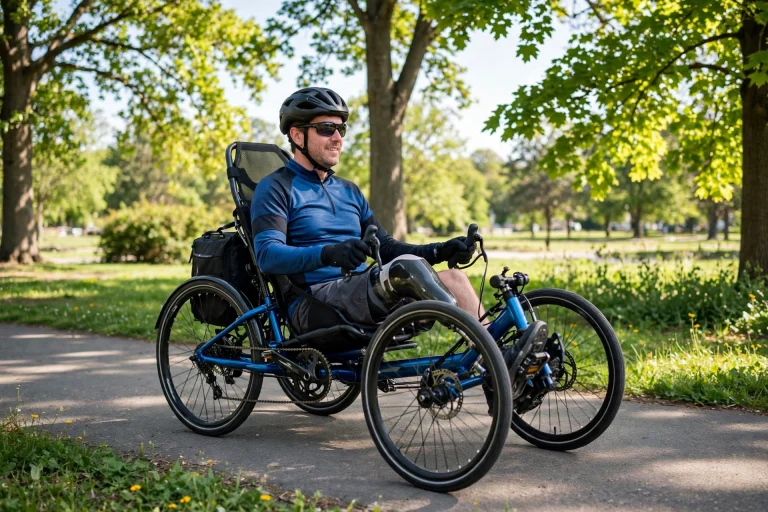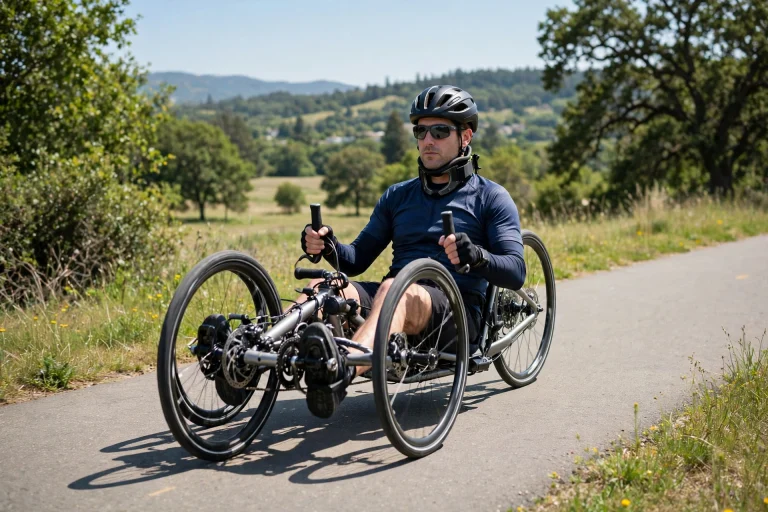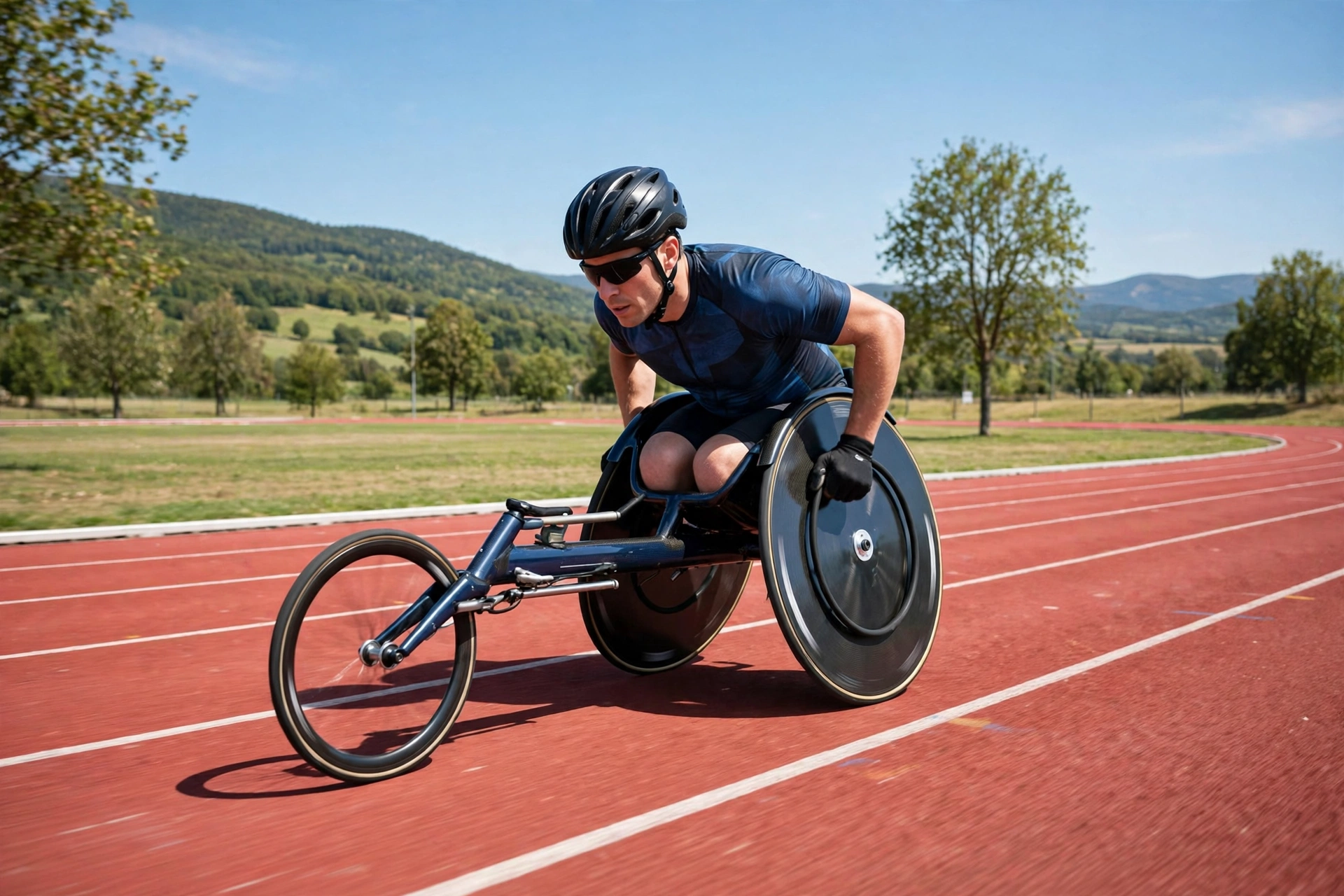
Do wheelchair racers wear helmets in competition? In general terms, yes — in most organised racing events, wheelchair racers are required to wear a helmet, and even where a rule does not spell it out, wearing one is the sensible choice. A racing wheelchair moves fast, sits low to the ground, and tips or crashes can happen in a pack, on a bend, or on a wet road. A helmet is a small piece of kit that protects against a serious outcome.
That said, the exact rule depends on the event, the organiser, and the level of competition. A local fun run may treat helmets as strongly recommended, while a sanctioned track or road race is more likely to make them compulsory. This guide explains what the rules usually say, what kind of helmet wheelchair racers wear, and how to get a fit that stays put at racing speed.
Do Wheelchair Racers Have to Wear a Helmet?
In general terms, helmet use is required at most formal wheelchair racing competitions. Event organisers set their own equipment rules, and those rules commonly list a helmet as mandatory kit for racing wheelchairs, alongside checks on the chair itself. If you turn up to a sanctioned race without one, you may not be allowed to start.
The reason is straightforward. Wheelchair racers can reach high speeds, especially on road courses with downhill sections, and they race in close packs where contact between chairs happens. A tip-over at speed can bring a racer’s head into contact with the track, the road, or another chair. A helmet reduces the risk of a head injury in exactly that kind of fall.
At informal events, the rule may be softer. A charity race or a community ride may only recommend helmets rather than require them. But the risk does not disappear just because the event is informal, and many experienced racers wear a helmet every time they train as well as race. If you are unsure what applies to your event, check the entry information or ask the organiser before race day — do not leave it to the morning of the race to find out.
What Kind of Helmet Do Wheelchair Racers Wear?
Most wheelchair racers wear a lightweight cycling-style helmet. These helmets are designed for speed, ventilation, and a low profile, which suits a racer sitting low in a racing chair. Some racers choose a helmet with more coverage around the back and sides of the head, while others prefer a road-style helmet with large vents for airflow on long road races.
What matters most is that the helmet meets a recognised safety standard for your region. The label inside the helmet will say which standard it meets, and race officials may check it. A helmet that has been in a crash, or one with visible cracks, dents, or compressed foam, should be replaced — in general terms, a helmet that has taken a hard impact may not protect as well a second time, even if the damage is hard to see.
Some racers also think about aerodynamics, and a smooth, low-profile helmet can help at racing speeds. But aerodynamics should never come before fit and protection. A helmet that slips, rocks, or lifts at speed is a distraction at best and a hazard at worst. If you are learning about helmet technology, reading about what MIPS is for helmets can help you understand one of the features you may see listed when you shop for a racing helmet.
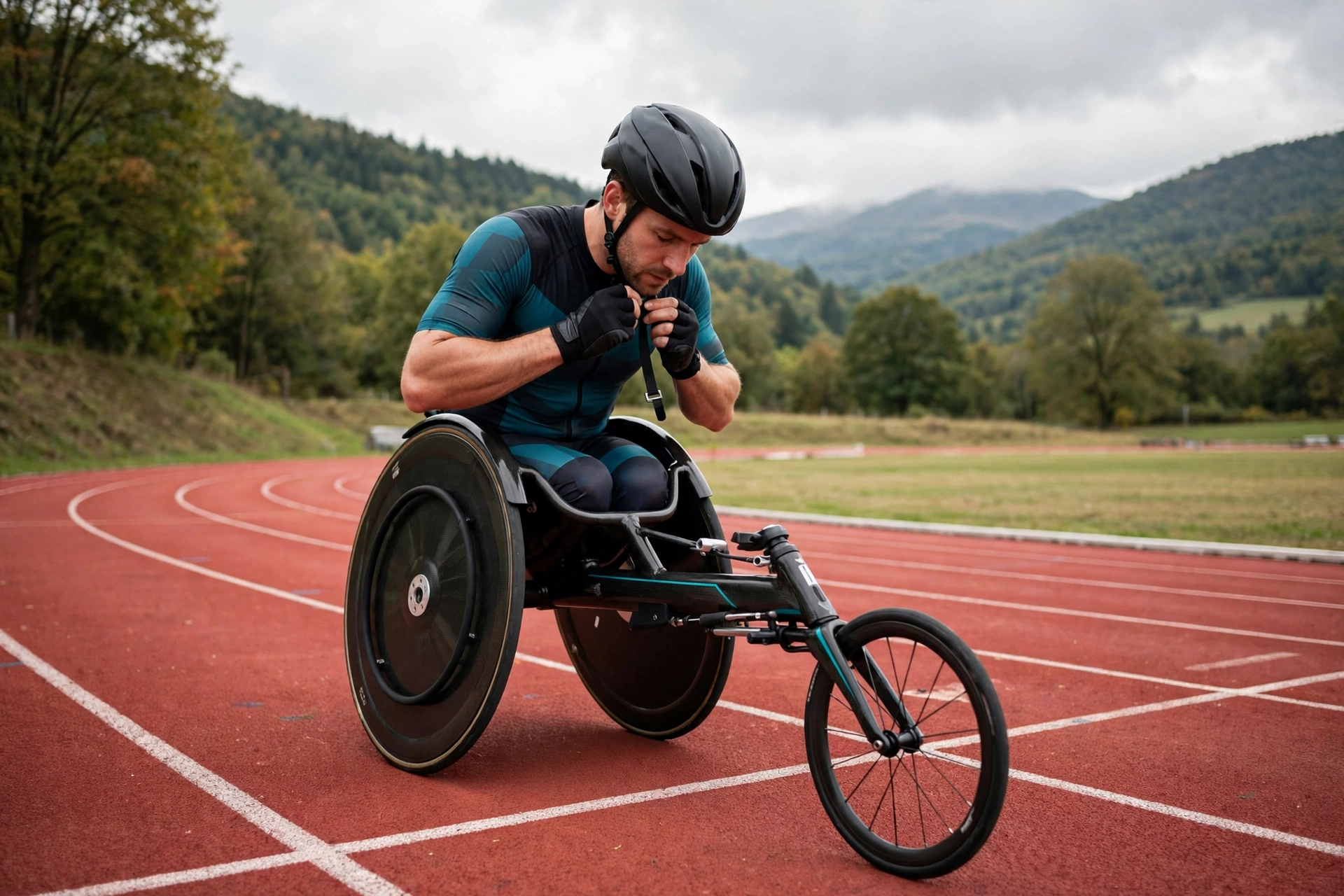
How Should a Wheelchair Racing Helmet Fit?
Fit decides how much protection a helmet actually gives, so it deserves real attention. The helmet should sit level on your head, low enough to cover your forehead, without tilting back. It should feel snug all around, with no pressure points that throb after a few minutes, and it should not rock from side to side or slide forward when you shake your head.
The retention system at the back of the helmet is what keeps it stable at speed. Tighten it until the helmet stays in place when you move your head sharply, but not so tight that it gives you a headache. Then do the chin strap up snugly — you should be able to fit about two fingers between the strap and your chin, and the helmet should not lift when you pull gently at the front edge.
Wheelchair racers sit in a reclined, forward-leaning position that is different from a cyclist’s upright posture, so check the fit in your racing position, not just standing up. Sit in your chair, lean into your racing posture, and move your head the way you would during a race. If the helmet shifts, presses on your forehead, or catches on the back of the chair, adjust it — or try a different shape. Helmet shapes vary between makers, and a size label is only a starting point.
What Should You Check Before a Race?
A quick pre-race check takes a couple of minutes and can save a bad day. Start with the shell: look for cracks, dents, or deep scratches. Then check the foam liner inside for dents or crumbling, and make sure the pads are clean, dry, and firmly attached. Sweaty or loose pads can let a helmet move around more than it should.
Next, check the straps and buckle. Pull each strap gently to make sure the stitching is sound and the adjusters hold. Clip the buckle in and out a few times to confirm it fastens cleanly and does not pop open. A strap that slips during a race is a problem you do not want to discover at speed.
What If You Race on the Road Rather Than the Track?
Road racing brings extra factors that track racing does not. Road courses include corners, cambers, descents, and sometimes wet or uneven surfaces, and racers share the road with other competitors in a pack. All of this raises the chance of a fall, and a fall on tarmac is harder than a fall on a track surface.
On the road, ventilation matters more because races are longer and the effort is sustained. A well-vented helmet keeps you cooler and more comfortable, which helps you stay focused. Visibility matters too: a bright helmet colour or reflective details can help other racers and officials spot you, especially in low light or rain.
Frequently Asked Questions
Q: Do all wheelchair racing events require a helmet?
A: In general terms, most formal competitions do require one, but the exact rule depends on the organiser and the level of the event. Always check the entry information for your race before race day.
Q: Can a wheelchair racer wear a regular cycling helmet?
A: Yes, in general terms a cycling helmet that meets a recognised safety standard is the usual choice for wheelchair racing. The key is fit: it must sit level, feel snug, and stay stable in your racing position.
Q: How often should a wheelchair racing helmet be replaced?
A: Replace it after any hard impact or crash, and if the shell, foam, straps, or buckle show wear or damage. Even without a crash, a helmet that no longer fits snugly or has worn-out pads is due for replacement.

Olivia
Writer at Helmet Today, covering helmet reviews, fit and riding safety.