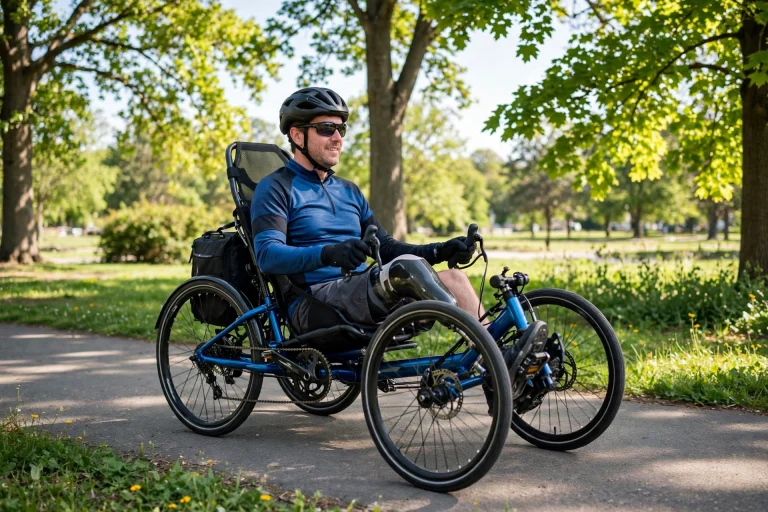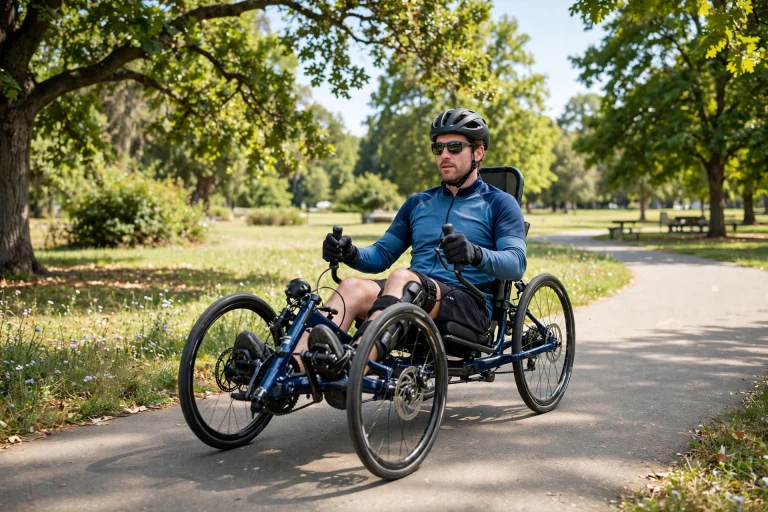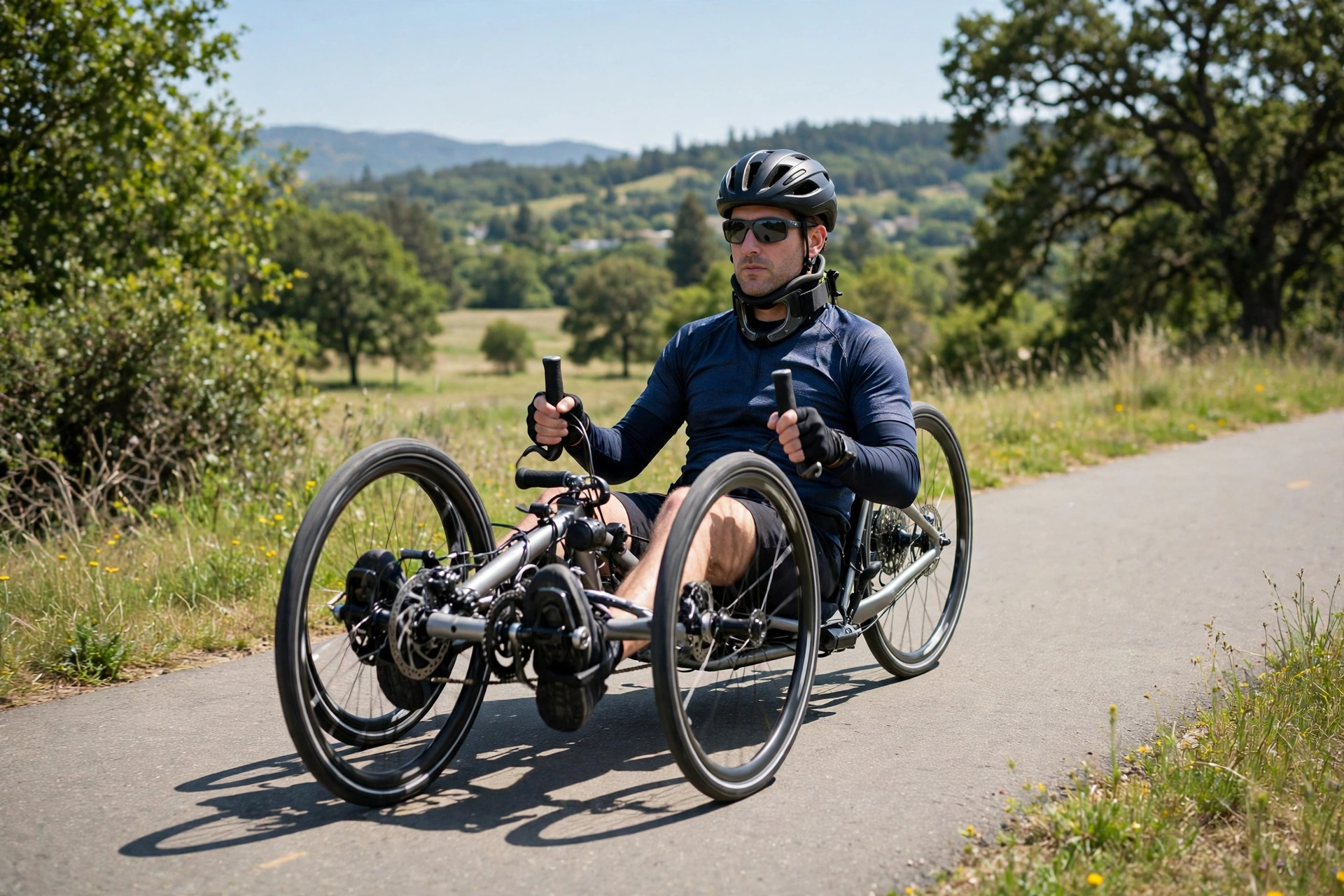
A helmet for handcyclists with neck support needs must do two things at once: protect your head and work with your neck support, not against it. Handcyclists ride in a reclined position, often with a headrest or a padded neck support, and a helmet that clashes with that support can tilt forward, press on the neck, or slide out of place. The right setup is one where the helmet and the support fit together comfortably for the whole ride.
Neck support needs vary widely. Some riders need a light headrest for resting between efforts, others rely on a shaped support to hold their head steady, and some need extra support because of limited neck strength or control. This guide explains how to choose a helmet that suits your support, how to fit the two together, and what to check before a long ride.
Why Does Neck Support Change the Helmet Choice?
In a handcycle, you sit low and reclined, with your head held up largely by your neck. Over a long ride, that takes effort, and a headrest or neck support takes some of the load. But the support occupies the same space as the back of a helmet — and that is where the clash happens.
A helmet with a deep, high back can press against a headrest and push the helmet forward over your eyes. A bulky retention dial at the back of the helmet can dig into a support pad. And a helmet that is too tall at the rear can stop you leaning back into the support at all, leaving your neck to do all the work.
That is why the helmet and the support have to be chosen and fitted together, not separately. A helmet that is perfect on its own can be wrong once the support is in place.
What Kind of Helmet Works Best with Neck Support?
Most handcyclists use a cycling helmet that meets a recognised safety standard for their region. The label inside will say which standard it meets. For use with neck support, a low-profile helmet with a shallower back usually works best, because it clears the support instead of pressing against it.
Look for a helmet with a slim or low-set retention system. Some helmets have a dial that sits high at the back of the head — that is the part most likely to clash with a headrest. Others have a lower cradle or a slim adjustment that sits flatter. Try both types against your support and see which one lets you lean back naturally.
Weight is worth weighing up too. A lighter helmet puts less load on your neck, which matters more when neck strength is already limited. Ventilation matters as well, because handcycling is hard work and a hot, sweaty head is uncomfortable on a long ride. If you are comparing the features listed on the box, reading about what MIPS is for helmets can help you understand one of the systems you may see mentioned.
How Do You Fit the Helmet and Neck Support Together?
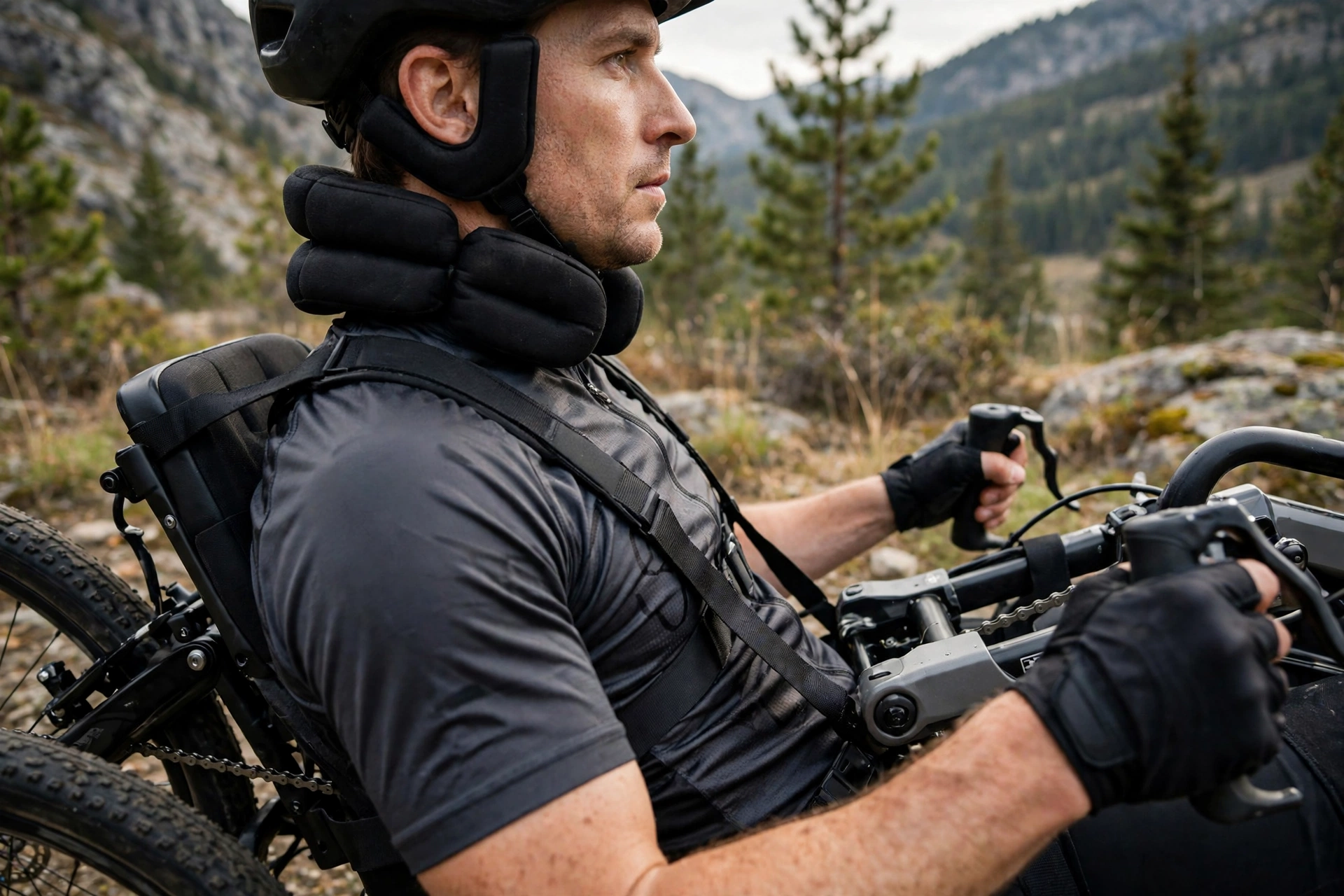
Start with the support. Sit in your handcycle, settle into your normal riding position, and adjust the headrest or neck support so your head rests comfortably and your view ahead is clear. Only then put the helmet on — if you fit the helmet first and the support second, you will end up chasing the fit back and forth.
Place the helmet level on your head, with the front edge just above your eyebrows. Lean back into the support and check: does the helmet touch the support, and if so, does it push the helmet forward or tilt it? A light touch is fine, but if the helmet is being pushed out of position, something has to change — the helmet shape, the support position, or both.
Next, adjust the retention system and straps with the support in place. The helmet should feel snug, stay put when you shake your head gently, and not lift when you pull at the front edge. The chin strap should be snug, with about two fingers’ width between the strap and your chin. Check your view: you should be able to see the road ahead and your hand cranks without the helmet blocking your vision or the support forcing your head into an awkward angle.
What If the Helmet and Support Keep Clashing?
If the helmet keeps pressing on the support or being pushed forward, work through the options in order. First, try adjusting the support — a small change in height or angle can make a big difference. A headrest set a little lower or tilted slightly may clear the helmet entirely.
Second, try a different helmet shape. A helmet with a lower back, a slimmer retention dial, or a different shell shape may fit your support far better. Helmet shapes vary a lot between makers, and the right one for your setup may not be the one you first tried. A bike shop that understands adaptive cycling can help you compare shapes against your support.
Third, think about padding. A thinner pad at the back of the helmet, or a small change to the support padding, can create the clearance you need. But do not remove padding just to make things fit — padding is part of how the helmet protects you. If you cannot get a good fit with the helmet and support you have, talk to your cycle fitter or a clinician who knows your neck support needs before changing anything about the support itself.
How Do You Check the Setup Before a Long Ride?
Do a short test ride before any long outing. Ride for ten or fifteen minutes in your normal position, then stop and check: is the helmet still level, is the strap still snug, and does your neck feel comfortable? A fit that feels fine for two minutes in the driveway can feel very different after an hour on the road.
Pay attention to pain, pressure, or numbness. A helmet pressing on the back of your head, a support digging in, or a strap pulling at your neck are all signs that something needs adjusting. Do not push through discomfort on a long ride — stop, adjust, and if you cannot fix it, cut the ride short and sort the setup out at home.
Check the helmet itself regularly too. Look for cracks, dents, or worn straps, and replace the pads when they get flat. In general terms, a helmet that has taken a hard impact should be replaced, even if the damage is hard to see.
Frequently Asked Questions
Q: Can I wear any cycling helmet with a neck support?
A: In general terms, yes, as long as it meets a recognised safety standard — but a low-profile helmet with a slim retention system usually fits better with a headrest or neck support. Always test the helmet and support together.
Q: Should the helmet touch my neck support?
A: A light touch is fine, but the support should not push the helmet forward, tilt it, or press it into your head. If it does, adjust the support position or try a different helmet shape.
Q: How do I know if my helmet is too heavy for my neck?
A: If your neck tires quickly, aches, or you find yourself resting your head on the support more and more during a ride, the helmet may be adding too much load. A lighter helmet, or a better-adjusted support, can help — and a clinician can advise on your individual needs.

Olivia
Writer at Helmet Today, covering helmet reviews, fit and riding safety.