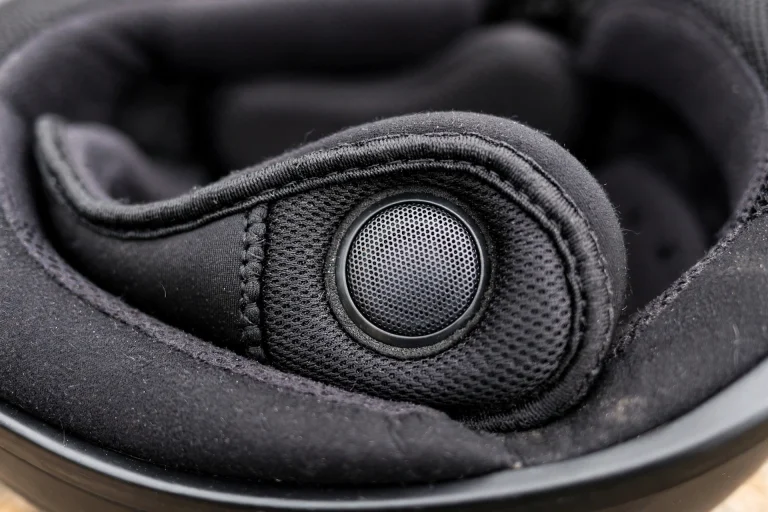
Two-way radio mounts on work helmets are brackets, clips, or holders that attach a radio, or its speaker-microphone, to a hard hat so the wearer can communicate hands-free, and in general terms, a good mount keeps the radio secure without drilling into the shell or changing how the helmet fits. The radio itself usually sits on a belt or chest harness, while the mount holds the speaker-microphone near the shoulder or ear, or carries the radio unit on the side of the helmet. The right choice depends on the job, the helmet, and how often you need to talk.
On construction sites, in warehouses, on railways, and in other noisy workplaces, a two-way radio is often the main way a team stays in touch. Holding a radio in one hand is not always practical when both hands are needed for work, and a radio loose in a pocket can be hard to reach quickly. A helmet mount puts the speaker and microphone where they can be heard and reached, while keeping the hands free for the job.
What Types of Two-Way Radio Mount Are Used on Work Helmets?
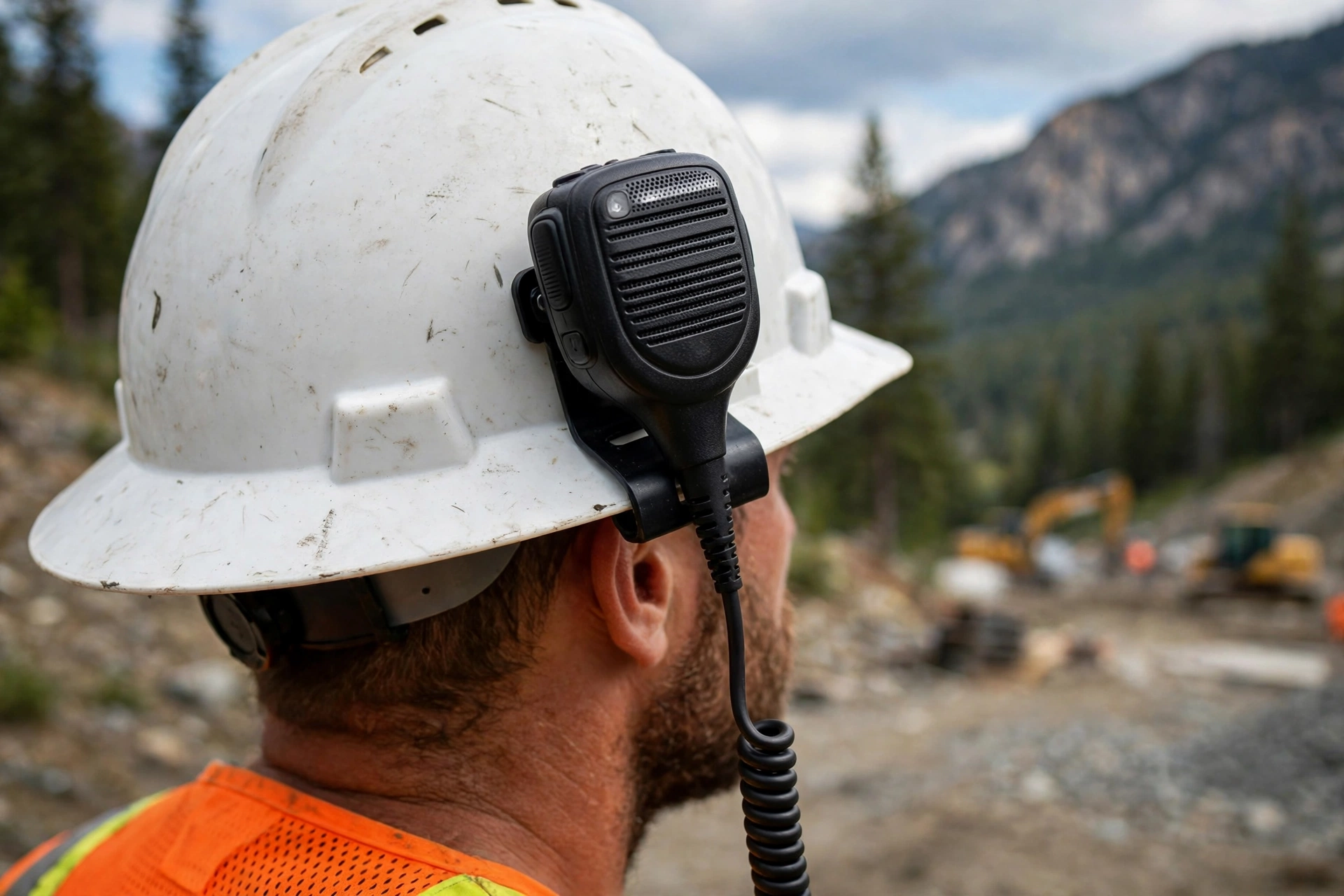
The most common type is a speaker-microphone clip that attaches to the helmet’s accessory slot, side rail, or strap. The speaker-microphone is a small unit with a speaker, a microphone, and a push-to-talk button, connected to the radio by a cable. Clipping it to the helmet keeps it close to the ear and mouth, so calls are easier to hear in noise and easier to answer without reaching for the radio.
A second type is a side-mounted radio holder that carries the whole radio on the helmet. These are less common, because a full radio adds weight to one side of the helmet and can unbalance it, but they suit jobs where the radio must be worn on the head rather than the body. A third type is an adapter that fits into the helmet’s accessory slot — the same slot used for ear defenders or a visor — and provides a clip point for the speaker-microphone or a small holder.
How Do You Attach a Radio Mount Without Damaging the Helmet?
The golden rule is never to drill, cut, or glue anything to a hard hat shell. Drilling a hole can weaken the shell and may void the helmet’s certification, and glue or solvents can damage the material in ways you cannot see. A safe mount uses the helmet’s existing features: the accessory slots on the sides, the rain gutter or rail, the chin strap, or a clip that grips the shell edge without piercing it.
To fit a slot-mounted holder, slide it into the accessory slot and lock it in place as the maker directs, then check that it sits firmly and does not wobble. For a strap-mounted clip, attach it to the chin strap or a side strap so the speaker-microphone rests near the shoulder or cheek, and route the cable so it cannot snag on machinery or scaffolding. Keep the cable short and tidy, with any slack clipped to clothing rather than hanging loose.
Does a Radio Mount Affect Helmet Balance or Comfort?
In general terms, a speaker-microphone is light enough that most wearers barely notice it, but a full radio mounted on the helmet is a different matter. Even a modest radio adds weight to one side, and over a long shift that can cause neck strain or make the helmet feel as if it is always sliding sideways. That is why most workers carry the radio on a belt or chest and mount only the speaker-microphone on the helmet.
Balance matters for safety as well as comfort. A helmet that is pulled to one side may not sit level, and a helmet that keeps slipping needs constant adjustment, which is a distraction on a busy site. If you must mount a heavier unit on the helmet, look for a mount that sits low and close to the shell, and consider whether a counterweight or a different carrying position would help — though in most cases, moving the radio to the body is the simpler answer.
What Should You Check Before Using a Radio Mount at Work?
Start with the helmet itself: check that it is the right type for your site, that it is in good condition, and that the mount does not cover any vents, labels, or the suspension inside. The suspension — the cradle that holds the shell off your head — needs to work freely, and nothing mounted on the outside should press on it or stop it from moving as designed.
Next, check the site rules. Some workplaces have their own guidance on what may be attached to a helmet, and some require mounts to be approved or supplied by the employer. If you are unsure, ask your supervisor or safety officer before fitting a mount you bought yourself. Using a mount that has not been approved for the site could put you in breach of site rules, even if the mount itself is well made.
Finally, test the radio in the conditions you will use it in. Can you hear calls over site noise? Can others hear you clearly? Does the cable stay out of the way when you bend, climb, or reach overhead? A mount that works well in a quiet store may fail on a noisy site, so a short trial on the job is worth more than a description on a box. If you are learning how helmet liners and retention systems work, reading about what MIPS is for helmets can help you understand why keeping the helmet’s fit and suspension undisturbed matters when you add any accessory.
How Do You Look After a Helmet Radio Mount?
Look after the mount as part of your helmet checks. Before each shift, check that the clip or holder is secure, that the cable is not frayed or kinked, and that the speaker-microphone still clicks firmly into place. A loose mount can drop the radio at height, which is a hazard for people below as well as a broken radio for you.
Clean the mount with the helmet, wiping off dust and grime and checking for cracks or worn clips. Replace a mount that no longer grips firmly, rather than wedging it tighter or taping it in place. Tape and wedges can hide a failing clip and may leave residue that affects the shell.
When the helmet itself reaches the end of its life, retire the mount with it unless the maker confirms it fits the replacement helmet. A radio mount is an accessory, not part of the helmet’s protection, and it should never be the reason a damaged helmet stays in use.
Frequently Asked Questions
Q: Can I drill a hole in my hard hat to fit a radio mount?
A: No. Drilling, cutting, or gluing can weaken the shell and may void its certification. Use mounts that fit the helmet’s existing accessory slots, rails, or straps instead.
Q: Is it better to mount the whole radio or just the speaker-microphone on a helmet?
A: In general terms, mounting just the speaker-microphone is better, because it is lighter and keeps the helmet balanced. The radio itself is usually best carried on a belt or chest harness.
Q: Will a radio mount fit any work helmet?
A: Not necessarily. Mounts are made for particular slot, rail, or strap systems, so check that the mount matches your helmet model before buying, and check your site rules too.

Olivia
Writer at Helmet Today, covering helmet reviews, fit and riding safety.