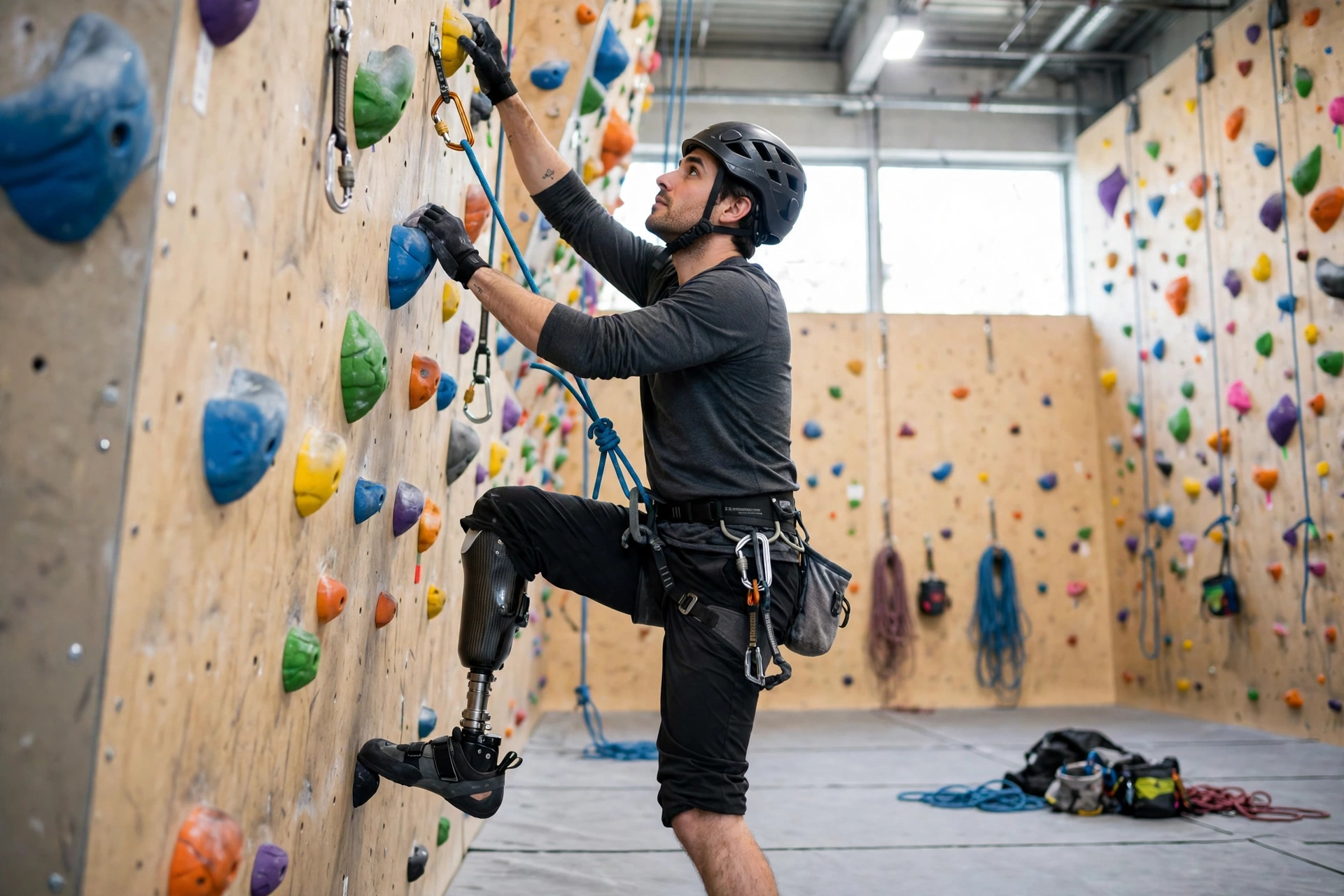
Adaptive climbing helmet fit comes down to this: the helmet should sit level on your head, feel snug all around, and stay put when you look up, lean back, and move — without pressing on anything it should not touch. Adaptive climbers may climb from a seated position, use a modified harness, or climb with a support or assistant, and each of those changes how a helmet sits and moves. A fit checked standing still on the ground is only the start.
Climbing helmets protect against falling rock, dropped gear, and bumps against the wall, and a helmet that slips or tilts leaves part of your head exposed. This guide explains how to choose, fit, and check a climbing helmet for adaptive climbing, so it stays where it should from the ground to the top of the wall.
What Makes Adaptive Climbing Helmet Fit Different?
Adaptive climbing covers a wide range of setups. Some climbers ascend in a seated harness, some climb with one arm or with limited grip, and some use a pulley or assisted system with a belayer. The common thread is that the climber’s head position and movement are not the same as a typical standing climber’s — and the helmet has to work with that reality.
A seated climber, for example, often leans back and looks up for long stretches. A helmet with a high back can press against a headrest, a harness, or the wall, and push the helmet forward over the eyes. A climber who uses a head support needs a helmet shape that clears that support. And a climber who cannot easily reach up to re-adjust a helmet mid-climb needs the fit set properly before leaving the ground.
The wall itself adds another factor. Indoor walls are close and vertical, so a helmet can catch or scrape as you move. Outdoor rock brings falling debris, which is exactly what a climbing helmet is for.
How Do You Measure and Choose a Climbing Helmet?
Measure your head with a soft tape around the widest part, just above your eyebrows and ears, and take the measurement two or three times. Use the largest reading as your starting point for sizing. But remember that helmet shapes vary between makers — a size label is only a guide, and the only real test is trying the helmet on.
When choosing, look for a climbing helmet that meets a recognised climbing helmet safety standard for your region. The label inside will say which standard it meets. Beyond that, think about weight and ventilation: a lighter helmet is easier on the neck during a long climb, and good vents keep you cooler indoors, where climbing walls can get warm.
Try the helmet with everything else you will wear. That means your harness, any head support, glasses, hearing aids, or a head covering. If you use a headlamp, check that the helmet’s clips hold it without pulling the helmet off balance. And if you climb with a support or an assistant, try the helmet in your climbing position — seated in the harness, leaning back, looking up — before you commit. If you are comparing helmet features, reading about what MIPS is for helmets can help you understand one of the systems you may see listed, even though it is more common on cycling helmets than climbing ones.
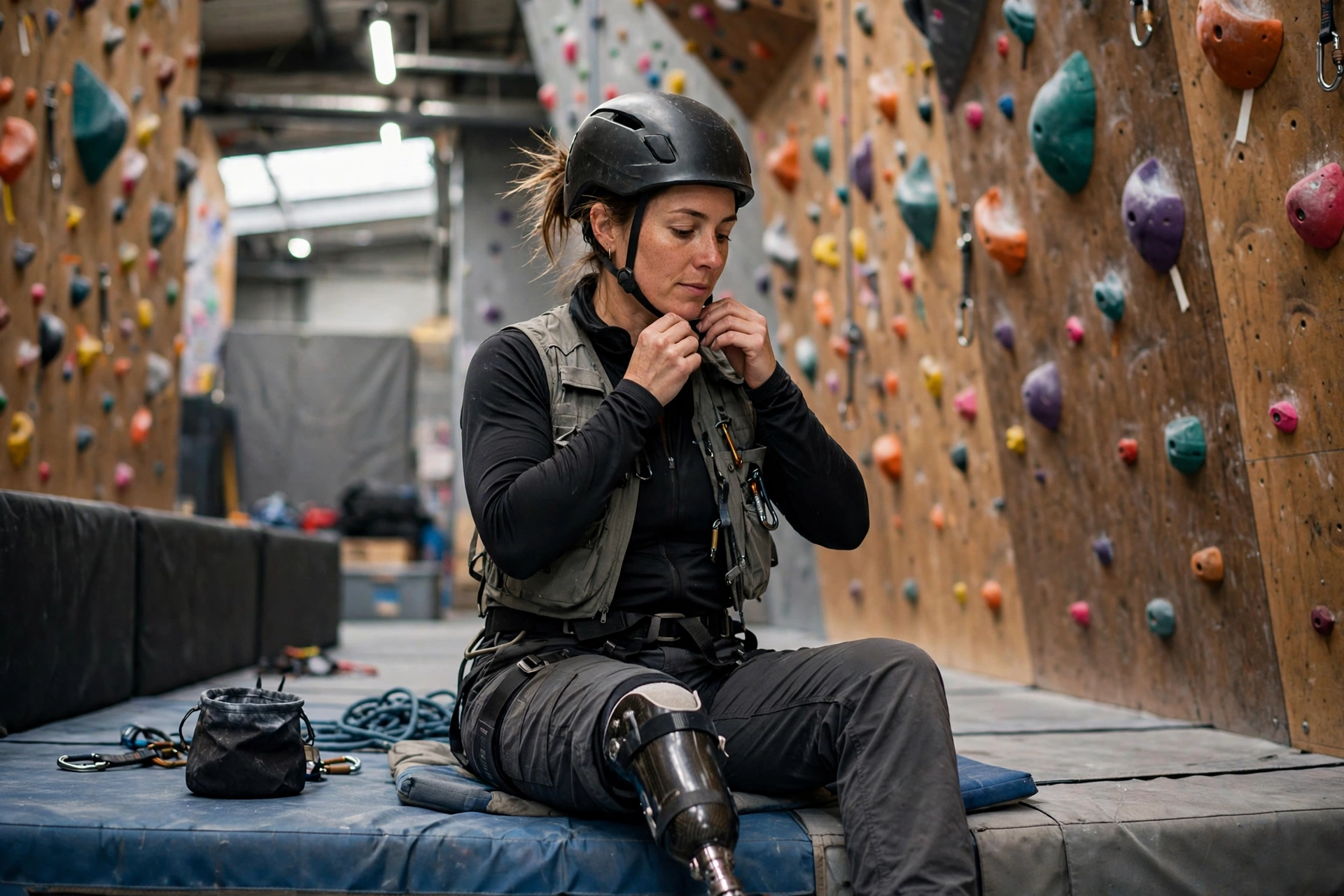
How Do You Adjust a Climbing Helmet Step by Step?
Adjust the helmet while you are in your climbing position, not just standing on flat ground. First, place it level on your head, with the front edge just above your eyebrows. It should cover your forehead without blocking your view when you look up.
Next, tighten the retention system at the back until the helmet feels snug and does not rock when you shake your head gently. Climbing helmets usually have a dial or a sliding adjustment — set it so the helmet stays put, but not so tight that it gives you a headache over a long session.
Then set the straps. The side straps should sit just below your ears, and the chin strap should be snug, with about two fingers’ width between the strap and your chin. Do the buckle up and check that the helmet does not lift when you pull gently at the front. Finally, lean back, look up, and turn your head both ways, the way you will on the wall. If the helmet shifts, presses, or catches, adjust it now — not halfway up.
What Problems Should You Watch For?
The most common problem is a helmet that tilts forward when you lean back. This usually means the back of the helmet is pressing against something — a headrest, a harness strap, or the wall — or that the retention system is too loose. Tighten the rear adjustment first, and if the problem stays, try a helmet with a lower profile at the back.
Pressure points are the next thing to watch. A helmet that presses on one spot will hurt after a while, and pain is a distraction on a climb. Most climbing helmets have adjustable padding or fit systems — move the pads, change the setting, or try a different size. A helmet should feel snug, not painful.
Also watch for interference with your other kit. A helmet that pushes your glasses down, catches on a harness, or knocks a hearing aid out of place is a problem, not a minor annoyance. Sort it out on the ground. And if you climb with an assistant, agree on a simple signal or check before you start: a quick look at the helmet from the front and side can catch a tilt that you cannot feel yourself.
How Do You Keep the Fit Right Over Time?
Check the fit before every session. Pads compress with use, straps stretch, and a helmet that fitted perfectly a month ago may have loosened. Do the shake test — gently shake your head and see if the helmet moves — and check the chin strap each time.
Clean the helmet regularly, following the maker’s instructions. Sweat and chalk build up in the pads and straps, and dirty, flat pads let the helmet move more than it should. Replace worn pads rather than living with them.
Replace the helmet after any significant impact — a dropped rock, a hard knock against the wall, or a fall where the helmet hits something. In general terms, a helmet that has taken a hard impact may not protect as well a second time, even if the damage is hard to see. If the shell is cracked, the foam is dented, or the straps or buckle are worn, it is time for a new one.
Frequently Asked Questions
Q: Can I use a cycling helmet for adaptive climbing?
A: In general terms, no — a climbing helmet is designed for the kinds of impacts climbing brings, such as falling rock and bumps against the wall. Use a helmet made for climbing that meets a recognised climbing helmet standard.
Q: How snug should an adaptive climbing helmet feel?
A: Snug all around, with no pressure points, and stable when you shake your head or look up. It should sit level and not slide forward when you lean back in your harness.
Q: What if my helmet presses on my headrest or harness?
A: Try a lower-profile helmet, adjust the headrest or harness position if you can, or try a different helmet shape. A helmet pushed out of position will not protect you properly, so do not just accept the pressure.

Olivia
Writer at Helmet Today, covering helmet reviews, fit and riding safety.