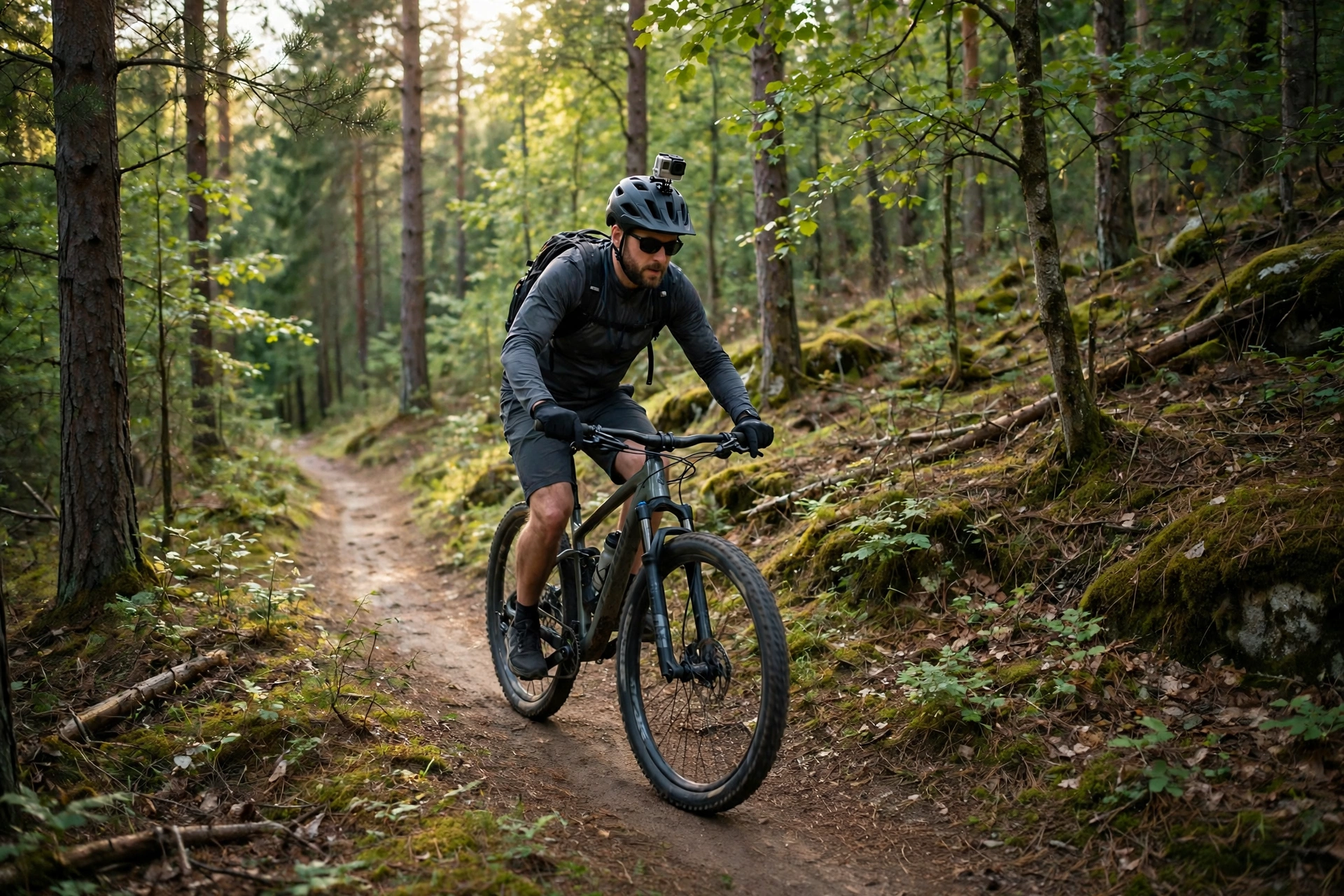
A helmet-mounted action camera can affect your balance slightly, because it adds weight to the top or side of your helmet and changes where that weight sits, but for most riders the effect is small and easy to get used to. In general terms, a small camera weighing a few tens of grams is barely noticeable, while a larger camera, a bulky mount, or a camera mounted far off-centre can create a pull that you feel on long rides or at speed.
The question matters because cameras are now common on bike, motorcycle, ski, and snowboard helmets, and riders want the footage without a sore neck or a helmet that feels top-heavy. This guide explains how much a camera can affect balance, what makes the effect bigger or smaller, and how to mount a camera so it interferes as little as possible.
How Much Weight Does a Camera Add to a Helmet?
Most action cameras weigh somewhere between a small matchbox and a small phone, and the mount adds a little more. That does not sound like much, but the weight sits on top of your head, which is the worst place for extra weight from a balance point of view: it raises your centre of gravity and adds leverage, so your neck muscles have to work harder to hold your head steady.
The position of the weight matters as much as the amount. A camera mounted on the top centre of the helmet adds weight straight above your head, which your neck can handle fairly well. A camera mounted on the side, however, pulls to one side, and your neck has to fight that pull constantly, which is more tiring. A camera mounted on the chin or front of the helmet pulls forward, which can make the helmet feel as if it is tipping forward, especially when you look down. In general terms, the further the camera sits from the centre of the helmet, the more you will feel it.
Does a Camera Affect Balance While Riding?
For most riders, the effect on balance is small. Your body is good at adjusting to a small change in weight, and after a few minutes you usually stop noticing the camera altogether. The effect is most noticeable in situations where balance is already demanding: slow-speed riding, track stands, technical mountain bike sections, or riding in strong crosswinds. In those moments, a top-heavy helmet can make small head movements feel slightly clumsier, and a side-mounted camera can make the helmet feel as if it wants to lean one way.
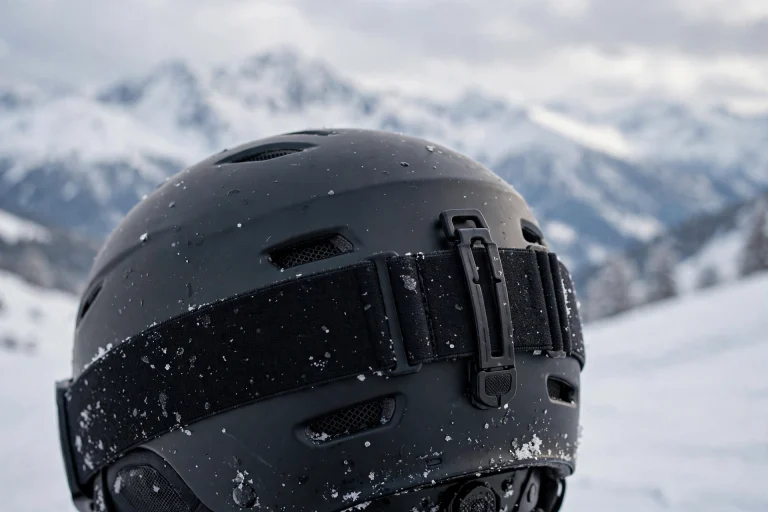
Wind is another factor. A camera and its mount stick out from the smooth shell of the helmet, and at speed they catch the wind. On a motorcycle or a fast road bike descent, that can create a small but noticeable drag, and a side-mounted camera can pull the helmet sideways in a gust. The effect is not dangerous for most riders, but it is worth knowing about, and it is one reason many riders prefer a low-profile mount that keeps the camera close to the shell. If you are learning about helmet design, reading about what MIPS is for helmets can help you understand how helmets manage movement and impact, which is useful context when you add anything to the outside of the shell.
Where Is the Best Place to Mount an Action Camera?
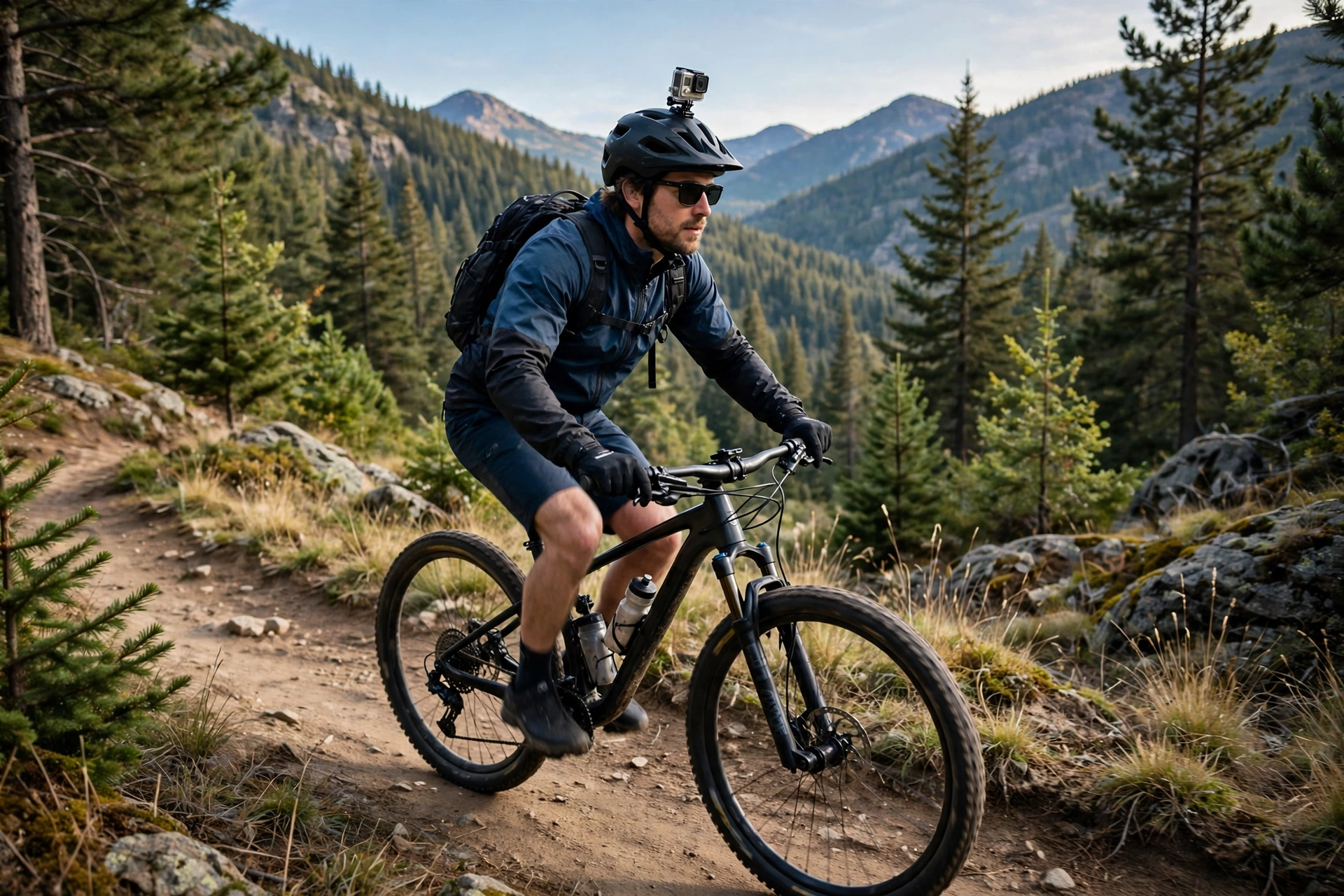
The top centre of the helmet is the most common and usually the best place for balance, because the weight sits evenly above your head and the camera gets a clear view over your shoulders. It does add height, which can be a problem under low branches or in a low garage, and it can make the helmet feel top-heavy when you tilt your head. The side of the helmet is a good second choice: it keeps the camera lower and out of the wind, but it creates a sideways pull and gives a view that is offset from where you are looking.
A chin mount, common on motorcycle helmets, sits low and central, which is good for balance, and it gives a view that follows your head closely. The downside is that it can block part of the vents and can interfere with the visor or the chin curtain. Wherever you mount the camera, use a mount made for helmets, with a secure adhesive pad or a strap that grips the shell, and test it at low speed before trusting it at high speed. A camera that falls off at speed is a hazard to you and to anyone behind you.
How Can You Reduce the Balance Effect?
The simplest step is to choose a small, light camera and a low-profile mount, because less weight and less height mean less leverage on your neck. Keep the camera as close to the shell as you can, and centre it rather than mounting it far to one side. If you use a side mount, try to keep the camera tucked in rather than sticking out on a long arm, because a long arm multiplies the leverage.
Take breaks on long rides to rest your neck, and if you feel a persistent ache on one side, try moving the camera to the other side or to the top centre to see if it helps. Some riders use a counterweight on the opposite side of the helmet to balance a side-mounted camera, but this adds more weight overall, so it is a trade-off. A better approach is usually to accept a small amount of imbalance and to keep the camera as light and as central as possible.
Are There Safety Concerns with Helmet-Mounted Cameras?
A camera mount is usually attached with adhesive or a strap, and in general terms it is designed to break away in a crash rather than staying rigidly attached. That matters, because a rigid object on the outside of a helmet could concentrate force in a fall. Check that your mount is made for helmet use and that it does not require drilling into the shell, because drilling or cutting the shell can weaken it. Never attach anything to a helmet with screws or by cutting into the protective foam.
Also consider the camera itself: in a fall, a hard camera could press against the helmet or your head, so a mount that lets the camera break away is safer than one that holds it rigidly. Check the mount regularly for wear, loose adhesive, or cracks, and replace it if it is damaged. A camera is a useful tool for recording rides, but it should never come at the cost of the helmet doing its job.
Frequently Asked Questions
Q: Will a camera on my helmet make my neck ache?
A: It can, especially a heavier camera or one mounted off-centre, on a long ride. A small, light camera mounted centrally is least likely to cause an ache, and taking breaks helps on longer days.
Q: Is a top mount or a side mount better for balance?
A: A top-centre mount is usually better for balance, because the weight sits evenly above your head. A side mount creates a sideways pull that your neck has to fight, which is more tiring over time.
Q: Can a helmet camera affect the helmet’s safety?
A: In general terms, a camera on a proper breakaway mount should not affect the helmet’s safety, but you should never drill into the shell or cut the foam to fit a mount. Use a helmet-specific adhesive or strap mount and check it regularly for wear.

Olivia
Writer at Helmet Today, covering helmet reviews, fit and riding safety.