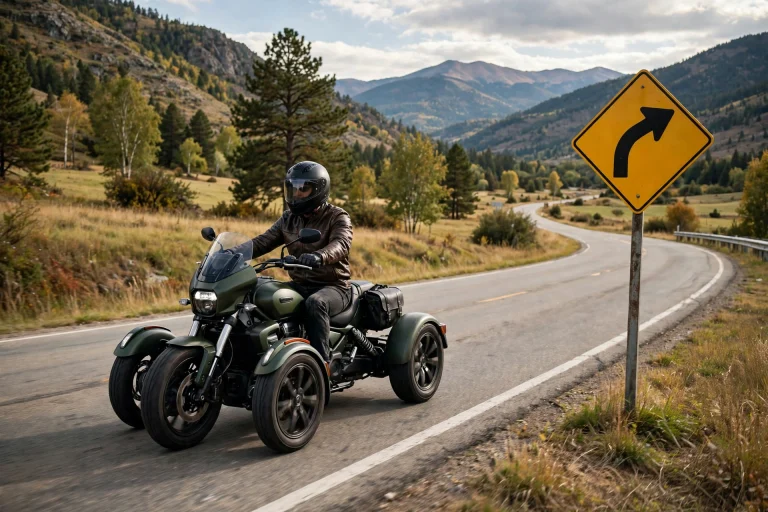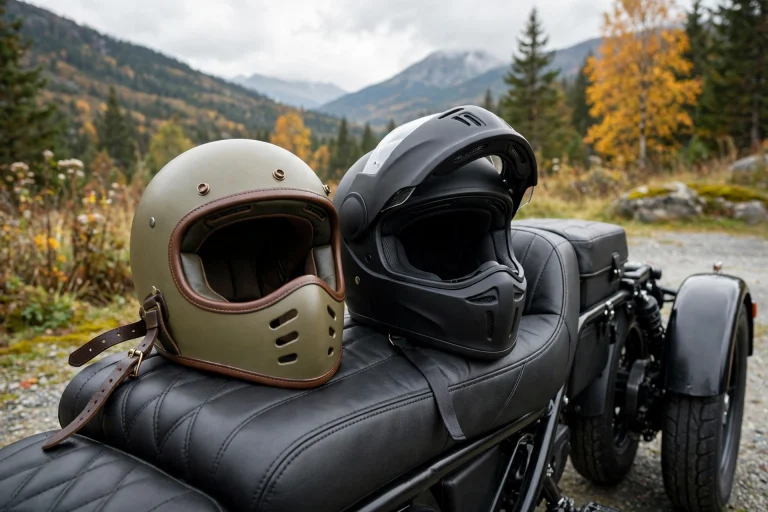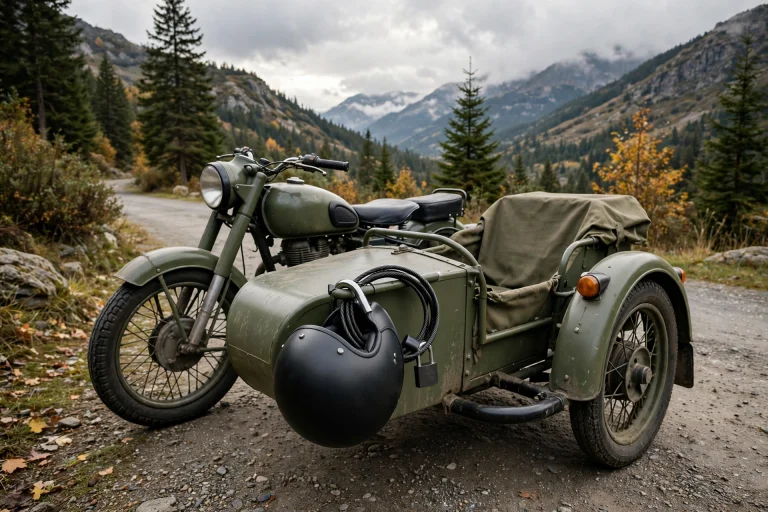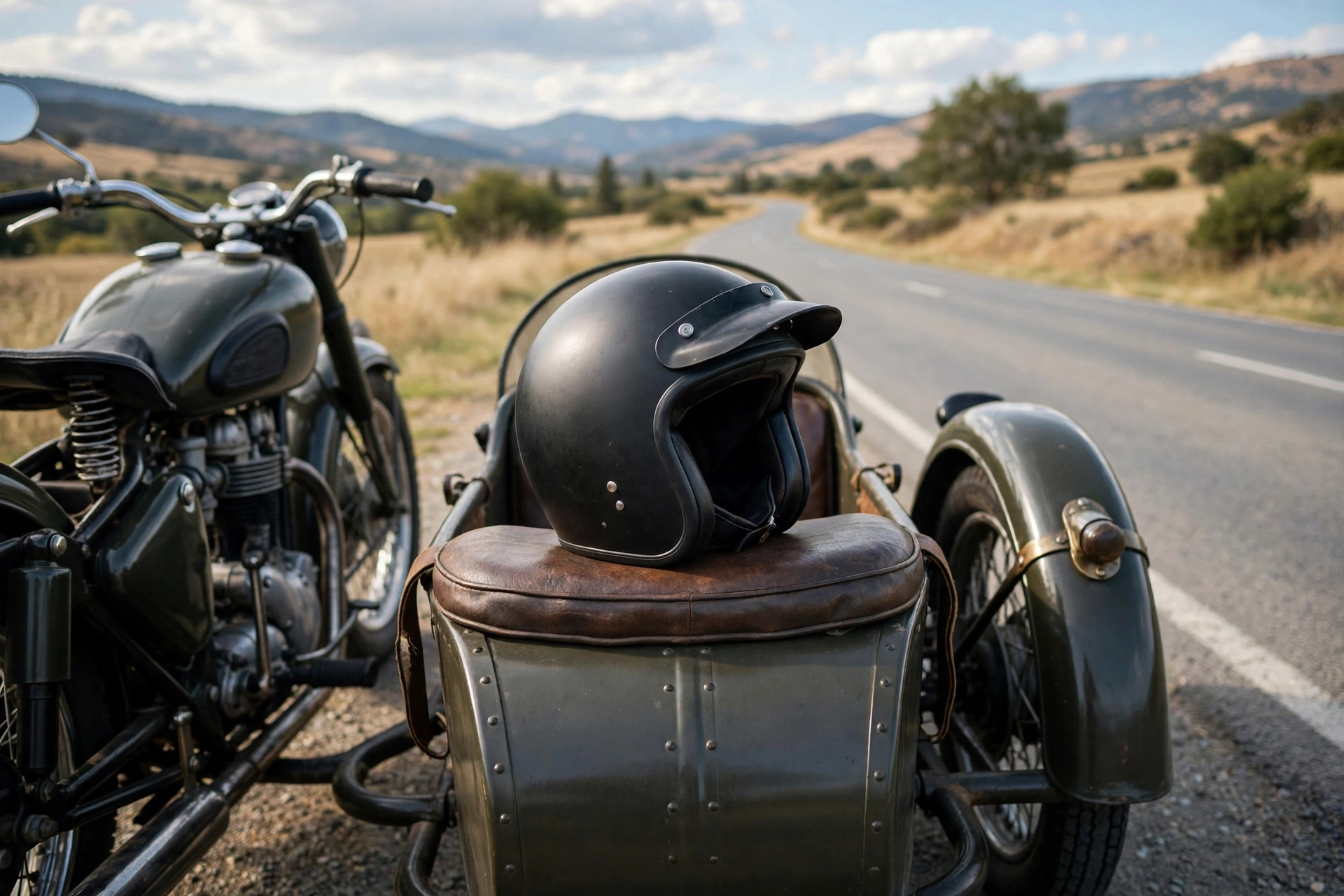
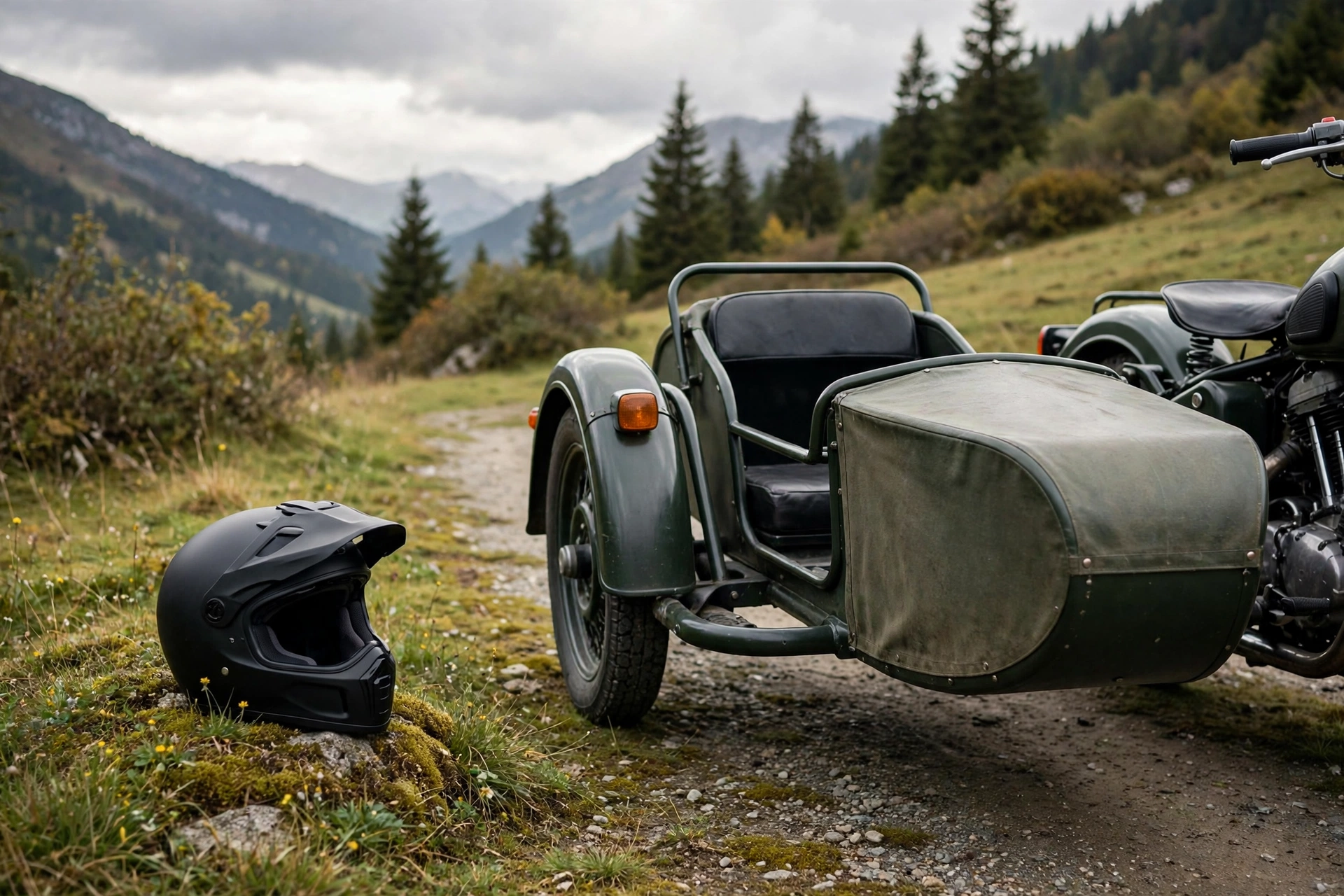
A sidecar helmet and a motorcycle helmet are usually the same type of helmet, but the difference lies in how they are used: a sidecar helmet is chosen for a passenger or rider in an open, three-wheeled outfit, while a motorcycle helmet is chosen for a rider on two wheels. In general terms, both must meet the same motorcycle helmet safety standards, and in most cases a good motorcycle helmet works perfectly well in a sidecar.
The real differences are practical rather than legal: the seating position, the wind, the need to talk, and the way the outfit handles. This guide explains where a sidecar helmet and a motorcycle helmet are the same, where they differ, and how to choose the right one for sidecar use.
Are Sidecar Helmets and Motorcycle Helmets the Same Thing?
There is no separate safety standard for sidecar helmets in most places. A helmet worn in a sidecar is expected to meet the same motorcycle helmet standard as one worn on a solo motorcycle, and it is tested in the same way. That means a helmet sold as a motorcycle helmet is, in general terms, suitable for sidecar use, and a helmet sold for sidecar use is really a motorcycle helmet chosen with sidecar riding in mind.
That said, the risks are not identical. A solo motorcycle rider is more likely to be thrown clear in a crash, while a sidecar passenger may be thrown sideways or trapped in the sidecar tub. A sidecar outfit can also tip in a turn, which is a risk a solo motorcycle does not share in the same way. These differences do not change the helmet standard, but they do change which features matter most: a sidecar helmet benefits from good side coverage, a secure fit that stays put in a sideways movement, and a visor that works well in the wind the passenger sits in.
What Features Matter More in a Sidecar?
Wind protection matters more in a sidecar, because the passenger sits lower and often in the full force of the wind, with no fairing to hide behind. A helmet with a good seal around the visor and a chin curtain will be more comfortable and will keep wind noise down. Ventilation matters too, because the passenger may get less airflow than the rider, and a visor that fogs in the cold is a common complaint.
Communication is another difference. On a solo motorcycle, the rider may ride alone and not need to talk. In a sidecar, the rider and passenger often need to communicate, whether to warn of a bump, to agree a stop, or simply to enjoy the ride together. A helmet that works well with an intercom or a Bluetooth headset, with speaker pockets and a microphone that sits clear of the wind, is a real advantage in a sidecar. Weight also matters: a passenger who is not used to helmets will feel a heavy helmet more quickly, so a lighter helmet can make a long ride much more pleasant.
Open Face, Full Face, or Modular for a Sidecar?
An open-face helmet gives the widest view and the easiest conversation, which suits slow, scenic sidecar rides. It is light, cool, and comfortable, and many passengers prefer it. The downside is the lack of face protection: in a crash, the chin and jaw are exposed, and on the road, wind, rain, and stones hit the face directly.
A full-face helmet gives the most protection and the best weather cover, and it is the better choice for faster roads or longer rides. A modular helmet, with a chin bar that lifts, is a popular compromise for sidecar use: the passenger can lift the chin bar at a stop to talk or drink, then close it for riding. For the rider of a sidecar outfit, the choice is much the same as for a solo motorcycle rider, though the upright seating position of many sidecar outfits suits a touring-style full-face helmet with a wide visor and good ventilation.
Do Sidecar and Motorcycle Helmets Cost the Same?
In general terms, yes, because they are the same helmets. There is no separate sidecar helmet market with its own pricing, so a sidecar rider or passenger pays the same as a solo motorcycle rider for the same helmet. The price depends on the helmet’s features, materials, and certification, not on whether it is used in a sidecar or on a motorcycle. A basic open-face helmet is usually the cheapest option, a good full-face helmet costs more, and a modular helmet with a Bluetooth system costs more still.
Where costs can differ is in the extras. A sidecar passenger may need a second helmet, an intercom system for rider-to-passenger communication, and possibly a spare visor or an anti-fog insert. These add to the total cost, but they are accessories rather than a different helmet. It is worth budgeting for them, because a helmet that fogs or a ride where you cannot talk to your passenger is a poorer experience, whatever the helmet cost.
How Do You Choose Between Them?
Start with the safety standard: any helmet you use in a sidecar should meet a recognised motorcycle helmet standard for your region, and the label inside the helmet will say which one. Then think about how you will use it: short, slow rides in good weather suit an open-face helmet, while longer or faster rides suit a full-face or modular helmet. Try the helmet on with the sidecar’s windscreen and seating position in mind, and check that it works with any communication system you plan to use.
Fit is the deciding factor, whatever type you choose. A helmet that is too loose will shift in a crash, and one that is too tight will be a misery on a long ride. If you are comparing helmets and want to understand the safety features on the box, reading about what MIPS is for helmets can help you make sense of one of the most common features listed. The right helmet for a sidecar is, in the end, a good motorcycle helmet that fits well and suits the way you ride.
Frequently Asked Questions
Q: Can I wear my normal motorcycle helmet in a sidecar?
A: Yes, in general terms a motorcycle helmet that meets a recognised standard is suitable for sidecar use. There is no separate sidecar helmet standard in most places, so your motorcycle helmet is fine.
Q: Does a sidecar passenger need a different helmet from the rider?
A: No, the passenger needs the same standard of protection, but they may prefer different features, such as a lighter helmet, better wind sealing, or a helmet that works well with an intercom.
Q: Is a full-face helmet overkill for slow sidecar rides?
A: Not necessarily. A full-face helmet gives more protection and weather cover, and many passengers find it more comfortable on anything but the shortest, slowest rides. An open-face helmet suits gentle, scenic rides in good weather.

Olivia
Writer at Helmet Today, covering helmet reviews, fit and riding safety.