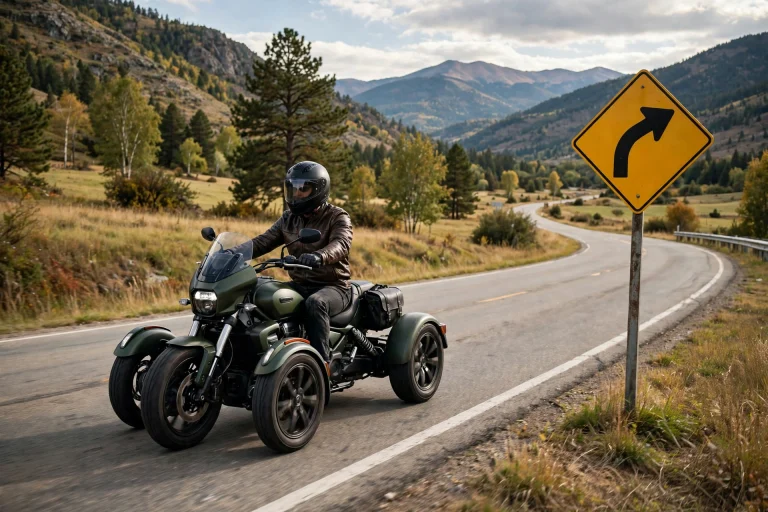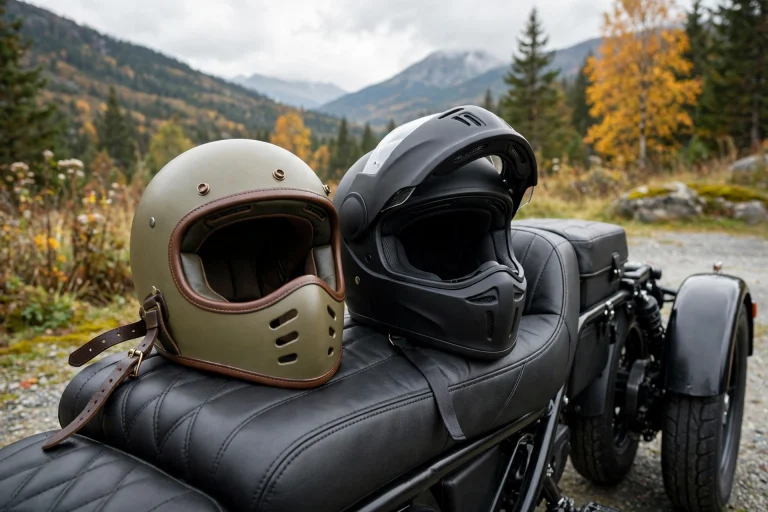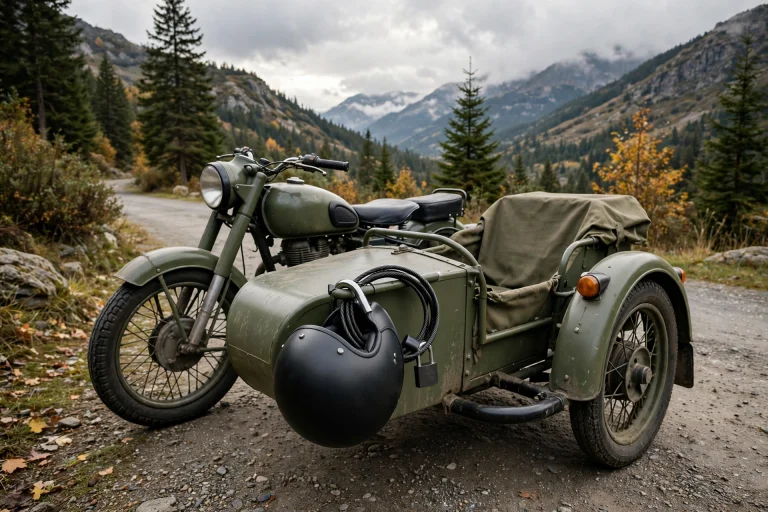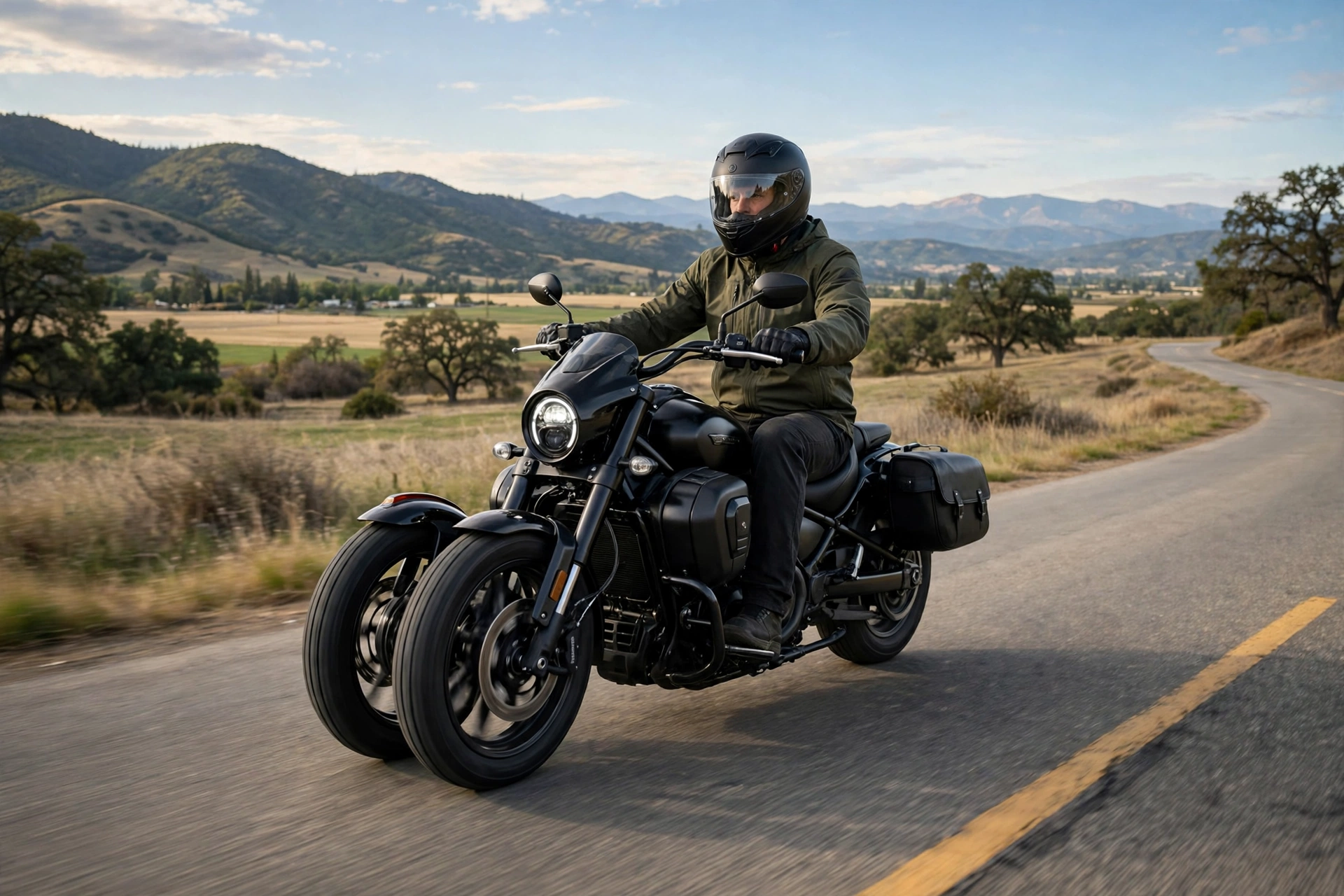
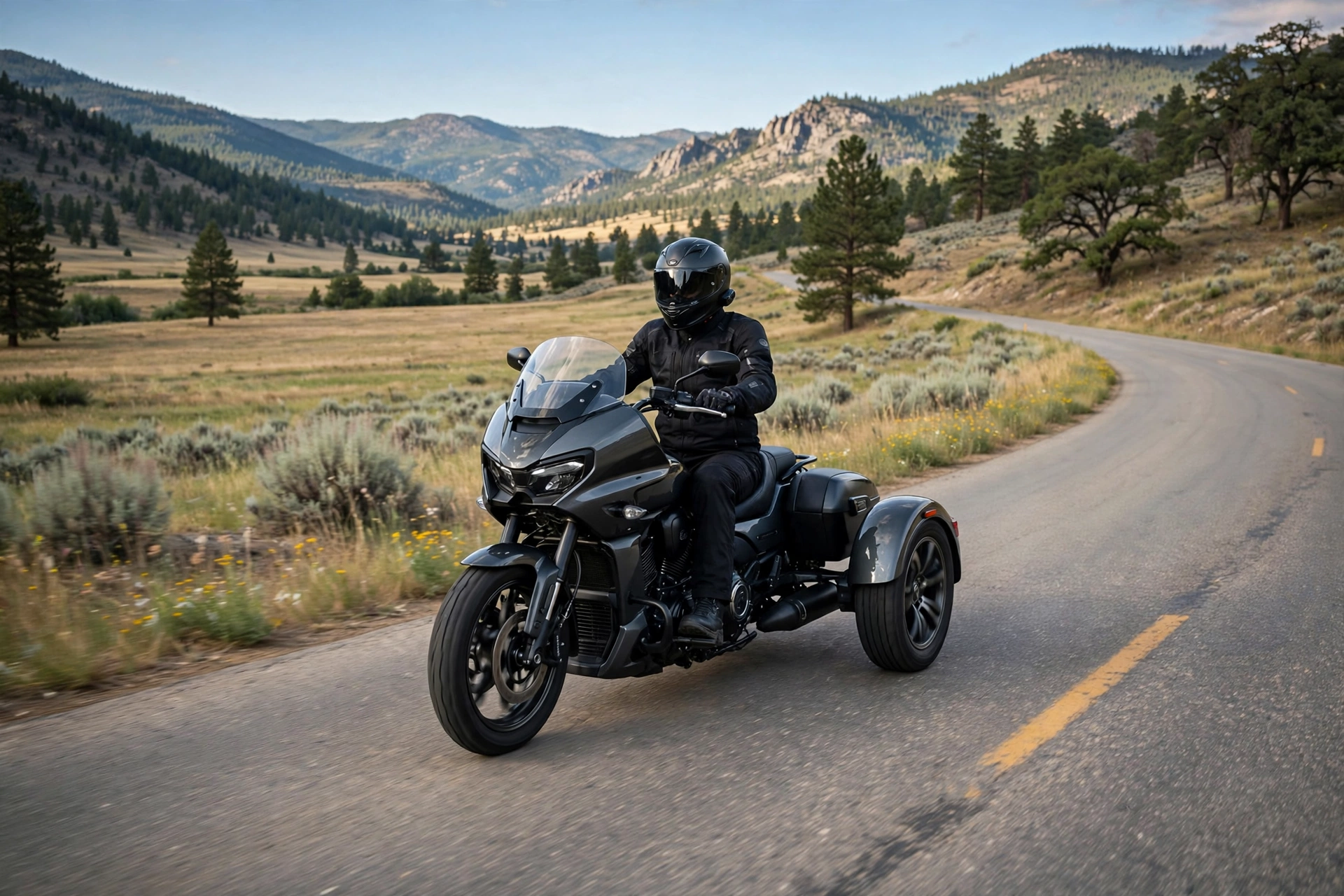
A good helmet for trike riders is a well-fitting motorcycle helmet that meets a recognised safety standard, with good ventilation, a wide field of view, and a comfortable fit for an upright, relaxed riding position. In general terms, trike riders sit upright with little wind protection, so the helmet needs to cope with wind, sun, and long hours in the saddle, while still protecting well in a crash.
Trikes, or three-wheeled motorcycles, are ridden by a wide range of people, from touring riders to those who choose three wheels for stability. The helmet choice is similar to that for a motorcycle rider, but the riding position and the speeds involved change which features matter most. This guide explains what to look for.
What Makes Trike Riding Different for Helmet Choice?
Trike riders sit upright, often with their feet forward and their hands on wide handlebars, and they are exposed to the wind in much the same way as a motorcycle rider. The difference is that a trike does not lean into corners, so the rider’s head stays upright through turns, and the speeds are often lower than on a sports bike. That means a helmet that works well at moderate speeds and in an upright position is more important than one designed for high-speed, tucked-down riding.
Trikes are also popular for touring, which means long days in the saddle, often in hot sun or cold wind. Comfort over hours matters more than it does for a short commute, so a helmet that is light, well ventilated, and quiet is worth paying for. A helmet that feels fine for an hour can become a burden after five hours, so it is worth trying a helmet on for a good while before buying, and checking that it does not press anywhere or catch the wind badly.
Open Face or Full Face for Trike Riders?
An open-face helmet is a popular choice for trike riders, because it gives a wide view, it is cool in hot weather, and it suits the relaxed, upright riding position. It also makes it easy to talk at stops and to enjoy the scenery, which is part of the appeal of trike touring. The trade-off is that it leaves the face exposed to wind, rain, stones, and insects, and it offers less protection in a crash than a full-face helmet.
A full-face helmet gives more protection and better weather cover, and it is the better choice for faster roads, motorways, or riding in poor weather. Many trike riders choose a modular helmet, which combines the two: the chin bar lifts up at stops for talking and fresh air, then closes for riding. A modular helmet is heavier than an open-face helmet, but for a trike rider who does long distances, the extra protection and weather cover are often worth it. The best choice depends on where and how you ride, and many trike riders own both types and choose according to the day.
What Should You Check for Ventilation and Comfort?
Ventilation is one of the most important features for a trike helmet, because trike riders are out in the open for long periods and can get hot in summer or fogged up in winter. Look for a helmet with vents at the front that can be opened and closed, and exhaust vents at the back that let warm air out. Try the vents with gloves on, because a vent that is hard to operate while riding will simply stay in one position.
Comfort also comes from the lining. A removable, washable liner is a practical plus, because a helmet worn for long touring days will get sweaty, and a liner you can wash lasts longer and smells better. Check the cheek pads and the fit around the ears, and make sure the helmet does not press on your glasses if you wear them. If you ride with a passenger, check that the helmet works with an intercom, because many trike riders ride two-up and want to talk on the move.
How Important Is the Safety Standard?
Very important. A trike is a motor vehicle, and in most places the same helmet rules apply as for a motorcycle. The helmet should meet a recognised motorcycle helmet standard for your region, and the label inside the helmet will say which standard it meets. Do not be tempted by a helmet that looks right but has no certification label, however cheap it is, because there is no way to know how it will perform in a crash.
Beyond the standard, look at the helmet’s construction: a sturdy shell, a good-quality liner, and a strap that fastens securely. Some helmets include extra features such as a rotational impact system, and if you want to understand one of those features, reading about what MIPS is for helmets can help you make sense of what is on the box. A helmet that meets the standard and fits well is the foundation; extra features are a bonus, not a substitute for fit and certification.
What About Weight, Noise, and Visibility?
Weight matters on a long ride, because a heavy helmet tires your neck. In general terms, a lighter helmet is more comfortable over a full day, though it may cost more. Noise matters too: a helmet that lets in a lot of wind noise is tiring and can make it hard to hear an intercom or a passenger. A helmet with a good seal around the visor and a chin curtain is usually quieter, and earplugs can help on longer rides.
Visibility is worth thinking about as well. A bright-coloured helmet, or one with reflective panels, makes you easier to see, which matters on a trike because other road users may not expect a three-wheeled vehicle. A wide visor with a clear view to the sides helps you see traffic at junctions, and a sun visor or a tinted visor can help in bright sun, though a tinted visor should not be used at night. Choose a helmet that keeps you comfortable, visible, and able to see clearly, and it will serve you well on a trike.
Frequently Asked Questions
Q: Do trike riders have to wear a helmet?
A: In most places, yes, the same motorcycle helmet rules apply to trike riders as to motorcycle riders. The exact rules vary by place, so it is worth checking the local requirements before you ride.
Q: Is a motorcycle helmet fine for trike riding?
A: Yes, in general terms a motorcycle helmet that meets a recognised standard is the right helmet for a trike. Choose one that suits an upright riding position and the speeds you ride at.
Q: Should I choose a modular helmet for trike touring?
A: A modular helmet is a good choice for touring, because you can lift the chin bar at stops to talk or drink, then close it for riding. It is heavier than an open-face helmet, but the extra protection and weather cover are often worth it on long days.

Olivia
Writer at Helmet Today, covering helmet reviews, fit and riding safety.