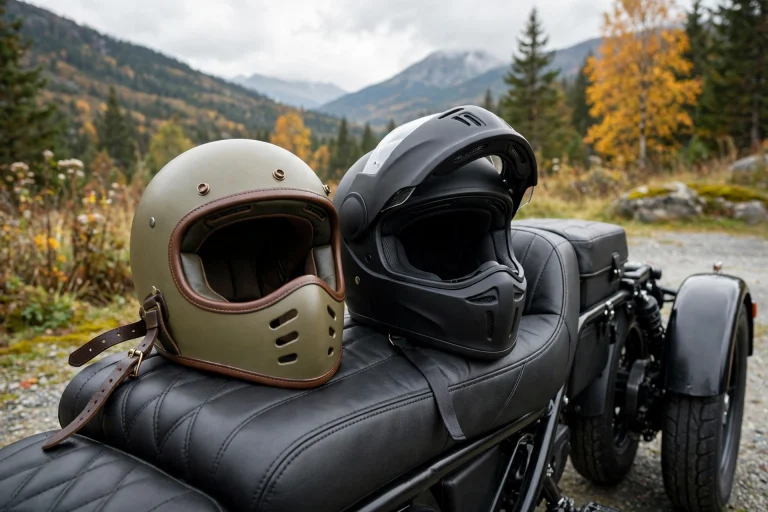
To stop a sidecar helmet fogging in cold weather, keep the visor slightly open for airflow, use an anti-fog visor insert, and make sure the helmet’s vents are open so moist air can escape instead of condensing on the visor. In general terms, fog forms when warm, moist air from your breath meets a cold visor, so anything that warms the visor or moves the moist air away will help.
Fogging is a common complaint for sidecar riders and passengers, because they sit lower than a solo motorcycle rider and often in colder, stiller air, with less wind to clear the visor. A fogged visor is not just annoying: it can cut your vision to a blur at the moment you need it most. This guide explains why sidecar helmets fog and how to stop it.
Why Do Sidecar Helmets Fog More in Cold Weather?
Fog forms when warm, moist air hits a cold surface and the moisture condenses into tiny droplets. Your breath is warm and moist, and in cold weather the visor is cold, so the inside of the visor is the perfect place for fog to form. The problem is worse in a sidecar, because the passenger sits in the full force of cold air with less wind flowing through the helmet than a rider on a solo motorcycle, and because the passenger may be breathing harder from the cold or from nervousness on their first rides.
Stopping and starting makes it worse: when you stop, the airflow through the helmet drops, the visor cools, and your breath keeps adding moisture, so the fog builds up quickly. When you set off again, the airflow may clear it, but in very cold weather the visor can stay fogged for a long time. Glasses worn inside the helmet can fog too, for the same reason, and they are often harder to clear than the visor.
How Does an Anti-Fog Visor Insert Help?
An anti-fog insert is a thin, clear film that sticks to the inside of the visor and creates a double layer, much like double glazing in a window. The air between the visor and the insert acts as insulation, so the inner surface stays warmer and moisture is less likely to condense on it. In general terms, a good anti-fog insert is the single most effective fix for a fogging visor, and many riders say it makes the biggest difference of any solution.
Fitting an insert is usually simple: clean the visor, line the insert up with the pins or the adhesive edge, and press it into place, making sure there are no air bubbles or gaps at the edges. An insert that is not sealed properly will let moist air in behind it, and the fog will form between the insert and the visor, which is worse than fog on the surface. Replace the insert if it becomes scratched, cloudy, or loose, because a worn insert works less well. Some helmets come with an insert included, while for others you buy it separately, so check what your helmet needs before you order.

What Ventilation Tricks Stop Fogging?
Airflow is the other half of the solution. Open the helmet’s vents before you set off, so fresh air flows through the helmet and carries moist air out. Many helmets have a vent at the chin that directs air up across the inside of the visor, and opening that vent is often enough to keep the visor clear in mild cold. If your helmet has a visor that can be cracked open a fraction, use that: a tiny gap lets air in without letting in too much cold or rain.
Breathing technique helps too. Breathing through your nose rather than your mouth directs less warm, moist air straight at the visor, and a breath deflector or a chin curtain can guide your breath down and away from the visor. Some riders use a balaclava or a neck warmer that covers the nose and mouth, but make sure it does not push moist air up into the helmet or interfere with the strap. And if the visor does fog, pull over safely and wipe it, rather than trying to clear it while riding.
How Do You Stop Glasses Fogging Inside a Helmet?
Glasses fog for the same reason a visor does, and they can be harder to clear because they sit closer to your face and further from the airflow. An anti-fog spray or wipe made for glasses can help, though it needs reapplying regularly and it can smear if used too often. Contact lenses are a simpler solution for riders who can wear them, because there is nothing to fog.
If you wear glasses, look for a helmet with a wide eye port and good ventilation, so air flows around the glasses as well as the visor. Some helmets have a glasses groove in the padding that lets the arms sit flat without pressing, which helps the glasses stay in place and lets air flow around them. And if you are comparing helmets, reading about what MIPS is for helmets can help you understand the safety features inside the helmet, so you can choose one that protects well and stays clear in the cold.
What Should You Do When the Visor Fogs While Riding?
If the visor fogs while you are riding, do not panic and do not try to wipe it with a gloved hand while moving, because that can smear the fog and distract you. Instead, crack the visor open slightly to let air in, and slow down gently until you can pull over safely. Once stopped, lift the visor fully, wipe it with a clean, soft cloth, and check that the vents are open before you set off again.
Prevention is better than a cure, so before a cold ride, check that the anti-fog insert is in good condition, the vents are open, and the visor is clean. A dirty visor fogs more easily than a clean one, because grime gives moisture something to cling to. Carry a soft cloth in a pocket so you can wipe the visor at a stop, and if fogging is a regular problem, consider a helmet with better ventilation or a different anti-fog system.
Frequently Asked Questions
Q: Does an anti-fog spray work as well as a visor insert?
A: In general terms, no, a spray or wipe is a short-term fix that needs reapplying and can smear, while a good insert lasts much longer and works more reliably. A spray is useful as a backup or for glasses, but an insert is the better main solution.
Q: Should I close all the vents in cold weather to stay warm?
A: No, closing the vents traps moist air inside the helmet and makes fogging worse. Keep at least the chin vent open so air flows across the visor, and use a neck warmer or balaclava to stay warm instead.
Q: Can I use a hairdryer to clear a fogged visor?
A: You can warm the visor gently before a ride, but it will cool and fog again once you are out in the cold. A proper anti-fog insert and good ventilation are more reliable than warming the visor.

Olivia
Writer at Helmet Today, covering helmet reviews, fit and riding safety.