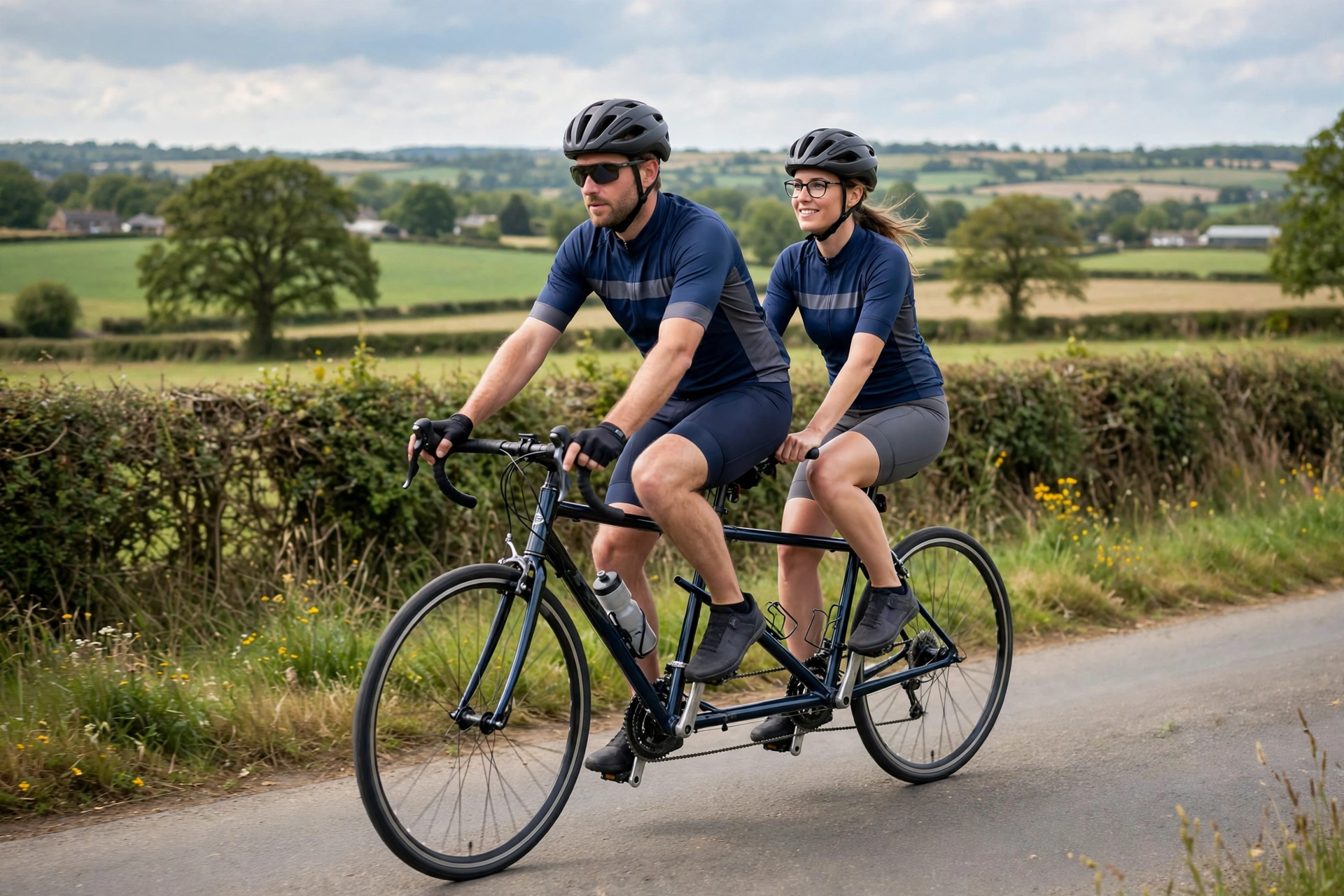
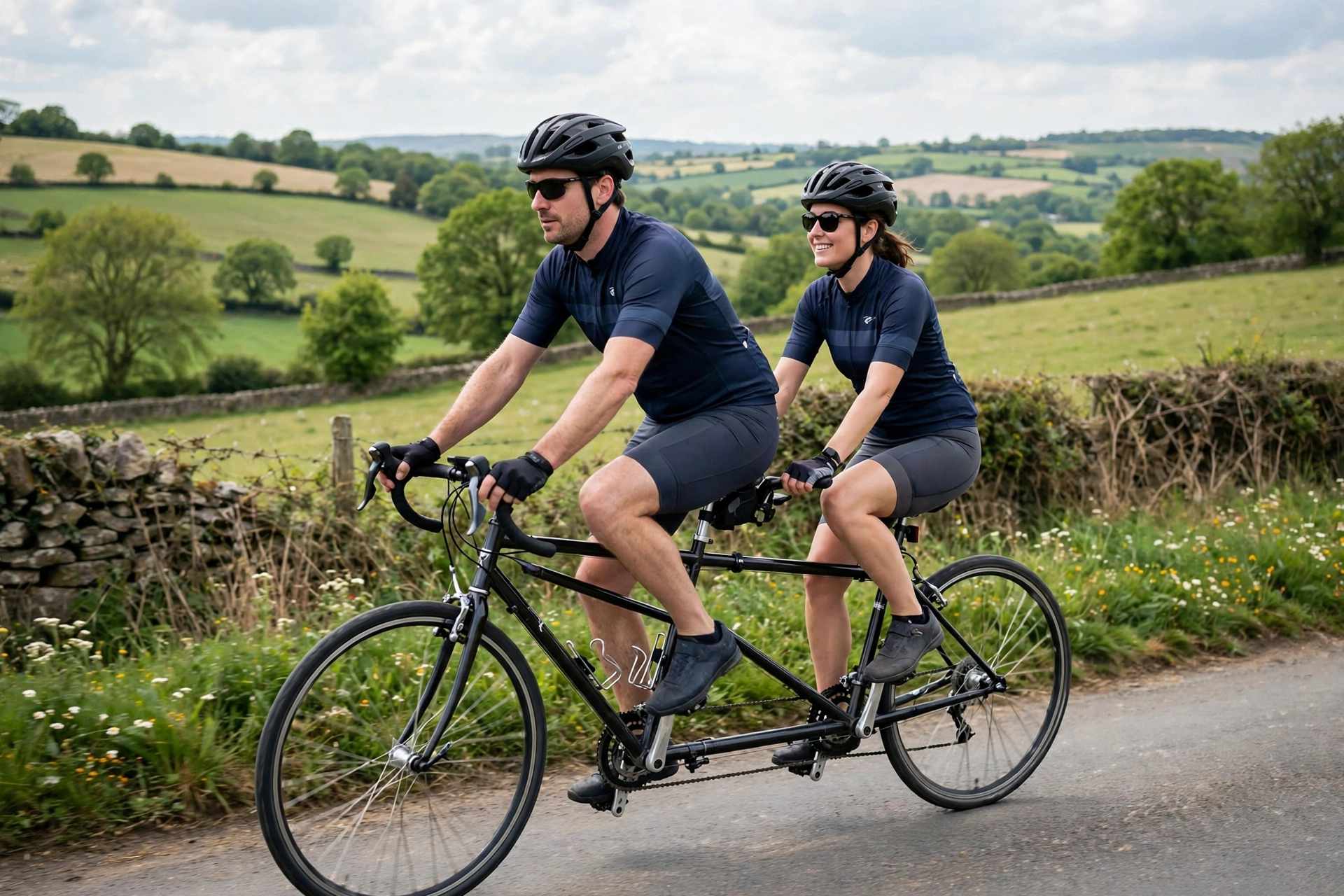
Tandem cycling helmet fit is the same for the captain and the stoker: each rider needs their own helmet, fitted to their own head, sitting level and snug. The captain rides at the front and steers, while the stoker rides at the back and pedals, but their heads are the same shape and size as they would be on any other bike, and the helmet rules do not change.
What does change on a tandem is the riding experience. The stoker cannot see the road ahead, cannot steer, and cannot brake, so they rely entirely on the captain. Communication, trust, and a comfortable fit matter more than on a solo bike, because the stoker cannot simply stop and adjust a helmet mid-ride. This guide explains how to get the fit right for both riders.
Do the Captain and the Stoker Need Different Helmets?
In general terms, no. Both riders need a standard road or touring bike helmet that meets a recognised bicycle helmet safety standard for their region. There is no special tandem helmet, and there is no reason for the captain and the stoker to wear different types of helmet unless their heads or preferences differ.
Each rider should choose a helmet that fits their own head. Head shapes vary, and a helmet that fits the captain perfectly may be too tight, too loose, or the wrong shape for the stoker. Buy and fit each helmet separately, and do not assume that matching helmets will fit matching heads.
The only real difference is in what each rider does while wearing the helmet. The captain needs to hear the stoker, look over a shoulder, and call out hazards, so a helmet that does not muffle hearing or block peripheral vision matters. The stoker needs a helmet that stays comfortable and stable for long periods without adjustment, because they cannot easily reach up and fiddle with it while riding.
How Should a Tandem Helmet Fit?
Fit follows the same rules as for any bike helmet. The helmet should sit level on the head, low enough to cover the forehead, without tilting back or forward. It should feel snug all around, with no pressure points, and it should not rock from side to side or slide forward when you shake your head gently.
Measure the head and check the maker’s size guide as a starting point, then try the helmet on. Sizing varies between makers, so a size label is only a guide. Use the dial at the back to fine-tune the fit, and adjust the straps so they form a neat V under each ear and meet snugly under the chin. You should be able to fit two fingers between the strap and your chin, but not much more.
Try the helmet on with anything else you wear, such as sunglasses or a cap, and check that it still sits level. On a tandem, the stoker sits close behind the captain, so check that the two helmets do not knock together when the stoker looks around. If they do, one or both helmets may be sitting too high. If you are learning about helmet technology, reading about what MIPS is for helmets can help you understand one of the features you may see listed on tandem helmets.
What Should the Stoker Look for in a Helmet?
The stoker’s main need is long-term comfort without adjustment. They sit in the slipstream of the captain, so they get less cooling airflow than the captain, and they cannot easily stop to adjust a strap or pad. A helmet with good ventilation and comfortable, quick-drying padding will feel better over a long day.
Because the stoker cannot see the road, they feel every bump and change of direction without warning. A helmet that fits securely and does not shift on rough roads matters more for the stoker than for the captain, because a shifting helmet is distracting when you cannot see what is coming. Check the fit on a bumpy road, not just in the shop.
Hearing matters too. The stoker needs to hear the captain’s calls — about bumps, turns, and stops — clearly. A helmet that covers the ears heavily or muffles sound can make communication harder. In general terms, a standard road helmet with open ear areas suits the stoker better than a helmet with deep ear coverage.
What Should the Captain Look for in a Helmet?
The captain’s main need is awareness. They steer, brake, and call out hazards, so they need to hear traffic, hear the stoker, and look around freely. A helmet that is light, well ventilated, and does not block hearing or peripheral vision suits the captain well.
Comfort matters for the captain too, because they are doing the most work: steering a long, heavy bike, managing the gears and brakes, and keeping the pair balanced. A helmet that presses or distracts the captain is a problem for both riders, not just one.
Some captains like a helmet with a small peak to shade their eyes from low sun, which is useful when you are the one watching the road. If you choose a peak, make sure it does not block your view of the road ahead or catch the wind at speed.
How Do You Fit Two Helmets Before a Long Tandem Ride?
Fit both helmets at home, well before the ride, and then test them on a short ride together. Check that each helmet sits level, feels snug, and stays put when you shake your head. Ride over a bumpy stretch and check again — a helmet that feels fine standing still can shift once you are moving.
Agree on communication before you set off. The captain should call out bumps, turns, stops, and gear changes, and the stoker should say if their helmet is uncomfortable or shifting. Stopping early to fix a fit problem is far better than riding for hours with a helmet that distracts one of you.
Finally, check both helmets after the ride. Look for worn straps, loose pads, or a dial that no longer holds its setting. Two helmets mean twice the wear, and a small problem caught early is easier to fix than one discovered on the next long ride.
Frequently Asked Questions
Q: Can the captain and the stoker share one helmet size?
A: Only if their heads are the same size and shape. Measure each head separately and fit each helmet on its own wearer. Sharing a size by guesswork risks a helmet that is too loose or too tight for one of you.
Q: Does the stoker need a helmet if they are not steering?
A: Yes. The stoker faces the same risk of a fall as the captain, and they cannot brace or steer to avoid one. Both riders should wear a properly fitting helmet on every ride.
Q: Should tandem riders wear matching helmets?
A: Matching helmets look tidy, but fit matters more than matching. Choose the helmet that fits each rider best, even if the two helmets are different models or colours. Comfort and fit come before appearance.

Olivia
Writer at Helmet Today, covering helmet reviews, fit and riding safety.